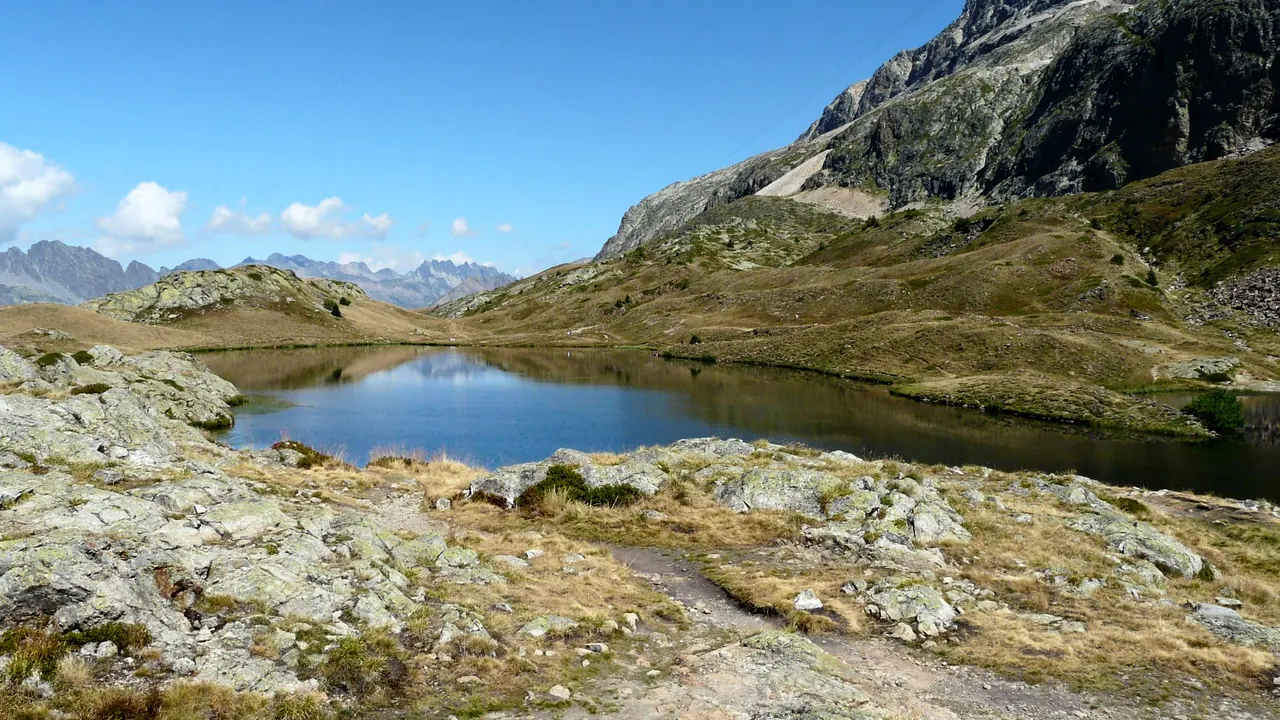
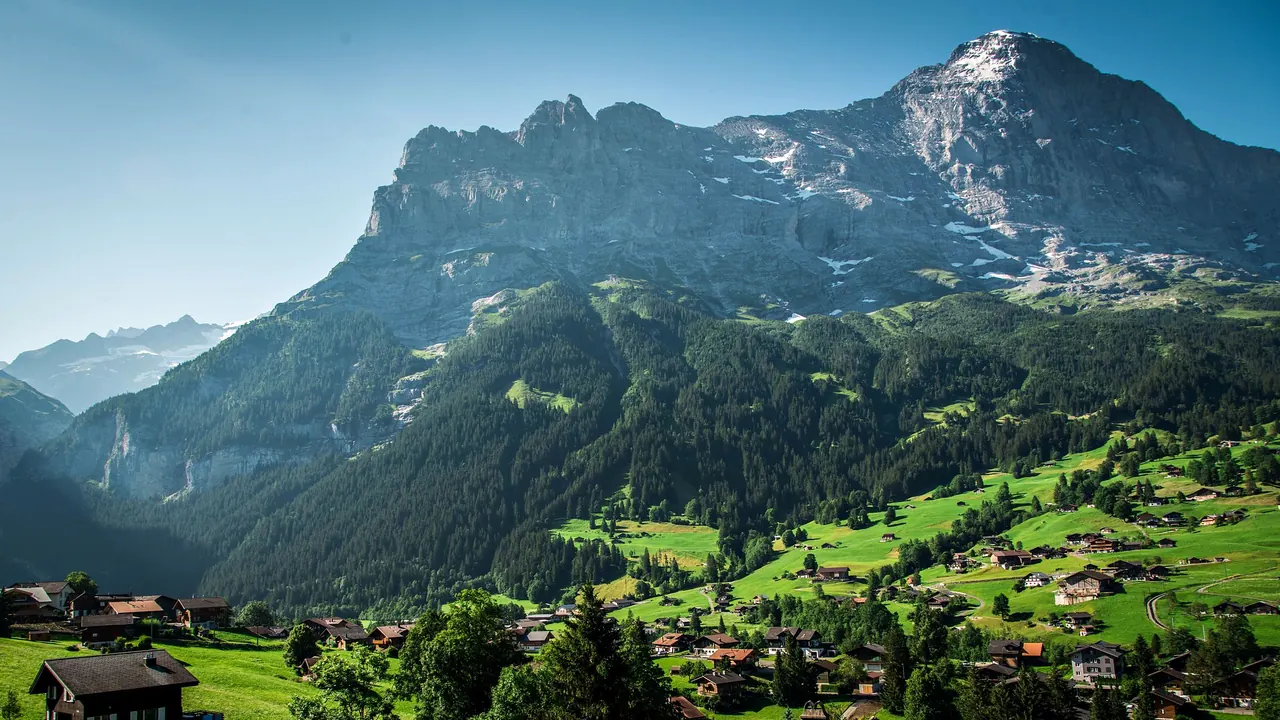
Photos: Alpe d'Huez by Beany, CC BY-SA 3.0, cropped; Grindelwald by Christopher Becke, Pexels License.
Alpe d'Huez or Grindelwald?
Our verdict in twelve categories, each scored against the same fixed benchmark cities, and the climate month by month, so you can choose for your trip.
Choose Alpe d'Huez for
- nightlife
- prices
- food and drink
Alpe d'Huez suits a sociable ski week with friends, or a summer built around the bike. Its après-ski carries on into village pubs and a few late bars, the mountain food has a little more variety, and although a week there is far from cheap, it costs noticeably less than one in the Bernese Oberland. Road cyclists also get the 21 hairpins up from Bourg d'Oisans on the doorstep.
Choose Grindelwald for
- getting around
- day trips
- beaches
For scenery, hiking and a trip without a car, Grindelwald is the stronger choice. The Eiger north face rises straight above the village, and trains and gondolas run to connecting timetables. Interlaken, the lakes and Bern are an easy train ride away. In return you get quiet evenings and some of the highest costs in the Alps.
Scoreboard
Twelve categories on one fixed scale from 0 to 100. The shaded stretch is the gap between the two.
Your match
Pick a travel style or drag the sliders, and both match scores follow your weighting.
Too close to call, 2 points apart
Wins on nightlife and prices with your weighting.
Wins on getting around and day trips with your weighting.
What matters to you?
Category by category
What the scores mean for a trip.
Beaches & swimming
Neither is a swimming destination, but Grindelwald gives you a little more. Lake Thun, half an hour to an hour away by train and bus, warms to around 20°C in a good summer and has lawns and lido-style bathing spots, while turquoise Lake Brienz stays bracing.
Alpe d'Huez has only the small, cold lakes of the Lac Besson plateau and slightly milder ones down in the Romanche valley, so most real swimming happens in the sports centre or hotel pools.
Food & drink
Both serve hearty alpine cheese cooking, but Alpe d'Huez has a little more range. Besides raclette, tartiflette and diots with polenta there are pizzerias, brasseries and a few more ambitious French kitchens, and lunch on a sunny slope-side terrace is part of every ski day.
Grindelwald eats mostly in hotel dining rooms and top-station restaurants, with rösti and Älplermagronen as its local dishes. The pleasure lies in a terrace facing the Eiger or cheese bought from a summer dairy rather than in the cooking, and beyond that the choice is thin.
Culture & sights
Neither has much to see, and in either place the sights fill an afternoon at most. Alpe d'Huez offers modern architecture in Notre-Dame des Neiges, its tent-shaped church, along with a local museum and the medieval silver-mining ruins of Brandes on the plateau in summer. Grindelwald's interest is older and more rural: carved and painted chalets across the slopes, a whitewashed church and a museum on early tourism and the Eiger climbers.
Nightlife
Alpe d'Huez is the place for a night out. Once the lifts close, après-ski bars by the lower runs fill with young British, Dutch and French skiers. The crowd then moves on to the village pubs, and in winter a few late bars and small clubs stay open past midnight.
Grindelwald has a short burst of après-ski near the slopes and along the main street, then a hotel bar or two, and no clubs to speak of. In summer its hikers go to bed early, and the village is dark by late evening.
Nature & outdoors
Both are superb mountain bases, but Grindelwald puts you closer to the great peaks. The Eiger north face rises straight above the village, and the Panoramaweg runs beneath the Eiger, Mönch and Jungfrau. The rack railway climbs to the Jungfraujoch above the Aletsch Glacier, and the Glacier Canyon lies just below the village. Cloud can hide it all for days, though.
Alpe d'Huez has a vast linked ski area on sunny south-facing slopes, with long descents such as the Sarenne black run and views from the Pic Blanc across much of the French Alps. In summer, lift-served mountain biking and the hairpin climb from Bourg d'Oisans make it the better base for riders, while Grindelwald suits walkers better.
Day trips
Grindelwald is far better placed. The train down to Interlaken opens up Wengen and Mürren above the Lauterbrunnen valley, the castles of Thun and Spiez, the lake steamers and the Ballenberg open-air museum. The arcaded old town of Bern is about an hour and a half away.
From Alpe d'Huez, every outing begins with the long winding drive down. Grenoble, with its Bastille cable car and fine-arts museum, is the main draw, and the Château de Vizille is on the way. Over the Col du Lautaret lie La Grave and Briançon's Vauban upper town, and after that the list runs short.
Good for families
Both work well for families, though each comes into its own in a different season. Alpe d'Huez is built around the family ski week, with kids' clubs, wide gentle beginner areas next to the village, an ice rink and sledging, and its sunny exposure makes cold days easier.
Grindelwald comes into its own in summer. It has the cliff walk, scooter-bikes and mountain carts at First, the toboggan run below Pfingstegg and themed walks for small legs, plus farm animals everywhere. Its trains and gondolas also take pushchairs, which Alpe d'Huez's steep, spread-out layout makes much harder.
Getting around
Grindelwald is much easier. Trains from Interlaken pull into the middle of the village, gondolas start nearby, and the timetables for trains and lifts are linked, so a full day across the region involves little waiting.
Alpe d'Huez has no railway, so arriving means a coach, a transfer or a drive up the hairpins, which can be slow in snow. Once you are there, free shuttles and a small gondola link the quarters, and many lodgings let you ski to and from the door. Both villages sprawl across steep slopes, though.
Shopping & style
Neither works for a shopping trip, and both main streets mostly sell ski and outdoor gear and hire equipment. The difference lies in what you take home: Alpe d'Huez has delicatessens with regional cheese and charcuterie, while Grindelwald goes in for Swiss watches, army knives, chocolate and cowbells. From Alpe d'Huez, serious shopping means a trip to Grenoble.
Affordability
A week in Alpe d'Huez adds up quickly, above all in the peak school-break weeks, when the lift pass, equipment hire, lessons and slope-side lunches all pile on. Still, the French resort gives you more ways to cut back. You can rent an apartment and cook for yourself, stay somewhere plainer than in France's most exclusive resorts, or come in summer or a quieter winter week, when the bill drops sharply.
The same trip to Grindelwald costs a good deal more. Rooms and even a simple mountain lunch carry Swiss resort prices, and you pay heavily on top for the gondolas and the Jungfraujoch railway, which are hard to leave out of any stay. Travel passes and picnics from the village supermarkets soften the total, but they never make it modest.
Live music & performing arts
Neither has a theatre or concert hall. Alpe d'Huez has a slight edge, with organ concerts at Notre-Dame des Neiges and occasional outdoor gigs in both seasons. Grindelwald offers folk music in summer instead, with yodelling choirs, alphorn players and brass bands. They are pleasant to come across, but not something to plan around.
Wellness & relaxation
Both rely on hotel spas and a public sports centre pool, and neither has a bathing tradition of its own. From Alpe d'Huez, the historic thermal spa of Uriage-les-Bains near Grenoble is about an hour's drive away, and the resort is at its most restful in early summer. Grindelwald's strength is the setting: spa windows facing the Eiger, cowbells and calm balcony evenings, especially out of season.
When should you go?
Pick your month. The climate figures are measured averages, not a forecast.
Alpe d'Huez in July
Grindelwald in July
Daytime high, °C
Rainfall in the month, mm
Where the figures come from
Alpe d'Huez has no weather station within reach, so its figures come from a gridded climate model rather than a measured record, and read a broad area rather than one spot.
Grindelwald has no weather station within reach, so its figures come from a gridded climate model rather than a measured record, and read a broad area rather than one spot.
Temperature and rainfall are climate normals, averaged over the years shown. Alpe d'Huez: 2001-2020 normals, NASA POWER reanalysis grid, no weather station within 90 km. Grindelwald: 1991-2020 normals, TerraClimate 4 km grid at the town, no weather station within 90 km.
Neither place ever gets warm enough for a beach vacation, and both are at their best either under snow or in high summer. Alpe d'Huez sits higher and is the colder of the two in winter, with January highs around -3°C, while Grindelwald hovers near freezing. Both stay below 5°C from November to March. Summer temperatures are almost the same, with highs of 17 to 18°C in July and August. That is comfortable walking weather, and it feels cool at altitude.
The real difference is rain. Grindelwald is wettest in summer, with around 119mm in both June and July, so a hiking week there needs some flexibility. Alpe d'Huez is drier from July to September, at under 60mm a month, and its wettest months are May and November. September is a good month in both: cooler than midsummer, and drier in Grindelwald than its June and July.
Which traveller are you?
For a food and nightlife trip, Alpe d'Huez is the clear pick. Après-ski bars by the lower runs lead on to village pubs and a few late clubs. Its slope-side terraces, brasseries and cheese-heavy mountain menus also offer more choice than Grindelwald's hotel dining rooms.
On an outdoors trip, Grindelwald edges ahead, with trails from First and Männlichen beneath the Eiger, Mönch and Jungfrau, the railway to the Jungfraujoch and the Glacier Canyon. Alpe d'Huez answers with the Sarenne run, the Pic Blanc and its famous cycling climb.
On a tight budget, Alpe d'Huez is the more realistic of the two, though neither is cheap. Self-catering apartments and modest lodgings take the edge off a French ski week. In Grindelwald, Swiss prices and costly railways and gondolas weigh on every day.
Before you go
| Measure | Alpe d'Huez | Grindelwald |
|---|---|---|
| Official language | French | French, German, Italian, Romansh |
| Currency | Euro (EUR) | Swiss Franc (CHF) |
| Sockets | CE230 V, 50 Hz | CJ230 V, 50 Hz |
| Driving side | Right | Right |
| Time zone | UTC+1, UTC+2 in summer | UTC+1, UTC+2 in summer |
| Emergency number | 112 | 112 |
| Elevation | 1,860 m | 1,034 m |
| Main airport | Grenoble Alpes Isère Airport (GNB)65 km from centre16 non-stop destinations | Zürich Airport (ZRH)100 km from centre226 non-stop destinations |
| Public holidays this year | 11 days | 10 days |
By the numbers
| Measure | Alpe d'Huez | Grindelwald |
|---|---|---|
| Population | - | 3,942 |
| People per km² | - | 23 |
| Museums within 10 km | 1 | 0 |
| UNESCO World Heritage sites within 50 km | 0 | 2 |
Where else could you go?
Every comparison below shares a destination with this one, so you can follow Alpe d'Huez or Grindelwald somewhere new.
- Wengenvs Grindelwald
- Les Deux Alpesvs Alpe d'Huez
- Mürrenvs Grindelwald
- Interlakenvs Grindelwald
- Engelbergvs Grindelwald
- Adelbodenvs Grindelwald