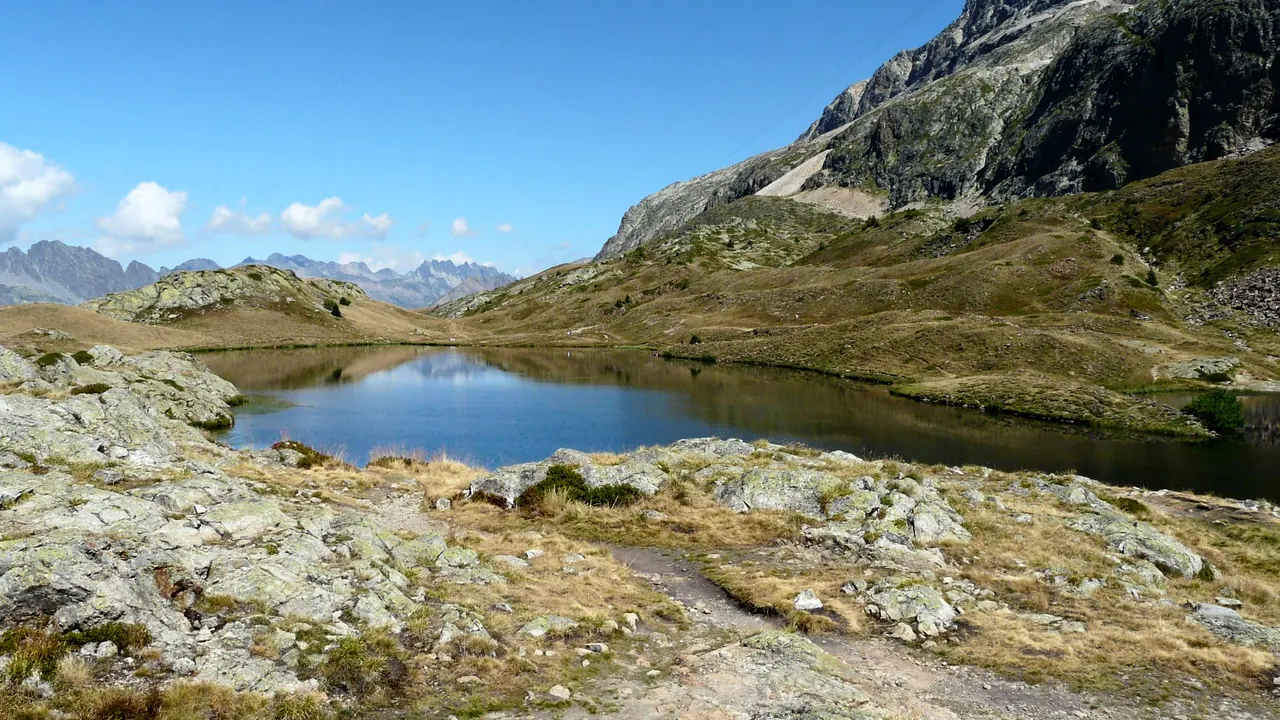
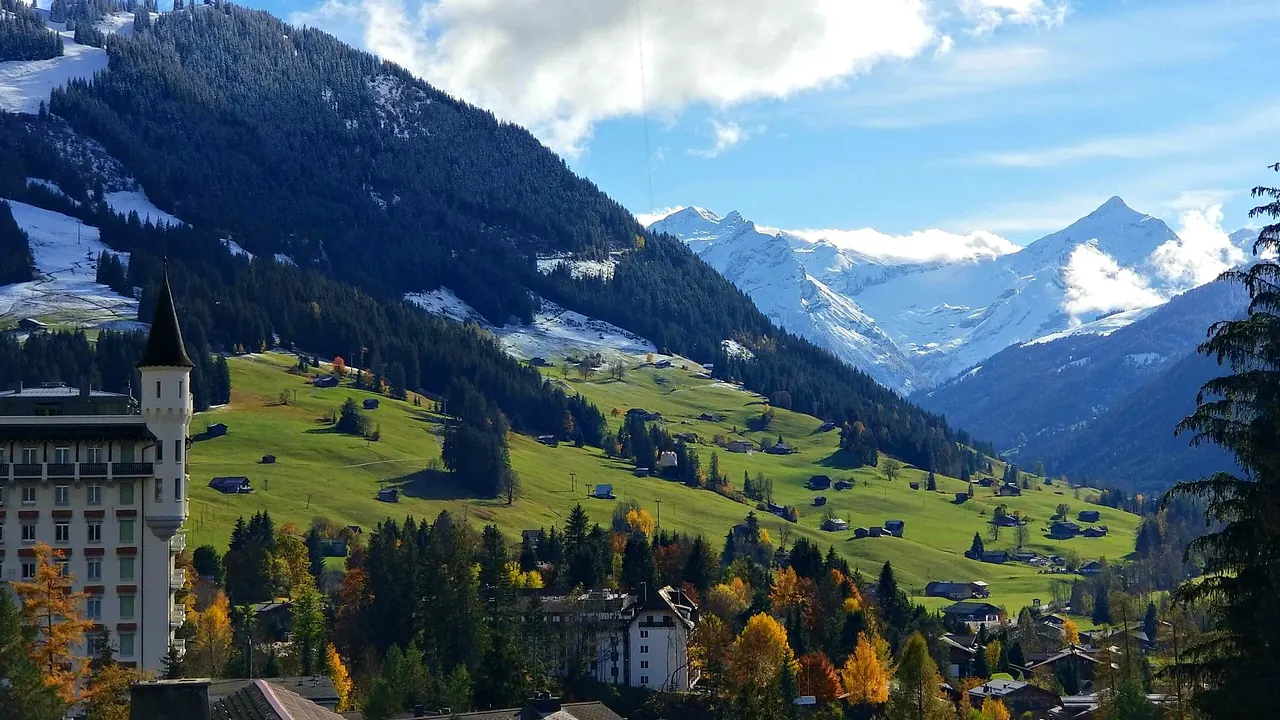
Photos: Alpe d'Huez by Beany, CC BY-SA 3.0, cropped; Gstaad by Samuel Barlow, CC BY-SA 4.0, cropped.
Alpe d'Huez or Gstaad?
Our verdict in twelve categories, each scored against the same fixed benchmark cities, and the climate month by month, so you can choose for your trip.
Choose Alpe d'Huez for
- prices
- families
- nightlife
Alpe d'Huez is the better pick for an active ski or bike week where the mountain itself is the point. It sits much higher, its lifts reach past 3,300m, and the slopes are set up for families and groups who want ski schools, lively après-ski and self-catering apartments that keep costs within reach. Summer brings cyclists for the famous hairpins and riders for the downhill trails.
Choose Gstaad for
- shopping
- live music and the arts
- getting around
Gstaad suits travellers who want comfort, calm and a little polish around their time outdoors. Its grand-hotel spas, the Menuhin Festival in summer and the luxury shops on the Promenade give it more to do off the slopes. A train line brings Montreux, Gruyères and Bern within reach. You pay heavily for all of it, and the home slopes are gentler and lower, so it rewards a slower, more refined stay rather than a week chasing vertical metres.
Scoreboard
Twelve categories on one fixed scale from 0 to 100. The shaded stretch is the gap between the two.
Your match
Pick a travel style or drag the sliders, and both match scores follow your weighting.
Wins on prices and families with your weighting.
Wins on shopping and live music and the arts with your weighting.
What matters to you?
Category by category
What the scores mean for a trip.
Beaches & swimming
Neither is a swimming destination, and both send you to a pool. Alpe d'Huez has small, very cold lakes on the Lac Besson plateau and the sports centre pool. Gstaad's Lauenensee and Arnensee have grassy shores for sunbathing, plus a heated outdoor pool in the valley. Being lower, Gstaad makes a summer dip a little more tempting, and real lakeside bathing at Montreux is a train ride away.
Food & drink
Alpe d'Huez cooks in the Savoyard way, with raclette, tartiflette, diots with polenta and a génépi to finish. These are best eaten on a sunny terrace at altitude between runs. Down in the village, pizzerias, brasseries and a few more ambitious French kitchens round out the week. The range is still narrow and repetitive, and self-caterers lean on the supermarkets.
Gstaad eats better, mainly thanks to the serious gourmet kitchens in its grand hotels, while wooden huts on the slopes serve rösti and fondue. Its cheese is worth seeking out: Saanen's long-aged Hobelkäse, shaved into thin curls, and L'Etivaz, both sold in valley dairies and cellars. Casual, street-level eating is thin in the village, and in both resorts many kitchens close between seasons.
Culture & sights
Neither is a place for sightseeing. The difference is in character. Alpe d'Huez is a purpose-built twentieth-century resort whose highlights are the tent-shaped Notre-Dame des Neiges and the medieval mining ruins of Brandes. Gstaad's heritage is in its carved, dark-timbered Saanenland chalets and the wall paintings in Saanen's late-Gothic church, so it is the prettier village to walk through.
Nightlife
Alpe d'Huez has the livelier winter evenings. Après-ski bars by the lower runs fill as the lifts close, then a young British, Dutch and French crowd moves on to village pubs and a few small clubs.
Gstaad's nights are smaller, dressier and more private. They revolve around hotel bars, a couple of exclusive cellar clubs and chalet parties, mostly between Christmas and February. Out of season, both quieten to dinner and a drink.
Nature & outdoors
Both are superb mountain bases, but the landscapes differ. Alpe d'Huez is high and dramatic: a sunny shelf below the Grandes Rousses, lifts up to the Pic Blanc, the long Sarenne black run, the Écrins nearby and the 21 hairpins that draw road cyclists.
Gstaad is lower and pastoral, with several gentler linked ski areas, cross-country trails and Glacier 3000 for higher snow. Its summer of lake walks to Lauenensee, paragliding and rafting on the Saane is arguably its stronger season.
Day trips
Gstaad is the better base for excursions. The GoldenPass railway runs down to Montreux, Chillon and the Lavaux terraces, Gruyères is under an hour by car, and Thun and Bern lie along the line to the east.
From Alpe d'Huez, every outing begins with the long descent. Grenoble, with its Bastille cable car and old town, is the main draw, and the Château de Vizille is on the way. Briançon's Vauban fortifications are the farthest reasonable trip.
Good for families
Alpe d'Huez is better organised for children. It has ski schools with kids' clubs, gentle beginner areas by the village, plus an ice rink, a pool and sledging off the snow. The altitude and steep, spread-out layout are harder going with pushchairs.
Gstaad is calm and easy, with sleigh rides and farm-pasture walks, but it has little designed for children and nothing for a wet day.
Getting around
Gstaad is easier to reach and to move around. Trains on the GoldenPass line stop in the village and at the lift stations nearby, PostBuses serve the side valleys, and the centre is a short, car-free promenade.
Alpe d'Huez has no railway, so arrival is by coach, transfer or a drive up the hairpins. Once there, free shuttles and a small gondola link the quarters, and ski-in, ski-out lodging helps, but the steep layout is tiring on foot.
Shopping & style
Gstaad has a real if very narrow shopping street. The Promenade has watchmakers, jewellers, fashion labels and cashmere, plus papercut art and carved wood from the region, though nothing at all for a modest budget. Alpe d'Huez sells what a ski week needs, mainly rental and outdoor gear with a few delis, and for anything more you would drive to Grenoble.
Affordability
Both are expensive, but Alpe d'Huez is the one most people can actually afford. Self-catering apartments and more modest lodgings soften the cost of lift passes and lessons, and summer is far cheaper.
Gstaad sits at the very top of Swiss prices, with few mid-range rooms. Staying in Saanen or Zweisimmen is the usual way around that.
Live music & performing arts
This is one of the clearest gaps between them. Gstaad has the Menuhin Festival, several summer weeks of leading soloists and orchestras in a festival tent and in the intimate village churches of the Saanenland, plus winter chamber music. Alpe d'Huez offers only organ concerts at its modern church and occasional outdoor gigs, and serious listeners would head to Grenoble.
Wellness & relaxation
Alpe d'Huez treats wellness as recovery. The saunas, hot tubs and massage rooms in its hotels and apartment residences, along with the sports centre pool, are there to loosen legs after the Sarenne or a ride up the hairpins, and the resort around them is often loud with ski crowds. For historic thermal water you would drive down towards Grenoble to Uriage-les-Bains.
In Gstaad the spa is a reason to book. The grand hotels treat theirs as a centrepiece, so you can swim outdoors with snow on the chalet roofs or spend an afternoon moving between steam rooms with the Saanenland pastures beyond the glass. The best of it goes to hotel residents, though some of the spas let outside visitors in for the day. Spring water plays no part in either place, so Gstaad's edge is luxury and setting, not a bathing tradition.
When should you go?
Pick your month. The climate figures are measured averages, not a forecast.
Alpe d'Huez in July
Gstaad in July
Daytime high, °C
Rainfall in the month, mm
Where the figures come from
Alpe d'Huez has no weather station within reach, so its figures come from a gridded climate model rather than a measured record, and read a broad area rather than one spot.
Gstaad's temperatures are measured 78 km from the centre, at Les Eplatures.
Gstaad has no rain gauge within 25 km of the centre, so its rainfall comes from a gridded climate dataset read at the destination rather than from a gauge further away.
Temperature and rainfall are climate normals, averaged over the years shown. Alpe d'Huez: 2001-2020 normals, NASA POWER reanalysis grid, no weather station within 90 km. Gstaad: 2010-2020 (rainfall 1991-2020) normals, Les Eplatures (77.5 km from centre).
Alpe d'Huez is a true high-altitude resort. Daytime highs stay below freezing from December to February, around -3°C in January, which keeps the snow reliable through a long winter. Summer is short and cool, peaking at about 18°C in July and August, which is ideal for hiking and cycling but never beach weather. Rain is fairly even through the year, with the wettest spells in May and November, the two months when the resort sits between seasons.
Gstaad is lower and milder. January highs hover just above freezing, which is pleasant for winter walks but explains its thinner early-season snow, and July and August reach about 21°C, warm enough for a quick lake dip on a hot afternoon. It is also noticeably wetter all year, with well over 100mm in most summer months and the most in December. For summer walking, Gstaad is softer and greener. For deep winter, Alpe d'Huez is colder and drier.
Which traveller are you?
On a family trip with young children, Alpe d'Huez has the edge. It has kids' clubs, wide beginner areas close to the village, an ice rink and a pool. Gstaad is safe and calm, but it offers less that is built for children.
For a trip on a tight budget, neither is cheap, but Alpe d'Huez is far more manageable. Self-catering apartments and more modest lodgings bring costs down, while Gstaad is among the priciest places in the Alps, even if you stay down the valley.
For a relaxing and wellness trip, choose Gstaad. Its grand hotels have unusually lavish spas, and the quiet car-free centre and still nights set an unhurried rhythm. Alpe d'Huez only feels this restful in early summer, away from the busy ski weeks.
Before you go
| Measure | Alpe d'Huez | Gstaad |
|---|---|---|
| Official language | French | French, German, Italian, Romansh |
| Currency | Euro (EUR) | Swiss Franc (CHF) |
| Sockets | CE230 V, 50 Hz | CJ230 V, 50 Hz |
| Driving side | Right | Right |
| Time zone | UTC+1, UTC+2 in summer | UTC+1, UTC+2 in summer |
| Emergency number | 112 | 112 |
| Elevation | 1,860 m | 1,050 m |
| Main airport | Grenoble Alpes Isère Airport (GNB)65 km from centre16 non-stop destinations | Geneva International Airport (GVA)94 km from centre150 non-stop destinations |
| Public holidays this year | 11 days | 10 days |
By the numbers
| Measure | Alpe d'Huez | Gstaad |
|---|---|---|
| Population | - | 2,960 |
| Museums within 10 km | 1 | 0 |
| UNESCO World Heritage sites within 50 km | 0 | 4 |
Where else could you go?
Every comparison below shares a destination with this one, so you can follow Alpe d'Huez or Gstaad somewhere new.
- Les Deux Alpesvs Alpe d'Huez
- Adelbodenvs Gstaad
- Crans-Montanavs Gstaad
- Leukerbadvs Gstaad
- Châtelvs Gstaad
- Serre Chevaliervs Alpe d'Huez