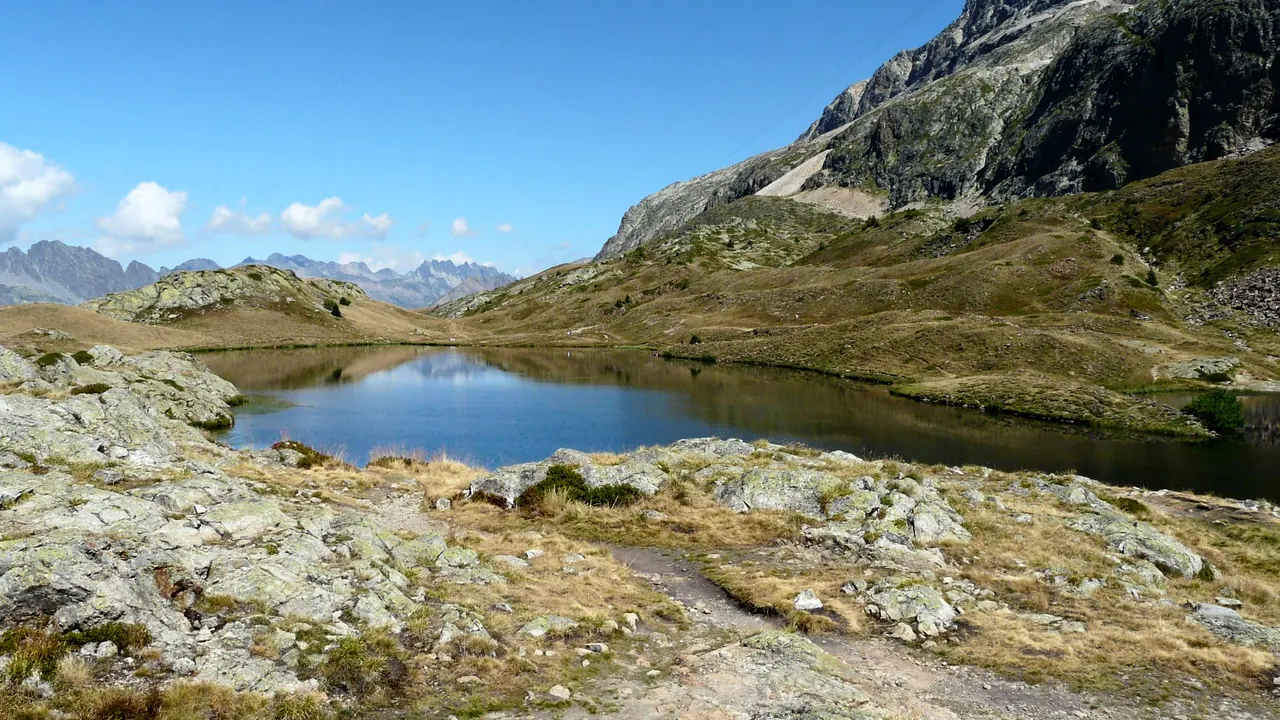
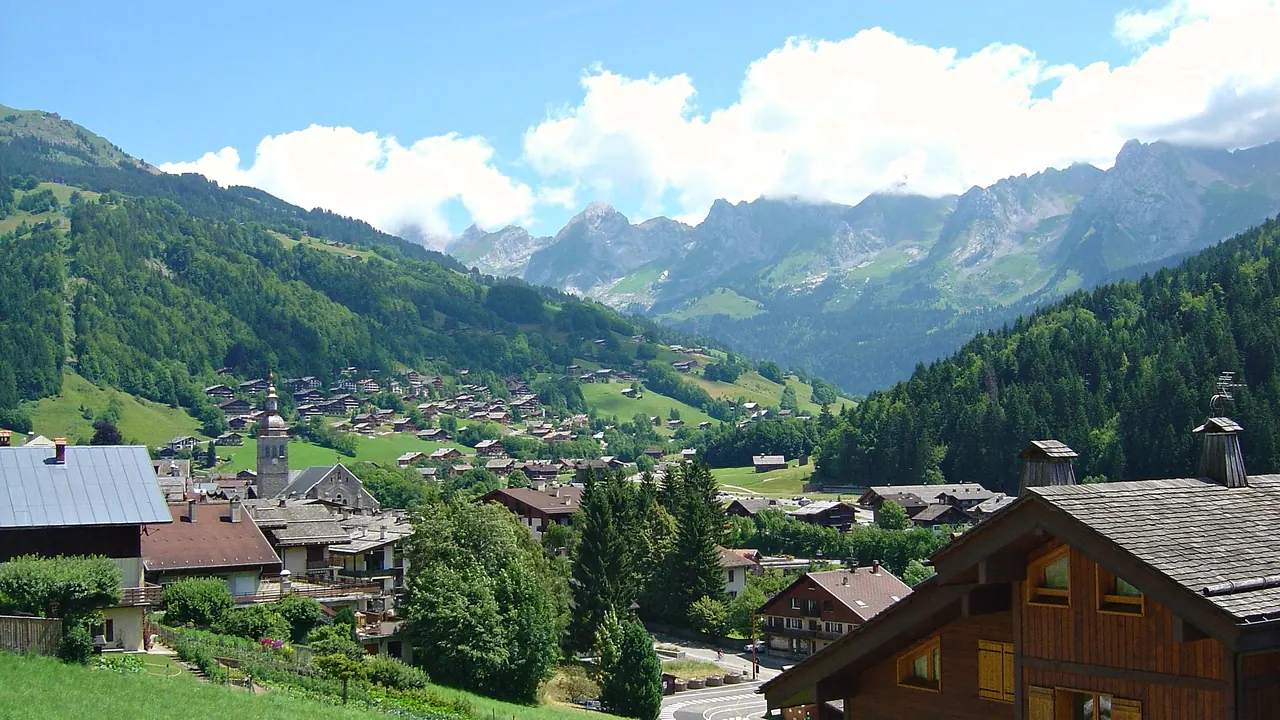
Photos: Alpe d'Huez by Beany, CC BY-SA 3.0, cropped; Le Grand-Bornand by Anthospace, CC BY-SA 3.0, cropped.
Alpe d'Huez or Le Grand-Bornand?
Our verdict in twelve categories, each scored against the same fixed benchmark cities, and the climate month by month, so you can choose for your trip.
Choose Alpe d'Huez for
- nightlife
- getting around
- nature and the outdoors
Alpe d'Huez suits skiers and riders who want big, high terrain and a livelier evening afterwards. Lifts run up to glacier height, the sun-facing slopes are long, and the après-ski bars and late pubs give a week some energy. In summer it draws road cyclists and downhill mountain bikers. It costs more, and once you are up the hairpins there is little to see beyond the mountain itself.
Choose Le Grand-Bornand for
- beaches
- day trips
- prices
Families who like a smaller, gentler mountain village will feel more at home in Le Grand-Bornand, as will anyone keeping an eye on spending. Its Reblochon farms, weekly market and old wooden chalets give it a rural character, and nights end early. Its biggest advantage is location: Annecy and its lake are close enough for swimming and easy outings, and Geneva is within reach, so a car opens up far more than the resort alone.
Scoreboard
Twelve categories on one fixed scale from 0 to 100. The shaded stretch is the gap between the two.
Your match
Pick a travel style or drag the sliders, and both match scores follow your weighting.
Wins on nightlife and getting around with your weighting.
Wins on beaches and day trips with your weighting.
What matters to you?
Category by category
What the scores mean for a trip.
Beaches & swimming
Alpe d'Huez offers no real swimming outdoors. The little lakes on the plateau above the resort are for a quick, cold dip at most, so most swims happen in the sports centre pool or a hotel pool.
Le Grand-Bornand has Lake Annecy less than an hour down the valley through Thônes. In high summer the clear water warms to about 23°C, and you can swim from the lawns, pontoons and small beaches at Talloires, Menthon-Saint-Bernard or Sevrier. A swimming afternoon is a realistic part of a stay here, though the season is short and really covers only July and August.
Food & drink
Both resorts serve the same Savoyard cheese dishes, so what differs is the setting. At Alpe d'Huez the best meal is lunch on a sunny slope-side terrace in the middle of a ski day, and the village adds pizzerias and a few more ambitious French kitchens.
Le Grand-Bornand eats closer to its source. Reblochon is bought straight from the valley farms, the weekly market fills the centre with cheese and charcuterie, and dinner is often in a farm auberge with a glass of Mondeuse.
Culture & sights
Neither is a place for sightseeing, and the little there is differs in age and feel. Alpe d'Huez is a twentieth-century ski resort whose landmark is the tent-shaped Notre-Dame des Neiges, with the ruins of the medieval mining village of Brandes up on the plateau. Le Grand-Bornand is older and more rural, with an onion-domed baroque church, deep-roofed farm chalets and a farmhouse museum about cheese-making.
Nightlife
Alpe d'Huez has the only real night scene of the two. The après-ski bars by the lower runs fill as the lifts close, then the crowd moves to the village pubs, and a few late bars and small clubs stay open past midnight, busiest in the school-break weeks.
In Le Grand-Bornand a couple of bars in the village and at Chinaillon get busy after skiing, and that is about it. The resort is built around families, so most people are in bed early, and a proper night out means driving to Annecy.
Nature & outdoors
Both are excellent mountain bases, but the mountains themselves are different. Alpe d'Huez is high-altitude country: lifts reach 3,330m, the linked ski area is vast, and the Écrins massif is next door. Summer brings lift-served downhill biking and the famous road of 21 hairpins.
Le Grand-Bornand sits lower, under the limestone wall of the Aravis, with wooded runs, open pastures, cross-country trails and snowshoe routes. Summer adds paragliding, climbing and the Col de la Colombière, and Lake Annecy is close enough for sailing and paddling.
Day trips
Le Grand-Bornand is far better placed for outings. Annecy, with its canals, old town and lakeside castle, is about 40 minutes away. Geneva takes about an hour, and Chambéry and medieval Yvoire are around an hour and a half.
From Alpe d'Huez every trip starts with the long, winding descent. Grenoble, with the Bastille cable car and its fine-arts museum, is the main option, plus the Revolution museum at Vizille on the way. The road over the Lautaret leads to La Grave and to Vauban's Briançon, and after that the choices run out.
Good for families
Both resorts are built around family ski weeks, so the difference lies in scale and setting. Alpe d'Huez puts its wide beginner slopes right beside the village on sunny south-facing ground, which makes cold days easier for small children, and adds kids' clubs, an ice rink, sledging and the sports centre pool. The altitude and the steep, spread-out quarters are hard going with toddlers and pushchairs.
Le Grand-Bornand is smaller and easier to manage, with snow gardens for little ones in the village and at Chinaillon. Summer gives children more to do here: they can watch Reblochon being made on the farms, play in the river and, for one week in August, join the long-running children's festival. Most outings beyond the valley need a car.
Getting around
Neither has a railway, and both rely on free shuttles in winter. Alpe d'Huez makes it easier to manage without a car once you arrive. A small gondola links its quarters, and many places to stay let you ski from the door, although walking uphill between quarters with ski gear is hard work.
The centre of Le Grand-Bornand is flat and small enough to walk. The car matters more here, because buses down the valley are few and most of the area's appeal lies beyond the village.
Shopping & style
Neither resort is a place to shop. Both cover what a mountain week needs and little more, but the browsing is different. At Alpe d'Huez almost everything is aimed at getting you onto the slopes or the bike trails, while Le Grand-Bornand's weekly market, with farm Reblochon, sausages, honey and local crafts, is a pleasant morning out in its own right.
For real shops, Le Grand-Bornand is better placed, since Annecy is about 40 minutes down the valley. From Alpe d'Huez the nearest proper shopping is in Grenoble, at the bottom of the long hairpin road.
Affordability
Le Grand-Bornand is noticeably kinder to the budget. Self-catering is the norm, it is more modest than the big high-altitude resorts, and the quiet weeks of January and March bring rents down.
At Alpe d'Huez the lift pass for its huge area, lessons, equipment hire and peak-week rents add up quickly. Lunch on the slopes is also expensive. Renting an apartment and visiting in summer or the quieter ski weeks keeps costs in check.
Live music & performing arts
Le Grand-Bornand has one real highlight in Au Bonheur des Mômes, a week of street theatre, circus, puppetry and music every August, which makes it a good choice for families with children at that time. Alpe d'Huez has organ concerts at Notre-Dame des Neiges and the occasional outdoor gig. Outside these, both are quiet, and a full programme means Grenoble from one or Annecy and Geneva from the other.
Wellness & relaxation
For relaxation the two are much alike. Neither has a bathing tradition, and both offer hotel and residence saunas, hot tubs and massages. Alpe d'Huez adds the sports centre pool and is about an hour from the historic spa at Uriage-les-Bains, but its peak ski weeks are noisy.
Le Grand-Bornand's calm feels rural: cow bells, wooden balconies and slow days, best of all off-peak and in early summer.
When should you go?
Pick your month. The climate figures are measured averages, not a forecast.
Alpe d'Huez in July
Le Grand-Bornand in July
Daytime high, °C
Rainfall in the month, mm
Where the figures come from
Alpe d'Huez has no weather station within reach, so its figures come from a gridded climate model rather than a measured record, and read a broad area rather than one spot.
Le Grand-Bornand's temperatures are measured 45 km from the centre, at Bourg-St-Maurice.
Le Grand-Bornand has no rain gauge within 25 km of the centre, so its rainfall comes from a gridded climate dataset read at the destination rather than from a gauge further away.
Temperature and rainfall are climate normals, averaged over the years shown. Alpe d'Huez: 2001-2020 normals, NASA POWER reanalysis grid, no weather station within 90 km. Le Grand-Bornand: 1999-2020 (rainfall 1991-2020) normals, Bourg-St-Maurice (44.7 km from centre).
Alpe d'Huez is a high-altitude place, and its figures show it. Daytime highs stay below freezing from December to February, dropping to about -3°C in January, which is what keeps the long ski season going. Even July and August only reach around 18°C, comfortable for hiking and cycling but never warm enough for a swim. Rain is moderate all year, with May and November the wettest months.
The figures for Le Grand-Bornand are milder throughout. Winter days stay above freezing, spring warms quickly, and July reaches about 27°C, warm enough for a lake afternoon at Annecy in high summer. It is also clearly wetter in every month, with the heaviest rain in late autumn and winter, up to about 144mm in December. For summer walking, Alpe d'Huez is the cooler and drier choice. For warm days and swimming, Le Grand-Bornand is better.
Which traveller are you?
For a food and nightlife trip, Alpe d'Huez is the better pick. The mountain cooking is much the same in both, but here it comes with après-ski bars by the lower runs, village pubs and a few late clubs full of young skiers.
On a trip with a tight budget, Le Grand-Bornand costs less. Self-catering chalets are normal there, the resort is more modest than the high-altitude names, and January and March are quiet weeks when rents and crowds ease.
Keen skiers who want high, demanding terrain should choose Alpe d'Huez. Its lifts reach the Pic Blanc, it has long runs such as the Sarenne, and the linked area is far larger than the mid-mountain pistes of the Aravis.
Before you go
| Measure | Alpe d'Huez | Le Grand-Bornand |
|---|---|---|
| Official language | French | French |
| Currency | Euro (EUR) | Euro (EUR) |
| Sockets | CE230 V, 50 Hz | CE230 V, 50 Hz |
| Driving side | Right | Right |
| Time zone | UTC+1, UTC+2 in summer | UTC+1, UTC+2 in summer |
| Emergency number | 112 | 112 |
| Elevation | 1,860 m | 892 m |
| Main airport | Grenoble Alpes Isère Airport (GNB)65 km from centre16 non-stop destinations | Geneva International Airport (GVA)41 km from centre150 non-stop destinations |
| Public holidays this year | 11 days | 11 days |
By the numbers
| Measure | Alpe d'Huez | Le Grand-Bornand |
|---|---|---|
| Population | - | 2,050 |
| People per km² | - | 33 |
| Museums within 10 km | 1 | 1 |
| UNESCO World Heritage sites within 50 km | 0 | 2 |
Where else could you go?
Every comparison below shares a destination with this one, so you can follow Alpe d'Huez or Le Grand-Bornand somewhere new.
- La Clusazvs Le Grand-Bornand
- Les Deux Alpesvs Alpe d'Huez
- Megèvevs Le Grand-Bornand
- Flainevs Le Grand-Bornand
- Saint-Gervais-les-Bainsvs Le Grand-Bornand
- Samoënsvs Le Grand-Bornand