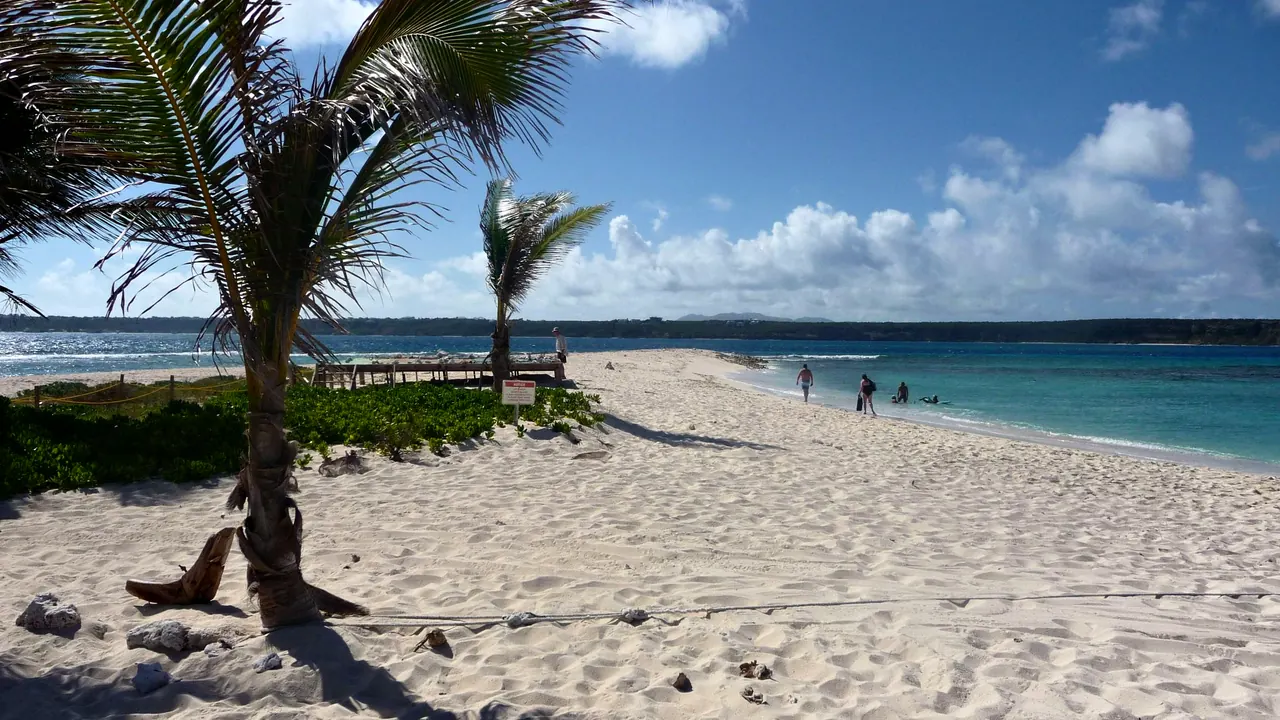
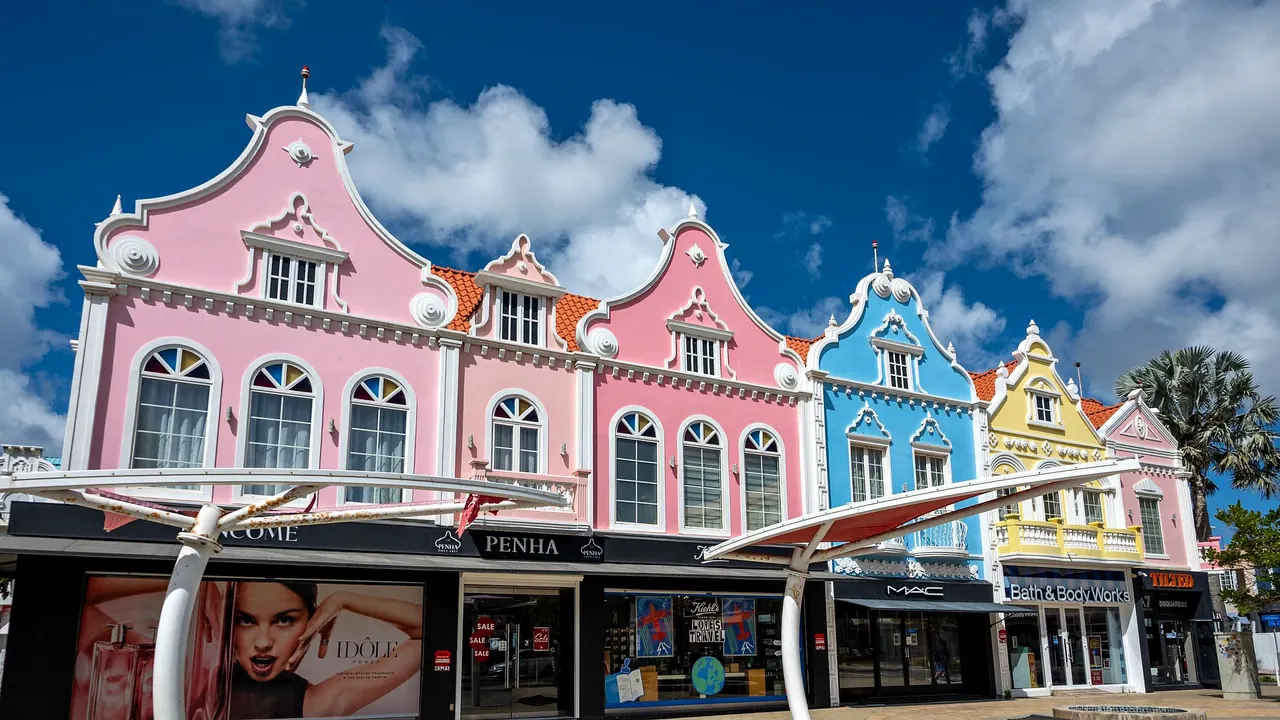
Photos: Anguilla by alljengi, CC BY-SA 2.0, cropped; Aruba by xiquinhosilva, CC BY 4.0, cropped.
Anguilla or Aruba?
Our verdict in twelve categories, each scored against the same fixed benchmark cities, and the climate month by month, so you can choose for your trip.
Choose Anguilla for
- day trips
- food and drink
- beaches
Anguilla suits travellers who want the beach and very little else, and who want it quiet. With no cruise pier and no high-rise strip, even its famous bays feel uncrowded, and the evenings revolve around long seafood dinners rather than going out. It also has the better food of the two and an easy ferry hop to Saint Martin for a change of scene. In return you accept a harder arrival via Sint Maarten, a hire car and steep prices across the board.
Choose Aruba for
- shopping
- families
- nightlife
Aruba is the easier and more rounded choice, especially with children. Its resort beaches come with pools, kids' clubs and water sports, buses link the main strips to Oranjestad, and the dry weather is the more dependable of the two. Arikok National Park adds hiking and caves, and Palm Beach has a livelier evening scene with casinos and a few clubs. It is busier and more developed, and once you have toured the island there is nowhere else to go for the day.
Scoreboard
Twelve categories on one fixed scale from 0 to 100. The shaded stretch is the gap between the two.
Your match
Pick a travel style or drag the sliders, and both match scores follow your weighting.
Wins on day trips and food and drink with your weighting.
Wins on shopping and families with your weighting.
What matters to you?
Category by category
What the scores mean for a trip.
Beaches & swimming
These are two of the finest beach islands in the Caribbean, and neither will disappoint on sand or water. The difference is in atmosphere. Anguilla spreads its beaches round a whole ring of coast, from the long strand of Shoal Bay East to the sheltered crescent of Maundays Bay and the cove at Little Bay, and without cruise ships or tower blocks even the best-known ones stay quiet. Day trips to the near-empty cays add a castaway feel.
Aruba concentrates its beach life on the sheltered west and south coasts. Eagle Beach is wide and roomy, while Palm Beach is busier, with piers and water-sports stands. Baby Beach and Mangel Halto offer shallow, calm water, but the windward north coast is for looking at, not swimming. Anguilla's north shore can pick up winter swell, so there you head for the south and west sides.
Food & drink
Anguilla takes dinner more seriously. The beachfront restaurants of the west end and Sandy Ground make the evening meal the high point of the day, and the local side, with crayfish, grilled snapper, johnny cakes and the weekend lolos serving ribs off the grill, gives it real character, even if a week covers most of it.
Aruba's eating is mostly competent international cooking in the Palm Beach and Eagle Beach resort strips. Its Dutch Caribbean dishes, such as keshi yena and pastechi, take some seeking out in Oranjestad, Savaneta or San Nicolas, though the south-coast fish restaurants on jetties and the late-night food trucks are worth finding.
Culture & sights
Neither island is a sightseeing destination, but Aruba has a little more to fill a day or two. Oranjestad's pastel Dutch colonial waterfront, Fort Zoutman with its museum, the Archaeological Museum, the lonely Alto Vista Chapel, the old gold mill ruins and the murals of San Nicolas add up to a pleasant tour of the island.
Anguilla's heritage fits into a morning or two: Wallblake House in The Valley, the Heritage Collection Museum with the story of the 1967 revolution, and the Amerindian carvings in Fountain Cavern.
Nightlife
Aruba has more to do after dark. The Palm Beach strip fills with beach bars and lounges after dinner, hotel casinos stay open late, a few clubs run into the small hours, and the party buses are fun for a group. Oranjestad has a more local cluster of bars at weekends.
Anguilla's evenings are mostly long dinners, with Sandy Ground's beach bars the one place for late drinks and dancing on the sand. Sunday afternoon sessions are its own social tradition, but there are no clubs and the island is mostly asleep by midnight.
Nature & outdoors
Both islands are dry and covered in scrub, but Aruba has more to explore on foot. Arikok National Park takes in much of the interior and the wild windward coast, with trails, limestone caves, dunes and the Natural Pool, while the Ayo and Casibari boulder fields and the climb up Hooiberg add easy outings. On the water, the kitesurfing at Fisherman's Huts and the SS Antilla wreck stand out.
Anguilla's outdoor life is almost all at sea: reefs and wrecks in the marine parks around Prickly Pear Cays and Dog Island, sailing in the trade winds and its local sloop racing. On land there are clifftop walks and birdwatching at the salt ponds, and little else.
Day trips
Anguilla wins here thanks to its neighbour. Saint Martin is a short ferry ride from Blowing Point, giving a choice of French Marigot and the restaurants of Grand Case or duty-free Philipsburg, and chartered boats reach St Barths and Gustavia for an occasional treat.
Aruba has no such escape. Oranjestad, San Nicolas and Savaneta are part of any stay rather than outings, and Curaçao and Bonaire need a flight, so once the island is seen, the beach is what remains.
Good for families
Both have calm, shallow water that suits small children, but Aruba makes a family stay much easier. Baby Beach is almost a lagoon, many Palm Beach and Eagle Beach resorts have kids' clubs and pools, and a butterfly farm, donkey sanctuary, ostrich farm and submarine trips break up the beach days. The dry weather also means fewer washed-out afternoons.
Anguilla is safe and friendly, with gently shelving bays like Rendezvous Bay and Meads Bay, but beyond the sand there is almost nothing aimed at children, and older ones may get restless after a few days.
Getting around
Aruba is the simpler island to manage. It has its own international airport, and buses run often enough between Oranjestad, Eagle Beach, Palm Beach and Arashi to manage without a car, with a day or two of car hire for the rest. Only the Natural Pool and the rougher parts of Arikok need a four-wheel drive or a tour.
Anguilla takes more planning: most visitors fly into Sint Maarten and cross by ferry, there are no real buses, and a hire car is close to essential, driving on the left. Distances are short and traffic light, though some beach tracks are potholed.
Shopping & style
Aruba is the better place to shop, though still no shopping destination. Oranjestad's pedestrian main street and harbourside malls carry duty-free jewellery, watches and perfume, and aloe products and Dutch cheese make easy gifts.
Anguilla has a few galleries, resort boutiques and souvenirs such as local sea salt, hot sauce and rum. Serious shoppers take the ferry to Saint Martin.
Affordability
Neither island is cheap, but Aruba gives you more ways to keep costs down. Food trucks, local eateries away from the strips, supermarkets, apartments with kitchens and public buses all soften the bill, even if hotels on Palm Beach and Eagle Beach stay costly.
Anguilla is expensive at almost every turn, with mostly high-end resorts and villas, imported groceries and taxis that add up. Guesthouses and the roadside lolos help a little, but budget travellers will struggle.
Live music & performing arts
Live music on both islands is mostly a soundtrack to beach bars and dinner, and neither has a classical or theatre scene to speak of. What sets them apart is the big annual event. Anguilla has a reggae festival in March and its Summer Festival in early August, with calypso, soca and boat racing, plus weekend string bands around Sandy Ground.
Aruba's highlight is Carnival in the weeks before Lent, with tumba competitions and road marches, and it has folk dance evenings around Fort Zoutman and occasional local productions at the Cas di Cultura.
Wellness & relaxation
Both rely on resort spas and an unhurried pace rather than any bathing tradition. Anguilla's appeal is its stillness: no high-rises, no cruise crowds and early nights, with spa rooms open to the breeze at the luxury resorts.
Aruba is more organised about rest, with adults-only hotels, beach massages, yoga sessions and aloe-based treatments easy to book. It has a bit more company around you, but the steady sunshine and cooling trade wind make it just as easy to switch off.
When should you go?
Pick your month. The climate figures are measured averages, not a forecast.
Anguilla in July
Aruba in July
Daytime high, °C
Rainfall in the month, mm
Where the figures come from
Aruba has no rain gauge within 25 km of the centre, so its rainfall comes from a gridded climate dataset read at the destination rather than from a gauge further away.
Temperature and rainfall are climate normals, averaged over the years shown. Anguilla: 1991-2020 normals, Juliana Airport, Saint Maarten (14.5 km from centre). Aruba: 2005-2025 (rainfall 1991-2020) normals, Queen Beatrix Airport (8.5 km from centre).
Both islands are warm enough for the beach every month, with daytime highs around 29°C to 33°C and the sea never far from 27°C, so the choice of month comes down to rain. Aruba is remarkably dry: from February to August there is barely any rain, and even its wettest month, November, sees only about 76mm. It is slightly hotter than Anguilla all year, and the late-summer middle of the day is strong for walking around Oranjestad or the cactus trails of Arikok.
Anguilla is at its best from January to April, when rain is light and sunshine is plentiful. From May the showers become more frequent, and October and November are clearly wet at around 164mm, the point where Aruba becomes the safer bet for an autumn trip. On both islands the dry months of late winter and spring are the most comfortable.
Which traveller are you?
For a beach and sun trip where quiet matters most, Anguilla is the pick. Aruba's sand and water are just as good, but on Anguilla you trade its busier resort strips for uncrowded bays all round the coast, at the cost of a wetter autumn.
On a family trip with young children, Anguilla gives you calm water and peace, but after a few days you are making your own entertainment. Aruba takes that work off your hands, with resorts built around children, simpler transport and steadier weather.
For an outdoors trip, Anguilla rewards only those happy to spend their active hours on or under the water, because the flat interior offers little walking. Aruba adds proper hiking and rough-country exploring to its sea days, so you get more variety on land.
Before you go
| Measure | Anguilla | Aruba |
|---|---|---|
| Official language | English | Dutch, Papiamento |
| Currency | East Caribbean Dollar (XCD) | Aruban Florin (AWG) |
| Sockets | A110 V, 60 Hz | ABF127 V, 60 Hz |
| Driving side | Left | Right |
| Time zone | UTC-4 | UTC-4 |
| Emergency number | 911 | 911 |
| Main airport | Clayton J. Lloyd International Airport (AXA)15 non-stop destinations | Queen Beatrix International Airport (AUA)35 non-stop destinations |
| Public holidays this year | 14 days | 12 days |
By the numbers
| Measure | Anguilla | Aruba |
|---|---|---|
| Population | 16,293 | 106,739 |
| People per km² | 167 | 553 |
| Swim season, months above 21 °C | 12 months | 12 months |
Where else could you go?
Every comparison below shares a destination with this one, so you can follow Anguilla or Aruba somewhere new.
- Saint-Martinvs Anguilla
- Sint Maartenvs Anguilla
- St Bartsvs Anguilla
- Curaçaovs Aruba
- British Virgin Islandsvs Anguilla
- St Croixvs Anguilla