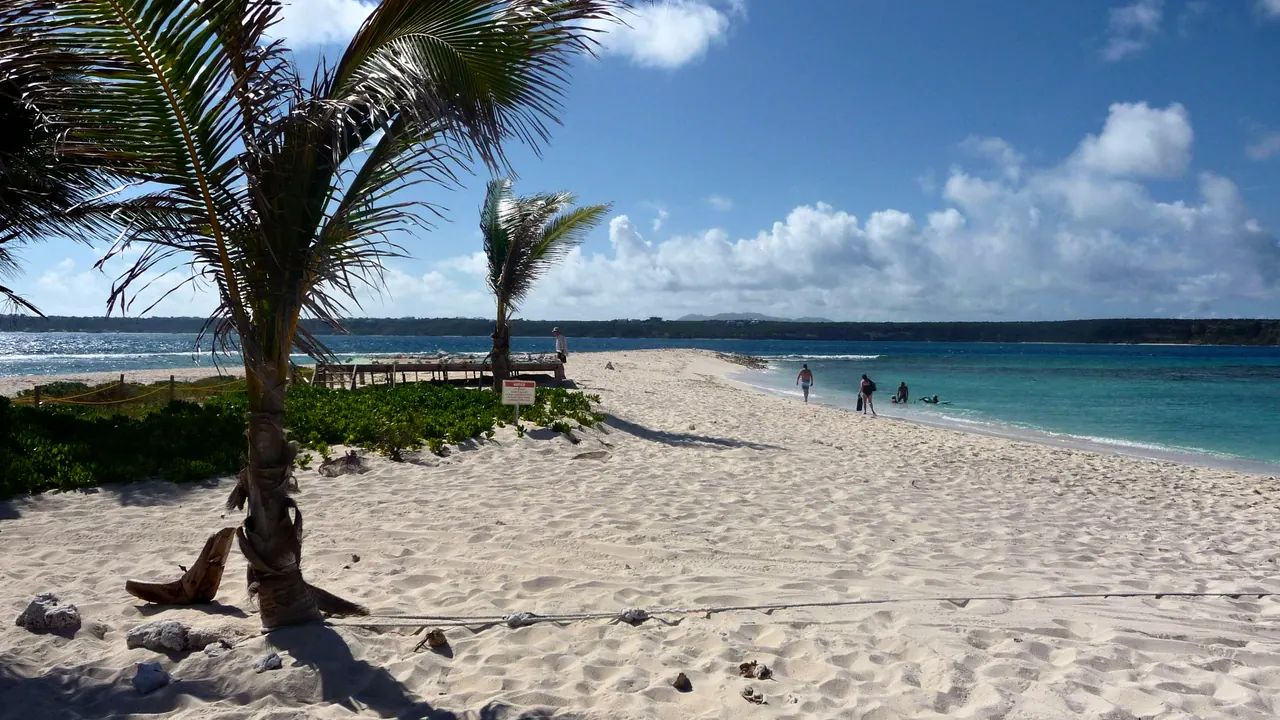
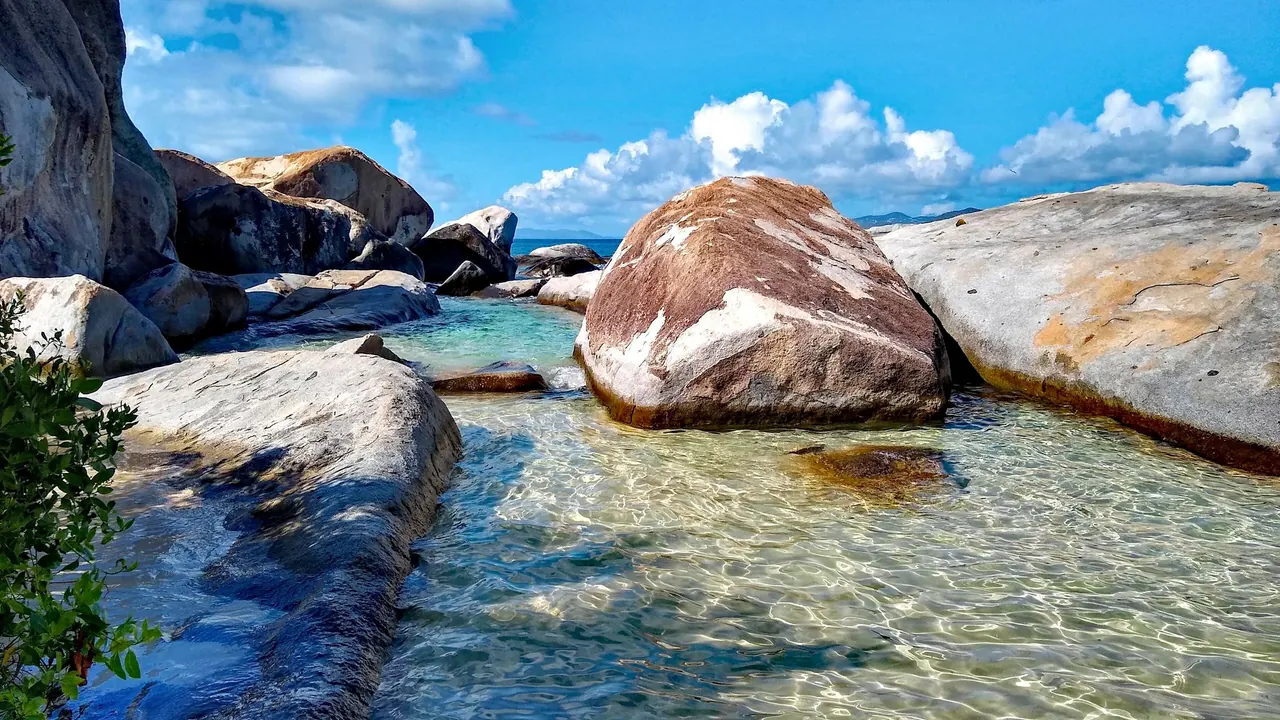
Photos: Anguilla by alljengi, CC BY-SA 2.0, cropped; British Virgin Islands by P. Hughes, CC BY-SA 4.0, cropped.
Anguilla or British Virgin Islands?
Our verdict in twelve categories, each scored against the same fixed benchmark cities, and the climate month by month, so you can choose for your trip.
Choose Anguilla for
- food and drink
- getting around
- day trips
Anguilla suits travellers who want one island, a hire car and a different stretch of white sand every day, with dinner as the evening's main event. Its beaches are long, quiet and all a short drive apart, and its beachfront restaurants at the west end and Sandy Ground give it a clear edge at the table. Expect little else: no hills, few sights and not much to do after dark.
Choose British Virgin Islands for
- nature and the outdoors
- nightlife
- wellness
The British Virgin Islands reward people who want the sea to be the way of travelling as well as the place to swim. A chain of islands around a sheltered channel makes for sailing, wreck dives and snorkelling off empty cays, with evenings spent hopping between anchorage bars. The trade-off is logistics, as steep roads and ferries make moving around harder, and the food is simpler.
Scoreboard
Twelve categories on one fixed scale from 0 to 100. The shaded stretch is the gap between the two.
Your match
Pick a travel style or drag the sliders, and both match scores follow your weighting.
Too close to call, level with your weighting
Wins on food and drink and getting around with your weighting.
Wins on nature and the outdoors and nightlife with your weighting.
What matters to you?
Category by category
What the scores mean for a trip.
Beaches & swimming
Both destinations have superb, warm and clear water, and the difference is in how you reach the sand. Anguilla's beaches are long, powdery strands on a single island, from Shoal Bay East to the resort-lined crescents of the west end, and you drive to them.
In the British Virgin Islands many of the best beaches are reached by boat, from White Bay on Jost Van Dyke to the reef-fringed sands of Anegada. They also have The Baths on Virgin Gorda, where granite boulders form pools and grottoes, a sort of beach Anguilla's flat coral shore cannot offer.
Food & drink
Anguilla takes eating out more seriously. Its west end beaches and Sandy Ground have a run of polished seaside restaurants, and the roadside lolos add smoky weekend barbecue, so a week of dinners has some range.
The British Virgin Islands eat more simply: rotis and conch fritters in Road Town, and a casual routine at beach bars. The standout is spiny lobster grilled on the beaches of Anegada, worth the trip out for a lobster lover, but outside Road Town and the resort dining rooms the choice thins quickly.
Culture & sights
Neither is a place for sightseeing, and each has an afternoon or two of history at most. Anguilla's is about earlier people and the salt trade, with Amerindian carvings in Fountain Cavern, Wallblake House and the old salt ponds. The British Virgin Islands lean on sugar and industry instead, with a working rum distillery at Cane Garden Bay and the Copper Mine engine house standing over the sea on Virgin Gorda.
Nightlife
The British Virgin Islands have more going on after dark, though neither has clubs. Their nights follow the sailing crowd from boat to bar at Great Harbour, White Bay and Norman Island's Bight, with full-moon parties at Trellis Bay.
Anguilla's evenings are mostly long dinners, with Sandy Ground's few late beach bars and Sunday afternoon sessions as the exceptions. Most of the island is asleep by midnight.
Nature & outdoors
For the outdoors, the British Virgin Islands win easily. Dozens of islands close together around a sheltered channel make sailing straightforward, and the wreck of the Rhone, the Caves at Norman Island and the reef around Anegada give divers and snorkellers plenty to explore. On land there are forest trails on Sage Mountain and Gorda Peak, and flamingos on Anegada's salt ponds.
Anguilla is low, dry scrub, so nearly everything happens on the water: reefs and wrecks around Prickly Pear Cays and Dog Island, kitesurfing in the trade winds and the island's own sloop racing. Cliff walks along the north and east are the only real hiking.
Day trips
Anguilla has the easier day out. Saint Martin is a short ferry ride from Blowing Point, with Marigot and Grand Case on the French side and duty-free Philipsburg on the Dutch side, and St Barths makes an occasional chartered treat.
From the British Virgin Islands the most substantial trip crosses into the US Virgin Islands for Charlotte Amalie's Danish warehouses and Cruz Bay on St John, so a passport is needed. Closer to home, Spanish Town and Great Harbour are small settlements rather than places to explore.
Good for families
Families will find the two much alike: calm, shallow water, a safe, slow pace and nothing built for children. Anguilla's flat island and quiet roads make life with toddlers simpler, as Rendezvous Bay and Meads Bay shelve gently and nothing is far. The British Virgin Islands give older children more, with reef snorkelling straight from the shore and the adventure of a charter yacht, but steep roads and boat transfers are harder with small ones.
Getting around
Anguilla is the simpler island to get around. It is about 26km long and flat, with light traffic, so a hire car puts any beach within a short drive, although arriving means flying into Sint Maarten and taking the ferry.
The British Virgin Islands ask for more planning. Tortola's roads are steep and winding, and the other islands depend on ferries, with Anegada further out and less often served. Many visitors get round this by chartering a yacht or simply staying put at one resort.
Shopping & style
There is very little shopping in either, and each sends serious shoppers to a duty-free neighbour: Saint Martin from Anguilla, Charlotte Amalie from the British Virgin Islands. At home, Anguilla's galleries of local painters and its sea salt and hot sauces are matched by Road Town's small shops and the marina stores selling sailing gear and woven baskets.
Affordability
Both are expensive, and neither has a budget way to do it. Anguilla's stays are mostly high-end resorts and villas, and on a flat island with few buses the hire car is another cost. In the British Virgin Islands the yacht charter is the big outlay, but a group sharing a boat spreads the cost of beds and transport, and Tortola's guesthouses and Road Town food stands help a little more.
Live music & performing arts
Neither has a theatre or concert scene, so music means beach bars and festivals. Anguilla's main draws are its reggae festival in March and the August Summer Festival of calypso, soca and boat racing. The British Virgin Islands have their own folk sound, fungi, played by scratch bands on washboards and gourds, which is worth hearing alongside the Emancipation Festival parades in Road Town.
Wellness & relaxation
The British Virgin Islands are a little better for a restful stay. The secluded resorts of Virgin Gorda's North Sound and the private islands add yoga decks and real isolation to their spas, though Road Town is busier.
Anguilla's calm comes from the whole island being quiet, with no high-rises or cruise ships, and from the open-air spas of its luxury resorts. Neither has any bathing tradition of its own.
When should you go?
Pick your month. The climate figures are measured averages, not a forecast.
Anguilla in July
British Virgin Islands in July
Daytime high, °C
Rainfall in the month, mm
Where the figures come from
British Virgin Islands's temperatures are measured 40 km from the centre, at C. Amalie / St. Thomas Airport.
British Virgin Islands has no rain gauge within 25 km of the centre, so its rainfall comes from a gridded climate dataset read at the destination rather than from a gauge further away.
Temperature and rainfall are climate normals, averaged over the years shown. Anguilla: 1991-2020 normals, Juliana Airport, Saint Maarten (14.5 km from centre). British Virgin Islands: 1991-2020 normals, C. Amalie / St. Thomas Airport (39.7 km from centre).
Measured around the main resort areas, Anguilla and the British Virgin Islands share almost the same climate. Days run from about 29°C in winter to 32°C in late summer, and the sea never drops much below 26°C, so either works for the beach in any month. The driest stretch on both is January to April, with February and March the best of it. Anguilla gets roughly 50mm of rain a month then, with long sunny days, and the British Virgin Islands are much the same. June brings a short drier spell to both.
From late summer the rain builds, and it lasts through December, which is still a wet month on both. Anguilla gets its heaviest rain in October and November, at around 160mm. The British Virgin Islands turn wet earlier, with August and September noticeably damper than on Anguilla. Late summer is also the hottest time and feels sticky for walking about, so January to April is the most comfortable stretch for days out of the water as well as on it.
Which traveller are you?
On a beach and sun trip, Anguilla is the easier pick. More than thirty beaches lie within a short drive on a flat island, so you can try Shoal Bay East one day and Meads Bay the next without needing a boat or a ferry timetable.
For an outdoors trip, the British Virgin Islands are far ahead. Sailing the Sir Francis Drake Channel, diving the wreck of the Rhone, scrambling through The Baths and walking Sage Mountain give far more variety than flat, scrubby Anguilla.
On a food and nightlife trip, choose Anguilla if dinner matters most, with polished beachfront restaurants and weekend lolos. The British Virgin Islands only edge ahead for evenings out, when anchorage bars on Jost Van Dyke and full-moon parties at Trellis Bay are the point.
Before you go
| Measure | Anguilla | British Virgin Islands |
|---|---|---|
| Official language | English | English |
| Currency | East Caribbean Dollar (XCD) | US Dollar (USD) |
| Sockets | A110 V, 60 Hz | AB110 V, 60 Hz |
| Driving side | Left | Left |
| Time zone | UTC-4 | UTC-4 |
| Emergency number | 911 | 999 |
| Main airport | Clayton J. Lloyd International Airport (AXA)15 non-stop destinations | Terrance B. Lettsome International Airport (EIS)8 non-stop destinations |
| Public holidays this year | 14 days | 14 days |
By the numbers
| Measure | Anguilla | British Virgin Islands |
|---|---|---|
| Population | 16,293 | 39,369 |
| People per km² | 167 | 257 |
| Swim season, months above 21 °C | 12 months | 12 months |
Where else could you go?
Every comparison below shares a destination with this one, so you can follow Anguilla or British Virgin Islands somewhere new.
- Saint-Martinvs Anguilla
- Sint Maartenvs Anguilla
- St Johnvs British Virgin Islands
- St Thomasvs British Virgin Islands
- US Virgin Islandsvs British Virgin Islands
- St Bartsvs Anguilla