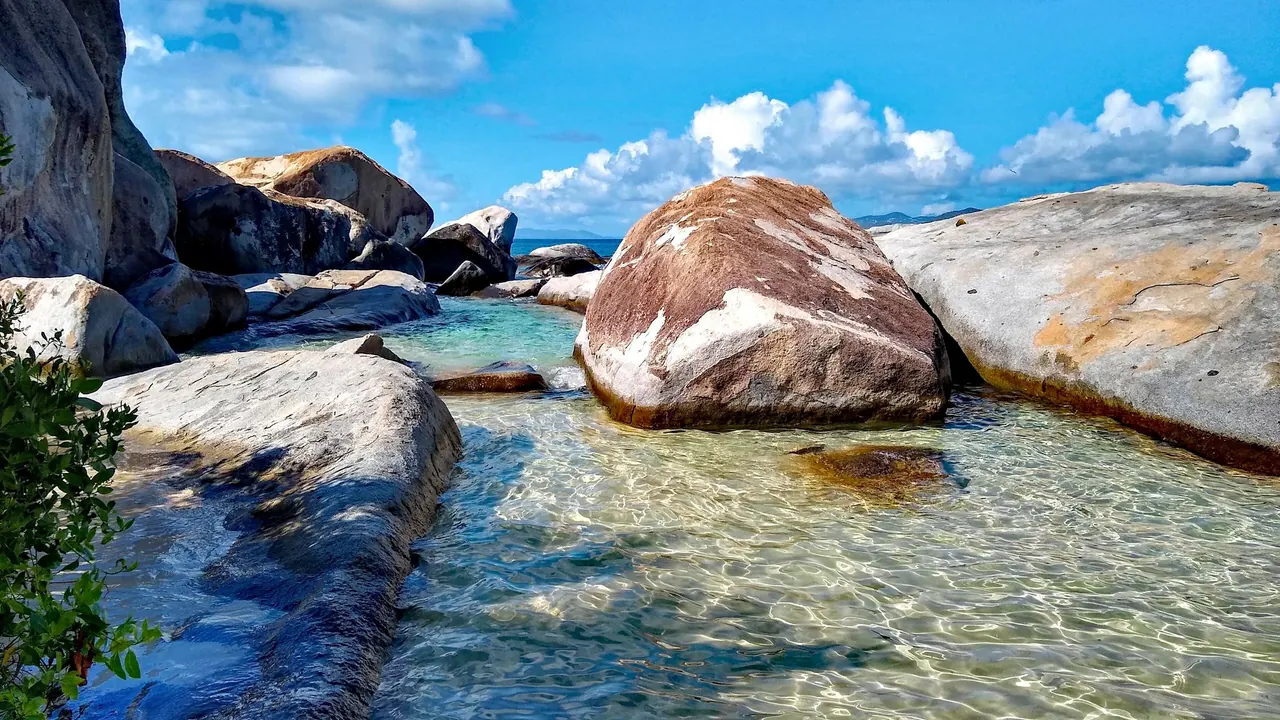
Photos: British Virgin Islands by P. Hughes, CC BY-SA 4.0, cropped.
British Virgin Islands or St John?
Our verdict in twelve categories, each scored against the same fixed benchmark cities, and the climate month by month, so you can choose for your trip.
Choose British Virgin Islands for
- nightlife
- wellness
- families
The British Virgin Islands suit travellers who want to move between islands, ideally on a charter yacht across the sheltered Sir Francis Drake Channel. That brings a wider spread of beaches, from the boulder pools of The Baths to the empty shores of Anegada. Evenings are livelier at the anchorages of Jost Van Dyke, and the most secluded resort stays are on Virgin Gorda's North Sound.
Choose St John for
- nature and the outdoors
- day trips
- culture and sights
Pick St John for a single, easy base where the national park does the work. It pairs north shore bays you can drive to with proper hiking trails and the plantation ruins at Annaberg, and St Thomas is a short ferry ride away for a day in town. It suits walkers, people who like to snorkel straight from the beach and anyone happy with quiet evenings.
Scoreboard
Twelve categories on one fixed scale from 0 to 100. The shaded stretch is the gap between the two.
Your match
Pick a travel style or drag the sliders, and both match scores follow your weighting.
Too close to call, level with your weighting
Wins on nightlife and wellness with your weighting.
Wins on nature and the outdoors and day trips with your weighting.
What matters to you?
Category by category
What the scores mean for a trip.
Beaches & swimming
Both have warm, clear, sheltered water and excellent sand, so the difference is in how you reach it. In the British Virgin Islands the beaches are spread across several islands: Cane Garden Bay on Tortola, the granite pools of The Baths on Virgin Gorda, White Bay on Jost Van Dyke and the empty, reef-fringed shores of Anegada. Many are best reached by boat.
St John lines its bays up along one north shore road, most of them inside the national park and undeveloped, from Trunk Bay's snorkel trail to the turtle grass at Maho. You can see several in a day by jeep or safari taxi, but the best-known bays fill by late morning in winter and have few facilities.
Food & drink
Neither is a place to travel for food, and the routine is much the same on both: grilled fish, johnnycakes, rum and the painkiller. In the British Virgin Islands the memorable meals belong to the places you sail to, such as lobster grilled on the beach at Anegada and drinks at the bars of Jost Van Dyke. Virgin Gorda's resorts add more polished dining.
On St John almost everything is in Cruz Bay, which has a decent range for an island this size, from open-air restaurants to food trucks and West Indian kitchens. Many villa guests stock up and cook for themselves.
Culture & sights
St John has the clearer story to show, though neither is a sightseeing trip. Its Danish plantation past survives in the forest: the windmill and boiling house at Annaberg, the Taíno petroglyphs at the end of the Reef Bay Trail, and the fort above Coral Bay where the 1733 slave revolt began. That is a morning or two of sights worth walking to.
The British Virgin Islands offer less. There is the Old Government House Museum and a few wooden buildings in Road Town, the working rum distillery at Cane Garden Bay and the Copper Mine's engine house on Virgin Gorda, which together fill an afternoon at most.
Nightlife
The British Virgin Islands have the better evenings because the night moves with the boats. Yachts anchor off Jost Van Dyke and Norman Island, and going out means taking the dinghy from one beach bar to the next. Each bay has a different crowd, so a week of sailing gives you a string of different nights. A few big occasions on Tortola and Jost Van Dyke are worth planning a trip around. Otherwise sailors go to bed early, and there are no clubs.
St John has one small waterfront rather than a chain of anchorages. Visitors, boat crews and residents mix at the few open-air bars in Cruz Bay and a couple in Coral Bay. That makes for an easy evening but not much variety, and most nights end soon after dinner. To stay out later, you have to take the ferry to St Thomas.
Nature & outdoors
St John packs more into a small space, on land and at sea. Most of the island is national park, with trails down the Reef Bay valley, out to the cliffs of Ram Head and around Lameshur. At Waterlemon Cay and Maho you can swim out from the beach and find turtles and rays.
The British Virgin Islands are about the water on a wider scale. You can sail the Sir Francis Drake Channel, dive the wreck of the RMS Rhone, snorkel the Caves at Norman Island and kitesurf at Trellis Bay. On land, Sage Mountain and Gorda Peak have short trails, and walkers will run out of routes sooner than on St John.
Day trips
St John is better placed for days out, mainly because St Thomas is a short ferry ride away, with the Danish streets, fort and harbour of Charlotte Amalie. Day charter boats also cross to Jost Van Dyke and The Baths on Virgin Gorda, stopping at empty cays to snorkel, though that means passports and customs.
Within the British Virgin Islands, the places to visit are small: Spanish Town, Great Harbour and Anegada's Settlement. The best day out means crossing the border to Charlotte Amalie, or to Cruz Bay and the Annaberg ruins on St John itself.
Good for families
Both suit families whose children love the water, with calm, shallow bays and reefs close to shore, and neither has a zoo, aquarium or anything else built for children. The British Virgin Islands have a slight edge. The resort beaches of Virgin Gorda and Cane Garden Bay are easy bases, and a charter yacht is a real adventure for older children.
On St John, the turtles at Maho Bay, in water where a child can stand, and Trunk Bay's marked snorkel trail make good first tries. But the journey in by plane, taxi and ferry, villas at the top of steep hills and few lifeguards are harder going for parents of small children.
Getting around
Both take some planning, with steep, winding roads and driving on the left, but the work is of a different kind. In the British Virgin Islands the task is getting between islands: ferries to Virgin Gorda and Jost Van Dyke, and fewer sailings or a short flight to Anegada. Many visitors avoid this by taking a charter yacht or staying at one resort.
St John is one small island once you are there, but getting there means flying into St Thomas, taking a taxi to Red Hook and then a ferry. After that, a hired jeep reaches the trails and the south shore, safari taxis run to the north shore beaches, and you can walk around Cruz Bay.
Shopping & style
Neither is a shopping destination, and both send keen shoppers to the duty-free streets of Charlotte Amalie, a short ferry ride from St John but a border crossing from the British Virgin Islands. Road Town's Main Street and the marinas sell rum, spices, sailing gear and woven baskets. St John's courtyards by the Cruz Bay ferry dock lean more towards galleries, jewellers and hand-painted pottery.
Affordability
Both are expensive because nearly everything is shipped in, but the ways to save differ. In the British Virgin Islands the main one is sharing a charter boat among a group, which spreads the cost of beds and transport. Small guesthouses on Tortola and food stands in Road Town are the cheaper fallback.
On St John the national park beaches and trails are mostly free, and the Cinnamon Bay campground is a simpler way to stay. Rates also drop in summer and autumn, the hurricane months.
Live music & performing arts
Neither has a theatre or concert scene, so music comes from bars and festivals, and their festivals fall at different times of year. The British Virgin Islands have fungi, played by scratch bands on washboards and gourds, as well as the Emancipation Festival in late summer and a beach music festival at Cane Garden Bay. St John's big occasion is its carnival in early summer, with calypso and quelbe. The rest of the year brings singer-guitarists and steel pan to the bars of Cruz Bay.
Wellness & relaxation
For a restful stay the British Virgin Islands offer more, mainly through the secluded resorts on Virgin Gorda's North Sound and the private islands, with open-air treatment rooms and yoga decks above the sea. Neither has a bathing tradition or thermal springs.
St John's calm comes from the national park: little traffic, no high-rise building and quiet nights in a hillside villa. Massage therapists who visit villas and a few small yoga studios make up the rest. That suits switching off rather than a spa programme.
When should you go?
Pick your month. The climate figures are measured averages, not a forecast.
British Virgin Islands in July
St John in July
Daytime high, °C
Rainfall in the month, mm
Where the figures come from
British Virgin Islands's temperatures are measured 40 km from the centre, at C. Amalie / St. Thomas Airport.
British Virgin Islands has no rain gauge within 25 km of the centre, so its rainfall comes from a gridded climate dataset read at the destination rather than from a gauge further away.
Temperature and rainfall are climate normals, averaged over the years shown. British Virgin Islands: 1991-2020 normals, C. Amalie / St. Thomas Airport (39.7 km from centre). St John: 1991-2020 normals, C. Amalie / St. Thomas Airport (20 km from centre).
The two are only a few kilometres apart, and daytime warmth is the same on both: about 29°C from December to March, rising to 32°C from June to September. The sea is warm enough to swim all year, from about 26°C in winter to 29°C in late summer. Late winter and spring are the best time on either, when rain is lightest and walking is comfortable. From June the heat makes trails hard work, and late summer and autumn, the hurricane season, bring the wettest weather.
The difference comes at the end of the rainy season. St John dries out sooner, with December already much drier. The British Virgin Islands stay wet through December, and November is their wettest month at around 154mm.
Which traveller are you?
On an outdoors trip, St John is the better pick. Its national park trails lead down the Reef Bay valley and out to the cliffs of Ram Head, and turtles and rays are a swim from shore. In the British Virgin Islands the outdoors happens mostly from a boat, with only short hill walks.
For a relaxing and wellness trip, choose the British Virgin Islands. The secluded resorts on Virgin Gorda's North Sound and the private islands have spas with open-air treatment rooms and yoga decks above the sea. On St John, rest comes from a quiet villa and therapists who visit.
On a food and nightlife trip, lean towards the British Virgin Islands. The cooking is equally simple on both. But sailing between Jost Van Dyke's beach bars, lobster grilled on the beach at Anegada and the full-moon parties at Trellis Bay beat St John's early evenings in Cruz Bay.
Before you go
| Measure | British Virgin Islands | St John |
|---|---|---|
| Official language | English | English |
| Currency | US Dollar (USD) | US Dollar (USD) |
| Sockets | AB110 V, 60 Hz | - |
| Driving side | Left | Left |
| Time zone | UTC-4 | UTC-4 |
| Emergency number | 999 | 911 |
| Main airport | Terrance B. Lettsome International Airport (EIS)8 non-stop destinations | Cyril E. King Airport (STT)26 non-stop destinations |
| Public holidays this year | 14 days | 18 days |
By the numbers
| Measure | British Virgin Islands | St John |
|---|---|---|
| Population | 39,369 | 3,881 |
| People per km² | 257 | 76 |
| Swim season, months above 21 °C | 12 months | 12 months |
Where else could you go?
Every comparison below shares a destination with this one, so you can follow British Virgin Islands or St John somewhere new.
- St Thomasvs St John
- St Thomasvs British Virgin Islands
- US Virgin Islandsvs British Virgin Islands
- Culebravs St John
- St Croixvs St John
- Viequesvs St John