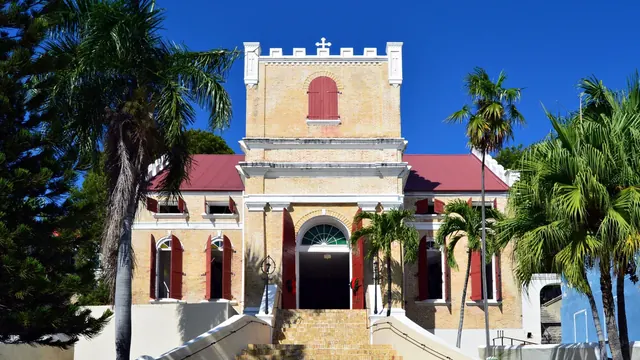
Photos: US Virgin Islands by Navin75, CC BY-SA 2.0, cropped; British Virgin Islands by P. Hughes, CC BY-SA 4.0, cropped.
US Virgin Islands or British Virgin Islands?
Our verdict in twelve categories, each scored against the same fixed benchmark cities, and the climate month by month, so you can choose for your trip.
Choose US Virgin Islands for
- shopping
- culture and sights
- day trips
For a trip with more to do between beaches, pick the US Virgin Islands. St John's national park has the best walking, Christiansted and Charlotte Amalie add Danish colonial history and duty-free shopping, and families find more for children to do. The British islands are also an easy ferry ride away, so one base lets you see something of both chains.
Choose British Virgin Islands for
- wellness
The British Virgin Islands suit travellers who want the sea to be the whole trip. Sailing between close-set anchorages, diving the wreck of the Rhone, wading ashore at White Bay and doing very little at a secluded Virgin Gorda resort are what they do best, and they are the quieter, more restful choice. In return you get almost nothing to see on land, very little shopping and an even higher bill.
Scoreboard
Twelve categories on one fixed scale from 0 to 100. The shaded stretch is the gap between the two.
Your match
Pick a travel style or drag the sliders, and both match scores follow your weighting.
Wins on shopping and culture and sights with your weighting.
Wins on wellness with your weighting.
What matters to you?
Category by category
What the scores mean for a trip.
Beaches & swimming
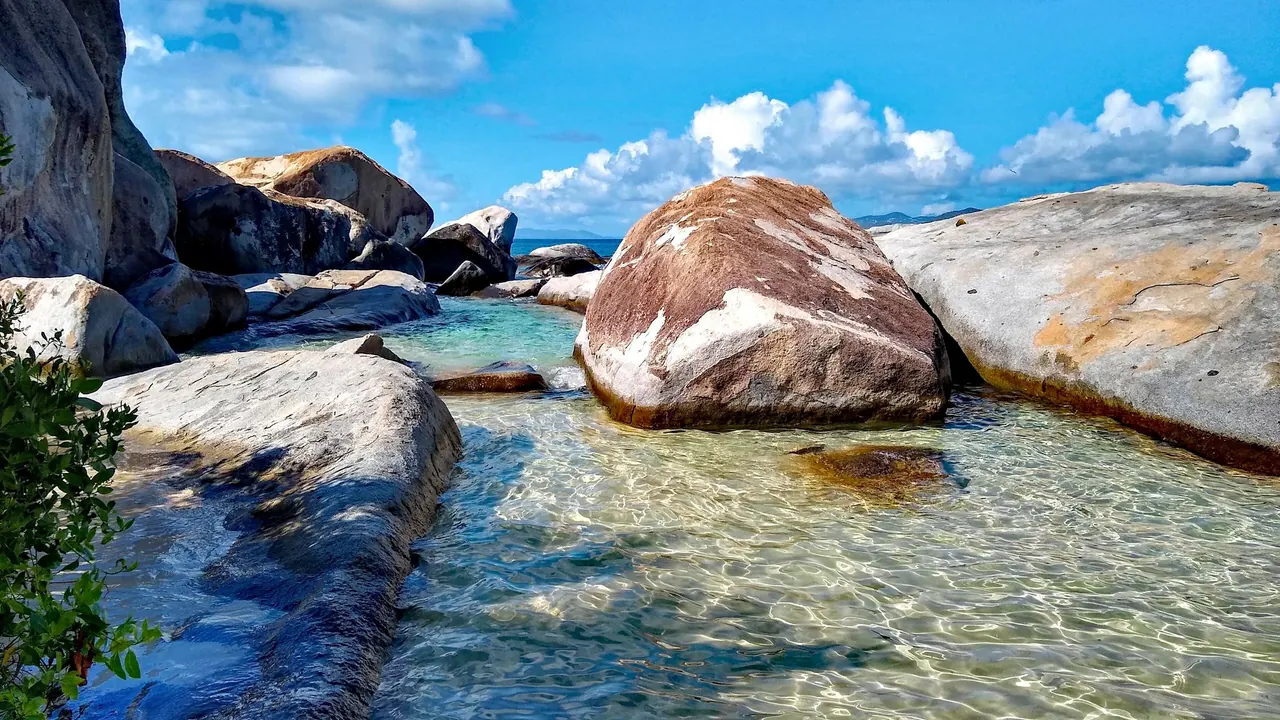
Both chains have superb, equally warm water, so the choice comes down to how you get to the sand. In the British islands many of the finest beaches, White Bay on Jost Van Dyke and the empty, reef-fringed shores of Anegada, are reached by boat, and The Baths on Virgin Gorda adds granite pools and grottoes found nowhere else.
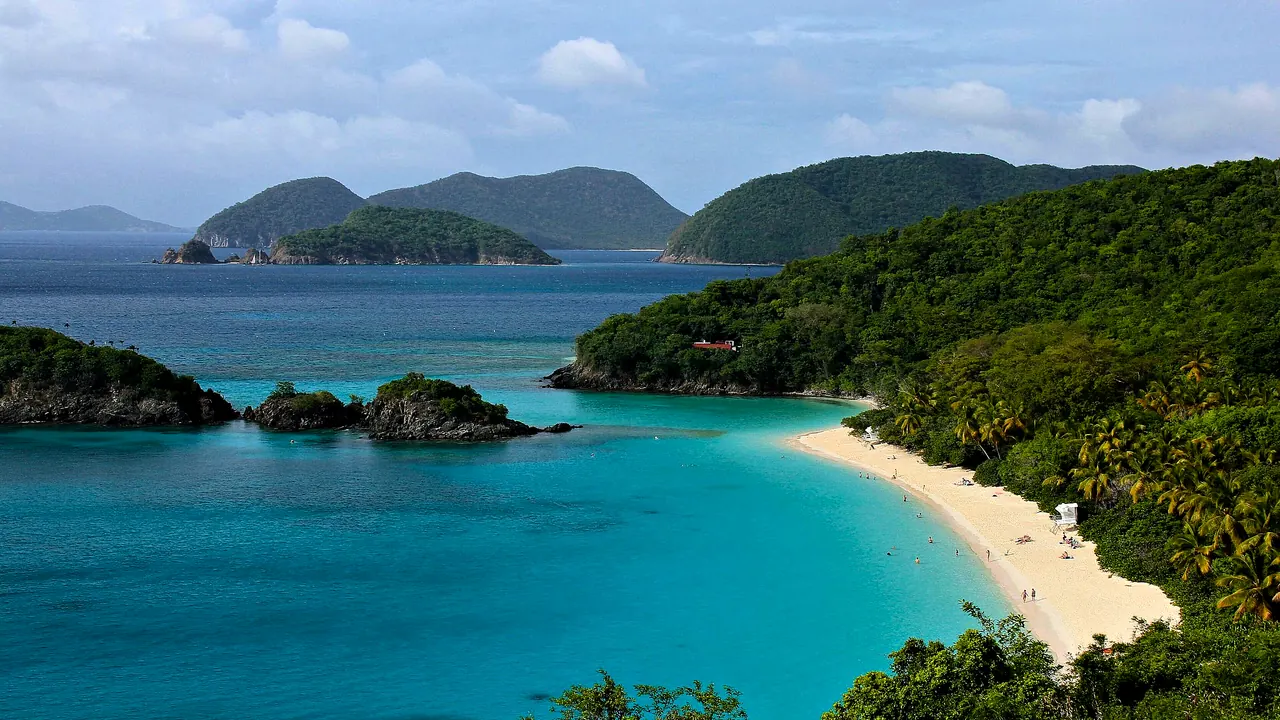
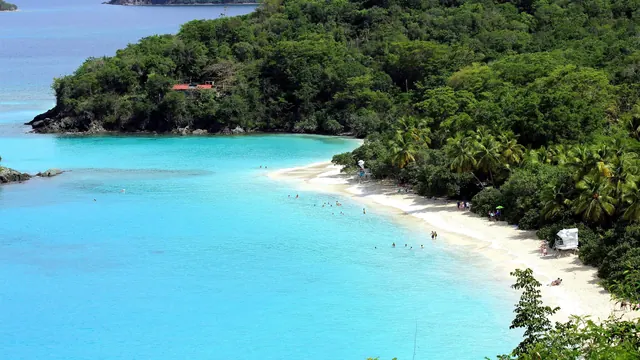
On the US side the best beaches are easier to reach by road. St John's north shore, from Trunk Bay to Maho Bay, lies inside the national park, and Magens Bay and Coki Point on St Thomas are a taxi ride from town. St Croix has Sandy Point and the Buck Island reef for quieter days.
Food & drink
Neither is a food destination, but a curious eater will find more on the US islands. St Croix has a real local kitchen of kallaloo, pates and goat stew, with rum distilleries and the best cooking in Frederiksted and Christiansted, and church and festival food fairs bring it out on every island.
The British side is narrower. Rotis and conch fritters in Road Town, lobster grilled on Anegada's beaches and a painkiller at a Jost Van Dyke bar make for pleasant meals, but the choice soon runs out away from Tortola.
Culture & sights
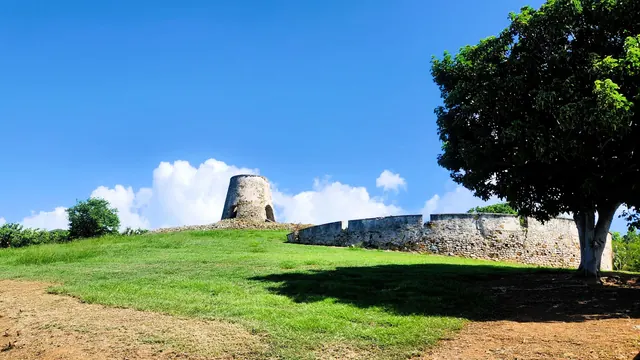
The US islands have a real historic side that the British ones lack. Christiansted's arcaded streets and yellow fort, the stepped lanes and sand-floored synagogue of Charlotte Amalie, and the plantation ruins at Annaberg and Whim make several worthwhile half-days of Danish colonial and sugar history.
In the British islands the sights barely register. The Old Government House Museum in Road Town, the working rum distillery at Cane Garden Bay and the Copper Mine ruin on Virgin Gorda fill an afternoon at most.
Nightlife
Evenings are just as easygoing in both, with rum, music and early nights rather than clubs, but the setting differs. In the British islands the night moves by dinghy between boats anchored at Great Harbour, White Bay and the Bight at Norman Island, and the full-moon fire parties at Trellis Bay are the big set piece.
The US islands keep their bars on land, in the crowded strips of Red Hook and Cruz Bay and along Christiansted's boardwalk. Carnival on St Thomas and the Crucian Christmas festival bring weeks of street parties that run late.
Nature & outdoors
Both have the same sheltered sailing water and reefs, but the strengths lie in different places. The British islands are the place for life on a boat: short passages around the Sir Francis Drake Channel, the wreck of the RMS Rhone for divers, and Anegada's long reef and its salt ponds with flamingos.
The US islands are better on land, mainly because most of St John is national park, with trails such as Reef Bay running past petroglyphs down to the sea. St Croix adds the underwater trail at Buck Island and the glowing water of Salt River Bay. On both, keen hikers will have walked every trail within a few days.
Day trips
You get more varied day trips from the US side. From St Thomas, St John's park and Cruz Bay are a short ferry away, Water Island is minutes from Charlotte Amalie, and the British islands are within about an hour if you carry a passport.
From Tortola, outings mostly lead to small settlements such as Spanish Town or Great Harbour. The best day out with real streets and history to explore means crossing the border to Charlotte Amalie or the Annaberg ruins on St John.
Good for families
A family trip is easier on the US islands. Turtles feed in shallow water at Maho Bay, Coki Point has touch pools and an underwater observatory, and glass-bottom boat tours keep children busy. American families also need no passport and no change of currency.
The British islands suit families who are happy to spend the whole day in the water, with calm, shallow bays at Cane Garden Bay and the Virgin Gorda resorts, and a charter that older children will remember. There are no attractions made for children and more boat transfers, so small ones need more managing.
Getting around
Neither is easy, as both have steep, narrow roads where traffic keeps left, so the difference lies in how the islands are laid out. The British chain is best seen from a charter yacht or from a single resort. Ferries serve Virgin Gorda and Jost Van Dyke, but Anegada means a longer crossing or a short flight.
On the US side, shared safari taxis on St Thomas and St John and the frequent ferries between Red Hook and Cruz Bay let you combine two islands without a car. St Croix needs a flight or a long ferry and works best as a separate stay with a hire car.
Shopping & style
This is one of the clearest gaps between the two. The old warehouses of Charlotte Amalie are full of duty-free jewellers, watch dealers and liquor shops, and Mongoose Junction on St John and the studios of Christiansted add island-made jewellery and the St Croix hook bracelet.
In the British islands there are a few small shops on Road Town's Main Street and marina stores selling swimwear and sailing gear. Anyone serious about shopping takes the ferry to St Thomas.
Affordability
Both are expensive, especially in the winter peak, but the US islands give you more ways to save. Campgrounds and guesthouses on St John, cheaper stays on St Croix, and beaches and park trails that cost little or nothing let a careful traveller cut the bill.
The British islands cost even more, with resorts and villas priced for a well-off market and a yacht charter as the classic trip. Sharing a boat or staying in a small Tortola guesthouse helps a little, but there is no cheap way to do them.
Live music & performing arts
Neither has a concert or theatre life to plan around, though the US islands have a little more. Quelbe, steel pan and the mocko jumbie stilt dancers of carnival give their festivals a strong character, and the open-air amphitheatre at the university on St Thomas hosts touring concerts and dance.
In the British islands, live music means fungi scratch bands at beach bars, plus the Emancipation Festival in Road Town and the beach music festival at Cane Garden Bay.
Wellness & relaxation
The British islands are the better place to do nothing at all. The secluded resorts of Virgin Gorda's North Sound and the private islands, with open-air treatment rooms and yoga decks over the water, offer a quiet that is hard to match.
The US islands have resort spas on St Thomas and St John and a slow pace on St John and St Croix's east end. The cruise traffic around Charlotte Amalie makes them less restful overall. Neither has a tradition of spas or bathing.
When should you go?
Pick your month. The climate figures are measured averages, not a forecast.
US Virgin Islands in July
British Virgin Islands in July
Daytime high, °C
Rainfall in the month, mm
Where the figures come from
British Virgin Islands's temperatures are measured 40 km from the centre, at C. Amalie / St. Thomas Airport.
British Virgin Islands has no rain gauge within 25 km of the centre, so its rainfall comes from a gridded climate dataset read at the destination rather than from a gauge further away.
Temperature and rainfall are climate normals, averaged over the years shown. US Virgin Islands: 1991-2020 normals, C. Amalie / St. Thomas Airport (5.6 km from centre). British Virgin Islands: 1991-2020 normals, C. Amalie / St. Thomas Airport (39.7 km from centre).
Around the main resort areas the two have almost the same climate. Daytime highs run from 29°C in winter to 32°C in summer, and the sea never drops below 26°C, so you can go to the beach in any month. February and March are the driest months on both, and the wettest stretch runs from late summer into November. At the peak of summer the heat is better met with an early start and a long swim than with an afternoon walking round town.
The difference shows at either end of the dry season. The British islands are wetter for longer, with clearly more rain in May, August and December. December brings about 120mm there against under 80mm on the US side, so for an early-winter trip the US islands are the safer bet for dry days.
Which traveller are you?
On a relaxing and wellness trip, the British Virgin Islands are the better choice. There is little traffic, few sights pull you away from the water, and resorts are built around seclusion, so days fall easily into swimming, reading and an unhurried treatment.
On a family trip with children, the US Virgin Islands make the days easier to fill. They have more for children to do between swims, more resorts with a beach of their own, and enough wildlife and boat outings to keep young ones curious all week.
For a culture and arts trip, the US Virgin Islands are clearly the better of the two. Their Danish colonial towns and sugar history fill several half-days, and their festivals keep a living music tradition. The British islands offer an afternoon's sightseeing at most.
Before you go
| Measure | US Virgin Islands | British Virgin Islands |
|---|---|---|
| Official language | English | English |
| Currency | US Dollar (USD) | US Dollar (USD) |
| Sockets | - | AB110 V, 60 Hz |
| Driving side | Left | Left |
| Time zone | UTC-4 | UTC-4 |
| Emergency number | 911 | 999 |
| Main airport | Cyril E. King Airport (STT)26 non-stop destinations | Terrance B. Lettsome International Airport (EIS)8 non-stop destinations |
| Public holidays this year | 18 days | 14 days |
By the numbers
| Measure | US Virgin Islands | British Virgin Islands |
|---|---|---|
| Population | 87,146 | 39,369 |
| People per km² | 252 | 257 |
| Swim season, months above 21 °C | 12 months | 12 months |
Where else could you go?
Every comparison below shares a destination with this one, so you can follow US Virgin Islands or British Virgin Islands somewhere new.
- St Johnvs British Virgin Islands
- St Thomasvs British Virgin Islands
- Culebravs US Virgin Islands
- Viequesvs US Virgin Islands
- Culebravs British Virgin Islands
- St Croixvs British Virgin Islands