US Virgin Islands
US Virgin Islands
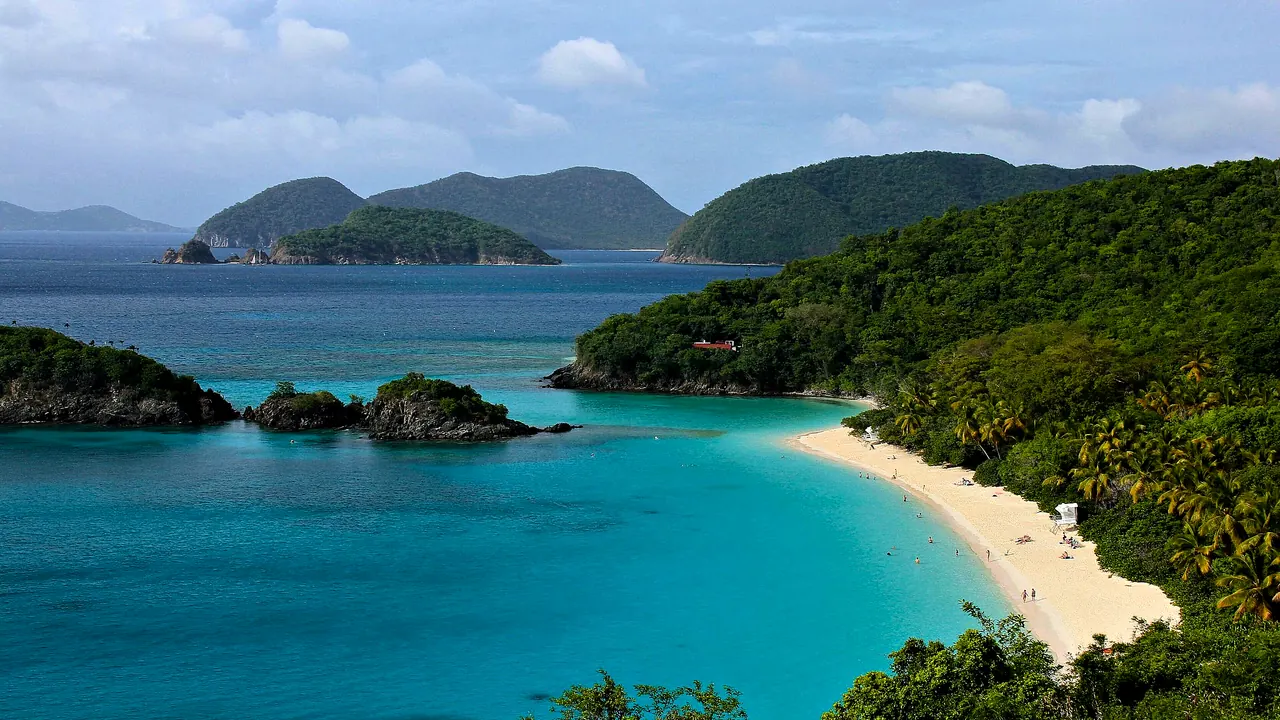
Trunk Bay on St John from the overlook
- Beaches93
- Nature & outdoors62
- Families60
Photo: Navin75, CC BY-SA 2.0, cropped
Match
46
Every category weighted equally
- Beach & sun52
- Culture & arts40
- Food & nightlife41
- Family trip50
- Outdoors50
- Relax & unwind50
- Shopping & style43
- On a budget43
US Virgin Islands in twelve categories
Our verdict on each, scored 0 to 100 against the same fixed benchmark cities, so a score means the same thing on every page.
Beaches & swimming. Scores 93 out of 100.
Food & drink. Scores 45 out of 100.
Culture & sights. Scores 40 out of 100.
Nightlife. Scores 35 out of 100.
Nature & outdoors. Scores 62 out of 100.
Day trips. Scores 45 out of 100.
Good for families. Scores 60 out of 100.
Getting around. Scores 35 out of 100.
Shopping & style. Scores 45 out of 100.
Affordability. Scores 22 out of 100.
Live music & performing arts. Scores 25 out of 100.
Wellness & relaxation. Scores 45 out of 100.
US Virgin Islands category by category
Beaches & swimming
93Beaches are the reason most people come, and the three islands have many good ones. St John is the strongest base: Trunk Bay, Cinnamon Bay, Maho Bay and Hawksnest line its north shore inside the national park, with white sand, calm turquoise water and reef just offshore. On St Thomas, Magens Bay is a long, sheltered curve on the north coast, and Coki Point and Sapphire Beach in the east are good for snorkelling straight from the sand.
St Croix is quieter, with Sandy Point's long beach in the west and Buck Island's reef a short boat ride off the north coast. The sea stays at about 26°C to 29°C all year, so swimming is never seasonal. The north shores can get swell in winter, when the south-facing coves are calmer.
Food & drink
45The local kitchen is West Indian: kallaloo, fungi, saltfish, goat stew, johnnycakes and the pastry turnovers called pates, best found at roadside stands, lunch counters and church and festival food fairs. St Croix has the strongest local food culture and the islands' rum distilleries, and Frederiksted and Christiansted have the best local cooking. Grilled fish and conch turn up wherever there is a beach bar.
Around the resort areas of St Thomas and in Cruz Bay on St John, menus lean towards American dishes and fine dining aimed at visitors. Most ingredients are imported, so produce markets are small and the range is narrow. You eat well here, but you don't come for the food.
Culture & sights
40Nearly two centuries of Danish rule shaped the towns, and that heritage is the main thing worth seeing. Christiansted on St Croix is the most complete: arcaded streets, the yellow Fort Christiansvaern and the old customs and scale houses, protected as a national historic site. In Charlotte Amalie on St Thomas, the red Fort Christian, the stepped lanes such as the 99 Steps, and the sand-floored synagogue built in 1833 sit among old merchant warehouses.
The sugar and slavery history survives in plantation ruins, most memorably Annaberg on St John and the restored estate at Whim on St Croix. Museums are small, and the sights add up to a few good half-days, not a cultural trip.
Nightlife
35Going out means open-air bars rather than clubs. Red Hook on the east end of St Thomas and Cruz Bay on St John have the liveliest strips, with rum drinks, sailors off charter boats and crowds that spill into the street, and Christiansted's waterfront boardwalk is the evening centre on St Croix. Charlotte Amalie empties once the cruise ships leave.
There are a few late dance bars, but most nights wind down well before the small hours. The exceptions are carnival on St Thomas in spring and the Crucian Christmas festival, when street parties and road marches run late for weeks.
Nature & outdoors
62The best of it is on St John, where national park land covers most of the island: steep green hills, dry forest and trails such as Reef Bay down past petroglyphs and plantation ruins to the sea. Under the water there are reefs, sea turtles and rays in the protected bays, and an underwater snorkelling trail at Buck Island off St Croix.
The islands sit in some of the most sheltered sailing water in the Caribbean, so day sails, charter yachts, kayaking and diving are easy to arrange, and Salt River Bay on St Croix glows with bioluminescence on dark nights. The hills are modest and the islands small, so serious hikers run out of trails within a few days.
Day trips
45From St Thomas, the classic day out is the short ferry to St John for Cruz Bay and the national park, and tiny Water Island is a few minutes from Charlotte Amalie. The British Virgin Islands are within an hour or so by ferry from Red Hook or St John: Jost Van Dyke's beach bars, Tortola's Road Town and the boulder-strewn coast of Virgin Gorda, though you need a passport and the crossings depend on schedules.
St Croix sits about 65km to the south, a short flight or a long ferry ride, so it is a separate stay rather than a day out. The outings are almost all small islands and beaches, with few towns or heritage sites to vary them.
Good for families
60Calm, shallow bays are the main draw for families: Magens Bay and Sapphire on St Thomas, and Maho Bay on St John, where turtles feed in water shallow enough for children to snorkel. The marine park at Coki Point has touch pools and an underwater observatory, and short boat trips and glass-bottom tours keep older children busy.
Beyond that, little is made for children, and the hilly roads, steep resort grounds and long drives on narrow lanes can wear small travellers out. A resort with its own beach on the east end of St Thomas or a villa on St John makes it much easier. For American families, the familiar currency and no passport needed take the stress out of travelling.
Getting around
35Each island is small, but they are not easy to get around. Roads are narrow, steep and winding, traffic keeps to the left in American cars, and outside the old town centres there are few pavements. Open-sided shared "safari" taxis run fixed routes on St Thomas and St John and are the usual way between town and beach, while most visitors to St Croix hire a car.
The passenger and car ferries between Red Hook and Cruz Bay make St Thomas and St John easy to combine. St Croix needs a short flight or seaplane, or a long and less frequent ferry. A jeep is the best way to reach St John's quieter north-shore beaches.
Shopping & style
45Shopping centres on Charlotte Amalie, where the old Danish warehouses along Main Street and its alleys hold duty-free jewellers, watch dealers and liquor shops aimed squarely at cruise passengers. It is a real draw for people who want a watch or gemstones, but beyond that the stock repeats itself from shop to shop.
For something more local, Mongoose Junction in Cruz Bay on St John and the small studios in Christiansted sell island-made jewellery, pottery and art, and St Croix is known for its hook bracelets. There is no fashion, design or market scene to speak of.
Affordability
22This is an expensive place to stay, especially in the winter high season from December to April, when most people visit. Beach resorts and villas on St John and the east end of St Thomas cost a lot, groceries and restaurant meals reflect the cost of shipping almost everything in, and shared taxis charge per person, which adds up for a family.
St Croix and the guesthouses and campgrounds on St John are the more modest options, and much of the best of the islands, the beaches and park trails, costs little or nothing. Summer and autumn bring lower rates, though that is also hurricane season.
Live music & performing arts
25The islands have their own music, quelbe, a scratch-band folk tradition with roots in the plantation era, plus steel pan, calypso and soca, and the mocko jumbie stilt dancers who lead the carnival parades. Hearing it mostly means catching a festival, a cultural night or a band at a beach bar.
The open-air amphitheatre at the University of the Virgin Islands on St Thomas hosts touring concerts and dance, and there is small community theatre, but there is no regular programme to plan a trip around.
Wellness & relaxation
45There is no local spa or bathing tradition here. Wellness means the spas at the larger resorts on St Thomas and St John, and the occasional yoga class or massage on the beach. What the islands do offer is pace: on St John and in the quieter parts of St Croix, days follow the sun, there is little traffic noise, and a hammock and a long afternoon in the shade are easy to find.
For real rest, stay on St John or on St Croix's east end, away from the cruise traffic around Charlotte Amalie.
Where to stay in US Virgin Islands
For a first visit, choose between the east end of St Thomas and St John. They are easy to combine, because the ferry from Red Hook to Cruz Bay is short. The east end of St Thomas suits families and beach days. Resorts with their own sand around Sapphire and Red Hook have calm water for children, and the island's liveliest bars are close by. Charlotte Amalie is better for a day of Danish lanes and duty-free shops than for a whole stay, as it goes quiet once the cruise ships leave.
St John is the base for walkers, snorkellers and anyone who wants a quiet stay. Cruz Bay has the restaurants and a lively bar strip. Villas, guesthouses and campgrounds in the hills put the national park's north-shore beaches close at hand, and a jeep makes them easy to reach.
St Croix works best as a second visit or a stay of its own, because it is a short flight or a long ferry ride away. Christiansted suits travellers interested in history and local food, with its old Danish town and a waterfront boardwalk for the evenings. Frederiksted is quieter and close to Sandy Point, and the east end is the place for real rest. Most visitors hire a car there. Splitting a week between St Thomas and St John needs only one ferry crossing, but adding St Croix means a flight and a third base.
When should you go?
Pick a month to see what it is like. The climate figures are measured averages, not a forecast.
US Virgin Islands in July
Daytime high, °C
Rainfall in the month, mm
The whole year
Shaded against this city’s own year: the deepest cell is its best month for that figure and the palest its weakest.
Temperature and rainfall are climate normals, averaged over the years shown. US Virgin Islands: 1991-2020 normals, C. Amalie / St. Thomas Airport (5.6 km from centre).
Before you go
| Measure | US Virgin Islands |
|---|---|
| Official language | English |
| Currency | US Dollar (USD) |
| Driving side | Left |
| Time zone | UTC-4 |
| Emergency number | 911 |
| Main airport | Cyril E. King Airport (STT)26 non-stop destinations |
| Public holidays this year | 18 days |
By the numbers
| Measure | US Virgin Islands |
|---|---|
| Population | 87,146 |
| People per km² | 252 |
| Swim season, months above 21 °C | 12 months |
Compare US Virgin Islands with
Every comparison with a written verdict behind it.