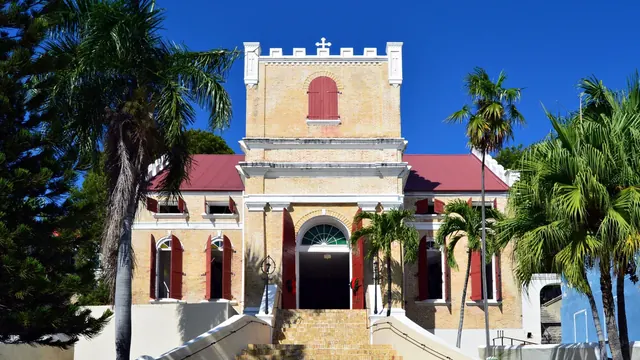
Photos: Turks and Caicos by Jonathan Palombo, CC BY 2.0, cropped; US Virgin Islands by Navin75, CC BY-SA 2.0, cropped.
Turks and Caicos or US Virgin Islands?
Our verdict in twelve categories, each scored against the same fixed benchmark cities, and the climate month by month, so you can choose for your trip.
Choose Turks and Caicos for
- wellness
- families
- beaches
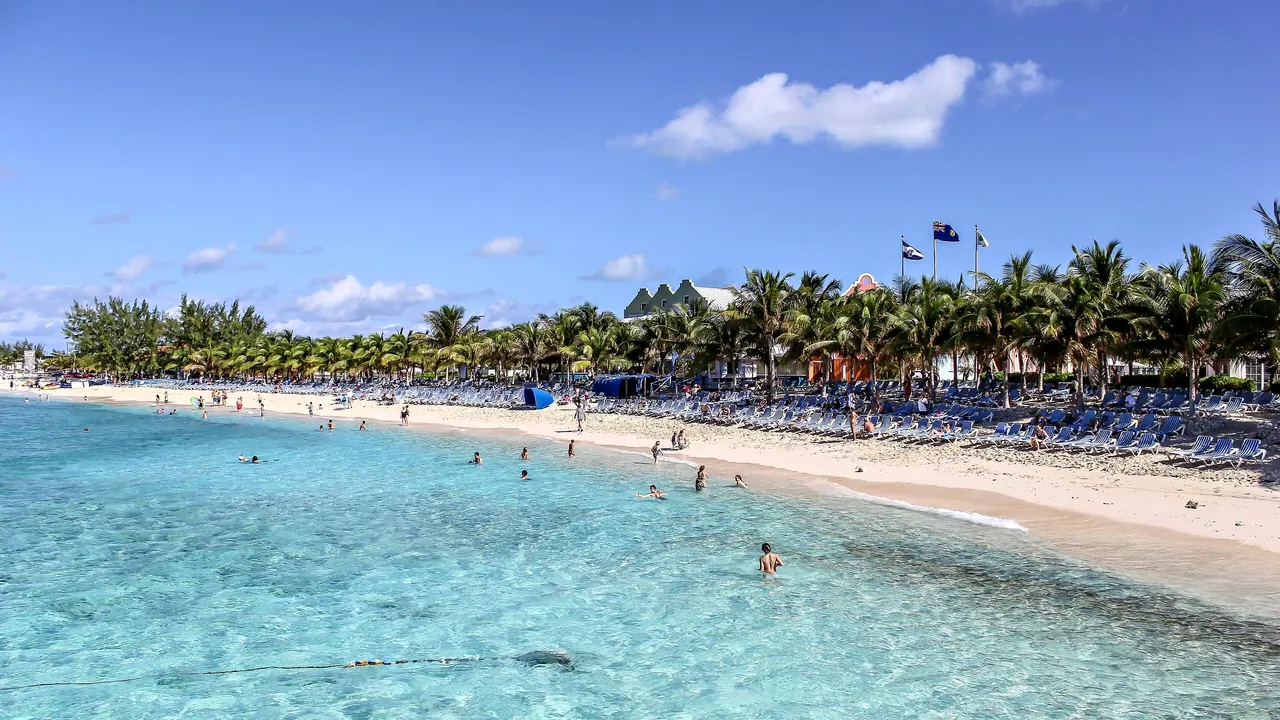
Turks and Caicos suits travellers who want the beach and very little else: Grace Bay's reef-sheltered water, the glassy shallows of the south-side bays and a resort or villa to return to each evening. It is the drier, flatter and quieter of the two, with nights that end after sunset drinks. That makes it a good fit for families with small children and couples who want rest, as long as the budget can take one of the costliest island stays in the Caribbean.
Choose US Virgin Islands for
- shopping
- culture and sights
- nightlife
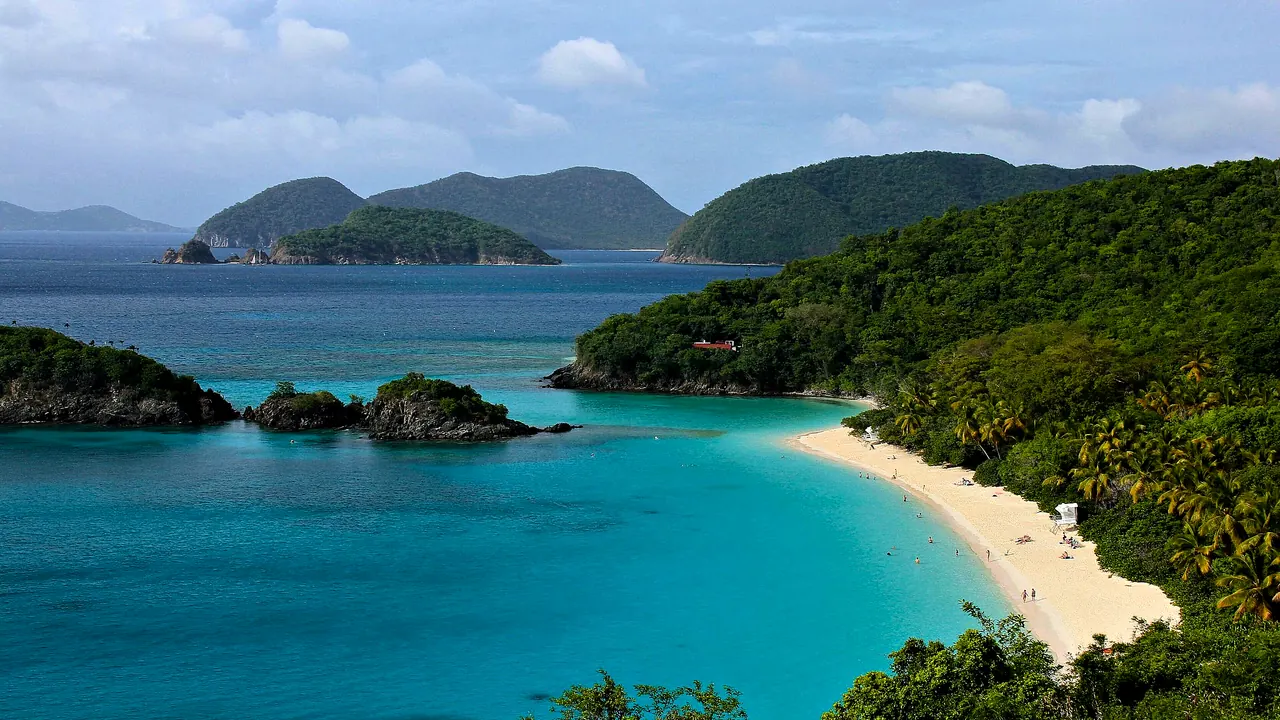
If you want beaches with more going on around them, the US Virgin Islands are the better pick. St John's national park adds hill trails to the swimming, and the Danish-built towns of Christiansted and Charlotte Amalie give you a few good half-days of history. The bars of Red Hook and Cruz Bay keep evenings going a little longer, and the ferries to St John and the British Virgin Islands make island-hopping easy. It is still expensive, though less so, and it suits travellers who like to move around.
Scoreboard
Twelve categories on one fixed scale from 0 to 100. The shaded stretch is the gap between the two.
Your match
Pick a travel style or drag the sliders, and both match scores follow your weighting.
Wins on wellness and families with your weighting.
Wins on shopping and culture and sights with your weighting.
What matters to you?
Category by category
What the scores mean for a trip.
Beaches & swimming
Both are first-rate, but they offer different kinds of beach. Turks and Caicos centres on one great sweep: Grace Bay's long white shore, kept calm by the reef offshore. The glassy south-side bays of Providenciales are good for wading, and boats run out to empty cays such as Pine Cay. The land behind the sand is low and flat.
The US Virgin Islands spread their best beaches across three islands. On St John, national park bays such as Trunk, Cinnamon and Maho sit below green hills. On St Thomas, Magens Bay is a long, sheltered curve, while Coki Point and Sapphire Beach let you snorkel straight from the sand. The north shores can pick up swell in winter, and on those days the south-facing coves are calmer for swimming.
Food & drink
The US Virgin Islands give you more to eat locally. There is a full West Indian kitchen of kallaloo, fungi, goat stew and pates at roadside stands and church food fairs, and St Croix adds rum distilleries and the best home cooking in Frederiksted and Christiansted.
Turks and Caicos has a narrower local repertoire that is almost all seafood. You get conch in every form and spiny lobster in season, eaten at its best at a fish fry or conch shack along the Blue Hills shore. Away from those, meals are international dishes at Grace Bay resorts, made with imported produce.
Culture & sights
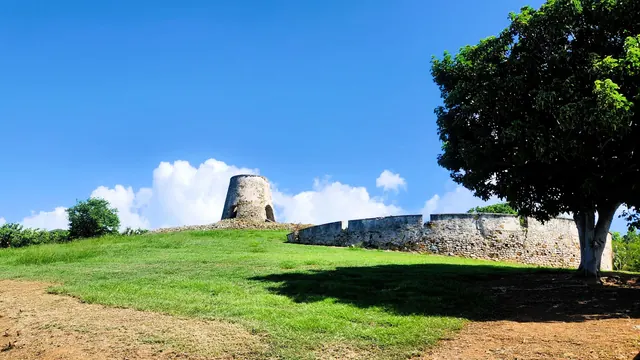
Heritage is a real if modest draw in the US Virgin Islands, and barely one in Turks and Caicos. Nearly two centuries of Danish rule left Christiansted's yellow fort and arcaded streets and Charlotte Amalie's red Fort Christian, 99 Steps and sand-floored synagogue. The sugar estates at Annaberg and Whim tell the plantation story.
In Turks and Caicos, the history worth seeing is mostly a flight away on Grand Turk. There you will find the Bermudian-style houses of Cockburn Town, the National Museum with its early Molasses Reef wreck, and the salt ponds that Salt Cay keeps almost untouched. On Providenciales there is little more than the ruins of Cheshire Hall.
Nightlife
Neither place has clubs, but the US Virgin Islands at least have streets that fill up. Red Hook and Cruz Bay draw charter-boat sailors and crowds that spill out of the open-air bars, Christiansted's boardwalk is busy after dark, and carnival on St Thomas and the Crucian Christmas festival run late for weeks.
Turks and Caicos stops at a rum punch on Grace Bay. You get sunset drinks at beach bars and resort lounges, sometimes a local band, and quiet well before late. The outer islands are quieter still.
Nature & outdoors
Both are strong outdoors, but in different places. The best of Turks and Caicos is in the water and on the flats. There is reef snorkelling off the Caicos Islands, a dramatic wall dive close to shore off Grand Turk and Salt Cay, humpback whales from about January to April, kiteboarding at Long Bay and bonefishing on the Caicos Bank. On land it is low scrub and salt ponds, with flamingos on North Caicos and the caves on Middle Caicos.
The US Virgin Islands add proper hills. St John is mostly national park, with dry forest and the Reef Bay trail past petroglyphs down to the sea. The sheltered water is ideal for day sails, and Salt River Bay on St Croix glows with bioluminescence on dark nights.
Day trips
Island-hopping is far easier from the US Virgin Islands. St John is a short ferry ride from St Thomas, Water Island is minutes from Charlotte Amalie, and with a passport you can reach Jost Van Dyke, Tortola and Virgin Gorda in the British Virgin Islands in about an hour.
From Providenciales, the options are fewer and take more planning. A ferry and a drive get you to the sleepy settlements of North and Middle Caicos. The most rewarding outing, Grand Turk and Salt Cay, depends on small inter-island flights.
Good for families
With toddlers, Turks and Caicos is the easier of the two. Grace Bay shelves gently, the lagoons at Taylor Bay and Sapodilla Bay are shallow enough for wading, and the big family resorts with kids' clubs sit on flat, easy ground. Older children can snorkel straight from the shore at Smith's Reef.
The US Virgin Islands give children a little more to do. Coki Point has touch pools and an underwater observatory, and turtles feed in shallow water at Maho Bay. The downside is steep, winding roads and hillside resorts that tire small legs. American families can also travel without a passport.
Getting around
The US Virgin Islands are easier to move around, though not easy. On St Thomas and St John, open-sided safari taxis run fixed routes between town and beach, and frequent ferries link Red Hook and Cruz Bay. The roads are narrow and steep, and a jeep helps on St John.
Turks and Caicos has no useful public transport, so you rely on taxis or a hire car to reach Chalk Sound or the south-side bays. The central stretch of Grace Bay can be walked. Going further means a ferry to North Caicos or a small plane to Grand Turk, which is why many visitors stay put. Traffic keeps to the left on both.
Shopping & style
Charlotte Amalie gives the US Virgin Islands a real shopping street. Its old Danish warehouses along Main Street are full of duty-free jewellers and watch dealers, even if the stock repeats from shop to shop. Cruz Bay and the Christiansted studios add island-made pottery, art and the St Croix hook bracelet.
Turks and Caicos has only a few small open-air plazas on Grace Bay selling resort wear and duty-free watches. The best things to take home are woven palm-straw baskets and hats from North and Middle Caicos and sea salt from the old salt islands.
Affordability
Both are expensive, but Turks and Caicos is the harder on the wallet. Grace Bay is mostly upmarket resorts and condo hotels, nearly all food is imported, and short taxi rides, diving and inter-island flights cost a lot. Sharing a self-catering villa and eating at conch shacks are the main ways to save.
The US Virgin Islands give you more room to economise. St Croix and St John's guesthouses and campgrounds cost less than the east end of St Thomas, and the park beaches and trails are free or nearly so. Summer and autumn rates are lower, though that is hurricane season.
Live music & performing arts
Neither destination has a performing arts programme to plan around, but the US Virgin Islands have more local tradition to catch. Quelbe scratch bands, steel pan, calypso and the stilt-walking mocko jumbies turn up at festivals and cultural nights, and touring concerts play the open-air amphitheatre at the University of the Virgin Islands.
In Turks and Caicos, the local sound is ripsaw music, played on a carpenter's saw at fish fries and resort evenings. The Maskanoo street parade at Christmas is the one big occasion.
Wellness & relaxation
Neither has a bathing tradition, and on both islands the spa offer belongs to the resorts. Turks and Caicos has the more complete retreats: private island resorts on the cays north of Providenciales built around yoga, treatments and healthy food, with full open-air spas along Grace Bay.
The US Virgin Islands rely more on pace than on pampering. A hammock on St John or St Croix's quiet east end, well away from the cruise traffic around Charlotte Amalie, is the closest thing to a rest cure.
When should you go?
Pick your month. The climate figures are measured averages, not a forecast.
Turks and Caicos in July
US Virgin Islands in July
Daytime high, °C
Rainfall in the month, mm
Where the figures come from
Turks and Caicos has no weather station within reach, so its figures come from a gridded climate model rather than a measured record, and read a broad area rather than one spot.
Temperature and rainfall are climate normals, averaged over the years shown. Turks and Caicos: 2001-2020 normals, NASA POWER reanalysis grid, no weather station within 90 km. US Virgin Islands: 1991-2020 normals, C. Amalie / St. Thomas Airport (5.6 km from centre).
Around Providenciales, Turks and Caicos is warm rather than hot. Daytime highs are about 26°C through winter and reach 29°C from July to October, and the sea is warm enough to swim in every month. Rain is light for most of the year. The wetter spell runs from September to November and peaks in October at about 83mm, so December to April is the most settled stretch, although almost any month works for the beach.
The US Virgin Islands are noticeably hotter all year. Highs start at 29°C in winter and reach 32°C from June to September, which makes the steep streets of Charlotte Amalie and Christiansted heavy going at midday. Rain climbs from August to a November peak of about 159mm, far wetter than Turks and Caicos at the same time of year. January to April is the driest and most comfortable time for both swimming and walking, and the sea temperatures on both destinations are almost the same through the year.
Which traveller are you?
On a beach and sun trip, Turks and Caicos has a slight edge. Calm, reef-sheltered water is the whole point of the place, autumn stays far drier than in the Virgin Islands, and a better swim rarely needs a drive. Little else fills the days.
For a culture and arts trip, neither is a natural choice, but the US Virgin Islands fill a few half-days with Danish forts, plantation ruins and quelbe bands. In Turks and Caicos, most history worth seeing is on Grand Turk, with only minor ruins on Providenciales.
On a trip with a tight budget, the US Virgin Islands are the more forgiving of two expensive places, with guesthouses and campgrounds on St John and park beaches and trails that cost almost nothing. Turks and Caicos offers almost no cheap way to stay.
Before you go
| Measure | Turks and Caicos | US Virgin Islands |
|---|---|---|
| Official language | English | English |
| Currency | US Dollar (USD) | US Dollar (USD) |
| Sockets | AB120 V, 60 Hz | - |
| Driving side | Left | Left |
| Time zone | UTC-5, UTC-4 in summer | UTC-4 |
| Emergency number | 911 | 911 |
| Main airport | Providenciales International Airport (PLS)30 non-stop destinations | Cyril E. King Airport (STT)26 non-stop destinations |
| Public holidays this year | 12 days | 18 days |
By the numbers
| Measure | Turks and Caicos | US Virgin Islands |
|---|---|---|
| Population | 44,542 | 87,146 |
| People per km² | 107 | 252 |
| Swim season, months above 21 °C | 12 months | 12 months |
Where else could you go?
Every comparison below shares a destination with this one, so you can follow Turks and Caicos or US Virgin Islands somewhere new.
- British Virgin Islandsvs US Virgin Islands
- Culebravs US Virgin Islands
- Viequesvs US Virgin Islands
- Puerto Ricovs US Virgin Islands
- Anguillavs US Virgin Islands
- Saint-Martinvs US Virgin Islands