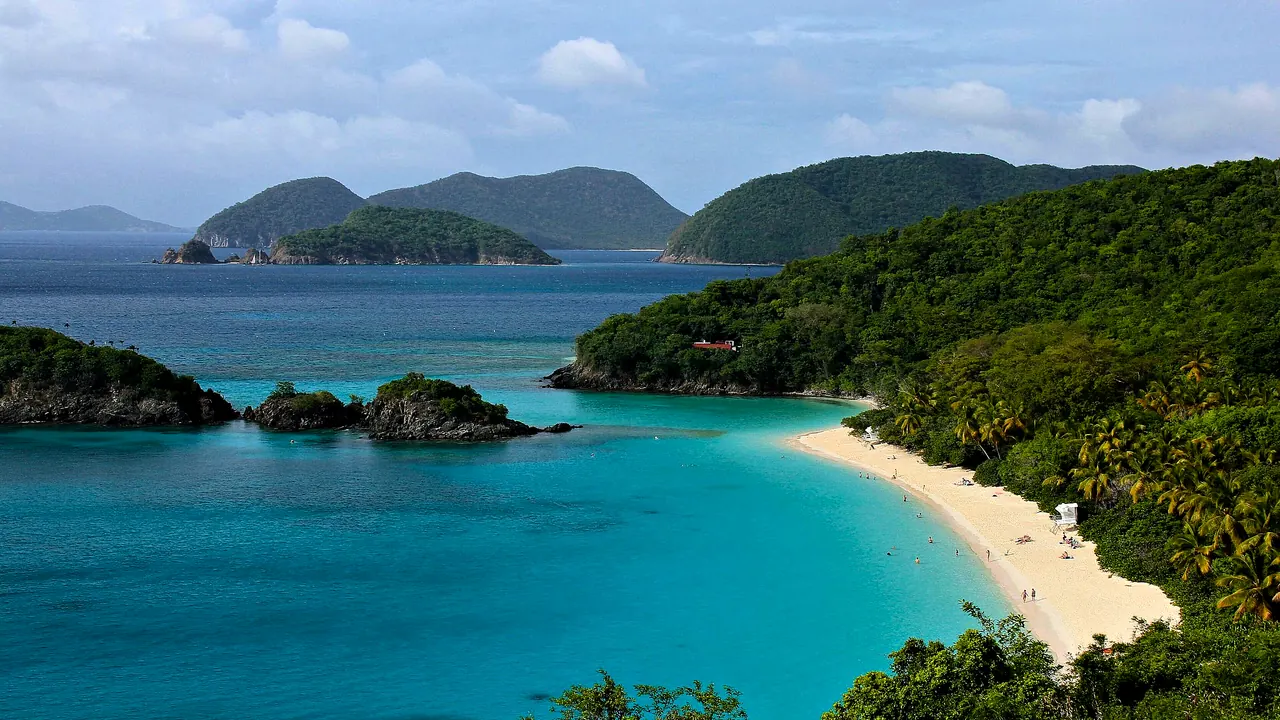
Photos: US Virgin Islands by Navin75, CC BY-SA 2.0, cropped.
Guadeloupe or US Virgin Islands?
Our verdict in twelve categories, each scored against the same fixed benchmark cities, and the climate month by month, so you can choose for your trip.
Choose Guadeloupe for
- nature and the outdoors
- food and drink
- day trips
Guadeloupe is the better pick for travellers who want more than a beach. Its volcanic western wing gives you rainforest walks, waterfalls and hot springs, and its Creole cooking and farm rum are worth seeking out. Ferries to Les Saintes and Marie-Galante make good days out, and drumming nights add something to the evenings. You need a car, and you should be happy to move between coasts and islands, because the best of it is spread out.
Choose US Virgin Islands for
- shopping
- beaches
The US Virgin Islands are for people whose whole plan is sand, clear water and an easy pace. St John's national park bays are among the finest swimming in the Caribbean, the sailing waters make boat days simple, and duty-free Charlotte Amalie adds some shopping. It costs more and offers less to do away from the shore. For American visitors, though, the familiar currency and no passport make the trip itself very simple.
Scoreboard
Twelve categories on one fixed scale from 0 to 100. The shaded stretch is the gap between the two.
Your match
Pick a travel style or drag the sliders, and both match scores follow your weighting.
Wins on nature and the outdoors and food and drink with your weighting.
Wins on shopping and beaches with your weighting.
What matters to you?
Category by category
What the scores mean for a trip.
Beaches & swimming
Guadeloupe gives you more kinds of beach. There are pale sand and reef-calmed lagoons on Grande-Terre, golden and darker volcanic sand under forest on Basse-Terre, snorkelling just off Malendure and almost empty strands on Marie-Galante. The trade-off is that this variety is spread across two wings and several islands. In some months drifting seaweed fouls the east and south coasts, so where you swim may depend on where you are staying.
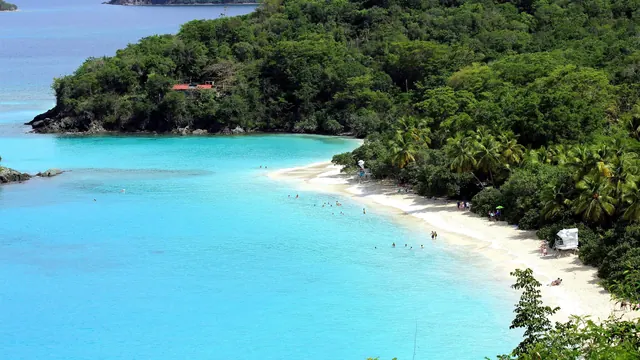
The US Virgin Islands win because so much first-rate beach sits in so small a space. St John's north shore is a run of white-sand bays protected inside the national park, with reef a short swim out from each, so you can try a different one every day without leaving that stretch of coast. St Thomas adds the deep, sheltered cove of Magens Bay and reef-fringed beaches on its east end, which makes the islands hard to beat for a trip spent almost entirely in the water.
Food & drink
Guadeloupe eats clearly better. Its Creole kitchen of accras, colombo curries and fish court-bouillon is at its best at simple beachside lolos and in market towns. Agricultural rum from the distilleries of Marie-Galante and Basse-Terre adds a real reason to visit, and French bakeries and cheese fill the gaps.
In the US Virgin Islands, the good local food is West Indian: kallaloo, fungi and pates, found mostly on St Croix and at roadside stands. Around the resorts of St Thomas and Cruz Bay, menus turn American and aimed at visitors, and imported ingredients keep the range narrow.
Culture & sights
Neither is a cultural destination, but their history comes in different forms. Guadeloupe's one essential visit is the Mémorial ACTe in Pointe-à-Pitre, a serious museum of slavery and Caribbean history. The rest is scattered: forts, Amerindian rock carvings, Hindu temples and Marie-Galante's sugar windmills.
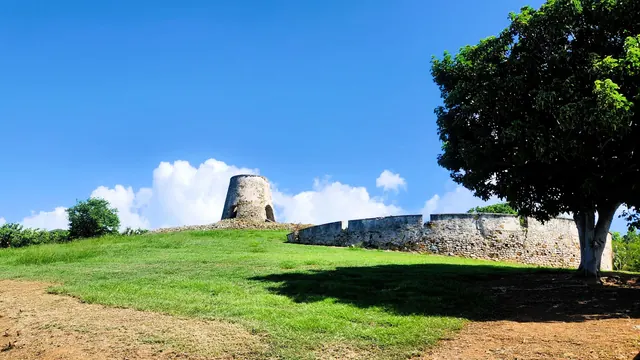
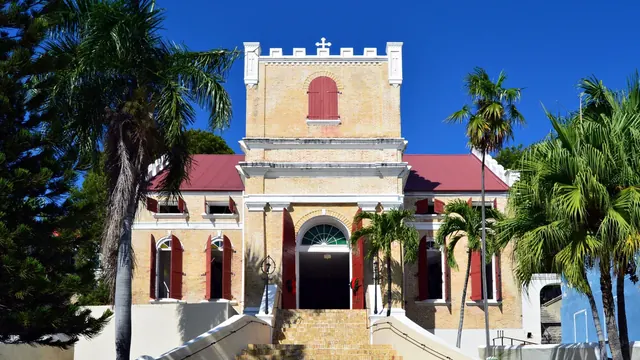
The US Virgin Islands are better for walking through history. Danish colonial towns survive in Christiansted's arcaded streets and yellow fort and in Charlotte Amalie's stepped lanes and old synagogue. Annaberg's plantation ruins on St John are the most memorable single sight.
Nightlife
Evenings are quiet in both, so the difference is in style. Guadeloupe has a few real clubs in Le Gosier playing zouk and dancehall late at weekends, but the island is spread out and a night out usually means driving. In the US Virgin Islands, going out means open-air rum bars in Red Hook and Cruz Bay, full of sailors off charter boats, and you can walk between them.
The carnival seasons are different too: Guadeloupe's runs from January to Ash Wednesday, while St Thomas has its carnival in spring and St Croix its Crucian Christmas festival.
Nature & outdoors
Guadeloupe is the much bigger outdoor destination. Basse-Terre is a protected volcanic rainforest, with La Soufrière rising to 1,467m, trails to the Carbet falls and the Route de la Traversée under giant trees. The Cousteau Reserve and the mangroves of Grand Cul-de-Sac Marin add diving and kayaking.
The US Virgin Islands are better on the water than on land. They have sheltered sailing, snorkelling at Buck Island and bioluminescence in Salt River Bay. St John's park trails, such as Reef Bay, are lovely, but the hills are modest and run out quickly.
Day trips
Guadeloupe has more and better days out, most of them by ferry. Terre-de-Haut in Les Saintes, with its painted village and fine bay, is the favourite. Sugar-cane Marie-Galante is worth a night, and a longer crossing reaches Dominica.
From St Thomas, the easy outing is St John's national park. The British Virgin Islands are close but need a passport and depend on ferry schedules. St Croix is too far for a day, and nearly every option is another beach rather than a town.
Good for families
Both suit young children about equally well, mostly because of calm water, but the days look different. In Guadeloupe, the knee-deep lagoons at Sainte-Anne come with an aquarium, a forest zoo and French healthcare, though almost every outing means a drive.
The US Virgin Islands are more about time in and on the water. Children can snorkel with turtles at Maho Bay or visit Coki Point's marine park. The steep, narrow roads tire small travellers, so a resort with its own beach makes life easier.
Getting around
Guadeloupe is slightly easier, as long as you hire a car. Its French-style roads are good, nothing on the main island is more than a couple of hours away, and the main delay is the traffic at the bridges between the two wings.
In the US Virgin Islands, the roads are steep and narrow and you drive on the left. Shared safari taxis cover St Thomas and St John, and the Red Hook to Cruz Bay ferry makes those two easy to combine, but reaching St Croix takes a flight or a long crossing.
Shopping & style
The US Virgin Islands have the edge, almost entirely because of Charlotte Amalie. Its old Danish warehouses hold duty-free jewellers and watch dealers, and the craft studios of Cruz Bay and Christiansted add island-made pieces. Guadeloupe's best shopping is the spice market in Pointe-à-Pitre, with vanilla, punches and madras cloth, plus rum bought at the distilleries.
Affordability
Neither is cheap, but Guadeloupe costs noticeably less. Prices match or exceed mainland France, yet villas and apartments with kitchens, roadside bokit vans and lolos give you ways to save, though a hire car is an unavoidable cost.
In the US Virgin Islands, resorts and villas on St John and the east end of St Thomas are expensive, nearly all food is shipped in, and per-person taxi fares add up for a family. St Croix and St John's campgrounds are the modest options, and the beaches and trails cost little.
Live music & performing arts
Guadeloupe has the stronger living music. Gwoka drumming at léwòz evenings, UNESCO-recognised, and zouk everywhere are easy to find. L'Artchipel in Basse-Terre stages theatre and dance, and Marie-Galante holds the Terre de Blues festival.
The US Virgin Islands have quelbe scratch bands, steel pan and mocko jumbie stilt dancers. Outside festivals and beach-bar sets, though, there is little regular programme beyond touring shows at the university amphitheatre on St Thomas.
Wellness & relaxation
Guadeloupe has the advantage of its volcano. Its hot springs include the forest pools of Bains Jaunes, the warm rock pools by the shore near Bouillante and the small thermal spa at Ravine Chaude, and slow places like Les Saintes and Deshaies add to the calm.
The US Virgin Islands have no bathing tradition, so wellness means resort spas and beach yoga. What they do have is quiet: St John and St Croix's east end, away from the cruise traffic, are easy places to rest.
When should you go?
Pick your month. The climate figures are measured averages, not a forecast.
Guadeloupe in July
US Virgin Islands in July
Daytime high, °C
Rainfall in the month, mm
Temperature and rainfall are climate normals, averaged over the years shown. Guadeloupe: 1991-2020 normals, Le Raizet, Guadeloupe (7.3 km from centre). US Virgin Islands: 1991-2020 normals, C. Amalie / St. Thomas Airport (5.6 km from centre).
Both are hot all year, with highs from about 29°C in winter to 32°C in late summer. The sea is warm enough to swim every month, so the beach season never closes. Rain makes the real difference. Guadeloupe is driest in February and March, grows wetter from May, and gets heavy showers from August to November, peaking around 211mm in October, though it still has plenty of sunshine through those months.
The US Virgin Islands are noticeably drier all year. Winter and early spring bring only about 50mm a month, and even the wettest stretch, September to November, stays below Guadeloupe's levels. For hiking on Basse-Terre, the drier first half of the year is clearly better. In both places the late-summer heat makes the middle of the day better spent in the water than walking around towns.
Which traveller are you?
For a beach and sun trip, the US Virgin Islands are the surer choice. Their winters are drier, the sheltered sailing waters make boat days out to Buck Island's reef easy, and when winter swell reaches the north shores, the south-facing coves stay calm.
On an outdoors trip, choose Guadeloupe. You can climb the steaming La Soufrière, cross the island under giant trees on the Route de la Traversée and kayak the mangroves of Grand Cul-de-Sac Marin. Keen walkers would run out of trails on St John within a few days.
On a tight budget, Guadeloupe goes further. Market food and roadside snacks are good value, and a shared villa keeps a group's costs down. The US Virgin Islands cost more across the board, and their cheaper summer rates fall in hurricane season.
Before you go
| Measure | Guadeloupe | US Virgin Islands |
|---|---|---|
| Official language | - | English |
| Currency | Euro (EUR) | US Dollar (USD) |
| Sockets | CE230 V, 50 Hz | - |
| Driving side | Right | Left |
| Time zone | UTC-4 | UTC-4 |
| Emergency number | 112 | 911 |
| Main airport | Maryse Condé International Airport (PTP)21 non-stop destinations | Cyril E. King Airport (STT)26 non-stop destinations |
| Public holidays this year | 12 days | 18 days |
By the numbers
| Measure | Guadeloupe | US Virgin Islands |
|---|---|---|
| Population | 384,160 | 87,146 |
| People per km² | 236 | 252 |
| Swim season, months above 21 °C | 12 months | 12 months |
Where else could you go?
Every comparison below shares a destination with this one, so you can follow Guadeloupe or US Virgin Islands somewhere new.
- British Virgin Islandsvs US Virgin Islands
- Culebravs US Virgin Islands
- Viequesvs US Virgin Islands
- Puerto Ricovs US Virgin Islands
- Martiniquevs Guadeloupe
- Anguillavs US Virgin Islands