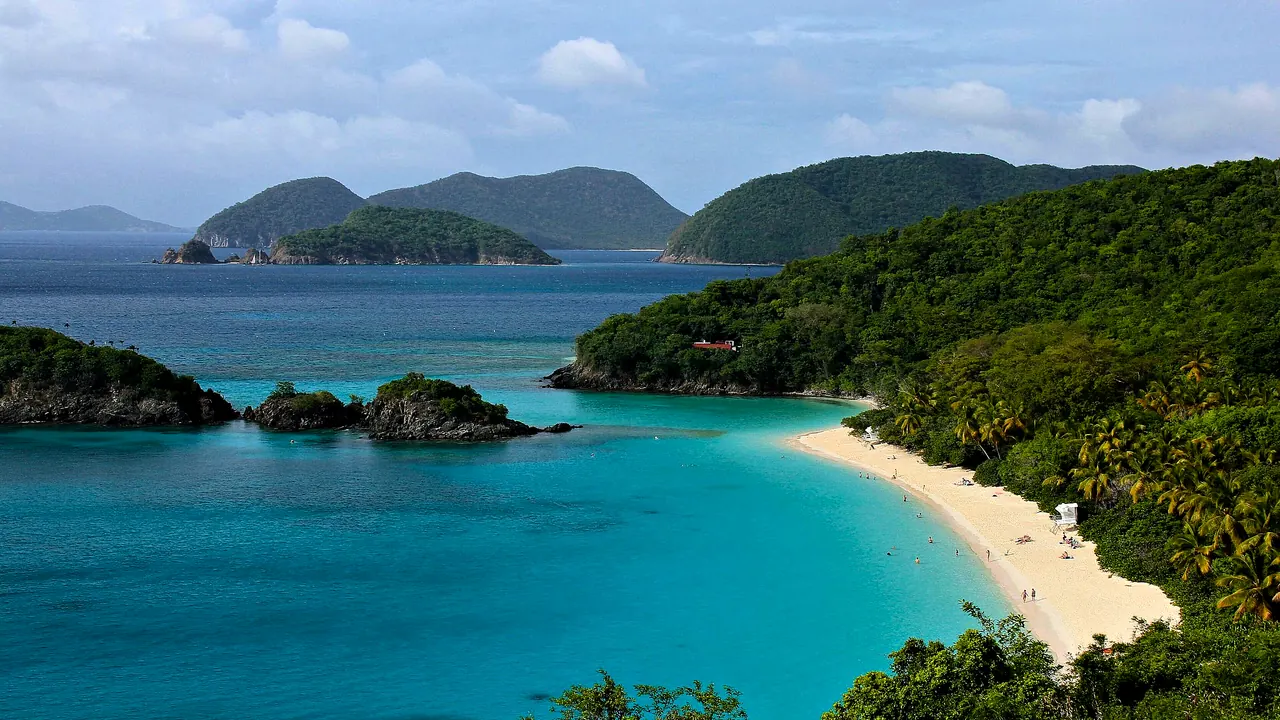
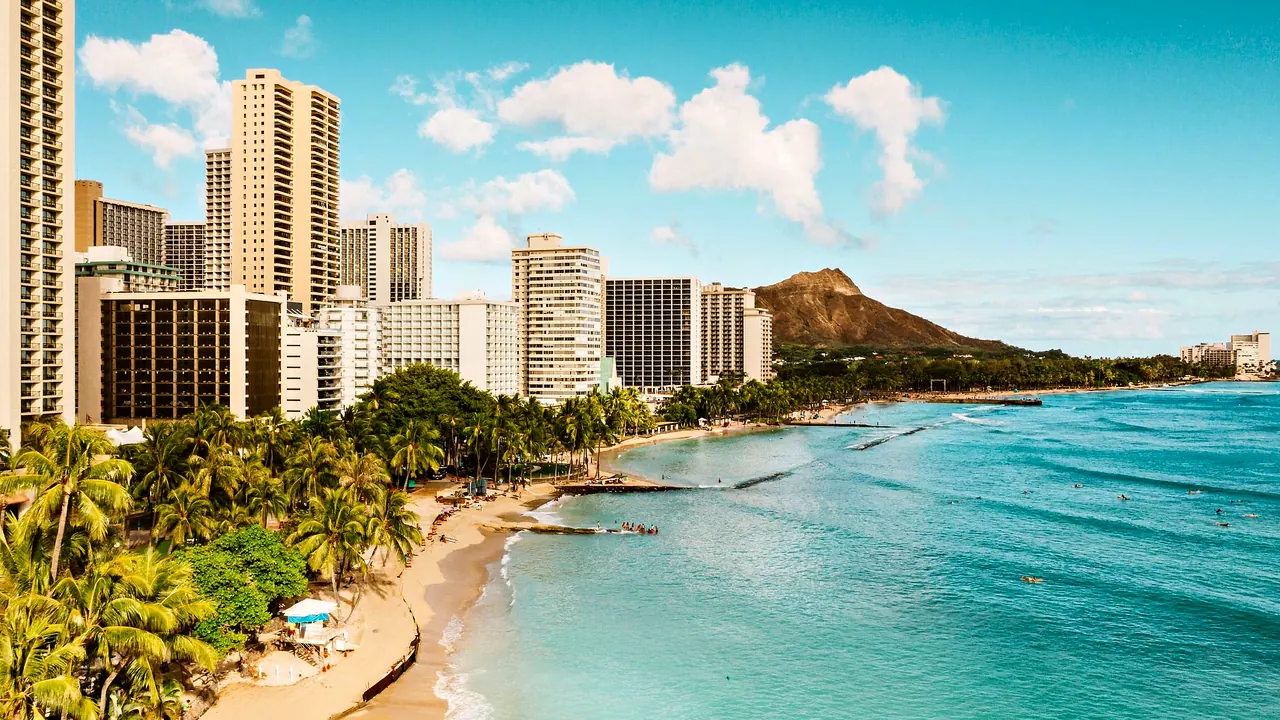
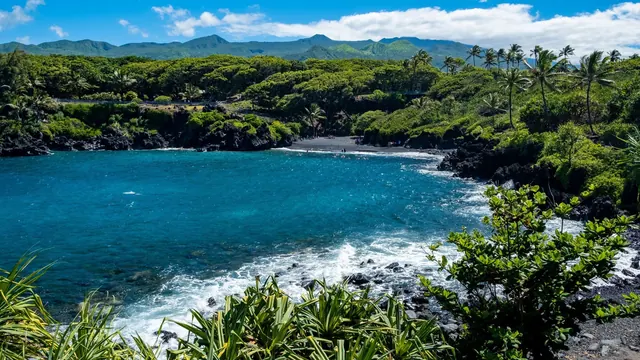
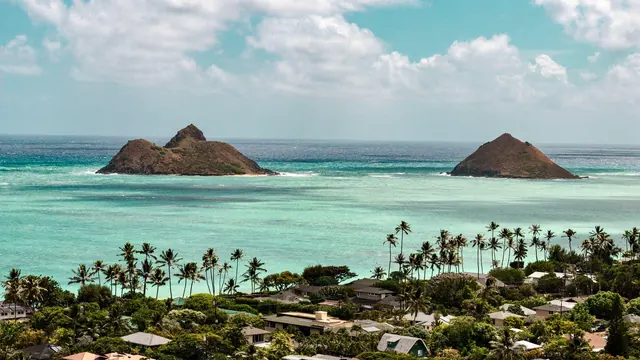
Photos: US Virgin Islands by Navin75, CC BY-SA 2.0, cropped; Hawaii by Jess Loiterton, Pexels License.
US Virgin Islands or Hawaii?
Our verdict in twelve categories, each scored against the same fixed benchmark cities, and the climate month by month, so you can choose for your trip.
Choose US Virgin Islands for
- day trips
- prices
The US Virgin Islands are the simpler, smaller choice. They suit a pure Caribbean beach trip of calm turquoise bays, snorkelling from the sand on St John and rum drinks at open-air bars after sunset. Hopping between islands is easier here, with ferries to St John and over to the British Virgin Islands, and stays are somewhat less expensive. If you want a hammock, warm water and very little to plan, this is the better fit, but you give up most of the landscape and city life that Hawaii offers.
Choose Hawaii for
- nature and the outdoors
- food and drink
- live music and the arts
Hawaii suits travellers who want more than a beach. Its islands take in active volcanoes, the Na Pali sea cliffs and Haleakala's crater, and it has the deeper food scene, the stronger family offer and a real capital in Honolulu, with Iolani Palace, the Bishop Museum and Pearl Harbor. It works best for a longer trip built around one or two islands, a hire car and early starts into the landscape.
Scoreboard
Twelve categories on one fixed scale from 0 to 100. The shaded stretch is the gap between the two.
Your match
Pick a travel style or drag the sliders, and both match scores follow your weighting.
Wins on day trips and prices with your weighting.
Wins on nature and the outdoors and food and drink with your weighting.
What matters to you?
Category by category
What the scores mean for a trip.
Beaches & swimming
Both are first-rate beach destinations, but the beaches differ in character. Hawaii gives more variety: a city beach with beginner surf at Waikiki, quiet green Lanikai, Maui's resort sands with snorkelling off the rocks and white crescents set against black lava on the Kohala Coast. Its beaches also change with the seasons, with winter swells closing the north shores to swimmers.
The US Virgin Islands offer the classic Caribbean version: calm, clear bays such as Trunk, Cinnamon and Maho inside St John's national park, with reef just off the sand and slightly warmer water. There is less surf and less drama than in Hawaii, but the sea is usually calmer for anyone who just wants to float and snorkel.
Food & drink
Hawaii eats noticeably better. Its local cuisine mixes Japanese, Chinese, Korean, Filipino, Portuguese and Native Hawaiian cooking into plate lunches, poke and malasadas. In Honolulu, Chinatown and Kapahulu add ramen counters, izakaya and dim sum. Kona coffee, drunk on the slopes where it is grown, is a bonus.
The Virgin Islands' strength is narrower: West Indian kallaloo, goat stew, johnnycakes and pates from roadside stands and food fairs, with St Croix and its rum distilleries the best place for them. Around the resorts on St Thomas and in Cruz Bay, menus turn to American dishes, so this is a place where you eat well enough rather than one you travel to for the food.
Culture & sights
Neither is a culture destination, but Hawaii's heritage is more substantial. Iolani Palace, the Bishop Museum's Pacific collections and the USS Arizona memorial at Pearl Harbor fill several worthwhile days in Honolulu. On the Big Island, the place of refuge at Puuhonua o Honaunau and the heiau temples put Native Hawaiian history into the landscape.
The Virgin Islands have something Hawaii lacks: complete colonial streetscapes. Danish arcades and the yellow fort in Christiansted, Charlotte Amalie's stepped lanes and its sand-floored synagogue, and the Annaberg plantation ruins make good half-days. Their museums are small, though.
Nightlife
Neither offers much late nightlife, and the difference is in the setting. Hawaii's evenings out are concentrated in Honolulu, where Chinatown has cocktail bars, dive bars and dance nights, and Waikiki has hotel bars and sunset lounges. On the other islands nights end early.
In the Virgin Islands you drink rum at open-air strips in Red Hook and Cruz Bay, among charter-boat crews, or along Christiansted's boardwalk. Things wind down early here too, except during carnival on St Thomas and St Croix's Christmas festival, when the street parties go on late.
Nature & outdoors
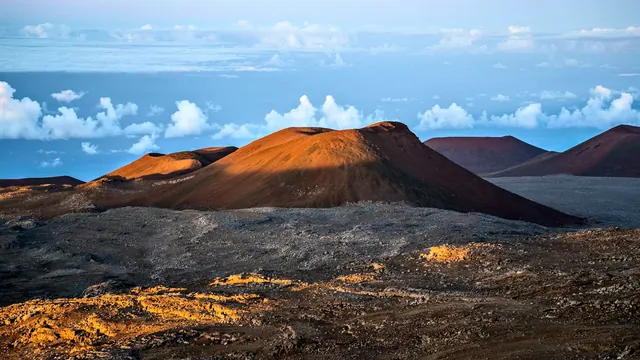
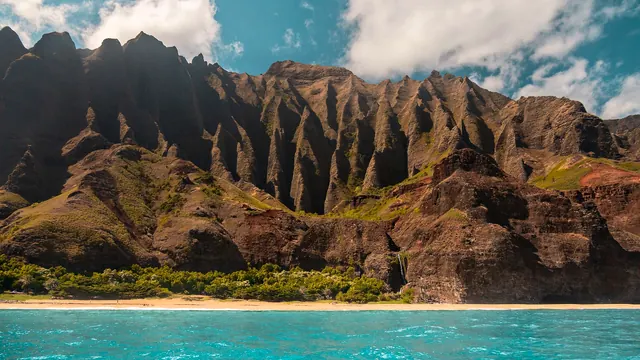
This is where Hawaii pulls furthest ahead. Each island has its own landscape: Kilauea's craters and lava fields, Mauna Kea's summit road, Kauai's Waimea Canyon and Na Pali cliffs, and Maui's road above the clouds to Haleakala and the rainforest waterfalls on the way to Hana. Manta-ray night snorkels and winter humpbacks add to it.
The Virgin Islands are gentler and smaller. They have green national-park hills and the Reef Bay trail on St John, Buck Island's underwater trail and bioluminescence in Salt River Bay. Their real strength is sheltered sailing water, but serious hikers will finish the trails quickly.
Day trips
The Virgin Islands have the better day trips, because the next island is often a short ferry ride away. From St Thomas you can cross to St John's park or to tiny Water Island, and with a passport you can sail to Jost Van Dyke's beach bars or the boulders of Virgin Gorda in the British Virgin Islands.
In Hawaii the other islands are a flight away, so days out stay on the island you are on: the surf town of Haleiwa from Honolulu, Hilo's waterfront or the coffee villages above Kona, or Maui's upcountry towns.
Good for families
Hawaii is the stronger choice with children. Ko Olina's lagoons and Maui's south-shore bays give calm swimming, and Honolulu adds an aquarium, a zoo and the Polynesian Cultural Center. Resorts on Maui and the Big Island have kids' clubs and lawns by the sea, and volcanoes and whales make good outings for older children.
The Virgin Islands have lovely shallow water, especially Maho Bay, where children can snorkel with turtles, and Coki Point's touch pools. Beyond that there is little aimed at families, and the steep roads and resort grounds can tire small legs.
Getting around
Hawaii is easier to get around, though only on Oahu do you not really need a car. There, Waikiki is walkable and the island buses reach most of the coast. On Maui, Kauai and the Big Island you need a hire car for long drives, and other islands are a flight away.
The Virgin Islands are small but awkward. Roads are steep and narrow, you drive on the left in American cars and there are few pavements. Shared open-sided safari taxis cover St Thomas and St John, and the Red Hook ferry links the two easily, but St Croix is a flight or a long crossing away.
Shopping & style
Hawaii has more range. Kalakaua Avenue and the big malls near Ala Moana in Honolulu carry luxury and international brands. The local things worth bringing home are aloha shirts, koa wood, Niihau shell lei and Hawaiian quilts.
The Virgin Islands' shopping is mostly one thing: duty-free jewellery, watches and liquor in the old Danish warehouses of Charlotte Amalie. Apart from Mongoose Junction on St John and Christiansted's studios, where you can buy island art and the St Croix hook bracelet, there is little fashion or design.
Affordability
Both are costly, but Hawaii is the harder on a budget. Beachfront resorts on Maui and Kauai, shipped-in groceries, a hire car and inter-island flights all add up. Plate lunches, poke counters, Oahu's cheap buses and a condo with a kitchen soften the bill.
The Virgin Islands are expensive too, especially from December to April, and per-person safari taxi fares mount up for families. Still, St John's campgrounds, modest stays on St Croix and the lower summer and autumn rates, in hurricane season, give you more ways to cut costs.
Live music & performing arts
Hawaii's music and dance tradition is better known and easier to find. Hula is a living art, and Hilo's Merrie Monarch Festival is its great competition. You can hear slack-key guitar and ukulele at sunset lounges, and Honolulu has the Hawaii Theatre and a symphony.
The Virgin Islands have quelbe scratch bands, steel pan and the stilt-walking mocko jumbies, but you mostly see them at carnival, a cultural night or a beach-bar gig. The university amphitheatre on St Thomas hosts touring shows, but there is no regular programme you could plan a trip around.
Wellness & relaxation
For a spa stay Hawaii has more to offer. Wailea, Kapalua, the Kohala Coast and Poipu all have large spas with treatment rooms set in tropical gardens. Lomilomi massage is offered almost everywhere, and Kauai's north shore draws yoga retreats.
The Virgin Islands have fewer spas, so here rest comes mainly from the slow pace. A villa on St John or a stay on St Croix's quiet east end, away from the cruise traffic, gives you long, quiet afternoons in the shade.
When should you go?
Pick your month. The climate figures are measured averages, not a forecast.
US Virgin Islands in July
Hawaii in July
Daytime high, °C
Rainfall in the month, mm
Temperature and rainfall are climate normals, averaged over the years shown. US Virgin Islands: 1991-2020 normals, C. Amalie / St. Thomas Airport (5.6 km from centre). Hawaii: 1991-2020 (sunshine 1981-2010) normals, Honolulu International Airport (10 km from centre).
Around Hawaii's main resort coasts it is warm enough for the beach in every month. Daytime highs run from about 27°C in winter to 32°C in August, and the sea stays comfortable for swimming all year. April to September is the drier, sunnier half, with very little rain and the longest sunny days in midsummer. From October to March showers return, though they stay modest, and that is also when big winter swells reach the north shores. The heat never gets bad enough to stop you walking Honolulu or hiking, although summer afternoons are best spent in the water.
The US Virgin Islands are a degree or two hotter, and the sea is warmer still all year. January to April is the best stretch: still hot, but at its driest. From August the rain builds steadily, and October and November are the wettest months, with November the wetter of the two at about 160mm. August to October is also the peak of the Atlantic hurricane season. Summer highs are close to their peak, which makes midday walks through Charlotte Amalie or Christiansted tiring, so go out early in the morning.
Which traveller are you?
On an outdoors trip, choose Hawaii. You can walk across lava fields at Kilauea, hike the Kalalau Trail past the Na Pali cliffs, watch the sun rise over Haleakala and see humpback whales in winter. The US Virgin Islands have pleasant trails on St John, but you will run out of them within days.
On a family trip with children, Hawaii is again the easier choice. It has the Ko Olina lagoons, the Waikiki Aquarium, a full day at the Polynesian Cultural Center and resorts built for families. The Virgin Islands have lovely shallow bays, but apart from Coki Point's marine park there is little made for children.
On a tight budget, the US Virgin Islands are the more manageable of two expensive destinations. St John's campgrounds and guesthouses, a base on St Croix and lower summer rates help a lot. In Hawaii you also have to pay for a hire car, inter-island flights and costly resorts.
Before you go
| Measure | US Virgin Islands | Hawaii |
|---|---|---|
| Official language | English | - |
| Currency | US Dollar (USD) | US Dollar (USD) |
| Sockets | - | AB120 V, 60 Hz |
| Driving side | Left | Right |
| Time zone | UTC-4 | UTC-10 |
| Emergency number | 911 | 911 |
| Main airport | Cyril E. King Airport (STT)26 non-stop destinations | Daniel K. Inouye International Airport (HNL)56 non-stop destinations |
| Public holidays this year | 18 days | 13 days |
By the numbers
| Measure | US Virgin Islands | Hawaii |
|---|---|---|
| Population | 87,146 | 1,455,271 |
| People per km² | 252 | - |
| Swim season, months above 21 °C | 12 months | 12 months |
Where else could you go?
Every comparison below shares a destination with this one, so you can follow US Virgin Islands or Hawaii somewhere new.
- Puerto Ricovs US Virgin Islands
- San Diegovs Hawaii
- Key Westvs Hawaii
- Miamivs Hawaii
- Bora Boravs Hawaii
- Tahitivs Hawaii