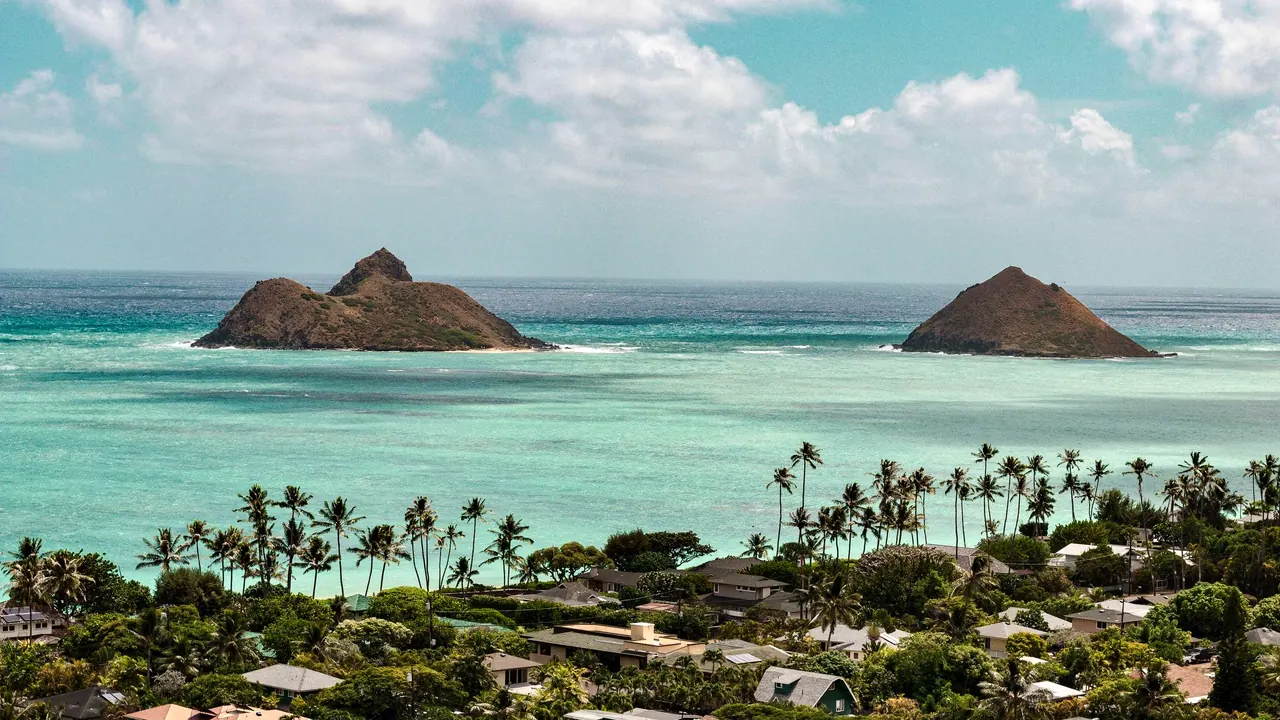
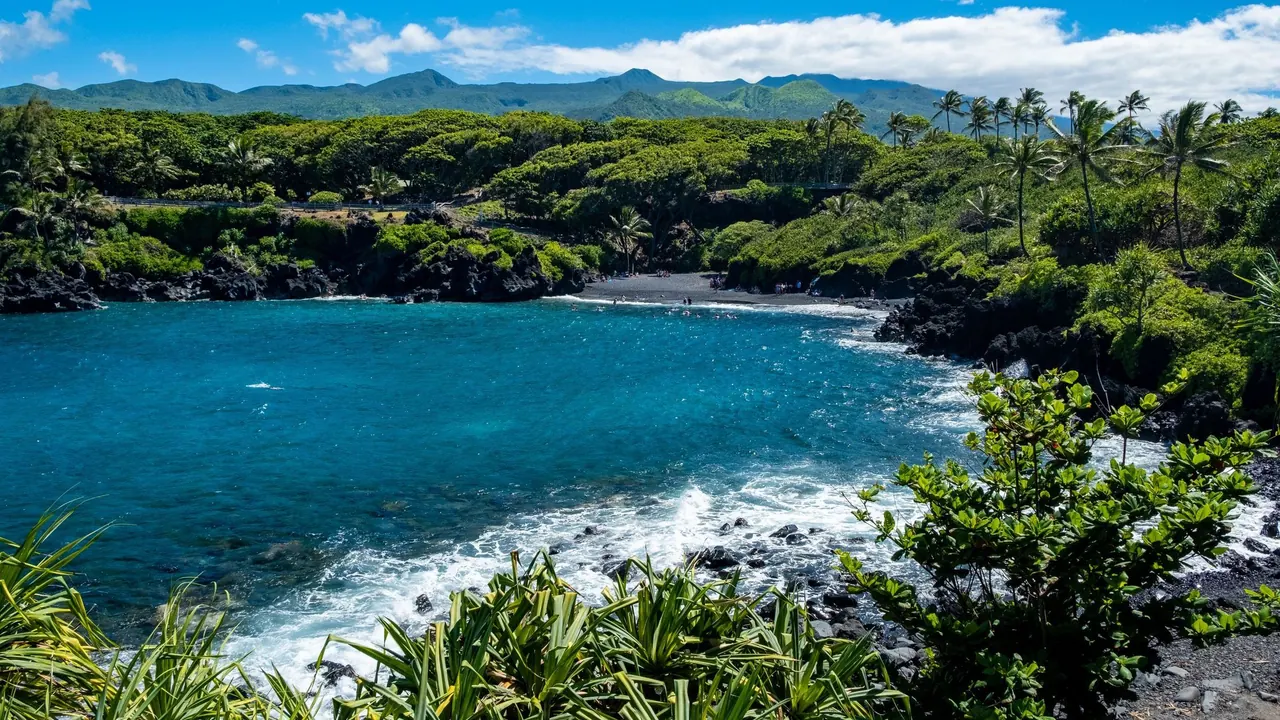
Photos: Oahu by Paige, Pexels License; Maui by Kelsey, Pexels License.
Oahu or Maui?
Our verdict in twelve categories, each scored against the same fixed benchmark cities, and the climate month by month, so you can choose for your trip.
Choose Oahu for
- culture and sights
- shopping
- nightlife
If you want the beach with a real city attached, Oahu is the better pick. Honolulu has what Maui lacks: Iolani Palace, the Bishop Museum and Pearl Harbor, neighbourhood eating in Kapahulu and Chinatown, a proper evening out and serious shopping around Ala Moana. Families do well there too, with the zoo, the aquarium and calm lagoons close by, and you can spend much of a stay in Waikiki without a car.
Choose Maui for
- wellness
- nature and the outdoors
- day trips
Maui suits a trip built around landscape and quiet. You get sunrise from the rim of Haleakala, the slow road to Hana, snorkelling over Molokini's sunken crater and whale boats in winter, with the big resort spas of Wailea and Kapalua for the days in between. You will need a hire car and there is little to do after dark, so it suits couples and anyone happy to swap city life for early nights.
Scoreboard
Twelve categories on one fixed scale from 0 to 100. The shaded stretch is the gap between the two.
Your match
Pick a travel style or drag the sliders, and both match scores follow your weighting.
Wins on culture and sights and shopping with your weighting.
Wins on wellness and nature and the outdoors with your weighting.
What matters to you?
Category by category
What the scores mean for a trip.
Beaches & swimming
Both islands have outstanding beaches. What differs is the setting. Maui's beaches are lined with resorts: the calm reef bays of Napili and Kapalua and the long strand at Kaanapali on the west coast, and a string of golden crescents from Kihei through Wailea to the wild sweep of Big Beach on the drier, sunnier south coast.
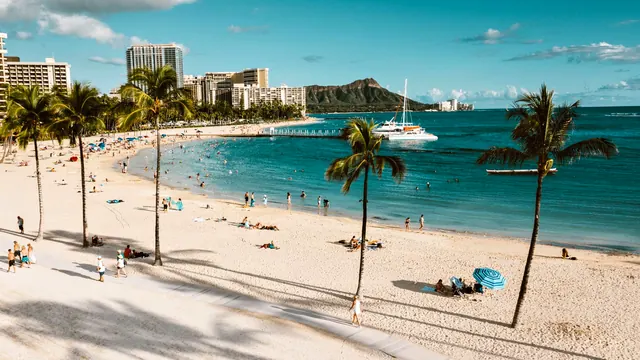
Oahu has more variety and a city beach. Waikiki is a sociable stretch of sand under the hotels with gentle learner waves, while Lanikai and Kailua feel like a neighbourhood. Hanauma Bay is the classic snorkel, and the calm water moves with the seasons, from the summer-flat North Shore to the south and east in winter.
Food & drink
The everyday food is the same on both islands: poke cut that morning, plate lunches of kalua pork and rice, malasadas and shave ice. Maui adds an upcountry farm side around Kula and Makawao, with farm stands, a goat dairy and a winery on Haleakala's slopes, but beyond that the choice is narrow and the resort dining rooms are uneven.
Oahu has more depth because Honolulu has the neighbourhoods. Kapahulu, Kaimuki and Chinatown have ramen and izakaya counters, bakeries and a small fine-dining scene built on local fish, and the garlic-shrimp trucks of Kahuku and Haleiwa turn a drive into a meal.
Culture & sights
Maui's history is scattered and easy to miss: the Bailey House Museum in Wailuku, the sugar museum at Puunene, the great stone platform of Piilanihale Heiau near Hana and the battle memory of Iao Valley. Much of its meaning lies in sacred places such as Haleakala rather than in buildings.
Oahu has the major sites. Iolani Palace is the only royal palace on American soil, the Bishop Museum holds the finest Hawaiian and Polynesian collection anywhere, and Pearl Harbor needs most of a day. Neither island has much historic street life, but only Oahu justifies several days of sightseeing.
Nightlife
Neither island is built for late nights, but Oahu at least has a night out. Waikiki's tiki bars, beachfront lounges and a few small clubs along Kalakaua Avenue draw a happy-hour crowd, and locals head to the cocktail and dive bars of Chinatown, busiest at weekends.
On Maui the evening usually ends after a sunset drink and dinner. A cluster of casual bars in Kihei and a few in Paia are as late as it gets, and there are no real clubs.
Nature & outdoors
Maui's landscapes are on a bigger scale. The road climbs from the reef to Haleakala's 3,055m summit, where Sliding Sands drops into a crater of red and grey cinder cones, and the road to Hana leads through rainforest to the bamboo and waterfall pools of Kipahulu. Offshore, there is clear snorkelling at Molokini and windsurfing at Hookipa.
Oahu's outdoors are easier to reach. The fluted green cliffs of the Koolau range, the Pali lookout, Diamond Head and the rainforest of Manoa are all within about an hour of Honolulu, and the North Shore's winter surf is the best known anywhere. Waikiki is the gentler place to learn.
Day trips
On both islands, most outings head into the landscape rather than to other places. Maui has a slight edge because Lanai is a passenger ferry ride away, with the plantation-era square of Lanai City, and the island's own small towns differ from one another: surfy Paia, cowboy Makawao, old Wailuku and remote Hana.
Oahu's classic outing is the circle drive through Haleiwa, Kailua and the pineapple fields. Reaching another island means a flight and a hire car at the other end, so it works better as a separate stay.
Good for families
Maui works for a family beach vacation: gentle sand on the west and south coasts, turtles to snorkel with, resort kids' programmes and the Maui Ocean Center at Maalaea. Beyond that there is not much, and the winding drives to Hana and up Haleakala can be hard on young children.
Oahu gives children more to do. There are the calm lagoons at Ko Olina and the reef-sheltered water at Waikiki, the zoo and aquarium beside Kapiolani Park, a marine park and a water park, and the Polynesian Cultural Center for an easy day of island culture.
Getting around
On both islands you will want a car for at least part of the stay, but in different ways. On Maui it is hard to manage without one. The bus is too sparse for sightseeing, the road to Hana is a slow run of hairpins and one-lane bridges, and Haleakala's summit is about two hours from the coast.
Oahu lets you split the stay. Waikiki is flat and walkable, and the island-wide bus reaches Hanauma Bay and the North Shore, though slowly. Most visitors hire a car only for the days out, and should expect Honolulu's rush-hour traffic and tight parking.
Shopping & style
On Maui, shopping is a pastime between beach days. The open-air resort centres of Wailea and Kaanapali sell swimwear and resort fashion, while the boutiques of Paia, the galleries of Makawao and lavender and coffee from upcountry farms make the better souvenirs.
Oahu has proper shopping. There are luxury flagship stores along Kalakaua Avenue and a huge open-air mall beside Ala Moana Beach Park, and Kakaako, Kailua and Haleiwa add independent boutiques. Oahu also has the wider choice of aloha shirts, including vintage and tailored ones, along with Niihau shell jewellery and Hawaiian quilts.
Affordability
Maui gives you fewer ways to cut the bill than Oahu, though neither island is cheap, because almost everything is shipped in. On Maui the hire car is a cost you cannot avoid, the resorts of Wailea and Kapalua are at the top of the market, and even the condos in Kihei are dear in the winter peak.
Oahu leaves a little more room to save. You can stay in Waikiki without a car and use the island bus, eat at plate-lunch counters and buy poke at the supermarket, and spend days on beaches and trails that cost nothing. Resort and parking charges still add up, though, and there are few vacation rentals outside the resort areas.
Live music & performing arts
On Oahu, Hawaiian music is easy to hear every evening. Slack-key guitar and falsetto singing are played on Waikiki's hotel lanais at sunset, and there are free hula shows by the beach at Kuhio. Honolulu adds a symphony orchestra, a small opera company and the restored Hawaii Theatre.
Maui has less on. The Maui Arts & Cultural Center in Kahului hosts touring acts and occasional hula festivals, and the Iao Theater stages community productions. Most visitors only see hula at a luau dinner show.
Wellness & relaxation
Maui is the better island for unwinding. The large spas of Wailea and Kapalua have hydrotherapy circuits and long lomilomi menus, the green hills around Haiku and Kula hold yoga studios and small retreats, and Hana, at the end of its long road, is about as quiet as Hawaii gets.
Oahu offers lomilomi at every level and yoga on the beach, but its main spas are in busy Waikiki and at Ko Olina. To slow right down there, you need to stay on the windward coast around Kailua or on the North Shore.
When should you go?
Pick your month. The climate figures are measured averages, not a forecast.
Oahu in July
Maui in July
Daytime high, °C
Rainfall in the month, mm
Temperature and rainfall are climate normals, averaged over the years shown. Oahu: 1991-2020 (sunshine 1981-2010) normals, Honolulu International Airport (10 km from centre). Maui: 1991-2020 (sunshine 1981-2010, rainfall 1961-1990) normals, Kahului Airport (15.1 km from centre).
Both islands are warm enough for the beach in every month. Daytime highs stay in the high twenties through winter and reach the low thirties from June to October, and the sea runs from 24°C in late winter to 27°C in September and October. The real difference is the rain. Maui has a short, sharp wet season. April to October is almost completely dry, then the showers build to a peak of about 108mm in January and ease off again by March. Oahu's wet season is longer and more even. No month there is as wet as Maui's January, but the rain is steady from October to March, so October, November and March are damper on Oahu than on Maui.
Oahu is the sunnier island all year, most clearly from March to August. Late spring suits both islands: April and May are dry and very sunny, and a little cooler than the hot months from June to October, when walking around at midday gets tiring. In autumn, Maui is the more reliable choice for dry weather. In midwinter, Oahu's January is the gentler month.
Which traveller are you?
On a culture and arts trip, Maui gives you a day or two of history, much of it held in sacred landscape rather than in museums. Oahu gives you a full programme, with the Hawaiian kingdom and the Second World War told on a grand scale, and live Hawaiian music most evenings.
For a food and nightlife trip, Maui means excellent poke and plate lunches by day and an early night after a sunset drink. On Oahu you can eat your way through Honolulu's neighbourhoods, where Asian and Hawaiian cooking have mixed for generations, and then go on to a proper evening out.
On a relaxing and wellness trip, Maui suits you better. Pick one coast and stay put, or split the week between the shore and a few nights upcountry, and the days settle into early swims, long afternoons and quiet nights. On Oahu, real calm means staying well away from Waikiki.
Before you go
| Measure | Oahu | Maui |
|---|---|---|
| Currency | US Dollar (USD) | US Dollar (USD) |
| Sockets | AB120 V, 60 Hz | AB120 V, 60 Hz |
| Driving side | Right | Right |
| Time zone | UTC-10 | UTC-10 |
| Emergency number | 911 | 911 |
| Main airport | Daniel K. Inouye International Airport (HNL)56 non-stop destinations | Kahului International Airport (OGG)29 non-stop destinations |
| Public holidays this year | 13 days | 13 days |
By the numbers
| Measure | Oahu | Maui |
|---|---|---|
| Population | 976,372 | 144,444 |
| People per km² | 632 | 77 |
| Swim season, months above 21 °C | 12 months | 12 months |
Where else could you go?
Every comparison below shares a destination with this one, so you can follow Oahu or Maui somewhere new.