United States
Oahu
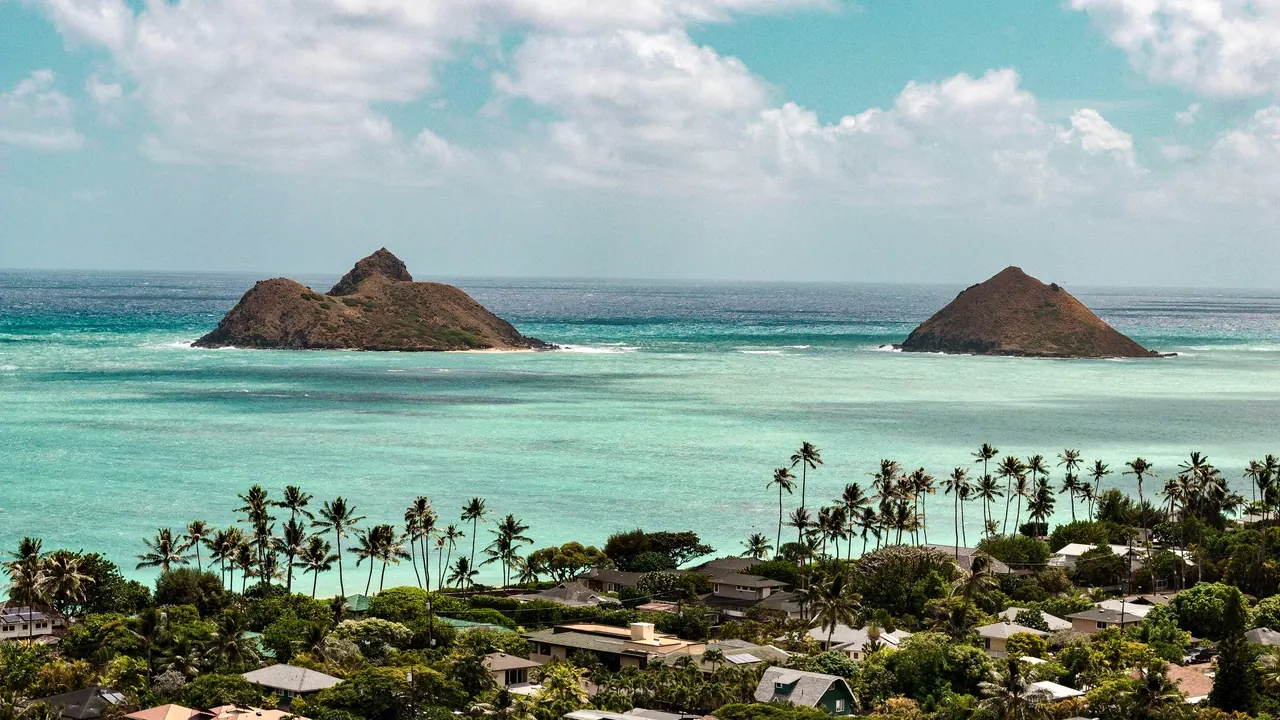
The Mokulua islets off Lanikai Beach
- Beaches93
- Nature & outdoors84
- Families78
Photo: Paige, Pexels License
Oahu lies in Hawaii, which has its own page.
Match
55
Every category weighted equally
- Beach & sun59
- Culture & arts49
- Food & nightlife50
- Family trip59
- Outdoors57
- Relax & unwind59
- Shopping & style53
- On a budget50
Oahu in twelve categories
Our verdict on each, scored 0 to 100 against the same fixed benchmark cities, so a score means the same thing on every page.
Beaches & swimming. Scores 93 out of 100.
Food & drink. Scores 68 out of 100.
Culture & sights. Scores 57 out of 100.
Nightlife. Scores 40 out of 100.
Nature & outdoors. Scores 84 out of 100.
Day trips. Scores 25 out of 100.
Good for families. Scores 78 out of 100.
Getting around. Scores 45 out of 100.
Shopping & style. Scores 58 out of 100.
Affordability. Scores 14 out of 100.
Live music & performing arts. Scores 42 out of 100.
Wellness & relaxation. Scores 52 out of 100.
Oahu category by category
Beaches & swimming
93The sea is warm enough to swim all year, from about 24°C in winter to 27°C in late summer, and beach life is what most stays revolve around. Waikiki is the easy, sociable option: a reef-calmed curve of sand below the hotels, with gentle waves for first-time surfers and Diamond Head at the end of the view. Across the mountains on the windward side, Kailua and Lanikai have soft pale sand, turquoise water and the Mokulua islets offshore, and they feel more like a neighbourhood than a resort.
The island changes with the seasons. In summer the North Shore goes flat, and Waimea Bay and Sharks Cove are good for swimming and snorkelling. In winter big swells make the same shore dangerous, and the calm water moves south and east. Hanauma Bay, a sheltered crater bay full of reef fish, is the snorkelling classic. In the west, the man-made lagoons at Ko Olina give calm water for small children. Strong currents are a real hazard on many exposed beaches, so it pays to swim where lifeguards are on duty.
Food & drink
68Oahu eats like nowhere else in the country, because Hawaiian, Japanese, Chinese, Korean, Filipino and Portuguese kitchens have mixed here for generations. The everyday food is the most rewarding: poke cut fresh at supermarket and fish-counter displays, plate lunches of rice, macaroni salad and kalua pork or garlic shrimp, Spam musubi from convenience stores, warm malasadas and shave ice on the drive to the North Shore. Garlic-shrimp trucks around Kahuku and Haleiwa are part of a day out.
Honolulu holds the depth. Kapahulu, Kaimuki and Chinatown have the neighbourhood places, the ramen and izakaya counters and the bakeries, and there is a small fine-dining tier built on local fish and produce. Waikiki itself is mostly hotel and chain dining at resort prices. Farmers' markets sell tropical fruit, and local coffee and craft beer are easy to find, but the island has no deep wine or café culture of its own.
Culture & sights
57The island's heritage falls into two stories. The first is the Hawaiian kingdom: Iolani Palace in downtown Honolulu, the only royal palace on American soil, with the statue of King Kamehameha and the state buildings around it, and the Bishop Museum, which holds the finest collection of Hawaiian and Polynesian objects anywhere. Ancient heiau temple sites survive on the windward coast and above Waimea Valley, and the Polynesian Cultural Center at Laie presents island cultures across the Pacific.
The second is the Second World War. Pearl Harbor, with the USS Arizona Memorial, the battleship Missouri and the aviation and submarine museums, is the most visited site on the island and needs most of a day. Beyond that the list is short: the Honolulu Museum of Art, the old shophouses of Chinatown and the Byodo-In temple replica in its valley. There is little historic street fabric, and most of the city is modern.
Nightlife
40Evenings on Oahu tend to start with a sunset drink and end fairly early. Waikiki has the most going on: beachfront bars, hotel lounges and tiki bars along Kalakaua Avenue, with a lively happy-hour crowd and some late bars and small clubs. Honolulu's Chinatown is where locals go out, with cocktail bars, dive bars and a few dance floors in the old streets near the harbour, busiest on weekend nights.
The rest of the island is quiet after dark, and the North Shore and the windward towns go to bed with the sun. Most visitors start the day early for surf or hiking, and the night reflects it. There is enough for a good evening out, but it is not a destination for clubbing.
Nature & outdoors
84The landscape is the island's other great draw. The Koolau range rises behind Honolulu as a wall of green, deeply fluted cliffs, and the drive or hike over the Pali gives one of the great views of the islands. Short trails climb Diamond Head crater and Koko Head, the Makapuu lighthouse path looks down on the windward coast, and the Manoa and Waimea valleys are true rainforest with waterfalls. Steeper ridge hikes, the remote Kaena Point at the western tip and the Kualoa valley, a well-known film location, reach wilder country.
The ocean is just as important. The North Shore is the world's best-known big-wave surf coast in winter, and Waikiki's long, gentle breaks are where many people learn to surf. Kayaking to the Mokulua islets, outrigger canoeing, snorkelling with green turtles and watching humpback whales from December to April fill out the year. Everything is within about an hour of Honolulu.
Day trips
25On a single island, the choice of outings is limited. The circle drive is the classic day out, taking in the surf town of Haleiwa with its plantation-era shopfronts, the windward beach town of Kailua, the pineapple fields of the central plain and the Byodo-In temple in its valley. That covers most of the separate places worth visiting. The neighbouring islands of Maui, Kauai and the Big Island are about half an hour to an hour away by plane, and some visitors fly over for a day, but it means airports at both ends and a hired car. Most people do better to treat Oahu as one destination and add a second island as a separate stay.
Good for families
78Oahu works well for children because the sea is the main attraction and parts of it are made for small swimmers. The lagoons at Ko Olina, the reef-protected stretches of Waikiki and the sandy shallows at Kailua are calm, and snorkelling at Hanauma Bay is easy for confident young swimmers. Honolulu Zoo and the Waikiki Aquarium sit at the quiet end of Waikiki next to Kapiolani Park. There is a marine park on the southeast coast and a water park in the west, and the Polynesian Cultural Center turns island culture into an easy family day.
The culture is relaxed, there are plenty of resort pools, and the climate is warm all year without extreme heat. The drawbacks are price and distance: hotel rooms and meals for a family add up quickly. Winter surf on the north shore and strong currents on exposed beaches also need watching.
Getting around
45Waikiki is compact and flat, and a visitor staying there can walk to the beach, Kapiolani Park, the Diamond Head trailhead and Ala Moana. The island-wide bus network is extensive and goes everywhere from Hanauma Bay to the North Shore, but the long routes are slow and the buses carry no surfboards or large luggage. Honolulu's elevated rail line is built for commuters and does not reach Waikiki, so it plays little part in a typical stay.
For the windward beaches, the North Shore and the hikes, most visitors hire a car for at least a few days. Roads are good and no drive on the island is long, but Honolulu's motorway traffic is heavy at rush hour, and parking in Waikiki and at the popular beaches and trailheads is tight. A sensible plan is to stay car-free in town and drive on the days you go out of town.
Shopping & style
58Shopping on Oahu is mostly about Waikiki and the area around Ala Moana. Kalakaua Avenue is lined with luxury flagship stores, and one of the world's largest open-air malls sits beside Ala Moana Beach Park, with department stores and a broad range of fashion. The island's own specialities are aloha shirts, from mass-made prints to vintage and well-tailored versions, koa wood crafts, Hawaiian quilts, Niihau shell jewellery and local food gifts.
The Kakaako district and the small towns of Kailua and Haleiwa add independent boutiques, surf shops and galleries, and weekend craft fairs turn up local makers. Beyond that the choice is thin, and a lot of Waikiki's street-level shopping is souvenirs.
Affordability
14Oahu is an expensive island. Hotels in Waikiki and the resorts at Ko Olina are costly all year, and resort and parking charges add a lot to the bill. Almost everything is shipped in, so restaurant meals, groceries and drinks cost well above mainland levels, and car hire, guided tours and boat trips add up quickly. The budget savers are local: plate-lunch counters, poke from the supermarket, picnics on the beach, the island bus, and the many beaches and trails that cost nothing. Vacation rentals are tightly limited outside the resort areas, so there are few cheaper places to stay.
Live music & performing arts
42The island's live tradition is Hawaiian music and hula, and a visitor can hear it every evening. Slack-key guitar, ukulele and falsetto singing are played on hotel lanais and beachfront stages in Waikiki at sunset, and free hula shows are held by the beach at Kuhio. The traditional luau dinner shows are more polished and touristic. Serious hula competitions and festivals happen through the year and are worth looking out for.
Honolulu also has a symphony orchestra, a small opera company and the restored Hawaii Theatre downtown, with touring musicals and concerts at the city's main concert arena. It is a modest programme, and most nights the best music is the informal kind.
Wellness & relaxation
52Oahu has no bathhouse or thermal tradition, so wellness here means spas and a slower pace. Lomilomi, the Hawaiian massage with long flowing strokes, is the local speciality and is offered at every level from small studios to the big resort spas of Waikiki and Ko Olina. Yoga classes on the beach and in the parks are common.
The real restoration comes from where you stay. Waikiki is busy and built up, but the windward coast around Kailua and the North Shore have a slow, small-town rhythm, early mornings and quiet evenings that suit a vacation spent unwinding.
Where to stay in Oahu
Most first-time visitors stay in Waikiki, the beach district of Honolulu, and it makes sense. You can walk to the calm, reef-sheltered sand, beginner surf breaks, Kapiolani Park and the Diamond Head trail. Sunset music and the island's busiest bars are also close by, so you can manage without a car until the days you drive out of town. It suits couples, first visits and anyone who wants an evening out, though it is built up and never quiet.
Kailua on the windward side is the calmer choice. It feels like a neighbourhood rather than a resort, with soft sand, gentle shallows for children, kayaking to the Mokulua islets and early, quiet evenings. The North Shore around Haleiwa suits surfers, walkers and anyone who wants to slow down. It is good for swimming in summer and spectacular to watch in winter, with nothing much to do after dark. Both places have few vacation rentals, so book early. Ko Olina in the west is a self-contained resort area. Its lagoons are ideal for small children, but staying there is costly and you will need a car to see the rest of the island.
No drive on Oahu is long, so one base is enough for most trips. A good split is a few nights in Waikiki followed by a few in Kailua or on the North Shore. On a second visit, many people skip town completely.
When should you go?
Pick a month to see what it is like. The climate figures are measured averages, not a forecast.
Oahu in July
Daytime high, °C
Rainfall in the month, mm
The whole year
Shaded against this city’s own year: the deepest cell is its best month for that figure and the palest its weakest.
Temperature and rainfall are climate normals, averaged over the years shown. Oahu: 1991-2020 (sunshine 1981-2010) normals, Honolulu International Airport (10 km from centre).
Before you go
| Measure | Oahu |
|---|---|
| Currency | US Dollar (USD) |
| Sockets | AB120 V, 60 Hz |
| Driving side | Right |
| Time zone | UTC-10 |
| Emergency number | 911 |
| Main airport | Daniel K. Inouye International Airport (HNL)56 non-stop destinations |
| Public holidays this year | 13 days |
By the numbers
| Measure | Oahu |
|---|---|
| Population | 976,372 |
| People per km² | 632 |
| Swim season, months above 21 °C | 12 months |
Compare Oahu with
Every comparison with a written verdict behind it.