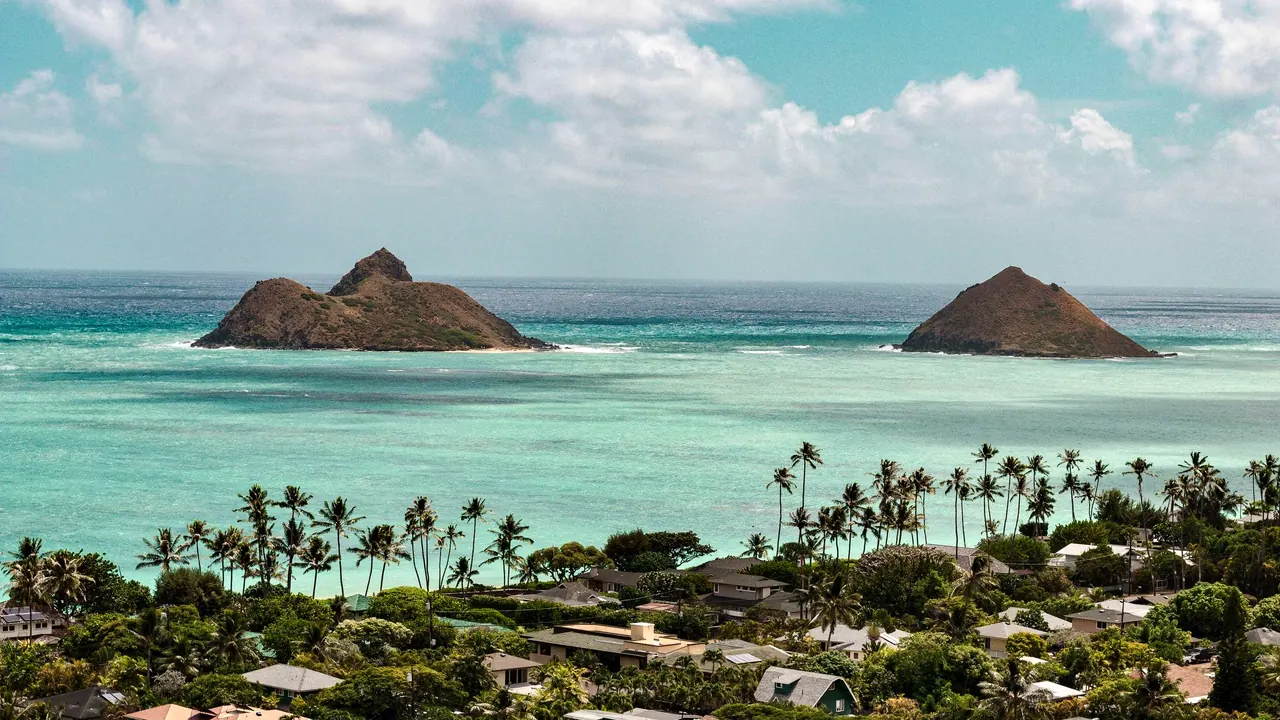
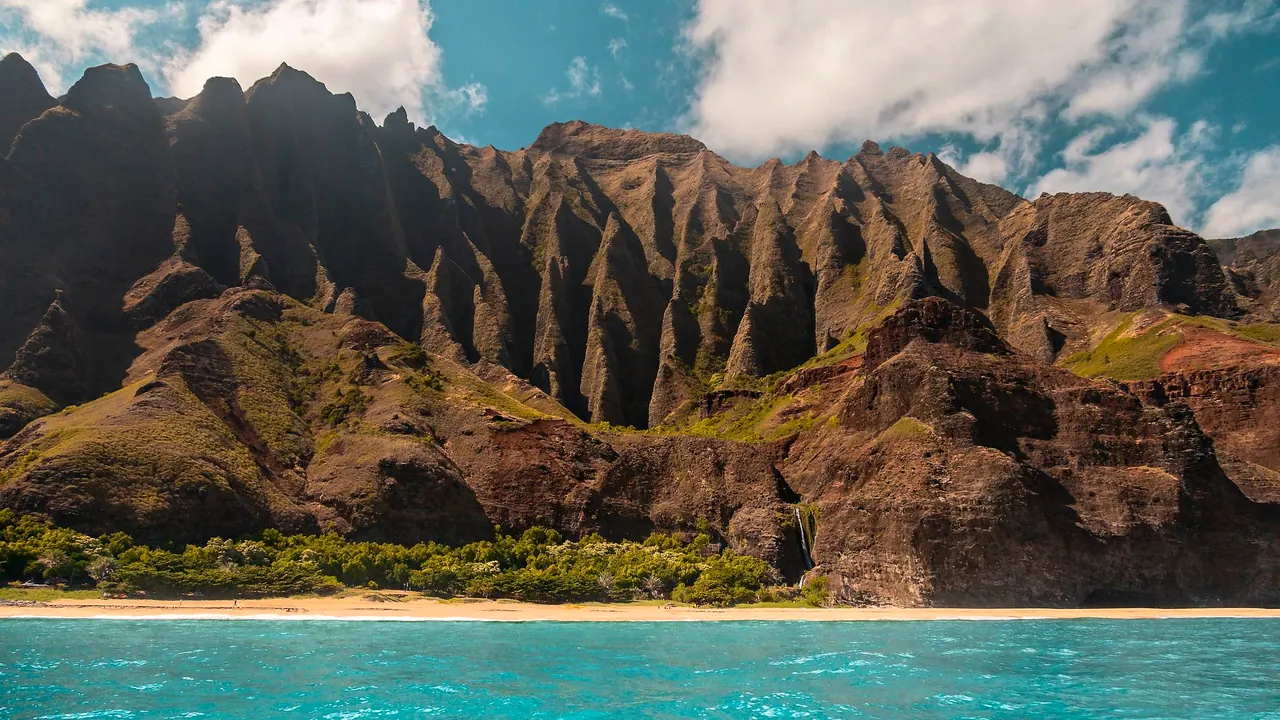
Photos: Oahu by Paige, Pexels License; Kauai by Jess Loiterton, Pexels License.
Oahu or Kauai?
Our verdict in twelve categories, each scored against the same fixed benchmark cities, and the climate month by month, so you can choose for your trip.
Choose Oahu for
- culture and sights
- shopping
- nightlife
Choose Oahu if you want the Hawaiian sea and mountains with a city attached. Honolulu adds Pearl Harbor, Iolani Palace and the Bishop Museum, the islands' best eating in Kapahulu and Chinatown, music every evening in Waikiki, and calm lagoons and an aquarium for children. Its nature is still superb, just less wild, and the weather is drier and sunnier through the year.
Choose Kauai for
- nature and the outdoors
Kauai is the island for travellers whose days are built around landscape: the Na Pali cliffs, Waimea Canyon and the forests of Kokee, river kayaking to waterfalls and the north-shore beaches in summer. It suits couples and walkers who are happy with early nights, simple food and a hire car, and who don't need museums, shops or bars to fill the gaps between outings.
Scoreboard
Twelve categories on one fixed scale from 0 to 100. The shaded stretch is the gap between the two.
Your match
Pick a travel style or drag the sliders, and both match scores follow your weighting.
Wins on culture and sights and shopping with your weighting.
Wins on nature and the outdoors with your weighting.
What matters to you?
Category by category
What the scores mean for a trip.
Beaches & swimming
Both islands have the same warm sea and follow the same pattern: north shores calm in summer and pounded by swells in winter. Kauai's settings may be the lovelier, with Hanalei Bay under green mountain walls and the reefs at Tunnels and Ke'e, and Poipu adds turtles and monk seals resting on the sand. But many beaches have no lifeguards, and in winter safe swimming is limited to the south shore and Lydgate.
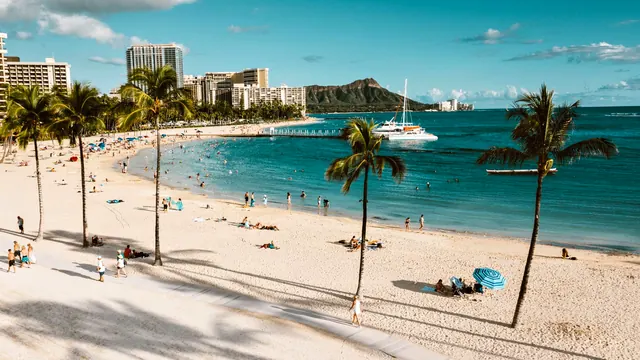
Oahu gives more choice and easier water. With Waikiki's reef-calmed curve of sand, the pale beaches of Kailua and Lanikai, the snorkelling bay at Hanauma and the Ko Olina lagoons, a sheltered swim is always within reach in any season. Waikiki's gentle waves are also a classic place to learn to surf.
Food & drink
The everyday food is the same on both islands: poke from the fish counter, plate lunches, malasadas and shave ice. On Kauai that is most of the story. Add farmers markets, food trucks in Kapaa and Hanalei, resort dining rooms at Poipu and Princeville, and an early dinner hour.
Oahu takes the same base much further. In Honolulu, Kapahulu, Kaimuki and Chinatown add ramen and izakaya counters, bakeries and a small fine-dining tier, and the garlic-shrimp trucks around Kahuku turn the North Shore drive into a meal. Someone who travels to eat will find a week's worth here, which Kauai can't offer.
Culture & sights
Kauai's history comes as small stops along the road: the Kauai Museum in Lihue, the Grove Farm sugar homestead, Captain Cook's landing place at Waimea and the heiau temple sites along the Wailua River. They make pleasant breaks on a drive, but not a programme.
Oahu has sights that fill whole days. Pearl Harbor, with the USS Arizona Memorial and the battleship Missouri, Iolani Palace and the Bishop Museum's Polynesian collection tell the stories of the Hawaiian kingdom and the war far more fully, even though Honolulu itself is a mostly modern city.
Nightlife
Kauai has almost no nightlife: a sunset drink at a resort bar in Poipu or Princeville, a few local bars in Kapaa, then bed. Oahu isn't a clubbing destination either, but the tiki bars and late lounges along Kalakaua Avenue in Waikiki and the cocktail and dive bars of Chinatown make a proper night out possible, especially at weekends.
Nature & outdoors
This is where Kauai pulls ahead. The Na Pali Coast, with cliffs rising more than 1,000m from the sea, and the red gorge of Waimea Canyon below the Kokee forests are wilder and grander than anything on Oahu. Much of it can only be seen on foot, from a kayak or from the air.
Oahu's outdoors are excellent and easier to reach. There are the Koolau cliffs behind Honolulu, short climbs up Diamond Head and Koko Head, rainforest in the Manoa valley and the winter big-wave surf of the North Shore, all within about an hour of the city. Here nature sits beside a city, not on an island given over to it.
Day trips
Neither island has much to offer beyond itself, and on both, outings are drives to small towns. Kauai's lie along a single road that never closes the loop: Hanalei, plantation-era Koloa, the galleries and swinging bridge of Hanapepe, and historic Waimea. Oahu's make a circle drive through Haleiwa, Kailua and the pineapple fields of the central plain, and from Honolulu the other islands are a short flight away, though a second island usually works better as a separate stay than as a day trip.
Good for families
Kauai suits a family that wants an outdoor vacation: calm water at Lydgate, Anini and Poipu, turtles on the sand, a plantation train ride and gentle river kayaking. But nothing on the island is built for children, and a rainy day leaves few options.
Oahu fills those gaps. The Honolulu Zoo and Waikiki Aquarium by Kapiolani Park, a marine park, a water park and the Polynesian Cultural Center come on top of the Ko Olina lagoons and Waikiki's shallows, so a week with young children is easier to fill. On both islands, parents need to watch the currents on exposed beaches.
Getting around
On Kauai a hire car is close to essential. One highway runs from Ke'e round to Polihale, about two and a half hours from end to end, the bus isn't built for visitors, and no town is walkable beyond a few streets. Choosing a base on the side of the island you care most about saves the most driving.
Oahu gives you more options. From Waikiki you can walk to the beach, Kapiolani Park and the Diamond Head trailhead. The island bus reaches almost everywhere, if slowly, and you only need a car on the days you head out of town. The trade-off is Honolulu's rush-hour traffic and tight parking, which are worse than anything on Kauai.
Shopping & style
Shopping on Kauai means surfwear in Old Kapaa and Hanalei, galleries in Hanapepe, craft stalls at Kilohana, and honey and coffee from the farmers markets. Oahu has far more: the luxury flagship stores of Kalakaua Avenue, the huge open-air mall at Ala Moana, and independent boutiques in Kakaako, Kailua and Haleiwa. Both sell the islands' own crafts, such as aloha shirts and Niihau shell leis, but only Oahu is worth planning a shopping afternoon around.
Affordability
Both islands are expensive in much the same way. Almost everything is shipped in, rooms in Poipu, Princeville, Waikiki and Ko Olina are costly, and neither has a cheaper district to fall back on.
The difference is in the extras. On Kauai the hire car is hard to avoid and a boat or helicopter trip along Na Pali is the big splurge. On Oahu, staying in Waikiki and using the bus can cut car hire to a few days, though resort fees and parking charges add up instead. On both, free beaches and trails, plate lunches and supermarket poke keep a trip under control.
Live music & performing arts
On Kauai, live performance mostly means the resort luau, slack-key guitar players in restaurants and the occasional community hula gathering. Oahu has the same traditions in greater supply, with music on hotel lanais at sunset every evening and free hula by the beach at Kuhio, and Honolulu adds a symphony orchestra, a small opera company and the restored Hawaii Theatre. The programme is modest, but there is something to hear or watch most nights.
Wellness & relaxation
Both offer the same kind of rest: lomilomi massage, resort spas, yoga and no thermal tradition. The difference is the setting. On Kauai the whole island is quiet, from the rainy calm and yoga retreats of Hanalei and Princeville to the open-air spas of Poipu. On Oahu you have to choose your base, because Waikiki is built up and busy, while Kailua and the North Shore have a small-town quiet much like Kauai's.
When should you go?
Pick your month. The climate figures are measured averages, not a forecast.
Oahu in July
Kauai in July
Daytime high, °C
Rainfall in the month, mm
Temperature and rainfall are climate normals, averaged over the years shown. Oahu: 1991-2020 (sunshine 1981-2010) normals, Honolulu International Airport (10 km from centre). Kauai: 1991-2020 normals, Lihue Airport (3.9 km from centre).
Both islands are warm enough for the beach in every month, and the sea is no cooler than about 24°C even in winter, so the best season depends on rain, heat and surf. On Kauai the wet months run from October to March, peaking at about 133mm in March, and the north shore and the mountains get more rain than that. In those months the trails above Na Pali and in Kokee turn steep and muddy. April to September is drier, and it is also when the north shore is calm enough to swim and the Na Pali coast can be seen by kayak or boat. Highs climb to about 30°C in August and September, so April to June is the easiest time for long hikes, and later in the summer it pays to start early.
Oahu is a degree or two hotter than Kauai and drier and sunnier in every month. Highs reach 32°C in August, and June brings only about 12mm of rain. From June to September the middle of the day is heavy going for hikes or sightseeing on either island, so on Oahu April, May and October are the best months for walking, dry enough for the ridge trails without the full summer heat. Winter brings more showers to both islands, and big swells that close the north shores to swimmers.
Which traveller are you?
On an outdoors trip, Kauai is the stronger choice. The Kalalau Trail above the Na Pali cliffs, Waimea Canyon, the Kokee lookouts and kayaking up the Wailua River give wilder country than Oahu, and the quiet evenings suit dawn starts.
For a culture and arts trip, Oahu is the clear pick. Pearl Harbor, Iolani Palace and the Bishop Museum fill several days, and evenings bring Hawaiian music in Waikiki or the Hawaii Theatre. Kauai has only a small museum and resort luaus.
On a food and nightlife trip, choose Oahu. The ramen counters, bakeries and neighbourhood places of Kapahulu and Chinatown go far beyond Kauai's plate lunches, and the bars of Waikiki and Chinatown are still open long after Kauai has gone to bed.
Before you go
| Measure | Oahu | Kauai |
|---|---|---|
| Currency | US Dollar (USD) | US Dollar (USD) |
| Sockets | AB120 V, 60 Hz | AB120 V, 60 Hz |
| Driving side | Right | Right |
| Time zone | UTC-10 | UTC-10 |
| Emergency number | 911 | 911 |
| Main airport | Daniel K. Inouye International Airport (HNL)56 non-stop destinations | Lihue Airport (LIH)14 non-stop destinations |
| Public holidays this year | 13 days | 13 days |
By the numbers
| Measure | Oahu | Kauai |
|---|---|---|
| Population | 976,372 | 66,921 |
| People per km² | 632 | 47 |
| Swim season, months above 21 °C | 12 months | 12 months |
Where else could you go?
Every comparison below shares a destination with this one, so you can follow Oahu or Kauai somewhere new.