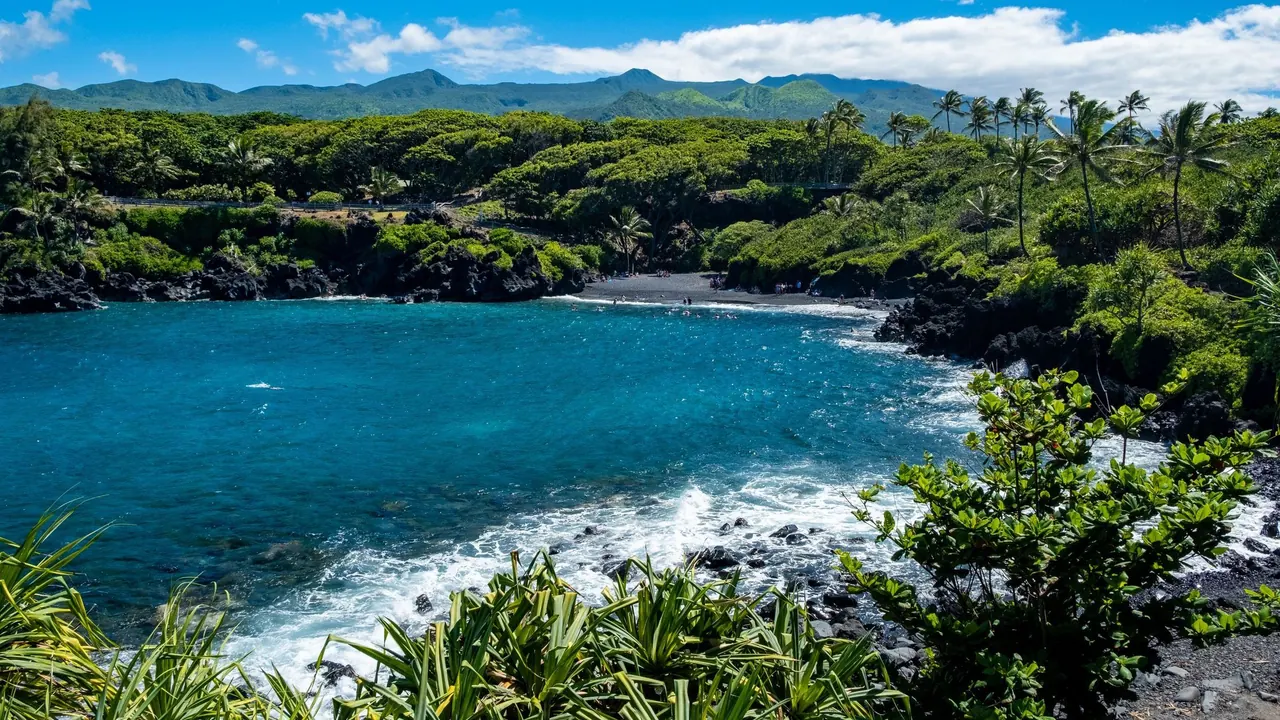
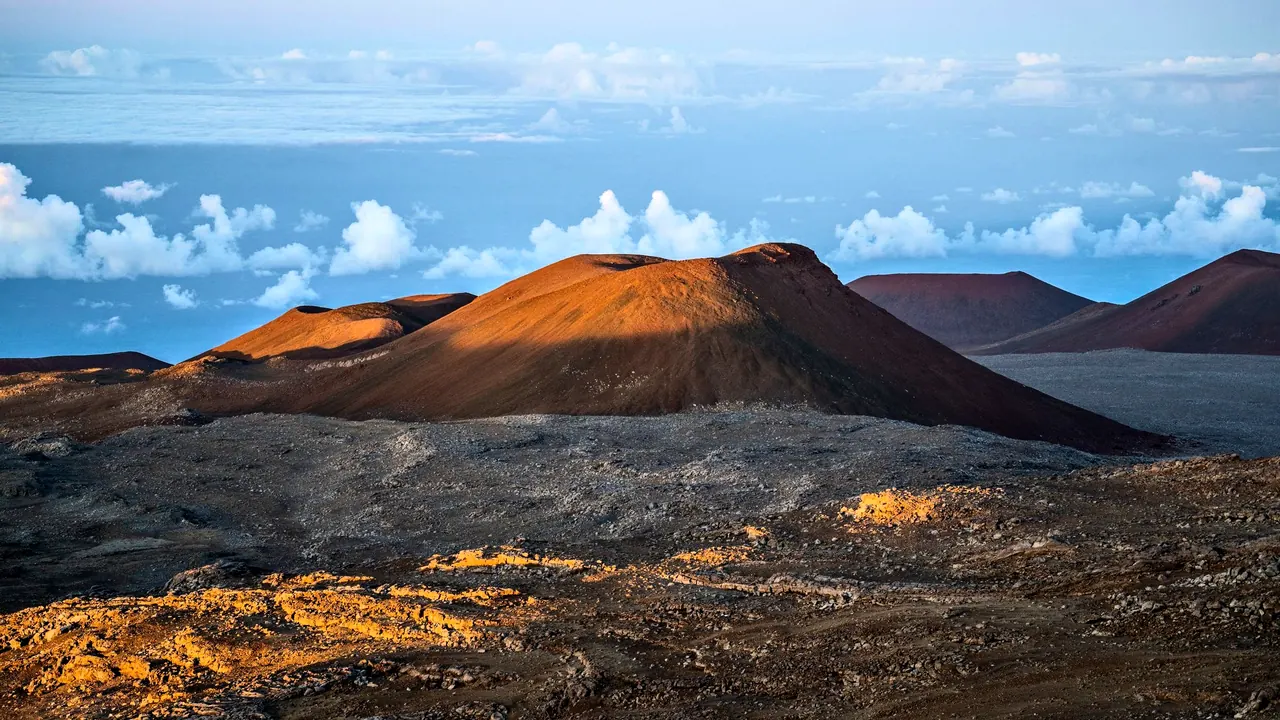
Photos: Maui by Kelsey, Pexels License; Big Island by Tim & Martin Klement, Pexels License.
Maui or Big Island?
Our verdict in twelve categories, each scored against the same fixed benchmark cities, and the climate month by month, so you can choose for your trip.
Choose Maui for
- wellness
- beaches
- food and drink
Maui is the better choice when the beach comes first and the days should be easy. Two coasts of swimmable sand, resort spas built for long afternoons and calmer water for children make it the more comfortable island to settle into. Haleakala at sunrise and the road to Hana mean the scenery is barely less dramatic. You pay for that comfort, though, because Maui is the dearer of the two.
Choose Big Island for
- culture and sights
- prices
- live music and the arts
The Big Island suits travellers who want to see land still being made. You can walk across steaming craters and fresh lava in the volcano park, watch the sky from the slopes of Mauna Kea, and follow Kamehameha's story from Pu'ukohola Heiau to the place of refuge at Honaunau. It costs a little less than Maui, but it asks more of you: the distances are long, and the best stays are split between the Kona side and the Hilo or volcano side.
Scoreboard
Twelve categories on one fixed scale from 0 to 100. The shaded stretch is the gap between the two.
Your match
Pick a travel style or drag the sliders, and both match scores follow your weighting.
Wins on wellness and beaches with your weighting.
Wins on culture and sights and prices with your weighting.
What matters to you?
Category by category
What the scores mean for a trip.
Beaches & swimming
On the Big Island the good swimming is mostly on the Kohala Coast, at broad pale crescents such as Hapuna, Kauna'oa and sheltered Anaeho'omalu. Most of the rest of the shore is black lava. Its strength is snorkelling straight from the shore at Kahalu'u and the ledges of Honaunau, where turtles are common.
Maui has more good beaches and more choice of where to stay. The west coast runs from Kaanapali to the reef bays of Napili and Kapalua, and the south coast has a chain of golden beaches from Kihei to Big Beach at Makena. Wherever you stay, sand is never far away. Winter swells hit the north shores of both islands.
Food & drink
Everyday food is much the same on both islands: poke cut to order, plate lunches, malasadas and shave ice. The Big Island's speciality is Kona coffee, tasted at the farms above Kailua-Kona and Holualoa. Hilo's big market and the upland kitchens of Waimea are its other highlights.
Maui has a little more range. Kahului, Wailuku and Kihei have more local counters, and the upcountry farms around Kula add farm stands, a goat dairy and a winery on Haleakala. Wailea and Kaanapali also have more oceanfront dining rooms, some of them very good.
Culture & sights
The Big Island has more Hawaiian history to see. Pu'ukohola Heiau, the restored place of refuge at Honaunau, Hulihe'e Palace and the Captain Cook monument at Kealakekua Bay make a real itinerary, and petroglyph fields along the Kohala Coast add to it.
Maui's history fills a day or two. You can visit the Bailey House Museum in Wailuku, the sugar museum at Puunene and the great stone platform of Piilanihale Heiau near Hana. Much of its meaning lies in places, above all the sacred mountain of Haleakala.
Nightlife
Both islands go to bed early, and neither has clubs. On the Big Island the evening means a sunset drink on Ali'i Drive in Kailua-Kona, and then often stargazing or a night snorkel with manta rays. Maui's Kihei strip draws a younger crowd and stays open somewhat later, so it is the better bet if you just want a bar after dinner.
Nature & outdoors
Both islands are outstanding, but the experiences differ. The Big Island's volcano is alive. In Hawai'i Volcanoes National Park you cross steaming craters and walk through lava tubes, and when Kilauea erupts you may see lava glowing at night. Mauna Kea gives some of the clearest night skies anywhere, and the Hilo side adds rainforest, Akaka Falls and Waipio Valley.
Maui's volcano is quieter but just as striking. You can watch sunrise over Haleakala's red-and-grey crater and walk down the Sliding Sands trail, then drive the rainforest road to Hana. At sea it has snorkelling at Molokini and windsurfing at Hookipa. Both islands have humpback whales offshore in winter.
Day trips
Neither island has much to offer in day trips to other places. The Big Island has more towns worth a day: wooden Hilo on its bay, the ranch country of Waimea, Hawi at the northern tip and the coffee village of Holualoa. Maui's towns are smaller, but it has something the Big Island cannot match: a ferry to Lanai, so you can visit a second island without flying.
Good for families
Maui is the easier island for children. Gentle beaches line two coasts, the Wailea and Kaanapali resorts run kids' programmes, and the Maui Ocean Center brings the reef indoors. If you choose one coast and stay there, the long drives are mostly optional.
The Big Island suits children who like the outdoors. It has the Junior Ranger programme and lava tubes in the volcano park, turtles in the shallows at Kahalu'u and a small zoo in Hilo. The trade-off is the long drive between the Kona and Hilo sides, and there are fewer calm beaches.
Getting around
You need a car on both islands, and the buses are no help for sightseeing. The Big Island's challenge is distance. The volcano park is about two and a half hours from Kona, which is why many visitors split their stay, and the Mauna Kea summit needs a four-wheel drive.
On Maui the west and south coasts are each within about an hour of the airport. The slow drives are the famous ones: the hairpins to Hana and the climb up Haleakala. In Wailea and Kaanapali you can spend a day on the beach paths without a car.
Shopping & style
Neither island is a shopping destination, and the best things to buy are local on both. The Big Island is the place for Kona coffee bought at the farm and for koa and ceramics from the galleries of Holualoa, Hawi and Volcano village. Maui has a little more fashion: a few luxury labels in the Wailea and Kaanapali resort centres, surf and boho shops in Paia and galleries in Makawao.
Affordability
Both islands are expensive, but the Big Island leaves more room to save. Condos in Kona and lodging on the Hilo side keep the bill down, and the national park and the beaches cost little to enjoy.
Maui is the dearer island. Even Kihei condos are expensive in the winter peak, and the Wailea and Kapalua resorts are priced at the top of the market. Plate lunches and cooking for yourself help a little, but there is no truly cheap way to see the island.
Live music & performing arts
The Big Island has the stronger cultural reason to time a visit. Every spring Hilo hosts the Merrie Monarch Festival, the most important hula competition in the world, and the town fills with free performances around it. For the rest of the year there are slack-key guitarists in the resort lounges and small programmes in the historic theatres of Hilo and Waimea.
Maui has a proper arts centre in Kahului, the Maui Arts & Cultural Center, with touring concerts and local theatre. It has no festival of Merrie Monarch's weight, so most visitors see hula at a resort luau.
Wellness & relaxation
Maui is the better island for a restful trip. The resort spas in Wailea and Kapalua are larger and have hydrotherapy circuits as well as lomilomi massage. Yoga retreats in the green hills of Haiku and Kula offer a quieter kind of rest, and Hana, at the end of its long road, is the place for real seclusion.
The Big Island has fine spas on the Kohala Coast and retreats in the Puna rainforest and on the coffee slopes. Its quietest corner is misty Volcano village. Neither island has thermal baths, despite the volcanoes.
When should you go?
Pick your month. The climate figures are measured averages, not a forecast.
Maui in July
Big Island in July
Daytime high, °C
Rainfall in the month, mm
Where the figures come from
Big Island has no rain gauge within 25 km of the centre, so its rainfall comes from a gridded climate dataset read at the destination rather than from a gauge further away.
Temperature and rainfall are climate normals, averaged over the years shown. Maui: 1991-2020 (sunshine 1981-2010, rainfall 1961-1990) normals, Kahului Airport (15.1 km from centre). Big Island: 2006-2020 (rainfall 1991-2020) normals, Kailua Kona / Mahaiula (12.1 km from centre).
Both islands are warm enough for the beach in every month. Daytime highs run from the high twenties in winter to about 31°C on Maui in late summer, and the sea never drops much below 24°C. The difference is the rain. The Big Island's figures show steady rain all year, heaviest in April and May at around 210mm, so expect showers whenever you go. The dry Kohala Coast gets far less of it than the Hilo side.
Maui's figures show a clear dry season. From April to October rainfall is often under 10mm a month, and the sunshine is at its longest in June. December and January are the wetter months, though they are still warm. If you want the most reliable dry weather, go to Maui between late spring and early autumn. The Big Island has no real dry season to plan around, so on the wetter Hilo side its timing depends more on what you want to see than on the weather.
Which traveller are you?
For a culture and arts trip, the Big Island has more Hawaiian heritage. Kamehameha's temple at Pu'ukohola, the place of refuge at Honaunau and Hulihe'e Palace are all there, and in spring Hilo hosts the Merrie Monarch hula festival.
On a beach and sun trip, choose Maui. Its west and south coasts both have calm golden beaches, from Kapalua down to Makena, and the dry season is long. The Big Island's good swimming is mostly limited to the Kohala Coast.
On a relaxing and wellness trip, Maui is the easier place to unwind. It has the larger resort spas in Wailea and Kapalua, yoga retreats in the upcountry hills and real quiet in Hana, and you do less driving between them.
Before you go
| Measure | Maui | Big Island |
|---|---|---|
| Currency | US Dollar (USD) | US Dollar (USD) |
| Sockets | AB120 V, 60 Hz | AB120 V, 60 Hz |
| Driving side | Right | Right |
| Time zone | UTC-10 | UTC-10 |
| Emergency number | 911 | 911 |
| Main airport | Kahului International Airport (OGG)29 non-stop destinations | Ellison Onizuka Kona International Airport at Keāhole (KOA)20 non-stop destinations |
| Public holidays this year | 13 days | 13 days |
By the numbers
| Measure | Maui | Big Island |
|---|---|---|
| Population | 144,444 | 198,449 |
| People per km² | 77 | 19 |
| Swim season, months above 21 °C | 12 months | 12 months |
Where else could you go?
Every comparison below shares a destination with this one, so you can follow Maui or Big Island somewhere new.