United States
Honolulu
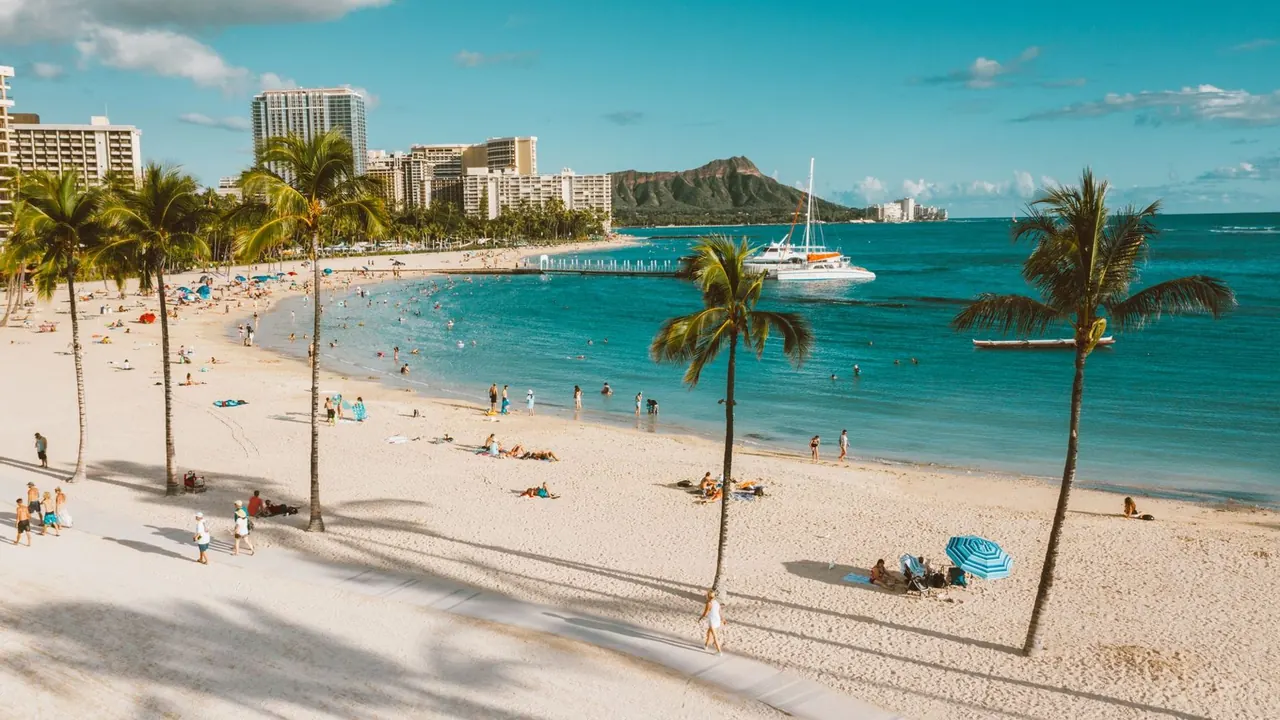
Palms on Waikiki Beach
- Beaches91
- Nature & outdoors88
- Families80
Photo: Jess Loiterton, Pexels License
Match
57
Every category weighted equally
- Beach & sun61
- Culture & arts52
- Food & nightlife53
- Family trip61
- Outdoors60
- Relax & unwind60
- Shopping & style56
- On a budget52
Honolulu in twelve categories
Our verdict on each, scored 0 to 100 against the same fixed benchmark cities, so a score means the same thing on every page.
Beaches & swimming. Scores 91 out of 100.
Food & drink. Scores 70 out of 100.
Culture & sights. Scores 55 out of 100.
Nightlife. Scores 45 out of 100.
Nature & outdoors. Scores 88 out of 100.
Day trips. Scores 38 out of 100.
Good for families. Scores 80 out of 100.
Getting around. Scores 52 out of 100.
Shopping & style. Scores 60 out of 100.
Affordability. Scores 15 out of 100.
Live music & performing arts. Scores 40 out of 100.
Wellness & relaxation. Scores 50 out of 100.
Honolulu category by category
Beaches & swimming
91Beach life is the reason most people come. Waikiki's crescent of sand faces calm, reef-sheltered water that stays around 25-27°C all year. The beach is narrow and crowded in front of the hotel towers, but it is easy for gentle swimming, beginner surfing and outrigger canoe rides. Ala Moana Beach Park, a short walk west, is calmer and popular with local families, and Kaimana Beach below Diamond Head is quieter still.
Within about forty minutes the windward side has the soft white sand and turquoise water of Kailua and Lanikai, and Hanauma Bay's sheltered reef bowl is a short drive east. The North Shore is about an hour away. In winter it gets huge surf and swimming there is often unsafe, but in summer it is glassy and good for swimming. Strong currents and shore breaks are real on exposed beaches, so swim where there are lifeguards.
Food & drink
70Eating in Honolulu means local food shaped by Hawaiian, Japanese, Chinese, Korean, Filipino and Portuguese families. You'll find poke sold by weight at fish counters and supermarkets, plate lunch with two scoops of rice and macaroni salad, loco moco, Spam musubi, garlic shrimp, malasadas and shave ice. Traditional Hawaiian food such as kalua pig, laulau and poi is easy to find. Japanese food is especially good, from ramen and udon counters to izakaya and sushi bars.
Kaimuki, Kapahulu and Chinatown are where locals eat. Chinatown also has dim sum, noodle shops and produce markets. Farmers' markets sell tropical fruit and island coffee, and Kona and other Hawaiian coffees are easy to find. Waikiki has plenty of upscale resort dining, but much of it is generic. The best meals tend to be the casual ones.
Culture & sights
55Honolulu's history is that of a Pacific kingdom and then of the Pacific war, and its best sights tell both stories. Iolani Palace was the royal residence of the Hawaiian monarchy. The Bishop Museum holds the finest collection of Hawaiian and Polynesian artefacts anywhere. At Pearl Harbor, the USS Arizona Memorial and the battleship Missouri make a moving half-day.
The Honolulu Museum of Art is strong on Asian art. Kawaiahao Church, built from coral blocks, and the King Kamehameha statue sit near the palace. Chinatown keeps some of its old two-storey shopfronts. Beyond these the city is mostly modern towers and resorts, so serious sightseeing fits into two or three days.
Nightlife
45Evenings usually start with a sunset drink by the beach and often end not much later. Waikiki has beachfront bars with mai tais, hotel lounges and a few clubs aimed at visitors. Chinatown and the area around Nuuanu Avenue have the more local scene of cocktail bars, dive bars and some dance nights. Kakaako has craft breweries.
It's sociable and relaxed rather than late or wild. Most places wind down well before dawn, and many visitors are up early for the water. Couples and groups looking for a good bar will be happy. Anyone after a serious club scene will find it thin.
Nature & outdoors
88Green volcanic mountains rise straight behind the city, and the landscape is close at hand. Diamond Head's crater rim trail looks down over Waikiki, the Manoa Falls trail climbs into rainforest within twenty minutes of the beach, and the Koko Crater and Makapuu lighthouse walks look along a dramatic coastline. Further along, the fluted cliffs of the Koolau range tower over the windward valleys, and the ridge trails are among the most striking anywhere, though they are often muddy and steep.
The water is just as important. You can snorkel over reefs with green sea turtles, learn to surf or paddleboard off Waikiki, and kayak to the islets off Kailua. Humpback whales pass offshore in winter, and the North Shore's big-wave season is a famous sight. Rain showers come and go quickly, mostly on the windward side.
Day trips
38Being on an island limits the options. Oahu's other places are small. Haleiwa is an old plantation and surf town on the North Shore with galleries and shrimp trucks. Kailua is a relaxed windward beach town. Near Laie, the Polynesian Cultural Center presents the island cultures of the Pacific, and the Byodo-In temple sits beneath the Koolau cliffs. The old pineapple country around Wahiawa also makes a stop, and the whole island loop makes a good day's drive.
The neighbouring islands are a short flight away. A day on Maui or the Big Island is possible but rushed, and most people do better to stay a few nights.
Good for families
80Honolulu is an easy place to bring children. The water is warm, many beaches are protected by reefs, and the local culture is relaxed and welcoming to children. The Honolulu Zoo and the Waikiki Aquarium sit at the quiet Diamond Head end of Waikiki, and Ala Moana Beach Park and the lagoons at Ko Olina are calm enough for small swimmers. Sea Life Park has dolphins and turtles, Hanauma Bay is a gentle first snorkel, and there is a water park in the west of the island.
Older children enjoy surf lessons, the Diamond Head climb, the Pearl Harbor ships and the Polynesian Cultural Center. Resort hotels come with pools and kids' clubs. The main drawbacks are the long flight and the cost.
Getting around
52Waikiki is compact and flat, and you can walk from end to end along Kalakaua Avenue or the beach. Ala Moana and Kapahulu are an easy stroll or short ride away. TheBus covers the whole island, including Pearl Harbor, Chinatown and the North Shore, though the longer rides are slow and crowded.
Outside the centre, the beaches, trailheads and small towns are spread out, and traffic on the main highways is heavy at rush hour. Many visitors spend a few days without a car, then hire one for a day or two to loop the island. Ride-hailing fills the gaps.
Shopping & style
60Shopping is a big part of a Waikiki stay, especially for visitors from Asia. Kalakaua Avenue has a long row of luxury fashion houses, and the huge open-air Ala Moana Center beside Ala Moana Beach Park holds department stores, international chains and a wide spread of Japanese and other Asian food counters.
The local things worth buying are aloha shirts (vintage and new), koa wood bowls, Hawaiian quilts, ukuleles, Niihau shell lei, island coffee and macadamia nuts. Independent design shops and surf brands cluster in Kakaako, Kaimuki and Haleiwa, and craft fairs and weekend swap meets make for a more casual hunt. Beyond the luxury streets, a lot of what Waikiki sells is souvenirs.
Affordability
15Honolulu is an expensive place to stay. Nearly everything is shipped in, and Waikiki hotel rooms, resort fees, sit-down restaurants, drinks and car hire all cost well above what most mainland cities charge. Tours and activities add up quickly.
There are ways to soften it. Plate lunches, poke counters, food trucks and supermarket delis feed you well for much less. The bus is cheap, and the beaches, most hikes and the Pearl Harbor memorial cost little or nothing. A self-catering apartment helps a lot on a longer stay.
Live music & performing arts
40The performance that belongs to Honolulu is Hawaiian music and hula. You'll find slack-key guitar, falsetto singing, steel guitar and ukulele, and hula from the gentle modern style to the chanted ancient form. Free hula shows at Kuhio Beach, musicians in hotel courtyards and beachfront lounges, and the dance competitions and festivals held through the year all let a visitor see it properly, beyond the staged luau.
The formal scene is small. The restored Hawaii Theatre in downtown hosts concerts and shows, the Hawaii Symphony and Hawaii Opera Theatre perform short seasons, and touring acts use the Blaisdell Center. Jazz and other live music turn up in a few bars, but anyone wanting a nightly programme of theatre or classical music will find little.
Wellness & relaxation
50There are no thermal baths or public bathing traditions here. What Honolulu offers is lomilomi, the long, flowing Hawaiian massage, and good spas in the resort hotels, some with open-air treatment rooms. Yoga on the sand at Waikiki or in the parks at dawn is common.
The pace of island life is the bigger restorative force: early mornings, warm air and an evening spent watching the sun go down. Waikiki itself is dense and busy, so those who want real quiet base themselves at Kahala, Ko Olina or on the windward side.
When should you go?
Pick a month to see what it is like. The climate figures are measured averages, not a forecast.
Honolulu in July
Daytime high, °C
Rainfall in the month, mm
The whole year
Shaded against this city’s own year: the deepest cell is its best month for that figure and the palest its weakest.
Temperature and rainfall are climate normals, averaged over the years shown. Honolulu: 1991-2020 normals, Honolulu International Airport (10.1 km from centre).
Before you go
| Measure | Honolulu |
|---|---|
| Currency | US Dollar (USD) |
| Sockets | AB120 V, 60 Hz |
| Driving side | Right |
| Time zone | UTC-10 |
| Emergency number | 911 |
| Elevation | 12 m |
| Main airport | Daniel K. Inouye International Airport (HNL)7 km from centre56 non-stop destinations |
| Public holidays this year | 13 days |
By the numbers
| Measure | Honolulu |
|---|---|
| City population | 350,964 |
| People per km² | 1,981 |
| Museums within 10 km | 12 |
| UNESCO World Heritage sites within 50 km | 0 |
| Swim season, months above 21 °C | 12 months |
Compare Honolulu with
Every comparison with a written verdict behind it.