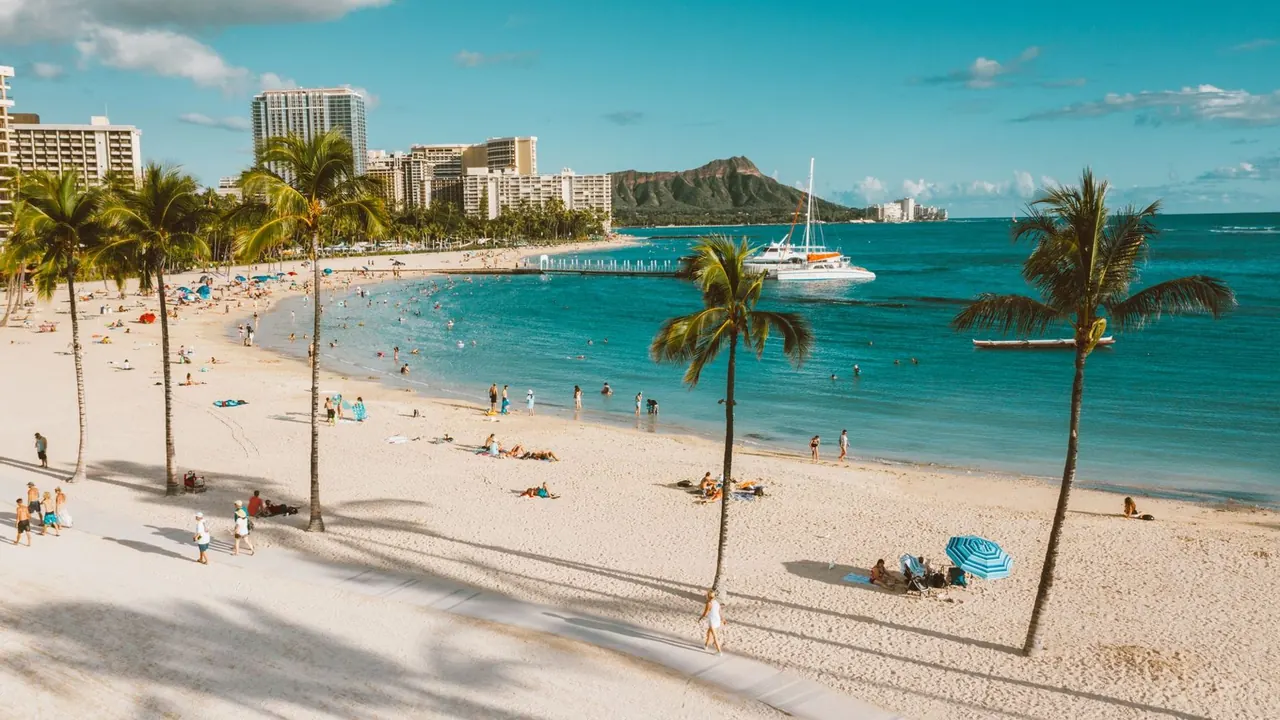
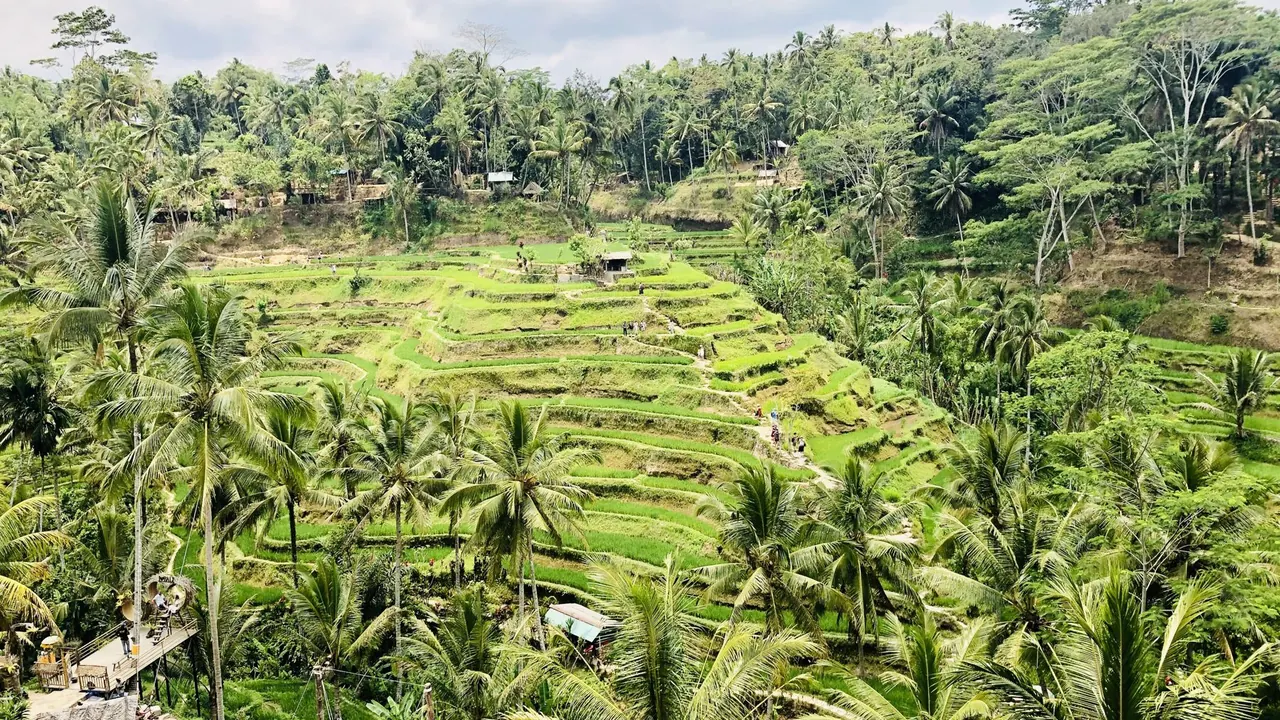
Photos: Honolulu by Jess Loiterton, Pexels License; Ubud by Pinterpandai, CC BY-SA 3.0, cropped.
Honolulu or Ubud?
Our verdict in twelve categories, each scored against the same fixed benchmark cities, and the climate month by month, so you can choose for your trip.
Choose Honolulu for
- beaches
- getting around
- families
Honolulu is the choice for a trip built around the water. It has warm, reef-sheltered swimming at Waikiki, the windward sands of Kailua and Lanikai, snorkelling at Hanauma Bay and crater and ridge walks right behind the city. It is also easier with children, easier to get around without a driver and livelier after dark. It costs a great deal more.
Choose Ubud for
- prices
- wellness
- day trips
Travellers who want to slow down should look at Ubud instead. Yoga, Balinese massage and villas facing the rice fields are part of everyday life there, the great temples of central and eastern Bali are within a driver's reach, and money goes much further. In return you get no beach in town, early nights and roads that turn almost every outing into a car ride.
Scoreboard
Twelve categories on one fixed scale from 0 to 100. The shaded stretch is the gap between the two.
Your match
Pick a travel style or drag the sliders, and both match scores follow your weighting.
Too close to call, 2 points apart
Wins on beaches and getting around with your weighting.
Wins on prices and wellness with your weighting.
What matters to you?
Category by category
What the scores mean for a trip.
Beaches & swimming
The gap here is large. Honolulu is built around its shore. Waikiki's reef-sheltered sand suits easy swimming and first surf lessons, and Kaimana and Ala Moana have quieter water. Lanikai, Kailua and Hanauma Bay are a short drive away, and in summer the North Shore is calm enough to swim.
Ubud sits inland among the hills. The nearest calm swim is at Sanur, the best part of an hour away, and the black-sand beaches of the Gianyar coast are for watching surfers rather than swimming. Most of your time in the water here will be in a villa pool.
Food & drink
Honolulu has more to eat because so many kitchens meet there. You'll find poke counters, plate lunch, kalua pig and laulau, and excellent Japanese ramen, izakaya and sushi in Kaimuki, Kapahulu and Chinatown.
Ubud's range is narrower but distinctly its own. There is babi guling at lunchtime counters, bebek betutu and nasi campur in family warungs, and a large plant-based café scene. In both places the main tourist strip is the weakest place to eat, and the best meals are the casual ones.
Culture & sights
The two are evenly matched, and both towns can be seen properly in two or three days, but the kind of culture differs. Honolulu's is history held in buildings and collections: Iolani Palace, the Polynesian artefacts of the Bishop Museum and the memorials at Pearl Harbor.
In Ubud you see culture in everyday life: offerings on doorsteps, processions on temple feast days and the palace at Puri Saren. Add the painting collections of Neka, ARMA and Puri Lukisan and the carved Elephant Cave at Goa Gajah on the edge of town.
Nightlife
Honolulu's evenings are modest, but there is a real choice. You can have a mai tai on the beach at sunset, then go on to the cocktail and dive bars around Chinatown and Nuuanu Avenue or the breweries of Kakaako. Ubud offers much less, usually a long dinner, a garden bar and perhaps a band, and the town is quiet before midnight. For a late night, people drive to Seminyak or Canggu.
Nature & outdoors
Both are excellent places to be outdoors, but Honolulu comes out ahead because it adds the ocean to the mountains. Snorkelling with turtles, surfing, paddleboarding and kayaking to the Kailua islets sit alongside the Diamond Head rim, Manoa Falls and the Koolau ridges, with whales offshore in winter.
Ubud's landscape is inland, and much of it starts at the edge of town. Rice terraces surround it, the Campuhan Ridge path and the paddies north of the centre are walks from your door, and the Monkey Forest's old jungle sits in the middle of town. The waterfalls, rafting on the Ayung and the dark climb up Mount Batur for sunrise are the parts that need a drive.
Day trips
Ubud is much the better base for excursions. Tirta Empul and Gunung Kawi are close by. With a driver you can reach Besakih on the slopes of Mount Agung, the old court town of Klungkung, Tanah Lot, Ulun Danu Bratan and the Jatiluwih terraces, though Bali's slow roads limit how many fit into one day.
Oahu has Haleiwa, Kailua, the Polynesian Cultural Center and the Byodo-In temple, and all of them fit into one loop of the island. Going further means flying to a neighbouring island and staying a few nights.
Good for families
Honolulu is much easier with children. It has the calm lagoons at Ko Olina and Ala Moana, the zoo and aquarium at the Diamond Head end of Waikiki, Hanauma Bay for a first snorkel and resort kids' clubs. Between them they cover most ages, and the main drawback is cost.
Ubud gives children a warm welcome, and villas with pools make the afternoons easy. But missing pavements, scooter traffic, macaques that grab at bags and long car rides make it better suited to older children who enjoy rafting and rice-field walks than to toddlers.
Getting around
Honolulu is far simpler to get around. Waikiki is flat and easy to walk end to end, and TheBus reaches Pearl Harbor, Chinatown and the North Shore. A hire car for a day or two covers the rest of the island.
Ubud has no public transport you can rely on, and its pavements are broken and its roads climb steeply through the river valleys. Plan each day around a hired driver or ride-hailing, and stay near the centre if you want to walk to dinner.
Shopping & style
Honolulu has the broader choice. There are luxury fashion houses along Kalakaua Avenue and the huge Ala Moana Center, and good local buys include aloha shirts, koa bowls, ukuleles and island coffee. Ubud has no fashion or department stores, but its craft trail is the more unusual hunt: haggling at the Art Market, woodcarving in Mas, silver in Celuk and paintings in Batuan.
Affordability
The difference in cost is large. In Honolulu nearly everything is expensive, from the hotel room and resort fees to drinks and car hire. The savings come from plate lunches, the bus, and beaches and hikes that cost nothing.
In Ubud a homestay, warung meals, massages and a driver for the day all cost little. Only the luxury resorts above the gorges, the tasting menus and imported wine push the bill towards Western levels.
Live music & performing arts
Each city's stage centres on its own island tradition, and Ubud's is easier to see. Legong, Barong and Kecak with a live gamelan are performed every evening in the palace courtyard, at Pura Taman Saraswati and in village temples.
Honolulu's hula and slack-key guitar are more scattered, with free shows at Kuhio Beach, music in hotel courtyards and festivals through the year. It does have what Ubud lacks: the Hawaii Theatre and short seasons from a symphony and an opera company.
Wellness & relaxation
Wellness is the main reason many people choose Ubud. It has yoga from dawn to dusk in open pavilions, retreats of a weekend or several weeks, flower baths, traditional healers and the purification springs at Tirta Empul.
Honolulu has lomilomi, good resort spas and yoga on the sand. Real quiet there means staying at Kahala, Ko Olina or on the windward side rather than in busy Waikiki.
When should you go?
Pick your month. The climate figures are measured averages, not a forecast.
Honolulu in July
Ubud in July
Daytime high, °C
Rainfall in the month, mm
Where the figures come from
Ubud's temperatures are measured 29 km from the centre, at Denpasar / Ngurah-Rai.
Ubud's station stands 209 m below the city centre, so the centre is likely a little cooler than the figures say.
Ubud has no rain gauge within 25 km of the centre, so its rainfall comes from a gridded climate dataset read at the city rather than from a gauge further away.
Temperature and rainfall are climate normals, averaged over the years shown. Honolulu: 1991-2020 normals, Honolulu International Airport (10.1 km from centre). Ubud: 1991-2020 normals, Denpasar / Ngurah-Rai (29 km from centre).
Honolulu is warm enough for the beach in every month, and the sea stays between 24°C and 27°C all year. April to September is the dry season, with only light showers, and the hottest days run from June into October, when midday walks around Waikiki or up Diamond Head are best done early. From November to March showers come more often, but no month gets more than about 60mm, so rain hardly decides when to go. Winter is a little milder for walking, and it is also when the North Shore surf is up.
Ubud is hot all year, so walks are best early in the day. Here rain decides the timing. The wet season from November to March is heavy, with close to 300mm in January, and the hills are at their greenest but the trails are muddy. August is the driest and sunniest month at 36mm, and May to September is the time for clearer Batur sunrises and drier paths. The sea at Sanur is warm enough to swim in all year round.
Which traveller are you?
On a beach and sun trip, Honolulu wins easily: calm water a short walk from the hotels, with Lanikai, Kailua and Hanauma Bay close by. From Ubud, every swim in the sea is a day out by car.
For a relaxing and wellness trip, Honolulu offers dawn yoga on the sand, lomilomi and slow island days, but Ubud is far stronger. Yoga pavilions, long retreats and Balinese massage are part of ordinary life there.
On a trip on a tight budget, Honolulu means renting a kitchen and living on poke counters, the bus and free beaches. In Ubud the cheap version is the full trip: a garden room with breakfast, family warungs and rice-field walks.
Before you go
| Measure | Honolulu | Ubud |
|---|---|---|
| Official language | - | Indonesian |
| Currency | US Dollar (USD) | Rupiah (IDR) |
| Sockets | AB120 V, 60 Hz | CF50 Hz |
| Driving side | Right | Left |
| Time zone | UTC-10 | UTC+8 |
| Emergency number | 911 | 112 |
| Elevation | 12 m | 210 m |
| Main airport | Daniel K. Inouye International Airport (HNL)7 km from centre56 non-stop destinations | Denpasar I Gusti Ngurah Rai International Airport (DPS)29 km from centre63 non-stop destinations |
| Public holidays this year | 13 days | - |
By the numbers
| Measure | Honolulu | Ubud |
|---|---|---|
| City population | 350,964 | - |
| People per km² | 1,981 | - |
| Museums within 10 km | 12 | 14 |
| UNESCO World Heritage sites within 50 km | 0 | 1 |
| Swim season, months above 21 °C | 12 months | 12 months |
Where else could you go?
Every comparison below shares a destination with this one, so you can follow Honolulu or Ubud somewhere new.