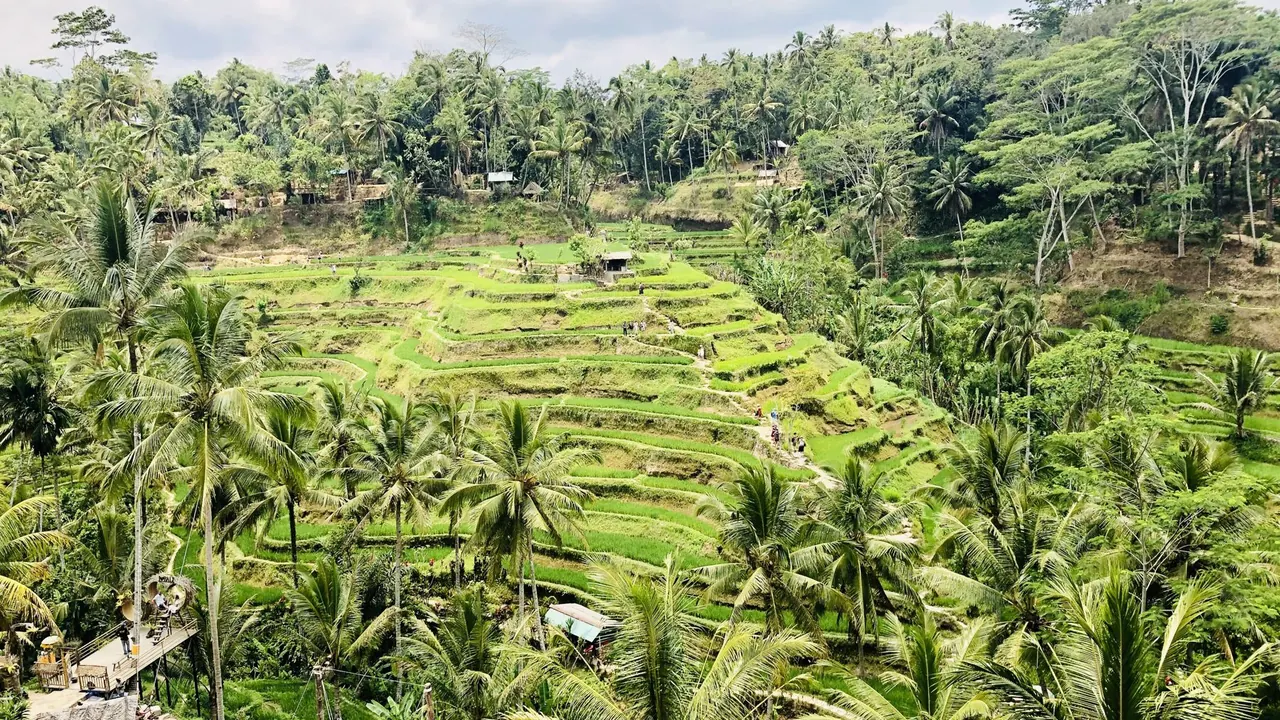
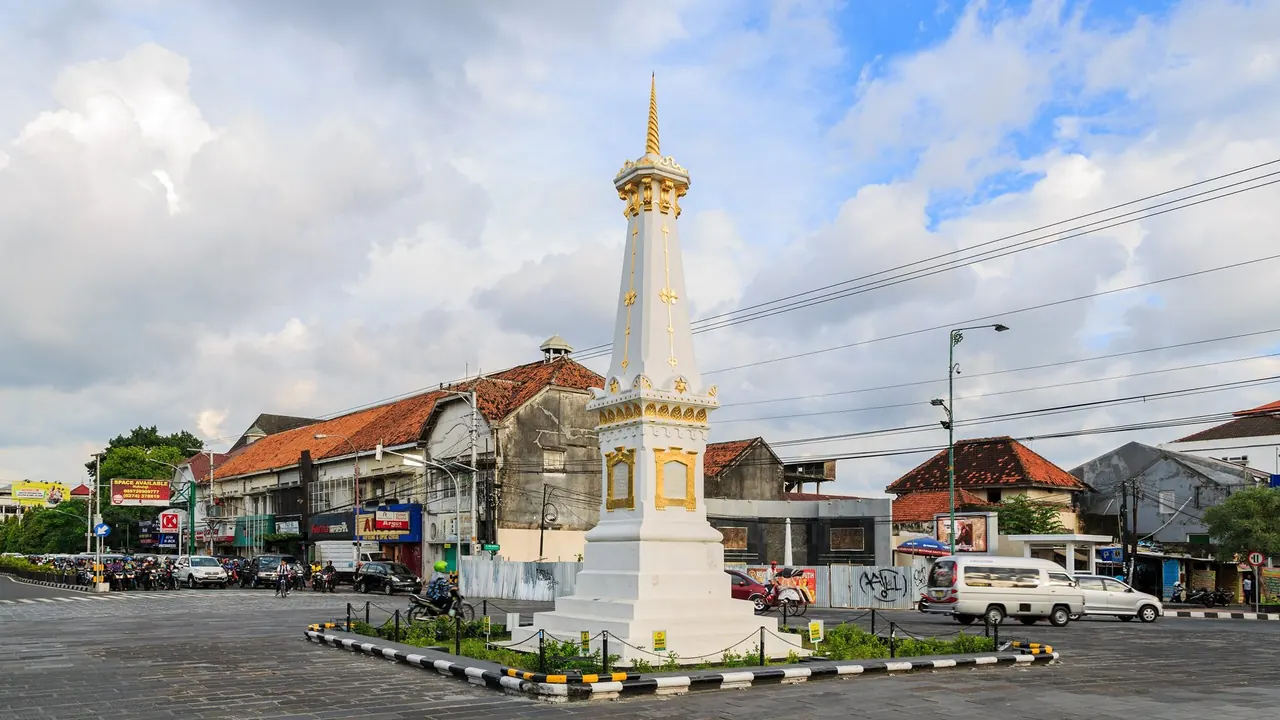
Photos: Ubud by Pinterpandai, CC BY-SA 3.0, cropped; Yogyakarta by CEphoto, Uwe Aranas, CC BY-SA 3.0, cropped.
Ubud or Yogyakarta?
Our verdict in twelve categories, each scored against the same fixed benchmark cities, and the climate month by month, so you can choose for your trip.
Choose Ubud for
- wellness
- beaches
- nature and the outdoors
Ubud is the place to slow down. Its pull is the landscape and the daily rhythm: rice terraces you can walk into from town, yoga at dawn, a massage most afternoons and a villa pool looking over the paddies. It also puts a calm swimming beach within reach, which Yogyakarta cannot. The price is that evenings are quiet and you will rely on a driver for almost everything.
Choose Yogyakarta for
- getting around
- nightlife
- prices
Travellers who want history, temples and a city that feels lived in are better off in Yogyakarta. A sultan still holds court in the Kraton, Borobudur and Prambanan are easy day trips, and the Ramayana ballet plays in front of Prambanan's towers. It is cheaper than Ubud, easier to get around, and its streets stay busy late, though wellness and the beach are not its strengths.
Scoreboard
Twelve categories on one fixed scale from 0 to 100. The shaded stretch is the gap between the two.
Your match
Pick a travel style or drag the sliders, and both match scores follow your weighting.
Too close to call, level with your weighting
Wins on wellness and beaches with your weighting.
Wins on getting around and nightlife with your weighting.
What matters to you?
Category by category
What the scores mean for a trip.
Beaches & swimming
Neither is a beach town, but Ubud is the better base for a swim. Sanur's calm water inside the reef is less than an hour's drive away, so a swim fits easily into a day.
From Yogyakarta, the nearest coast at Parangtritis is for sunset walks, not swimming, because of the rip currents. The paddling pools in Gunungkidul's white-sand coves are about two hours away and crowded at weekends.
Food & drink
The two are about equal for eating, but the food is very different. In Ubud, you eat Balinese spit-roast pork and slow-cooked duck, along with a large international layer of plant-based cafés and a few tasting-menu restaurants.
Yogyakarta's cooking is sweet Javanese, built around gudeg, and its best eating is on the street: angkringan carts, floor-seated lesehan stalls and charcoal coffee late at night. It has less range and fine dining, and alcohol plays almost no part.
Culture & sights
Yogyakarta has the deeper sightseeing. The Kraton is still the seat of a reigning sultan, and Taman Sari's bathing pools, the Sonobudoyo collections and the silversmith lanes of Kotagede fill several days.
Ubud's culture is smaller in scale and more a part of daily life: offerings on doorsteps, temple processions, the palace and lotus pond, and three museums tracing Balinese painting. Goa Gajah is its one major ancient site.
Nightlife
Neither is a party destination, but Yogyakarta stays up later. Students fill the coffee carts after dark, families pedal light-covered cars round Alun-Alun Kidul, and Prawirotaman has a small cluster of bars.
Ubud is mostly asleep before midnight, after a long dinner and perhaps a band in a garden bar. Clubbing means the long drive to Seminyak or Canggu.
Nature & outdoors
For landscape on your doorstep, Ubud is ahead. You can walk from town along Campuhan Ridge into the rice terraces, raft the Ayung gorge, swim under nearby waterfalls and climb Mount Batur for sunrise.
Yogyakarta's outdoors is more dramatic but further from the centre: jeep tours across Merapi's lava fields, an overnight climb of Merbabu, abseiling into the Jomblang cave shaft and tubing through Goa Pindul.
Day trips
Day trips are the main reason to stay in Yogyakarta. Borobudur and Prambanan are each world-class monuments, smaller temples cluster around Prambanan, and Solo is an easy train ride away.
Ubud also has a strong circuit: the holy spring at Tirta Empul, Besakih, Tanah Lot and the Jatiluwih terraces. But nothing on it matches those two monuments, and Bali's slow roads limit how much fits into a day.
Good for families
Private-pool villas give Ubud the edge with children, because the hottest hours can be spent in the water instead of on a scooter-filled street. Older children who like the outdoors get gentle rafting, rice-field walks and evening dance shows. Toddlers are harder work, with narrow pavements and Monkey Forest macaques that grab at bags and food.
Yogyakarta has a few easy mornings of its own: Gembira Loka zoo, the Taman Pintar science park near Malioboro and the light-covered pedal cars by the Kraton. The big temples are the difficult part, with early starts, long drives and a lot of steps in the sun for young legs.
Getting around
Yogyakarta is much easier to get around. The area around Malioboro, the Kraton and Taman Sari can be walked or covered by becak, ride-hailing reaches the rest, and a comfortable train runs to Solo.
Ubud has no usable public transport, and its sights are spread across steep river valleys. In practice, you plan each day around a hired driver or ride-hailing.
Shopping & style
Both are craft towns rather than fashion destinations, and each has a silver village: Celuk near Ubud, Kotagede in Yogyakarta. Ubud is better for woodcarving, Batuan paintings and homeware from the workshops towards Tegallalang, plus linen and yoga wear in town.
Yogyakarta is the place for batik, from hand-drawn pieces to printed cloth in Beringharjo market, along with Kasongan pottery and leather wayang puppets.
Affordability
Both are inexpensive, but Yogyakarta is cheaper overall. Street food, guesthouses, transport and spa treatments all cost little, and the main expense is the foreigners' entry fee at Borobudur and Prambanan.
Ubud can be just as cheap in a homestay that serves breakfast, but it also has a costly side, with luxury jungle resorts and cafés charging close to European prices.
Live music & performing arts
Yogyakarta offers the wider stage. The Ramayana ballet at Prambanan, court dance and gamelan inside the Kraton, and shortened wayang kulit shows at Sonobudoyo cover the classical Javanese arts, and the arts institute supports contemporary theatre in Indonesian.
Ubud has Balinese dance with live gamelan every night: Legong, Barong and Kecak in the palace courtyard and temple grounds. Beyond that, there is little.
Wellness & relaxation
This is where Ubud is strongest. Dawn yoga, multi-week retreats, riverside spas above the Ayung, traditional healers and the purification ritual at Tirta Empul are woven into the town's daily life.
Yogyakarta has its own court tradition of lulur scrubs, flower baths and jamu, all cheap. But real quiet means heading north towards Merapi, away from the noisy centre.
When should you go?
Pick your month. The climate figures are measured averages, not a forecast.
Ubud in July
Yogyakarta in July
Daytime high, °C
Rainfall in the month, mm
Where the figures come from
Ubud's temperatures are measured 29 km from the centre, at Denpasar / Ngurah-Rai.
Ubud's station stands 209 m below the city centre, so the centre is likely a little cooler than the figures say.
Ubud has no rain gauge within 25 km of the centre, so its rainfall comes from a gridded climate dataset read at the city rather than from a gauge further away.
Yogyakarta has no weather station within reach, so its figures come from a gridded climate model rather than a measured record, and read a broad area rather than the city itself.
Temperature and rainfall are climate normals, averaged over the years shown. Ubud: 1991-2020 normals, Denpasar / Ngurah-Rai (29 km from centre). Yogyakarta: 2001-2020 normals, NASA POWER reanalysis grid, no weather station within 90 km.
Both places are hot all year, so choosing a month comes down to rain. Ubud's dry stretch runs from about May to October. August is the clearest month, with only 36mm of rain and long sunny days. The wet season peaks around January, when heavy downpours turn the terraces their greenest and make the trails muddy. Daytime heat hardly changes through the year, and the sea at Sanur is warm enough to swim in every month.
Yogyakarta follows the same pattern, but its wet season is heavier. January and February are the wettest months in either place, with close to 340mm, while July to September are the best time for Merapi, the caves and early starts at the temples. Its days run a few degrees lower than Ubud's, around 28°C, but the humidity still makes walking the centre at midday tiring. Its southern sea stays warm, but it is too rough for swimming in any season.
Which traveller are you?
For a relaxing and wellness trip, Ubud is the clear choice. Yoga pavilions, retreats, Balinese massage and quiet villas over the rice fields set the pace of the whole town. Yogyakarta has cheap lulur scrubs and jamu, but its centre is hot and full of scooters.
On a culture and arts trip, Yogyakarta has more to offer. A living sultan's palace, Borobudur and Prambanan close by, and the Ramayana ballet under floodlit temple towers outweigh Ubud's painting museums and nightly dance shows, good as those are.
On a tight budget, your money goes further in Yogyakarta. Street carts, guesthouses and drivers cost very little, and the centre is walkable. In Ubud, a daily driver adds up, and the cafés aimed at visitors make it easy to overspend.
Before you go
| Measure | Ubud | Yogyakarta |
|---|---|---|
| Official language | Indonesian | Indonesian |
| Currency | Rupiah (IDR) | Rupiah (IDR) |
| Sockets | CF50 Hz | CF50 Hz |
| Driving side | Left | Left |
| Time zone | UTC+8 | UTC+7 |
| Emergency number | 112 | 112 |
| Elevation | 210 m | 113 m |
| Main airport | Denpasar I Gusti Ngurah Rai International Airport (DPS)29 km from centre64 non-stop destinations | Yogyakarta International Airport (YIA)39 km from centre20 non-stop destinations |
By the numbers
| Measure | Ubud | Yogyakarta |
|---|---|---|
| City population | - | 422,732 |
| People per km² | - | 13,007 |
| Museums within 10 km | 14 | 38 |
| UNESCO World Heritage sites within 50 km | 1 | 3 |
| Swim season, months above 21 °C | 12 months | 12 months |
Where else could you go?
Every comparison below shares a destination with this one, so you can follow Ubud or Yogyakarta somewhere new.