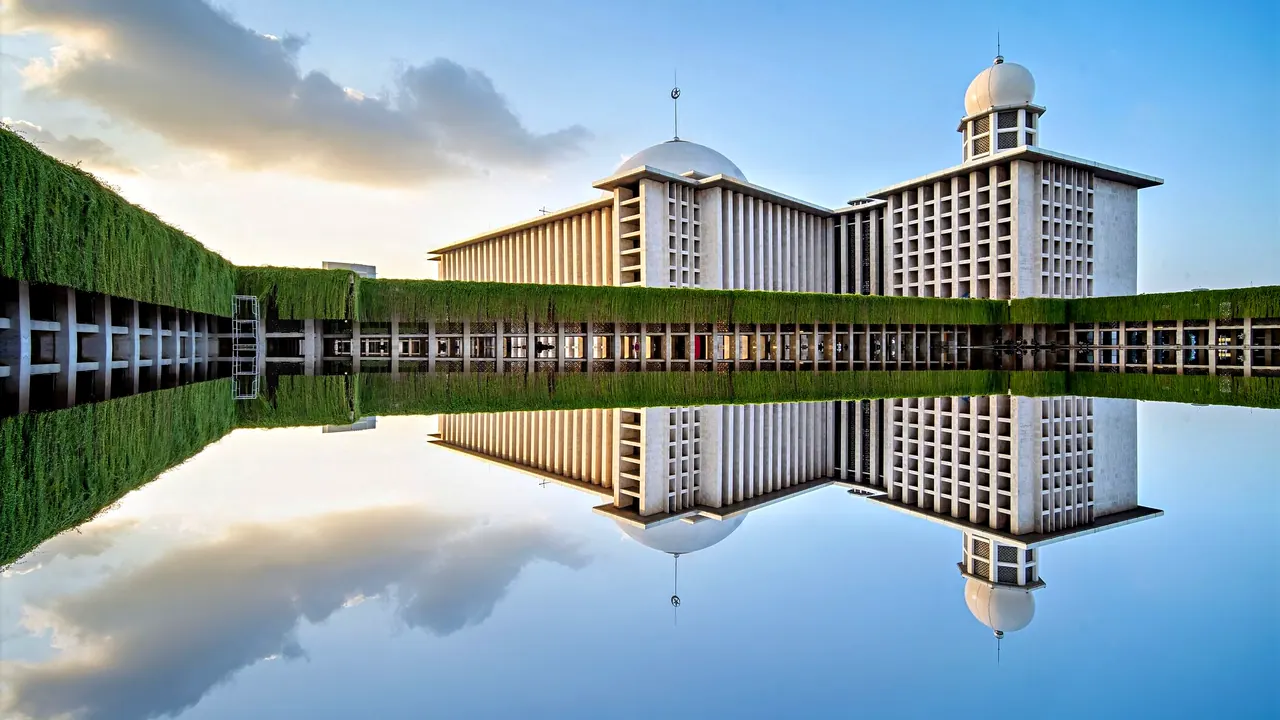
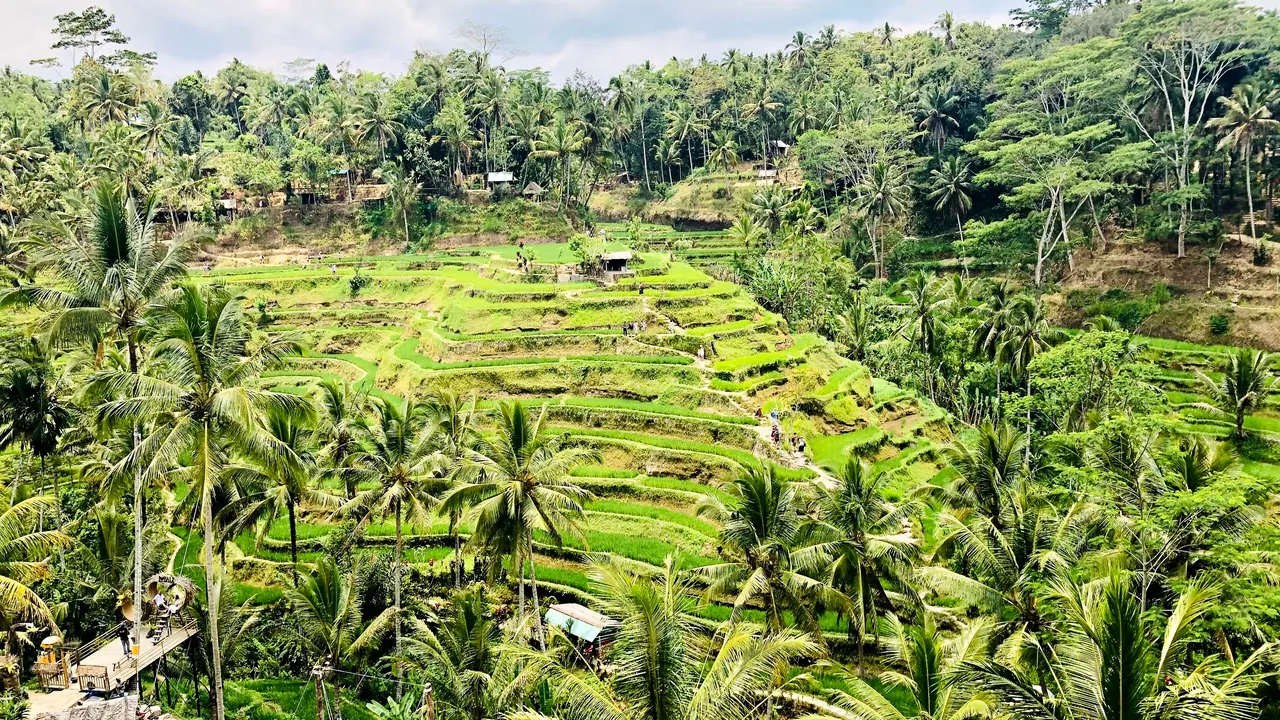
Photos: Jakarta by Antonyus Bunjamin, Pexels License; Ubud by Pinterpandai, CC BY-SA 3.0, cropped.
Jakarta or Ubud?
Our verdict in twelve categories, each scored against the same fixed benchmark cities, and the climate month by month, so you can choose for your trip.
Choose Jakarta for
- nightlife
- getting around
- food and drink
Jakarta suits travellers who want a big Asian capital on its own terms: eating your way through Padang counters, Betawi soups and Glodok's street stalls, then going out to clubs that run until dawn. It also suits shoppers after malls, Tanah Abang's textiles and batik by the floor. The price is time spent in traffic, and the beach, the green landscapes and real rest all lie outside the city.
Choose Ubud for
- nature and the outdoors
- wellness
- day trips
Ubud is the better pick for a slower trip built around landscape, ritual and looking after yourself. Rice terraces, river gorges and temple springs are on the doorstep, the island's great temples make easy outings with a driver, and yoga and Balinese massage shape the day. Evenings end early and every journey runs by car, so it rewards people who want quiet rather than nightlife or city energy.
Scoreboard
Twelve categories on one fixed scale from 0 to 100. The shaded stretch is the gap between the two.
Your match
Pick a travel style or drag the sliders, and both match scores follow your weighting.
Wins on nightlife and getting around with your weighting.
Wins on nature and the outdoors and wellness with your weighting.
What matters to you?
Category by category
What the scores mean for a trip.
Beaches & swimming
Neither is a beach destination, but Ubud gets you into the sea more easily. Sanur's calm water inside the reef is under an hour's drive, so a swim fits into an ordinary day, and the villa pool over the rice fields fills the gaps.
Jakarta's own shoreline at Ancol is for strolling, not swimming. The clear water and white sand of Pari or Tidung in the Thousand Islands are a fine snorkelling trip, but they mean a speedboat and often a night away.
Food & drink
Jakarta is the stronger eating city by some way, because the whole country's cooking is gathered in one place: Padang spreads, Manadonese and Sundanese kitchens, Betawi soto and kerak telor, and Glodok's lanes for grazing on foot. It also eats around the clock, from plastic stools to polished Menteng dining rooms.
Ubud's food is narrower but good where it is Balinese, above all babi guling and slow-cooked duck. Around that sits a layer of plant-based cafés and tasting menus aimed at visitors, so the best meals are a lane or two off the main street.
Culture & sights
Ubud has the edge because its culture is lived in the streets: offerings on doorsteps, processions on feast days, the palace and lotus-pond temple in the centre, and Balinese painting traced through the Puri Lukisan, Neka and ARMA museums. Goa Gajah and rock-cut shrines lie just outside town.
Jakarta tells a different, more historical story of Dutch Batavia and a colonial port, with Kota Tua, the Sunda Kelapa schooners and the National Museum's statuary as the high points. They are worth seeing, but they are scattered across the city and lack Ubud's sense of a living tradition.
Nightlife
This is one of the widest gaps between the two. Jakarta is known across the region for late nights, with big DJ clubs, rooftop bars around Senopati, Kemang's looser strip and Blok M's cheap, rowdy bars, though you will taxi between them and Ramadan quietens things.
Ubud's evening is a long dinner, a garden bar and maybe a band, then bed before midnight. Anyone wanting clubs has to drive down to Seminyak or Canggu.
Nature & outdoors
Ubud is surrounded by the landscape that draws people to Bali: terraced paddies you can walk into from town, deep river gorges with rafting and waterfalls, the Monkey Forest in the centre, and Mount Batur's crater for a dawn climb.
Jakarta is flat, hot and built up, with little green beyond Merdeka Square. Its rainforest trails at Gunung Gede Pangrango and the tea hills of Puncak are rewarding but sit hours away through traffic, so nature becomes a weekend escape rather than part of the stay.
Day trips
Ubud sits in the middle of Bali's temple country, so a day with a driver can take in Tirta Empul, Gunung Kawi, Besakih, Klungkung or the Jatiluwih terraces, with the coast and Uluwatu also within reach. The only limit is the slow roads.
Jakarta has a shorter list of outings: Bogor's botanical gardens by commuter train, highland Bandung by fast rail, and the sultanate ruins at Banten Lama. Java's great sights, such as Borobudur, need a flight.
Good for families
Both welcome children warmly, so the difference is in what a family does all day. Jakarta offers city attractions: Dunia Fantasi, the aquarium and water parks at Ancol, Ragunan Zoo and malls with indoor play, but heat, traffic and poor air make each trip tiring.
Ubud is about pool villas, rice-field walks, gentle rafting and dance shows, which suits older, outdoorsy children better than toddlers. Narrow pavements, scooters and bag-grabbing macaques are the hazards there.
Getting around
Jakarta is hard work, but it does have a system: the MRT along Sudirman-Thamrin, TransJakarta buses in their own lanes and commuter trains to Bogor, backed by cheap app-booked cars and motorbike taxis. Grouping sights by area keeps the traffic manageable.
Ubud has no public transport worth using. Short walks in the centre are possible, but everything else means a ride-hailing scooter, a hired driver or a hotel shuttle up and down the valley roads.
Shopping & style
Jakarta has more range: huge luxury malls around the Hotel Indonesia roundabout and Senayan, the textile maze of Tanah Abang, whole floors of batik at Thamrin City, and antiques on Jalan Surabaya. What it lacks is a street to stroll along.
Ubud is all handmade work, from the Art Market's sarongs and carvings to the craft villages of Mas, Celuk and Batuan, plus linen and yoga-wear boutiques in town. There is no fashion or luxury shopping at all.
Affordability
Both are cheap for visitors, but the bargains fall in different places. In Jakarta it is hotels: a business-class tower with a pool for the price of a modest European room, plus tiny transport fares.
In Ubud it is homestays, warung meals, massages and day drivers. Both have an expensive side, Jakarta's rooftop bars and Ubud's jungle resorts, and in both, taxed alcohol is the cost that bites.
Live music & performing arts
The two are broadly level but offer opposite things. Jakarta has the big-city calendar: touring concerts, the Java Jazz Festival, theatre at Taman Ismail Marzuki and the Gedung Kesenian, but traditional arts appear only now and then.
Ubud has nothing in the way of concert halls or theatre, yet Legong, Barong and Kecak dances to live gamelan play every evening at the palace and in temple courtyards, performed by village troupes.
Wellness & relaxation
Here Ubud is in a different league. Yoga from dawn to dusk, multi-week retreats, riverside spas above the Ayung, healers, sound sessions and the purification springs of Tirta Empul are woven into the town's ordinary life.
Jakarta does offer cheap and genuine Javanese treatments, such as pijat massage, lulur scrubs and creambaths, but rest happens indoors, away from the heat, haze and noise outside.
When should you go?
Pick your month. The climate figures are measured averages, not a forecast.
Jakarta in July
Ubud in July
Daytime high, °C
Rainfall in the month, mm
Where the figures come from
Ubud's temperatures are measured 29 km from the centre, at Denpasar / Ngurah-Rai.
Ubud's station stands 209 m below the city centre, so the centre is likely a little cooler than the figures say.
Ubud has no rain gauge within 25 km of the centre, so its rainfall comes from a gridded climate dataset read at the destination rather than from a gauge further away.
Temperature and rainfall are climate normals, averaged over the years shown. Jakarta: 1991-2020 normals, Jakarta / Observatory (1.1 km from centre). Ubud: 1991-2020 normals, Denpasar / Ngurah-Rai (29 km from centre).
Neither place ever cools down: daytime highs sit around 30°C to 33°C in both all year, and Ubud's hill air only takes the edge off. The real difference is the rain. Both are driest from June to September, with August the best month in each at under 40mm, and both turn very wet from December to March. Jakarta's wet season is the heavier, peaking around 360mm in February, when floods and grey skies slow down an already slow city.
Ubud gets far more sunshine through the whole year, even in its wet months, while Jakarta is often hazy and overcast outside the dry season. For swimming, Jakarta's Thousand Islands stay warm in every month, while the sea at Sanur cools slightly in the middle of the year but remains pleasant. Walking the streets is sticky work in either place at midday, so mornings and evenings are the times to be out.
Which traveller are you?
On a food and nightlife trip, Jakarta wins clearly. Dishes from every corner of the archipelago meet in one city, street carts feed people late into the night, and the clubs around SCBD and Kemang carry on until dawn, while Ubud is asleep before midnight.
For a relaxing and wellness trip, Ubud is the obvious choice. Yoga pavilions, retreats, riverside spas and the springs of Tirta Empul make up the town's whole rhythm, whereas Jakarta's noise, heat and haze leave you hiding in a hotel spa.
On an outdoors trip, choose Ubud. You can walk straight from town onto the Campuhan Ridge and into the paddies, raft the Ayung, and climb Mount Batur for sunrise. Jakarta's green escapes in Puncak and the Thousand Islands take a long journey first.
Before you go
| Measure | Jakarta | Ubud |
|---|---|---|
| Official language | Indonesian | Indonesian |
| Currency | Rupiah (IDR) | Rupiah (IDR) |
| Sockets | CF50 Hz | CF50 Hz |
| Driving side | Left | Left |
| Time zone | UTC+7 | UTC+8 |
| Emergency number | 112 | 112 |
| Elevation | 91 m | 210 m |
| Main airport | Soekarno-Hatta International Airport (CGK)20 km from centre90 non-stop destinations | Denpasar I Gusti Ngurah Rai International Airport (DPS)29 km from centre64 non-stop destinations |
By the numbers
| Measure | Jakarta | Ubud |
|---|---|---|
| Population | 11,135,191 | - |
| People per km² | 16,821 | - |
| Museums within 10 km | 44 | 14 |
| UNESCO World Heritage sites within 50 km | 0 | 1 |
| Swim season, months above 21 °C | 12 months | 12 months |
Where else could you go?
Every comparison below shares a destination with this one, so you can follow Jakarta or Ubud somewhere new.
- Yogyakartavs Jakarta
- Yogyakartavs Ubud
- Singaporevs Jakarta
- Balivs Jakarta
- Malaccavs Jakarta
- Kuala Lumpurvs Jakarta