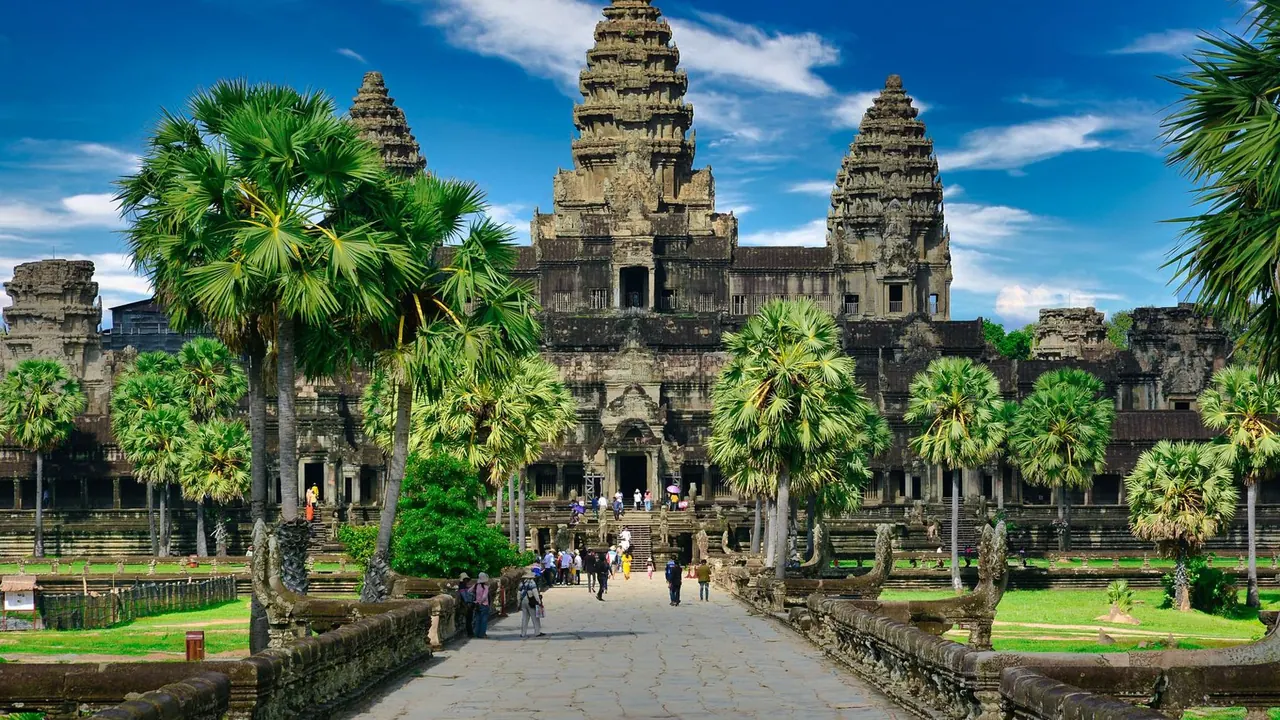
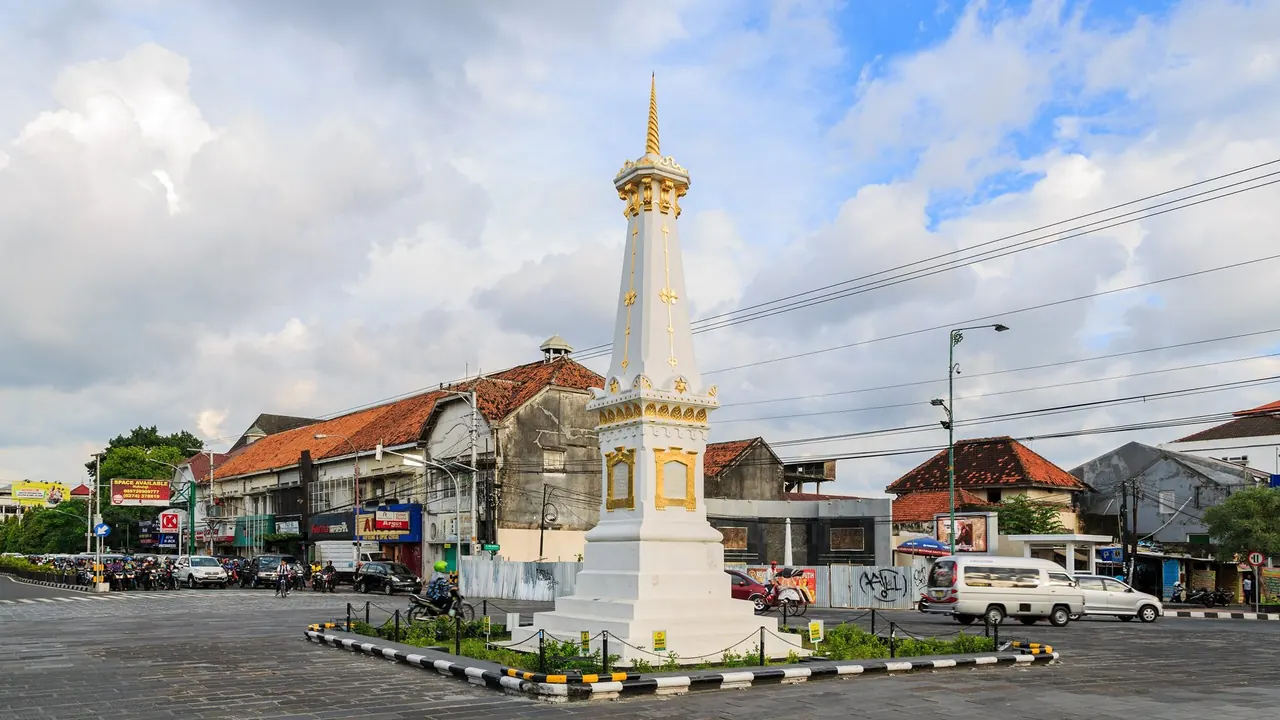
Photos: Siem Reap by allPhoto Bangkok, Pexels License; Yogyakarta by CEphoto, Uwe Aranas, CC BY-SA 3.0, cropped.
Siem Reap or Yogyakarta?
Our verdict in twelve categories, each scored against the same fixed benchmark cities, and the climate month by month, so you can choose for your trip.
Choose Siem Reap for
- culture and sights
- nightlife
- wellness
Siem Reap is for the traveller who wants one overwhelming sight and the time to take it in properly. Angkor starts at the edge of town, so the days settle into a pattern: dawn among the temples, a long afternoon by the pool, a massage, and Pub Street's easy bar crowd if you want company afterwards. It is a slow, focused trip built around a single great place.
Choose Yogyakarta for
- nature and the outdoors
- live music and the arts
- day trips
Pick Yogyakarta if you want more variety. The city works as a base. Borobudur and Prambanan fill the days out, Merapi's lava fields and the Gunungkidul caves add adventure, and the sultan's palace and gamelan evenings bring the court culture into town. Late nights are spent at Javanese street-food carts. Craft shoppers do better here too, with batik and Kotagede silver.
Scoreboard
Twelve categories on one fixed scale from 0 to 100. The shaded stretch is the gap between the two.
Your match
Pick a travel style or drag the sliders, and both match scores follow your weighting.
Wins on culture and sights and nightlife with your weighting.
Wins on nature and the outdoors and live music and the arts with your weighting.
What matters to you?
Category by category
What the scores mean for a trip.
Beaches & swimming
Neither city is a beach destination, though Yogyakarta at least has a coast within reach. Siem Reap's only open water is the muddy Tonle Sap, which nobody swims in, so the hotel pool takes the place of a beach.
Yogyakarta's Indian Ocean shore is about an hour south. Parangtritis has black volcanic sand and good sunset walks, but its rip currents are dangerous. The white coves of Gunungkidul, two hours out, have a few sheltered pools for paddling. It makes a good day out, but not a reason to stay.
Food & drink
Yogyakarta gives you the better eating, mainly because street food is the centre of city life. There is gudeg simmered in palm sugar and coconut milk, satay and rice parcels at angkringan carts late into the night, and lesehan stalls along Malioboro where you eat sitting on the floor. Alcohol plays little part, though, and fine dining is thin.
Siem Reap's Khmer cooking, amok and num banh chok among it, is good, and a few ambitious kitchens rework it as tasting menus. But backpacker pizza dominates the centre, so the better meals are a tuk-tuk ride away, in the side streets and across the river.
Culture & sights
Angkor puts Siem Reap well ahead. Angkor Wat, the stone faces of the Bayon and the tree-split galleries of Ta Prohm fill three days on their own, and they begin a few minutes from town. The Angkor National Museum is a useful first stop.
Yogyakarta's heritage in the city is a living court rather than a field of ruins. It has the sultan's Kraton, the Taman Sari water palace, the Sonobudoyo collection of puppets and krises, and the silversmith lanes of Kotagede, which together take two or three days. The great temples lie outside the city.
Nightlife
Siem Reap has the livelier night out, though it comes in one style only. Pub Street has neon bars, cheap draught beer and cocktail buckets every night, and there are calmer wine bars along the river.
Yogyakarta's evenings are full but mostly sober. Students crowd the coffee carts, and families pedal lit-up cars round Alun-Alun Kidul. Travellers who want a drink go to the guesthouse bars of Prawirotaman, and anyone after a big night will find the city quiet.
Nature & outdoors
Yogyakarta wins easily outdoors. Merapi has jeep tours across its lava fields and buried villages, and Merbabu is an overnight climb with a dawn view. In the limestone south you can be lowered on a rope into the Jomblang shaft or float through Goa Pindul on a tube.
Siem Reap is flat paddy country, lovely by bicycle early in the day. Boat trips reach the stork and pelican colonies of Prek Toal, and Phnom Kulen has a waterfall and forest walks. There are no mountains, though, and the heat rules out much that is strenuous.
Day trips
Day trips are Yogyakarta's strongest point. Borobudur and Prambanan, two of Southeast Asia's great monuments, are both within a comfortable drive, with Sewu, Plaosan and Ratu Boko close by. Solo, Central Java's other royal city, is an easy train ride away.
Siem Reap's outings are mostly more temples: the fine pink carving of Banteay Srei and the overgrown Beng Mealea. The stilt villages of the Tonle Sap make a change, but there is no other town near enough for a day.
Good for families
Both cities suit older, adventurous children better than toddlers, and both come with heat, heavy traffic and broken pavements. The difference lies in what fills the rest of the day.
In Siem Reap the adventure comes from clambering through ruins and riding boats to the stilt villages. There is almost nothing built for children, so the pool fills the afternoons. Yogyakarta has a zoo, the Taman Pintar science park and water parks, plus Merapi jeeps and cave tubing, though its big temples mean longer drives.
Getting around
Neither city has a metro or buses a visitor would use, so in both you are driven most of the time, and the difference lies in the vehicle. In Siem Reap that means the tuk-tuk, waiting on every corner or called by app, with a driver hired for the whole day at Angkor. The flat temple circuits also suit a bicycle or e-bike. The centre around the Old Market and the river is small, but broken pavements and the heat cut walks short.
Yogyakarta offers a wider choice. Ride-hailing cars and motorbike taxis are the quickest way across town, becaks and horse carts work the streets around Malioboro, and the commuter train to Solo is simple and comfortable. The Kraton and Taman Sari are within walking distance, though the scooters make it slow going, and Borobudur, Merapi and the coast are usually reached with a car and driver.
Shopping & style
Yogyakarta has much the deeper craft trade, though Siem Reap's best pieces are made with real care. Siem Reap's Old Market and night markets lean towards souvenirs. The buys worth making are the silk, stone carving and lacquerware from the social-enterprise workshops, where you can watch the work being done.
In Yogyakarta, hand-drawn batik comes from workshops and galleries, filigree silver from the family workshops of Kotagede and pottery from the village of Kasongan, with leather wayang puppets and masks as well. Malioboro and Beringharjo market are where you bargain for cheaper cloth. Neither city has much fashion or luxury.
Affordability
Both are very cheap, and in both the largest single cost is getting into the monuments. In Siem Reap that is the Angkor pass, and in Yogyakarta the foreigners' fees at Borobudur and Prambanan.
Otherwise they differ in where you can spend freely. Yogyakarta's angkringan meals and day hire of a car and driver cost very little, though alcohol does not. Siem Reap makes a daily massage and a tuk-tuk driver everyday spends, but places aimed at visitors cost clearly more.
Live music & performing arts
Yogyakarta is the centre of Javanese classical performance, and it is easy to see. The Ramayana ballet is danced in front of floodlit Prambanan, the Kraton pavilions host gamelan and court dance, and Sonobudoyo stages shorter versions of the all-night shadow-puppet shows. The arts institute and students keep a contemporary theatre scene going.
Siem Reap offers two good evenings rather than a scene. One is apsara dance, best at the smaller, more serious performances. The other is the much-admired contemporary circus telling Khmer stories under a big top.
Wellness & relaxation
Siem Reap is the easier place to unwind, because the shape of the day builds rest in. Dawn at the temples gives way to long afternoons by a garden pool. Khmer massage and herbal compresses are on every street, and yoga is easy to find.
Yogyakarta has the more distinctive tradition: lulur scrubs from the royal courts, flower baths and jamu tonics. But the centre is hot and loud with scooters, so real quiet means a villa among the rice fields north towards Merapi, where the air is cooler.
When should you go?
Pick your month. The climate figures are measured averages, not a forecast.
Siem Reap in July
Yogyakarta in July
Daytime high, °C
Rainfall in the month, mm
Where the figures come from
Siem Reap has no weather station within reach, so its figures come from a gridded climate model rather than a measured record, and read a broad area rather than the city itself.
Yogyakarta has no weather station within reach, so its figures come from a gridded climate model rather than a measured record, and read a broad area rather than the city itself.
Temperature and rainfall are climate normals, averaged over the years shown. Siem Reap: 2001-2020 normals, NASA POWER reanalysis grid, no weather station within 90 km. Yogyakarta: 2001-2020 normals, NASA POWER reanalysis grid, no weather station within 90 km.
Siem Reap is at its best from November to January, when the rain has all but stopped and the heat still allows full days at the temples. February is already as hot as March and April, with highs of 36°C, so midday at Angkor turns punishing and temple visits shrink to the early mornings. From May to October the monsoon sets in, heaviest around September at about 230mm. The heat eases a little then, and the Tonle Sap swells, so the floating villages are at their fullest.
Yogyakarta's heat hardly changes, with highs of 28°C to 30°C all year, so the rain decides the season. June to September is the dry window, with August the driest month, and it is the best time for Merapi, the caves and clear mornings at the temples. From November to March the rains are heavy, over 340mm in January. The two calendars roughly mirror each other: Siem Reap is dry when Yogyakarta is wet. The Indian Ocean off Yogyakarta stays warm all year, but its surf is for watching, not swimming.
Which traveller are you?
On a culture and arts trip, Siem Reap is the stronger choice. Angkor is one of the world's great monument sites and starts at the edge of town, enough to fill several days on its own. Yogyakarta has the better classical performance in the evenings.
For an outdoors trip, choose Yogyakarta. A live volcano, a mountain worth climbing and limestone country full of caves make for real physical days out, best in the dry season. Siem Reap's hot, flat plains offer gentle rides and little more.
On a relaxing and wellness trip, Siem Reap makes rest easy. The heat and the early starts turn slow afternoons into the natural rhythm, and treatments are cheap and close by. Yogyakarta's spa tradition is richer, but calm there means staying outside town.
Before you go
| Measure | Siem Reap | Yogyakarta |
|---|---|---|
| Official language | Khmer | Indonesian |
| Currency | Riel (KHR) | Rupiah (IDR) |
| Sockets | ACG230 V, 50 Hz | CF50 Hz |
| Driving side | Right | Left |
| Time zone | UTC+7 | UTC+7 |
| Emergency number | Police 117, ambulance 119, fire 118 | 112 |
| Elevation | 18 m | 113 m |
| Main airport | Siem Reap-Angkor International Airport (SAI)39 km from centre14 non-stop destinations | Yogyakarta International Airport (YIA)39 km from centre20 non-stop destinations |
| Public holidays this year | 21 days | - |
By the numbers
| Measure | Siem Reap | Yogyakarta |
|---|---|---|
| City population | 147,866 | 422,732 |
| People per km² | - | 13,007 |
| Museums within 10 km | 6 | 38 |
| UNESCO World Heritage sites within 50 km | 1 | 3 |
| Swim season, months above 21 °C | - | 12 months |
Where else could you go?
Every comparison below shares a destination with this one, so you can follow Siem Reap or Yogyakarta somewhere new.