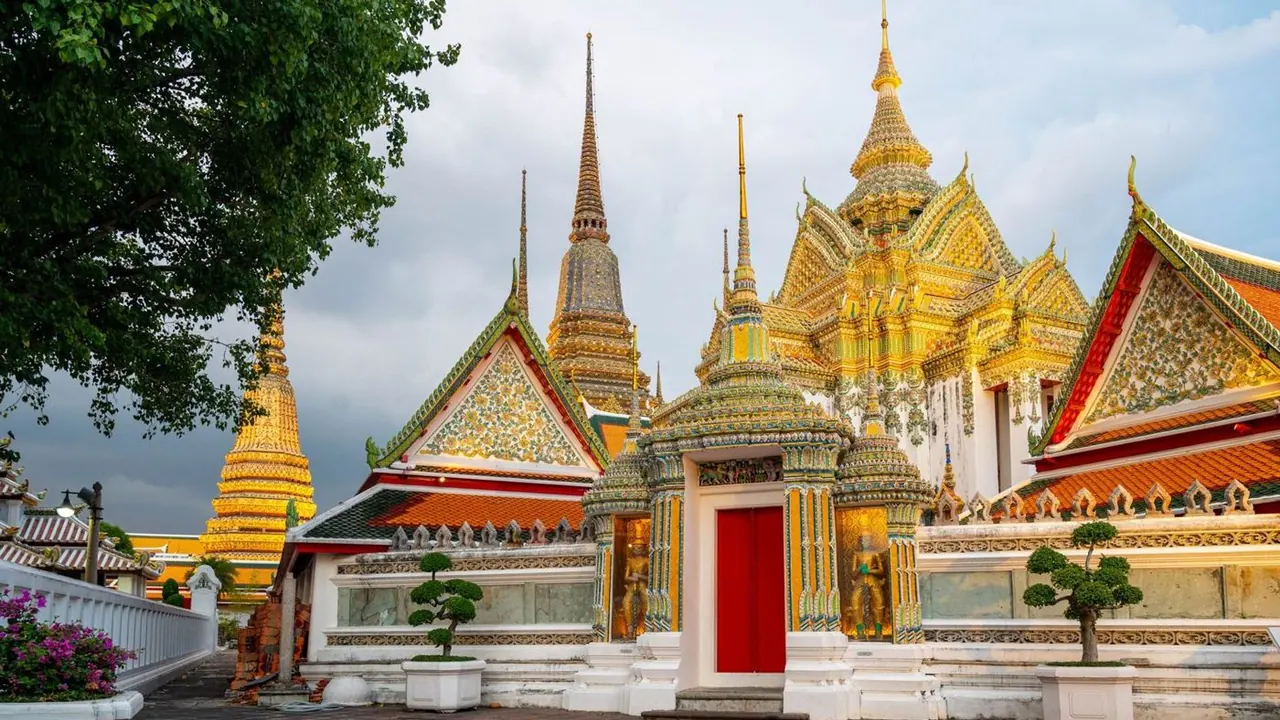
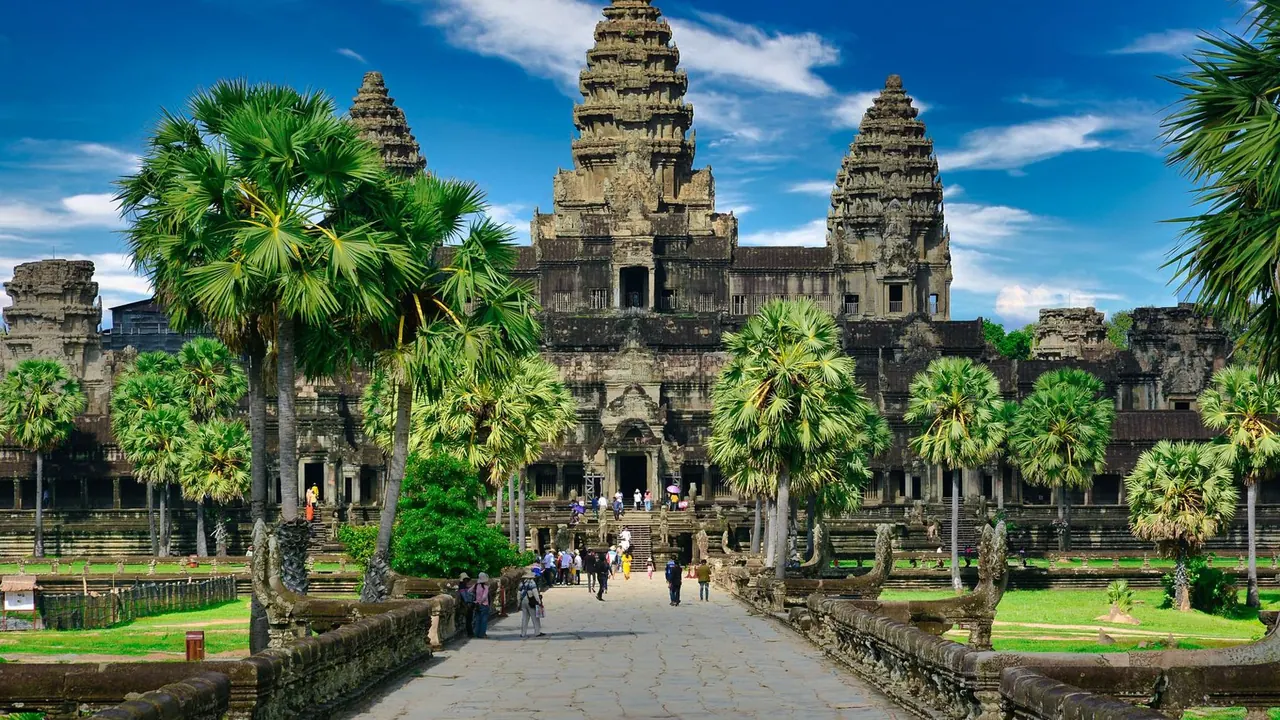
Photos: Bangkok by Lu Zhao, Pexels License; Siem Reap by allPhoto Bangkok, Pexels License.
Bangkok or Siem Reap?
Our verdict in twelve categories, each scored against the same fixed benchmark cities, and the climate month by month, so you can choose for your trip.
Choose Bangkok for
- food and drink
- nightlife
- shopping
Bangkok suits travellers who want a big city to live in for a week or more: eating at street stalls and shophouse counters from breakfast until well past midnight, rooftop bars and Thonglor cocktail rooms, Chatuchak and the Siam malls, with the gilded temples of Rattanakosin Island at the centre of the sightseeing. It is also the easier choice with younger children, and for anyone who would rather use trains and river boats than hire a driver.
Choose Siem Reap for
- nature and the outdoors
- culture and sights
- prices
Pick Siem Reap when the trip is about one great thing done properly, and that thing is Angkor. Its temples go beyond anything in Bangkok's old city, and the town is set up around them: dawn at the ruins, afternoons by a garden pool, an evening on Pub Street or at the circus. It is a smaller, slower base with rice-paddy lanes to cycle and the Tonle Sap close by, and three or four days there are worth more than a long stay.
Scoreboard
Twelve categories on one fixed scale from 0 to 100. The shaded stretch is the gap between the two.
Your match
Pick a travel style or drag the sliders, and both match scores follow your weighting.
Wins on food and drink and nightlife with your weighting.
Wins on nature and the outdoors and culture and sights with your weighting.
What matters to you?
Category by category
What the scores mean for a trip.
Beaches & swimming
Neither city is a beach destination. In both, your swimming will happen in a hotel pool: often on a rooftop in Bangkok, and usually in a garden after a morning at the temples in Siem Reap.
Bangkok has the edge only because the sea is within reach. Bang Saen and Pattaya are around two hours by road, and the water there is near 29°C. From Siem Reap the coast is most of a day away and the Tonle Sap is not for swimming, so any beach time has to be a separate part of the trip.
Food & drink
The gap here is wide, and eating is one of the main reasons to choose Bangkok. Street cooking runs from breakfast pork skewers to late-night Yaowarat, markets such as Or Tor Kor show off the produce, and there is a deep layer of serious Thai, Japanese and Chinese restaurants, along with a strong cocktail and coffee culture.
Siem Reap's Khmer food is worth seeking out: fish amok, num banh chok and grilled meats with pickles, plus a handful of kitchens that rework local ingredients with care. But the range is small, and the centre around Pub Street leans towards pizza and backpacker menus, so the good meals are a tuk-tuk ride away.
Culture & sights
Siem Reap holds the bigger prize. Angkor Wat, the stone faces of the Bayon and the tree-split galleries of Ta Prohm are among the great sights of the world. They are spread through the forest just north of town and need several days.
Bangkok's temples impress in a different way, as living places of worship covered in gold and mirrored tiles, from Wat Phra Kaew to Wat Arun. The National Museum, the Jim Thompson House and the shophouses of Chinatown add depth, but nothing in the city matches the scale of Angkor.
Nightlife
Bangkok has several kinds of night out in one city. There are polished cocktail bars and clubs in Thonglor and Ekkamai, the backpacker street party of Khao San Road, Silom's long-established gay scene and rooftop bars high above the river.
Siem Reap has one scene, Pub Street: cheap, loud and friendly, with a few quieter bars along the river. There are no clubs to speak of, and early starts for sunrise at Angkor cut most evenings short.
Nature & outdoors
Siem Reap gets you into the countryside more easily. Flat lanes through rice paddies and sugar palms make for gentle cycling in the morning. Boats cross the Tonle Sap to the flooded forest and the bird colonies of Prek Toal, and the waterfall on Phnom Kulen is about an hour and a half away.
In Bangkok, green space mostly means its parks, such as Lumphini with its monitor lizards and the orchard paths of Bang Krachao. Khao Yai and Kanchanaburi need an overnight stay. In both places the heat limits outdoor activity to the early hours.
Day trips
The ruined island capital of Ayutthaya, an hour and a half north by train, would justify a day out on its own, and Bang Pa-In's summer palace sits on the way. West of Bangkok are the floating markets, the Maeklong railway market where stalls fold back for passing trains, and Thailand's tallest stupa at Nakhon Pathom, while Kanchanaburi's Death Railway bridge makes a long but worthwhile day.
Around Siem Reap the outings are mostly more temples: the pink sandstone carving of Banteay Srei and the collapsed, overgrown Beng Mealea, with the stilt villages of Kampong Phluk for a change of scene. That suits a trip built on Angkor, but there is less variety and no other town within an easy return drive.
Good for families
Bangkok is easier with children, especially young ones. Sea Life, Safari World, Dream World, KidZania and the air-conditioned play areas in the malls fill hot afternoons, and the Skytrain and river boats are fun in themselves.
Siem Reap has almost nothing built for children, and steep temple steps and long walks in the heat soon tire small legs. Older children who like scrambling over root-covered ruins and riding in tuk-tuks will find a real adventure, though.
Getting around
Bangkok has a proper rail network. The BTS Skytrain and the MRT link the main districts, express boats run along the river to the Grand Palace, and a rail link serves Suvarnabhumi airport. The catch is the traffic and the stretches between stations, where walking in the heat is hard work.
Siem Reap has no public transport, but its centre is small enough to walk and tuk-tuks are everywhere. Hiring a driver for the day is the normal way to see the temples, though the flat main circuits are easy by bicycle or e-bike.
Shopping & style
Bangkok is one of Asia's great shopping cities. It has thousands of weekend stalls at Chatuchak, the connected malls of Siam and Ratchaprasong, ICONSIAM on the river, Pratunam's wholesale clothing, and night markets and Chinatown gold shops on top.
Shopping in Siem Reap is about crafts. You can buy silk, kramas and silver at the Old Market, and the artisan workshops, where you can watch weaving, carving and lacquerware being made, are even better. There is no fashion or luxury shopping.
Affordability
Both cities are very cheap by Western standards, with meals, massages and comfortable hotels with pools costing little. The extra costs fall in different places: in Bangkok they are rooftop bars, imported drinks and hotels on the river or in Sukhumvit, while Siem Reap's one big expense is the Angkor pass, which takes a large share of a short stay's budget.
Live music & performing arts
Khon, the masked dance drama of the Ramakien, is the reason to book a theatre seat in Bangkok, at the Sala Chalermkrung or the National Theatre. Add the symphony orchestra at the Thailand Cultural Centre, small jazz bars and the ritual and music of Muay Thai at Rajadamnern and Lumpinee, and the city gives you a real range of evenings.
In Siem Reap the choice comes down to two things. Apsara dance is best seen at the smaller, more serious performances rather than the buffet shows, and the Cambodian circus, with its young performers telling Khmer stories, is well worth an evening.
Wellness & relaxation
Massage runs deeper in Bangkok, and calm comes more easily in Siem Reap. For treatments the Thai capital is the stronger choice: Wat Pho's traditional school still works inside the temple grounds, parlours open late on every street, and the grand hotels run some of Asia's finest spas. What the city cannot offer is quiet.
Siem Reap has fewer refined spas but a slower day. Khmer massage, yoga classes and long afternoons in garden hotels make it easy to unwind, as long as you stay away from the noise of Pub Street.
When should you go?
Pick your month. The climate figures are measured averages, not a forecast.
Bangkok in July
Siem Reap in July
Daytime high, °C
Rainfall in the month, mm
Where the figures come from
Siem Reap has no weather station within reach, so its figures come from a gridded climate model rather than a measured record, and read a broad area rather than the city itself.
Temperature and rainfall are climate normals, averaged over the years shown. Bangkok: 1991-2020 normals, Bangkok (5.7 km from centre). Siem Reap: 2001-2020 normals, NASA POWER reanalysis grid, no weather station within 90 km.
Both cities are hot all year, so the real choice is about rain. Bangkok is dry and sunniest from November to March. April is the hottest month, at around 36°C, which makes walking the old city hard going. From May to October the rains set in, peaking in September at over 330mm, and the sunshine drops. The sea at the eastern seaboard beaches stays near 29°C all year, so a side trip to the coast works in any month.
Siem Reap follows the same split, dry from November and wet from May to October, but its worst heat comes earlier, with February to April reaching 36°C, which is punishing on temple days. The wet months are a little cooler, around 30°C. They also turn the countryside green and fill the Tonle Sap, which is the best time to visit the stilt villages. In both cities, December and January are the most comfortable months, dry and slightly less hot.
Which traveller are you?
On a food and nightlife trip, Bangkok is the clear pick. Thai cooking alone is reason to come, eaten at any hour, and nights out range from smart cocktail rooms to street parties. Siem Reap eats well enough, but its evenings are short and simple.
For a culture and arts trip built around monuments, choose Siem Reap. Angkor is on a scale nothing in Bangkok matches and repays several days. Bangkok's gilded temples are superb, and its stage gives you more to do after dark.
On a shopping trip, Bangkok is in another league, with everything from giant weekend markets to luxury malls, plus silk and ceramics worth taking home. Siem Reap suits buyers of handmade crafts who like meeting the maker, but the choice is narrow.
Before you go
| Measure | Bangkok | Siem Reap |
|---|---|---|
| Official language | Thai | Khmer |
| Currency | Baht (THB) | Riel (KHR) |
| Sockets | ABCF220 V, 50 Hz | ACG230 V, 50 Hz |
| Driving side | Left | Right |
| Time zone | UTC+7 | UTC+7 |
| Emergency number | Police 191, ambulance 1669, fire 199 | Police 117, ambulance 119, fire 118 |
| Elevation | 2 m | 18 m |
| Main airport | Suvarnabhumi Airport (BKK)26 km from centre150 non-stop destinations | Siem Reap-Angkor International Airport (SAI)39 km from centre14 non-stop destinations |
| Public holidays this year | - | 21 days |
By the numbers
| Measure | Bangkok | Siem Reap |
|---|---|---|
| City population | 5,676,648 | 147,866 |
| People per km² | 3,619 | - |
| Museums within 10 km | 59 | 6 |
| UNESCO World Heritage sites within 50 km | 0 | 1 |
| Swim season, months above 21 °C | 12 months | - |
Where else could you go?
Every comparison below shares a destination with this one, so you can follow Bangkok or Siem Reap somewhere new.