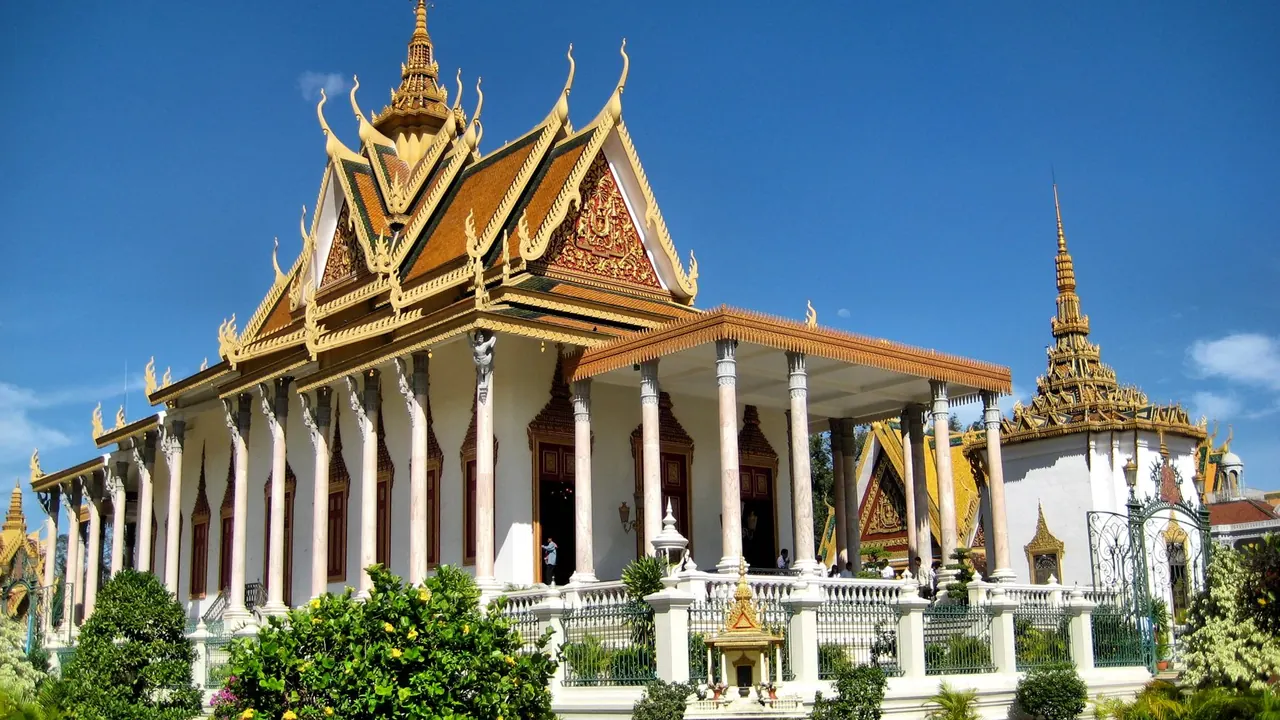
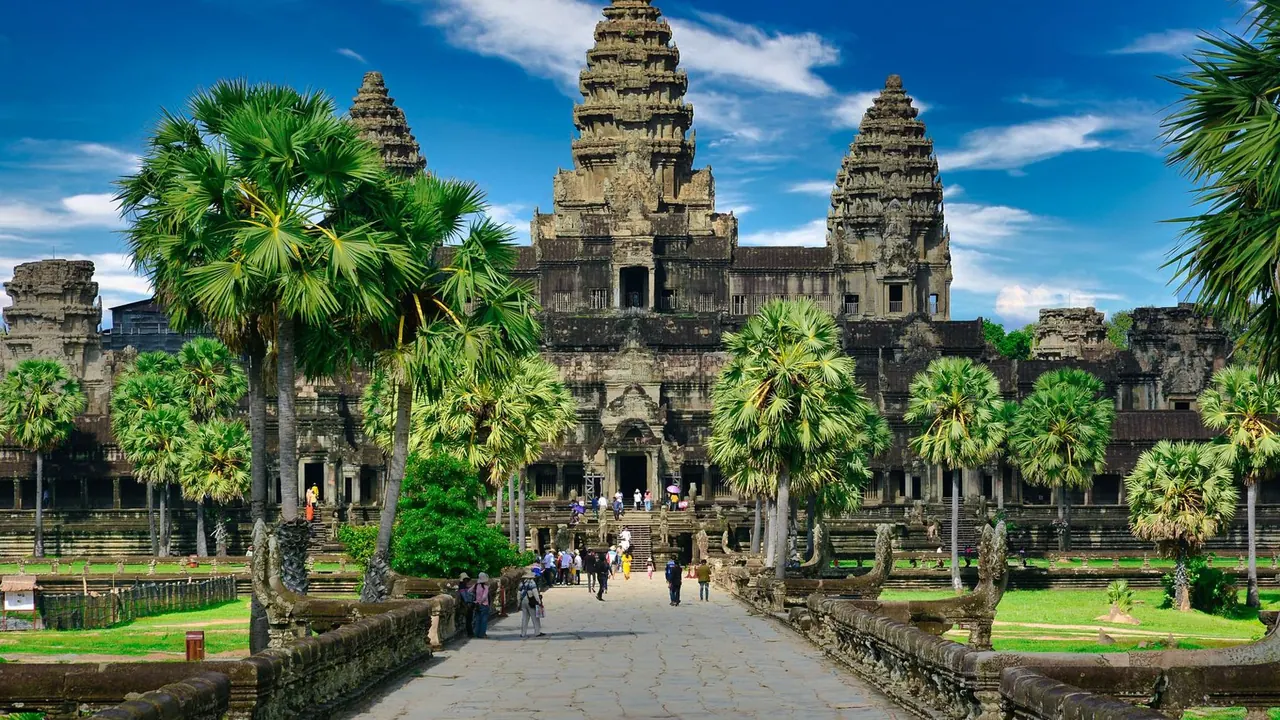
Photos: Phnom Penh by Francisco Anzola, CC BY 2.0, cropped; Siem Reap by allPhoto Bangkok, Pexels License.
Phnom Penh or Siem Reap?
Our verdict in twelve categories, each scored against the same fixed benchmark cities, and the climate month by month, so you can choose for your trip.
Choose Phnom Penh for
- food and drink
- nightlife
- shopping
Phnom Penh suits travellers who want a capital with more going on at the table and after dark. Mornings start with kuy teav at market counters, the cafés of BKK1 fill the afternoon, and evenings end in the cocktail bars of Bassac Lane or the late streets near the riverside. Its sights, from the Royal Palace and National Museum to Tuol Sleng and Choeung Ek, give a sober and essential account of the country's modern history in two or three days. Its markets are also the better place to shop for silk and crafts.
Choose Siem Reap for
- culture and sights
- day trips
- nature and the outdoors
Anyone coming for the temples should base themselves in Siem Reap. Angkor begins a short ride from town and repays several days, and Banteay Srei, Beng Mealea and the Tonle Sap villages make good days beyond it. The town is smaller and calmer, built around dawn starts and afternoons by the pool, with more spas and yoga and a slower pace. In return, its eating and going out lean towards the backpacker crowd.
Scoreboard
Twelve categories on one fixed scale from 0 to 100. The shaded stretch is the gap between the two.
Your match
Pick a travel style or drag the sliders, and both match scores follow your weighting.
Wins on food and drink and nightlife with your weighting.
Wins on culture and sights and day trips with your weighting.
What matters to you?
Category by category
What the scores mean for a trip.
Beaches & swimming
Neither city has a beach, and in both the hotel pool takes its place through the heat. The difference is how far away the sea is. From Phnom Penh the coast around Kep and Kampot is about three hours by road, while from Siem Reap it takes most of a day. Neither the Mekong nor the Tonle Sap lake is for swimming.
Food & drink
Phnom Penh eats better. Breakfast can be bai sach chrouk at a stall or a seat at the counters of Central Market and the Russian Market, and from there the choice runs up to Khmer fine dining and NGO training restaurants. Across BKK1 and the riverside there is also a café habit going back to French rule, with good baguettes and strong iced coffee.
Siem Reap cooks the same Khmer dishes, amok and num banh chok among them, and has a few thoughtful tasting menus. But the centre around Pub Street leans to pizza and backpacker menus, so the good meals take a tuk-tuk ride into the side streets.
Culture & sights
Siem Reap has one of the world's great sights on its doorstep. Angkor Wat, Angkor Thom with the stone faces of the Bayon, and Ta Prohm with trees splitting its galleries all begin a short ride north of town. Three days covers them without exhausting them.
Phnom Penh tells a different story. It has the Royal Palace and Silver Pagoda and the National Museum's Angkorian sculpture, and Tuol Sleng and Choeung Ek explain the Khmer Rouge years. It takes two or three days and works best as the modern-history half of a trip that ends at Angkor.
Nightlife
Phnom Penh has the fuller night out. It moves from rooftop sundowners over the Tonle Sap to the small cocktail and craft bars around Bassac Lane, and the clubs near the riverside and on Street 51 run into the early morning. Keep your bag away from the road, as passing motorbikes snatch them.
Siem Reap's evenings gather on Pub Street, a few sociable blocks of cheap draught beer and buckets for the backpacker crowd, with quieter bars along the river. There is no club culture, and early starts at the temples end many nights early.
Nature & outdoors
Siem Reap brings you closer to the countryside. Rice paddies and village lanes make easy cycling from town, and boats reach the flooded forest and the storks and pelicans of Prek Toal. Phnom Kulen and Kbal Spean add a waterfall and short jungle trails.
Phnom Penh's landscape is where three rivers meet, best seen from the promenade, a sunset boat or a bicycle on Koh Dach. For real forest you have to go to Kirirom, about two and a half hours away.
Day trips
Siem Reap has the stronger days out, because the temples carry on beyond the main park. There is the carved pink sandstone of Banteay Srei, the collapsed and overgrown Beng Mealea and the early Roluos group, and Koh Ker for a long day. In the wet season, the stilt villages such as Kampong Phluk make a good outing on the lake.
The outings from Phnom Penh are quieter. They include the ridge of stupas at Oudong, the lakeside temple at Tonle Bati, the hilltop at Phnom Chisor and the silk-weaving villages on the Mekong islands.
Good for families
Both cities are hard work with small children because of the heat, broken pavements and traffic, and in both the hotel pool anchors the day. What differs is the appeal. Siem Reap gives older children real adventure, scrambling through the roots at Ta Prohm and taking boats to the stilt villages.
Phnom Penh has the Phnom Tamao rescue centre, river cruises and malls with play areas and ice rinks. Its main sights, Tuol Sleng and Choeung Ek, are not places for children.
Getting around
Neither city has public transport a visitor would use, and in both the tuk-tuk does the work, hailed in the street or booked by app. Phnom Penh is larger and more spread out, so you rely more on motorbike taxis and need nerve to cross the roads.
Siem Reap's centre is small enough to walk, and the main Angkor circuits are flat enough for a bicycle or e-bike. Most visitors still hire a driver for the day at the temples.
Shopping & style
Phnom Penh is the better place to shop. The Russian Market's covered stalls mix silk, silver, carvings and surplus clothing from local factories, and Central Market adds gold and jewellery under its art deco dome. The boutiques around Street 240 sell silk, homewares and Kampot pepper, and malls cover the international chains.
Siem Reap's Old Market and night markets are more about souvenirs. Its artisan workshops are worth finding, though, to watch silk weaving, carving and lacquerware being made.
Affordability
Both are very cheap: Khmer meals, tuk-tuks, massages and hotels with pools cost a fraction of Western prices. What differs is the cost that hurts. In Siem Reap it is the Angkor pass that foreigners must buy, which weighs on a short stay. In Phnom Penh it is imported wine, Western restaurants and international hotels, which cost about what they would at home.
Live music & performing arts
In both cities classical Khmer dance is the evening worth planning for, and neither has opera, an orchestra or a theatre district. Phnom Penh gives the dance a proper setting of its own. Shows near the National Museum combine it with masks and shadow puppets, and the Chaktomuk Theatre by the river takes the bigger occasions.
In Siem Reap the apsara usually comes with dinner, and standards vary, so choose a modest performance that takes the dance seriously rather than a large buffet. What Siem Reap has and the capital lacks is its circus, where young Cambodian performers under a big top tell Khmer stories through acrobatics and live music.
Wellness & relaxation
Siem Reap is the easier place to slow down. Besides the massage parlours on its streets, many resorts have proper spas with herbal compresses, and yoga classes and small retreats are easy to find. Early mornings at the temples and long afternoons by the pool build rest into every day.
Phnom Penh has massage on almost every street, blind-masseur centres and leafy villa hotels. Even so, traffic, dust and noise are never far away.
When should you go?
Pick your month. The climate figures are measured averages, not a forecast.
Phnom Penh in July
Siem Reap in July
Daytime high, °C
Rainfall in the month, mm
Where the figures come from
Siem Reap has no weather station within reach, so its figures come from a gridded climate model rather than a measured record, and read a broad area rather than the city itself.
Temperature and rainfall are climate normals, averaged over the years shown. Phnom Penh: 1991-2020 normals, Phnom-Penh / Pochentong (8 km from centre). Siem Reap: 2001-2020 normals, NASA POWER reanalysis grid, no weather station within 90 km.
Both cities are hot all year, so the choice is mostly about rain. In Phnom Penh the dry season runs from December to February, the easiest time to walk the riverfront, though March and April build to 36°C. Rain arrives in May and peaks in September and October at around 260mm a month, and November is still fairly wet.
Siem Reap dries out about a month earlier. November already sees little rain and December falls to 7mm, which makes November to January the best window for long temple days. From February to April it is as fierce as the capital. June to September brings the coolest days, around 30°C, with green paddies and a full lake for the floating villages. Siem Reap's rain eases in October, just as Phnom Penh reaches its wettest.
Which traveller are you?
On a culture and arts trip, Siem Reap is the clear choice. Angkor Wat, the Bayon and Ta Prohm need three days on their own, and Banteay Srei and Beng Mealea extend the stay further. Phnom Penh's palace, museums and memorials fill about two days.
For a food and nightlife trip, Phnom Penh gives more. Its food runs from market counters and noodle stalls to Khmer fine dining and French-style cafés. Evenings move from rooftop terraces to the Bassac Lane bars and late clubs, while Siem Reap's nightlife is mostly Pub Street.
On a relaxing and wellness trip, Siem Reap is easier to unwind in. Spas using herbal compresses, yoga classes and small retreats are common, and the garden hotels across the river stay quiet. Phnom Penh's massage parlours sit among traffic, dust and noise.
Before you go
| Measure | Phnom Penh | Siem Reap |
|---|---|---|
| Official language | Khmer | Khmer |
| Currency | Riel (KHR) | Riel (KHR) |
| Sockets | ACG230 V, 50 Hz | ACG230 V, 50 Hz |
| Driving side | Right | Right |
| Time zone | UTC+7 | UTC+7 |
| Emergency number | Police 117, ambulance 119, fire 118 | Police 117, ambulance 119, fire 118 |
| Elevation | 11 m | 18 m |
| Main airport | Techo International Airport (KTI)23 km from centre41 non-stop destinations | Siem Reap-Angkor International Airport (SAI)39 km from centre14 non-stop destinations |
| Public holidays this year | 21 days | 21 days |
By the numbers
| Measure | Phnom Penh | Siem Reap |
|---|---|---|
| City population | 2,129,371 | 147,866 |
| People per km² | 3,138 | - |
| Museums within 10 km | 3 | 6 |
| UNESCO World Heritage sites within 50 km | 1 | 1 |
Where else could you go?
Every comparison below shares a destination with this one, so you can follow Phnom Penh or Siem Reap somewhere new.