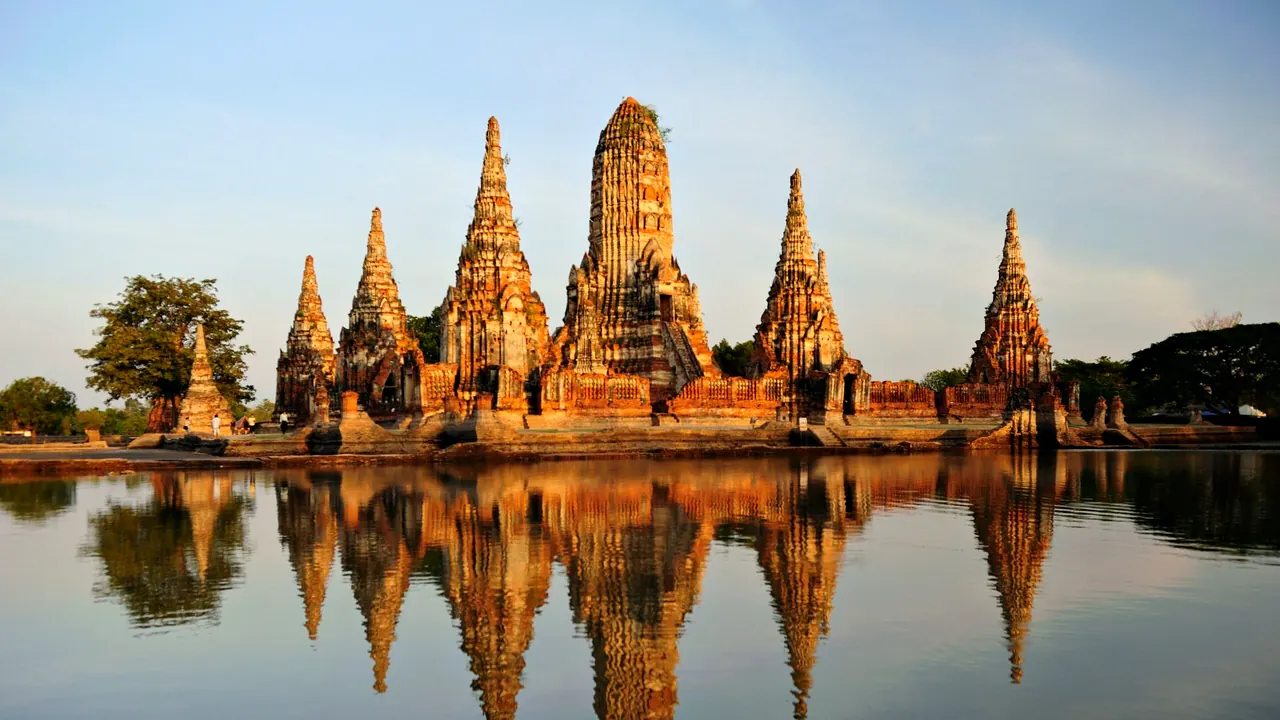
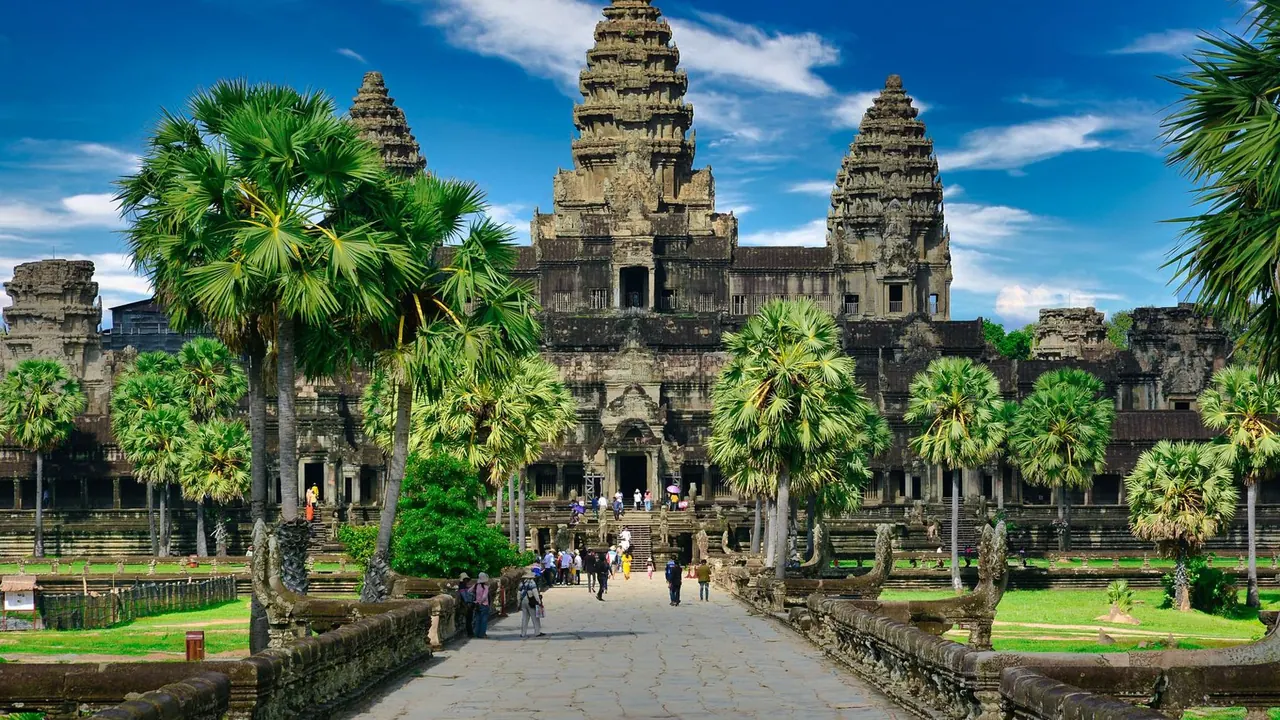
Photos: Ayutthaya by เกริกชัย อินทร์ปอ, CC BY-SA 3.0, cropped; Siem Reap by allPhoto Bangkok, Pexels License.
Ayutthaya or Siem Reap?
Our verdict in twelve categories, each scored against the same fixed benchmark cities, and the climate month by month, so you can choose for your trip.
Choose Ayutthaya for
- getting around
- day trips
- prices
Ayutthaya suits travellers who want a great ruined capital without much effort. It sits close to Bangkok, and its temples fit on one flat island you can cycle round in a day or two. Lopburi and the Bang Pa-In palace are easy side trips. It is quieter, slightly cheaper and simpler to get around, and it works best as a short, calm stop on a wider Thailand trip.
Choose Siem Reap for
- nightlife
- live music and the arts
- shopping
Siem Reap is the stronger choice when the temples are the reason for the whole trip. Angkor is bigger and more dramatic, and it needs several days. The town also does more after dark, with Pub Street, apsara dance and a well-regarded circus. It has proper spas, artisan workshops and the Tonle Sap lake. Choose it for a longer stay where hard early starts at the temples alternate with slow afternoons by the pool.
Scoreboard
Twelve categories on one fixed scale from 0 to 100. The shaded stretch is the gap between the two.
Your match
Pick a travel style or drag the sliders, and both match scores follow your weighting.
Wins on getting around and day trips with your weighting.
Wins on nightlife and live music and the arts with your weighting.
What matters to you?
Category by category
What the scores mean for a trip.
Beaches & swimming
Neither town has a beach, so beach days belong somewhere else on the trip. From Ayutthaya the upper Gulf of Thailand is a little over two hours away, which makes it easy to add the coast on the same trip. From Siem Reap the coast is most of a day by road.
In both towns the swimming happens in the hotel pool, since Ayutthaya's rivers are working waterways and the Tonle Sap is a shallow, muddy lake. In Siem Reap the pool is also part of the daily routine: most visitors spend the afternoon there after a dawn at the temples.
Food & drink
Both towns are good for cheap, tasty local food rather than wide choice, but the cooking itself is different. Ayutthaya serves central Thai food. It is known for small bowls of boat noodles eaten several at a time, grilled giant river prawns at restaurants by the water, and roti sai mai, pancakes rolled around spun sugar. In the evening the night markets fill in the rest, and there is almost nothing international.
Siem Reap is a place to get to know Khmer food: fish amok, num banh chok for breakfast, and sour lemongrass soups. It also has a few restaurants serving Khmer tasting menus and social-enterprise kitchens that train young cooks. Avoid the pizza and backpacker menus around Pub Street.
Culture & sights
Both towns are built around ruins of a great former capital, and Siem Reap's are the bigger draw. Angkor is spread through the forest and covers far more ground. It includes Angkor Wat, the faces of the Bayon, trees growing through Ta Prohm and dozens of smaller temples, and you need at least three days to see the main circuits. The Angkor National Museum is a good place to start.
Ayutthaya's ruins are smaller and less varied, mostly brick prangs and chedis, but they fit into a day or two. The highlights are the three chedis of Wat Phra Si Sanphet, the Buddha head caught in tree roots at Wat Mahathat, and Wat Chaiwatthanaram at sunset. Traces of the old Portuguese and Japanese quarters show how international Siam's capital once was.
Nightlife
Siem Reap is the place for a night out. Pub Street and the lanes around it have neon-lit bars, cheap draught beer and cocktail buckets, and they stay busy until late every night. There are also quieter cocktail and wine bars by the river.
Ayutthaya's evenings are much quieter. There is a short row of backpacker bars and a few riverside terraces looking at the floodlit temples, and most people are in bed well before midnight. Neither town has any real club scene.
Nature & outdoors
Outdoors in Ayutthaya means rice fields, canals and storks over the paddies, best seen from a bicycle or from a long-tail boat around the island at dusk. There are no hills, and the nearest forest and waterfalls are about two hours away at Khao Yai, so nature is a gentle setting for the ruins rather than a reason to come.
Siem Reap has more to do outside. Boats cross the Tonle Sap to the flooded forest and the Prek Toal bird sanctuary, where pelicans and cormorants nest. On the Phnom Kulen plateau there are a waterfall and forest walks, and at Kbal Spean a short jungle trail leads to carvings in the riverbed.
Day trips
Ayutthaya has the more varied day trips. Bangkok, with the Grand Palace and its markets, is about an hour and a half away. The Bang Pa-In summer palace, a mix of Thai, Chinese and European styles, is twenty minutes away. Lopburi has Khmer temples and macaques living among the stones.
From Siem Reap most day trips mean more temples: the fine pink carving at Banteay Srei, the collapsed and overgrown Beng Mealea, and Koh Ker at the far edge of a day. The stilt villages on the Tonle Sap are a change of scene, but no other town is close enough for an easy return trip.
Good for families
Neither town is really set up for children, but they suit different ages. Siem Reap is better for older children who like adventure: they can scramble through the ruins at Ta Prohm and Beng Mealea and take boats to the stilt villages. The steep temple steps and broken pavements wear out younger ones.
Ayutthaya is easier to manage but less exciting for children. Climbing is not allowed on many monuments, so the ruins are for looking at and the temple grounds for running around. There is little shade, so keep sightseeing to the mornings in either town.
Getting around
Ayutthaya is easier to get around on your own. The main ruins are on one flat island a few kilometres across, and a bicycle on the quiet back lanes reaches most of them. Small ferries cross to the temples on the far banks, and a tuk-tuk can take you round the sites in half a day.
In Siem Reap you can walk around the small centre, but Angkor starts a ride away, so most visitors hire a tuk-tuk driver or a car each day. Some cycle or ride an e-bike around the main temple circuits instead. With broken pavements and the heat, expect to be driven most of the time.
Shopping & style
Siem Reap is better for shopping. The Old Market sells silk, kramas and silver. In the social-enterprise workshops you can watch silk weaving, stone carving and lacquerware being made and buy much better pieces than at the stalls. A few boutiques sell clothing and homewares made in Cambodia.
Ayutthaya has little more than amulets and clothes at the night markets, souvenir stands at the temples and floating markets set up for visitors. Its one real craft centre is downriver at Bang Sai.
Affordability
Both are very cheap. Pool hotels, market meals and transport cost very little in either town, and Ayutthaya is slightly cheaper overall. Bicycle hire there costs almost nothing.
The extra costs work differently. In Ayutthaya you pay a small entrance fee at each major ruin. In Siem Reap the Angkor pass is one big payment, which is a noticeable cost on a short stay, and places aimed at visitors charge well above local prices.
Live music & performing arts
Siem Reap has the better evening shows. There is classical apsara dance, the court tradition carved on the temple walls, best seen at the smaller, more serious venues rather than the buffet halls. A circus under a big top, run by a school for young performers, tells Khmer stories through acrobatics and live music.
Ayutthaya has almost nothing on a normal night. The exception is its annual World Heritage fair, when light-and-sound shows and traditional dance are staged among the ruins.
Wellness & relaxation
Siem Reap is better for a stay built around rest. Massage rooms line the central streets, many resorts have proper spas using herbal compresses and local ingredients, and yoga classes and small retreats are easy to find. Choose a garden hotel across the river, away from the noise of Pub Street.
Ayutthaya offers simple Thai massage in shophouse parlours, which is very welcome after a day on the bicycle, but it has few upmarket spas. Its real draw is the quiet once the tour buses have left, with evenings spent watching the boats from a riverside terrace.
When should you go?
Pick your month. The climate figures are measured averages, not a forecast.
Ayutthaya in July
Siem Reap in July
Daytime high, °C
Rainfall in the month, mm
Where the figures come from
Ayutthaya's temperatures are measured 49 km from the centre, at Suphan Buri.
Ayutthaya has no rain gauge within 25 km of the centre, so its rainfall comes from a gridded climate dataset read at the city rather than from a gauge further away.
Ayutthaya's sunshine is measured 70 km from the centre, at Bangkok.
Siem Reap has no weather station within reach, so its figures come from a gridded climate model rather than a measured record, and read a broad area rather than the city itself.
Temperature and rainfall are climate normals, averaged over the years shown. Ayutthaya: 1961-1990 (sunshine 1991-2020, rainfall 1991-2020) normals, Suphan Buri (49.2 km from centre). Siem Reap: 2001-2020 normals, NASA POWER reanalysis grid, no weather station within 90 km.
Both towns are hot all year, and the best months are the same: November to January, when the rain has stopped and the heat is at its mildest. Ayutthaya stays dry well into March, with long sunny days right through the dry season. The heat then builds to 37°C in April, and cycling between the ruins after mid-morning becomes hard work. In Siem Reap the hottest stretch comes a little earlier, from February to April, and it is just as tiring on long days at the temples.
The wet seasons are different. In Ayutthaya the rain comes and goes from May to August, when the sunshine is at its lowest, and then peaks in September at about 234mm. Siem Reap's wet season is steadier and heavier, with close to 200mm a month from June to September. The rain does keep daytime highs to about 30°C, which makes walking round the temples easier. It is also when the Tonle Sap is full and boat trips to the floating villages are at their best.
Which traveller are you?
For a culture and arts trip, Siem Reap is the one. Angkor Wat, the Bayon and Ta Prohm are enough for three full days, and in the evenings there is apsara dance and a Cambodian circus. Ayutthaya's ruins are impressive but less varied, and it has almost no performances.
On a relaxing and wellness trip, Siem Reap again works better. Its hotel spas, Khmer massage rooms and yoga retreats offer more than Ayutthaya's simple shophouse parlours. Its garden hotels with pools are made for long, quiet afternoons between visits to the temples.
For a short city break, Ayutthaya fits better. It is about an hour and a half from Bangkok, its main ruins are on one flat island you can cycle around, and you can see the best of it in a day or two. Angkor really needs several days.
Before you go
| Measure | Ayutthaya | Siem Reap |
|---|---|---|
| Official language | Thai | Khmer |
| Currency | Baht (THB) | Riel (KHR) |
| Sockets | ABCF220 V, 50 Hz | ACG230 V, 50 Hz |
| Driving side | Left | Right |
| Time zone | UTC+7 | UTC+7 |
| Emergency number | Police 191, ambulance 1669, fire 199 | Police 117, ambulance 119, fire 118 |
| Elevation | 7 m | 18 m |
| Main airport | Suvarnabhumi Airport (BKK)78 km from centre150 non-stop destinations | Siem Reap-Angkor International Airport (SAI)39 km from centre16 non-stop destinations |
| Public holidays this year | - | 21 days |
By the numbers
| Measure | Ayutthaya | Siem Reap |
|---|---|---|
| City population | 52,940 | 147,866 |
| People per km² | 3,577 | - |
| Museums within 10 km | 3 | 6 |
| UNESCO World Heritage sites within 50 km | 1 | 1 |
Where else could you go?
Every comparison below shares a destination with this one, so you can follow Ayutthaya or Siem Reap somewhere new.
- Bangkokvs Ayutthaya
- Pattayavs Ayutthaya
- Hua Hinvs Ayutthaya
- Phnom Penhvs Siem Reap
- Pattayavs Siem Reap
- Bangkokvs Siem Reap