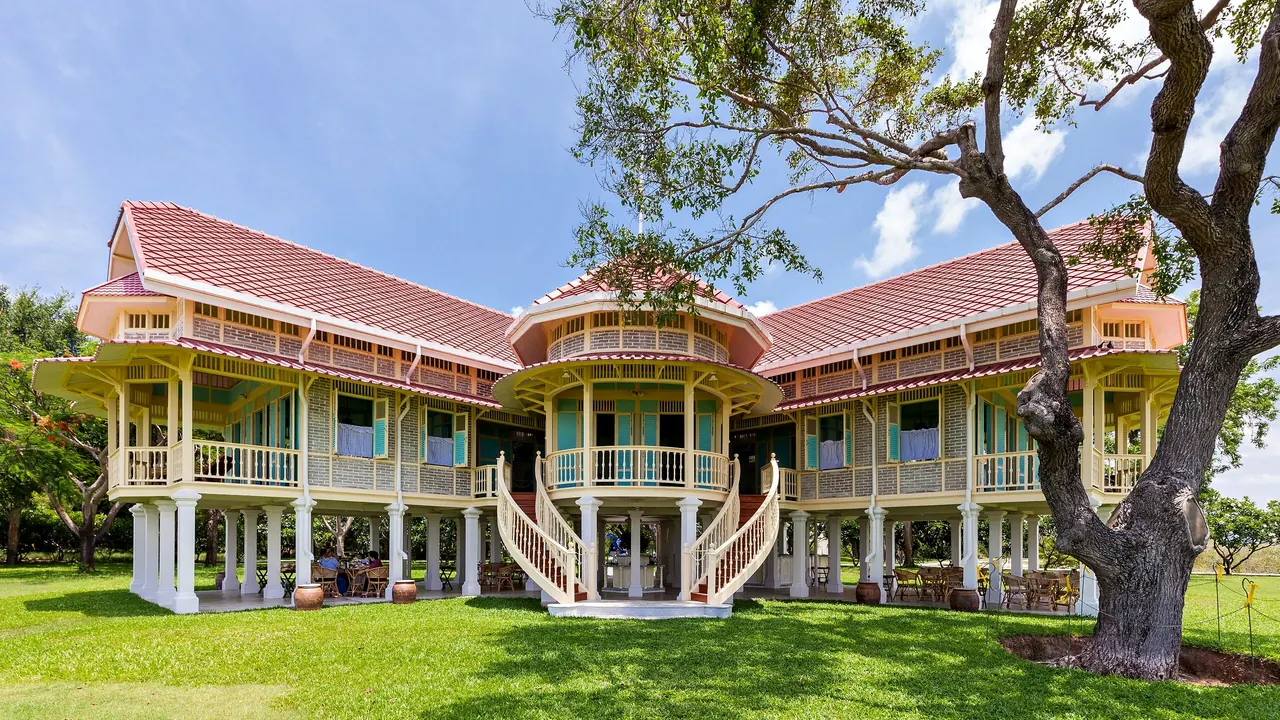
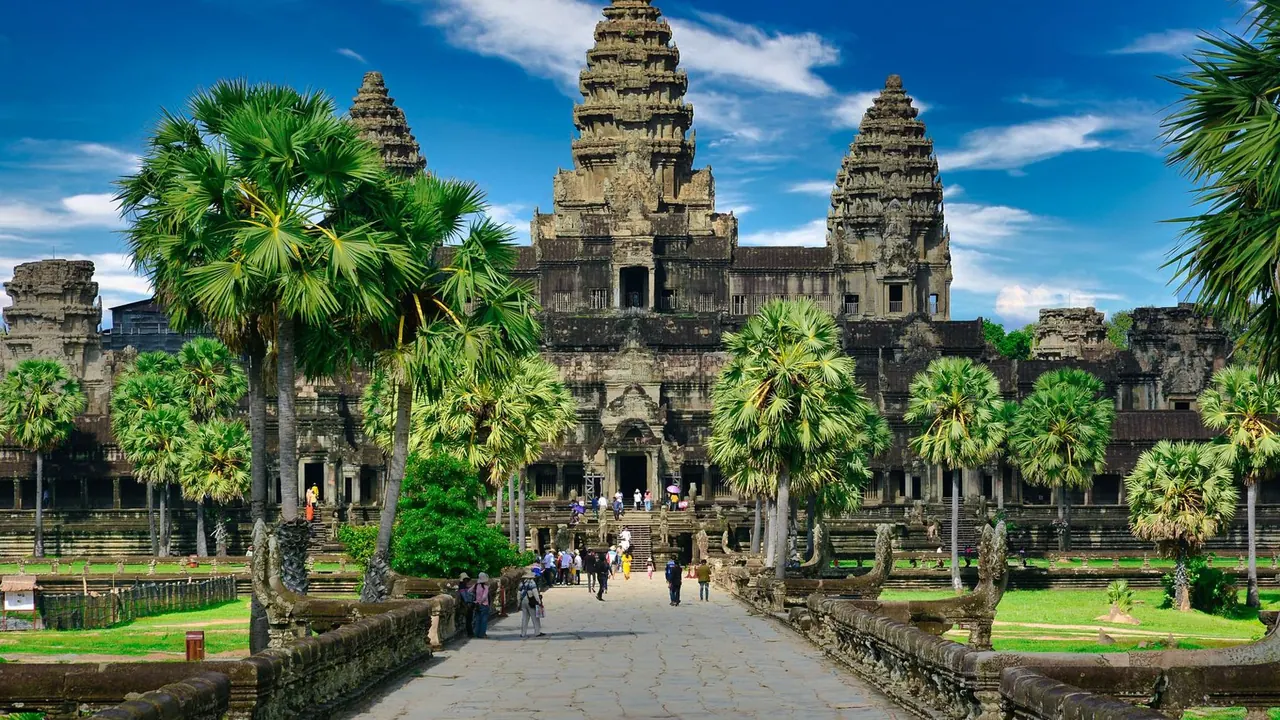
Photos: Hua Hin by allPhoto Bangkok, Pexels License; Siem Reap by allPhoto Bangkok, Pexels License.
Hua Hin or Siem Reap?
Our verdict in twelve categories, each scored against the same fixed benchmark cities, and the climate month by month, so you can choose for your trip.
Choose Hua Hin for
- beaches
- families
- nature and the outdoors
Hua Hin is the choice for a slow seaside stay: long pale sand, a warm and gentle Gulf, resorts with pools and kids' clubs, and some of Asia's best-known destination spas. It suits families, couples who want to rest, and anyone who would rather spend a morning in limestone national parks than in museums. The town's own sights take only a day or two.
Choose Siem Reap for
- culture and sights
- live music and the arts
- prices
Travellers who come to see something should pick Siem Reap. The temples of Angkor are among the great sights of the world, and a stay here is built around dawn starts at Angkor Wat, the Bayon and Ta Prohm, with afternoons by a hotel pool. There is no sea, but it is even cheaper, has apsara dance and a celebrated circus in the evenings, and suits older children who like scrambling through ruins.
Scoreboard
Twelve categories on one fixed scale from 0 to 100. The shaded stretch is the gap between the two.
Your match
Pick a travel style or drag the sliders, and both match scores follow your weighting.
Wins on beaches and families with your weighting.
Wins on culture and sights and live music and the arts with your weighting.
What matters to you?
Category by category
What the scores mean for a trip.
Beaches & swimming
This is the clearest difference between the two. Hua Hin has several kilometres of pale sand running south to Khao Takiab, warm and usually calm water, and quieter stretches towards Pranburi. The sea is milky rather than clear and the sand narrows at high tide, but this is a proper beach town.
Siem Reap is far inland, and the Tonle Sap is a muddy working lake, not a place to swim. Swimming there means the hotel pool, which is welcome after the temples but is no substitute for the sea.
Food & drink
Hua Hin eats better for most visitors, mainly because of the sea. You can choose crab, squid and whole fish by weight in the stilt restaurants by the old pier, and the night market on Dechanuchit Road is reliable. It is good provincial Thai cooking rather than a reason to go.
Siem Reap's Khmer dishes, such as fish amok and num banh chok, are less familiar, and a handful of kitchens rework them in tasting menus. The catch is that backpacker pizza dominates the centre around Pub Street, so the good meals take more finding.
Culture & sights
Here Siem Reap is in another league. The Angkor temples begin a short tuk-tuk ride from town, from Angkor Wat itself to the root-split galleries of Ta Prohm, and the Angkor National Museum gives useful context first. Three days there is not too many.
Hua Hin's interest is its royal seaside past: the red-and-cream railway station, the teak palace of Maruekhathaiyawan and the hilltop temple at Khao Takiab. That makes a pleasant morning or two rather than the purpose of a trip, and there are no museums worth the name.
Nightlife
Neither town has clubs, and in both the night out is packed into a few blocks. Siem Reap's Pub Street has the slight edge for a sociable evening, with a young backpacker crowd, cheap draught beer, music spilling into the street and quieter wine bars along the river.
The lanes around Soi Bintabaht in Hua Hin are a different scene of beer bars, sports screens and hostess bars aimed at older Western men. The rooftop and beachfront bars at sunset are the better choice there.
Nature & outdoors
Hua Hin has more countryside worth heading out into. The limestone peaks of Khao Sam Roi Yot and the sunlit cave pavilion at Phraya Nakhon are an hour away. Kaeng Krachan shelters gibbons and wild elephants in its rainforest, and the windy months bring good kitesurfing.
Siem Reap is flat paddy country, best for cycling between villages and for boat trips to the storks and pelicans of Prek Toal. The waterfall on Phnom Kulen and the riverbed carvings at Kbal Spean are the closest it comes to hills.
Day trips
Both have good days out, but of different kinds. Hua Hin's are about Thai towns and markets: the hilltop palace and lit cave temple at Phetchaburi, and further north the floating market at Damnoen Saduak and the canals of Amphawa.
From Siem Reap nearly every outing means more temples, from the fine pink carving at Banteay Srei to the overgrown ruins of Beng Mealea, plus the stilt villages on the Tonle Sap. No other town is close enough for a comfortable day there and back.
Good for families
Hua Hin is set up for families in a way Siem Reap is not. Beyond the resort there are the themed sheep farms and mock-European parks inland for younger children, pony rides on the sand and the monkeys on Khao Takiab. Most families stay in one resort and go out by car or taxi, because the main highway has few safe crossings and the midday heat drives everyone back to the shade.
Siem Reap makes a cheap family base, since a family room with a pool costs little, and Cambodians are just as warm towards children. For children who like adventure, tuk-tuk rides, walkways through the collapsed halls of Beng Mealea and boats to the stilt villages are the entertainment. Avoid March to May if you can, when the heat is heaviest, and keep the temples to the mornings.
Getting around
Hua Hin is a long ribbon of resorts along the Phetkasem highway, many kilometres from end to end, while Siem Reap's centre around the Old Market and the river is small enough to cross on foot. In Hua Hin the green shared songthaews running up and down the strip are the easiest way along it. The highway is daunting to cross, and the national parks and Phetchaburi need a car and driver.
Siem Reap has no public transport, but tuk-tuks wait on every corner, and hiring a driver for the day is the usual way round Angkor. The flat temple circuits also suit a bicycle or e-bike. In both towns, broken pavements and the heat mean you will be driven more than you walk.
Shopping & style
The two differ less in how much there is to buy than in what you take home. In Hua Hin the most enjoyable shopping is at the weekend craft markets on the southern side of town, with handmade jewellery and ceramics under the trees in the evening. Its large malls and the tailors on the tourist streets also make it the easier place to replace something you forgot to pack.
Siem Reap is stronger on things made locally. In its workshops and social enterprises you can watch silk weaving, stone carving and lacquerware being made, and the quality is far above the market stalls. The Old Market adds kramas, spices and silver, and bargaining is expected there.
Affordability
Both are cheap by Western standards, but your money goes further in Siem Reap. Guesthouses with pools, Khmer meals and a tuk-tuk driver for a whole day at the temples all cost very little. The Angkor pass is the one large expense.
Hua Hin is also good value for market meals, songthaews and massages. The beachfront resorts charge international rates, though, and Thai weekenders push up room rates on Fridays and Saturdays.
Live music & performing arts
Siem Reap has at least two evenings worth planning: classical apsara dance, best seen at the smaller and more serious performances rather than the buffet halls, and the contemporary Cambodian circus with its acrobats and live music. Hua Hin offers little beyond cover bands and resort dance shows, despite its long link with jazz.
Wellness & relaxation
Hua Hin is the better place simply to rest. It has residential destination spas with detox and yoga programmes, a spa in nearly every resort and massages under the trees on the beach. The days take an easy shape of early swims, long lunches and quiet evenings.
Siem Reap does massage well and cheaply, with Khmer herbal compresses in the hotel spas and yoga classes easy to find. There, though, rest has to fit around early temple starts, and the streets around Pub Street are noisy at night.
When should you go?
Pick your month. The climate figures are measured averages, not a forecast.
Hua Hin in July
Siem Reap in July
Daytime high, °C
Rainfall in the month, mm
Where the figures come from
Hua Hin's sunshine is measured 83 km from the centre, at Prachuap Khirikhan.
Siem Reap has no weather station within reach, so its figures come from a gridded climate model rather than a measured record, and read a broad area rather than the city itself.
Temperature and rainfall are climate normals, averaged over the years shown. Hua Hin: 1961-1990 (sunshine 1981-2010, rainfall 1981-2010) normals, Hua Hin (1.8 km from centre). Siem Reap: 2001-2020 normals, NASA POWER reanalysis grid, no weather station within 90 km.
Hua Hin works for the beach in every month, with the sea close to 28°C all year. The best stretch is December to April, when rain almost stops and the days are long and sunny. Showers return from May, and October is the wettest month at about 221mm. Even then it stays warm enough for the pool and the sea, and the heat never builds as high as it does inland.
Siem Reap is at its best from November to January, when the rains have ended and the heat is mildest for temple days. From February to April highs reach 36°C, which makes long walks round Angkor hard going after mid-morning. The wet season runs from May to October and peaks in September at about 231mm. It is slightly cooler and much greener then, and the lake villages are at their best. December and January are dry in both places, so they are the easiest months to combine the two.
Which traveller are you?
For a beach and sun trip, Hua Hin is the only real option of the two. It has kilometres of pale sand and a warm, calm Gulf for swimming. In Siem Reap the water stops at the hotel pool, and the lake is not for bathing.
On a culture and arts trip, Siem Reap wins by a long way. Three days at Angkor barely covers Angkor Wat, the Bayon and Ta Prohm, and in the evenings there is apsara dance or the circus. Hua Hin's royal palaces fill a day or two at most.
On a family trip with young children, Hua Hin is far easier. Resorts have kids' clubs and large pools, the sea is gentle and there are water parks. Siem Reap suits older children who enjoy ruins, but steep temple steps and the heat soon tire little ones.
Before you go
| Measure | Hua Hin | Siem Reap |
|---|---|---|
| Official language | Thai | Khmer |
| Currency | Baht (THB) | Riel (KHR) |
| Sockets | ABCF220 V, 50 Hz | ACG230 V, 50 Hz |
| Driving side | Left | Right |
| Time zone | UTC+7 | UTC+7 |
| Emergency number | Police 191, ambulance 1669, fire 199 | Police 117, ambulance 119, fire 118 |
| Elevation | 9 m | 18 m |
| Main airport | Suvarnabhumi Airport (BKK)150 km from centre150 non-stop destinations | Siem Reap-Angkor International Airport (SAI)39 km from centre14 non-stop destinations |
| Public holidays this year | - | 21 days |
By the numbers
| Measure | Hua Hin | Siem Reap |
|---|---|---|
| City population | 59,369 | 147,866 |
| People per km² | 687 | - |
| Museums within 10 km | 0 | 6 |
| UNESCO World Heritage sites within 50 km | 0 | 1 |
| Swim season, months above 21 °C | 12 months | - |
Where else could you go?
Every comparison below shares a destination with this one, so you can follow Hua Hin or Siem Reap somewhere new.
- Pattayavs Hua Hin
- Bangkokvs Hua Hin
- Phnom Penhvs Siem Reap
- Pattayavs Siem Reap
- Bangkokvs Siem Reap
- Ho Chi Minh Cityvs Siem Reap