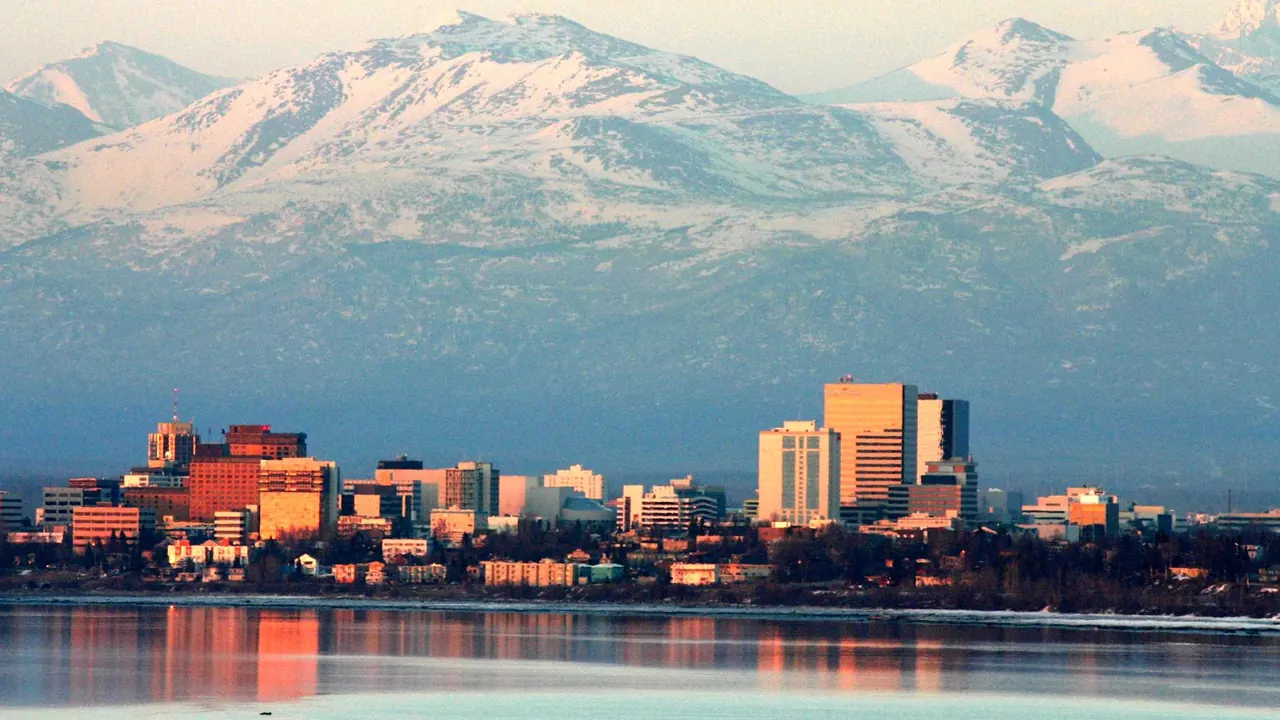
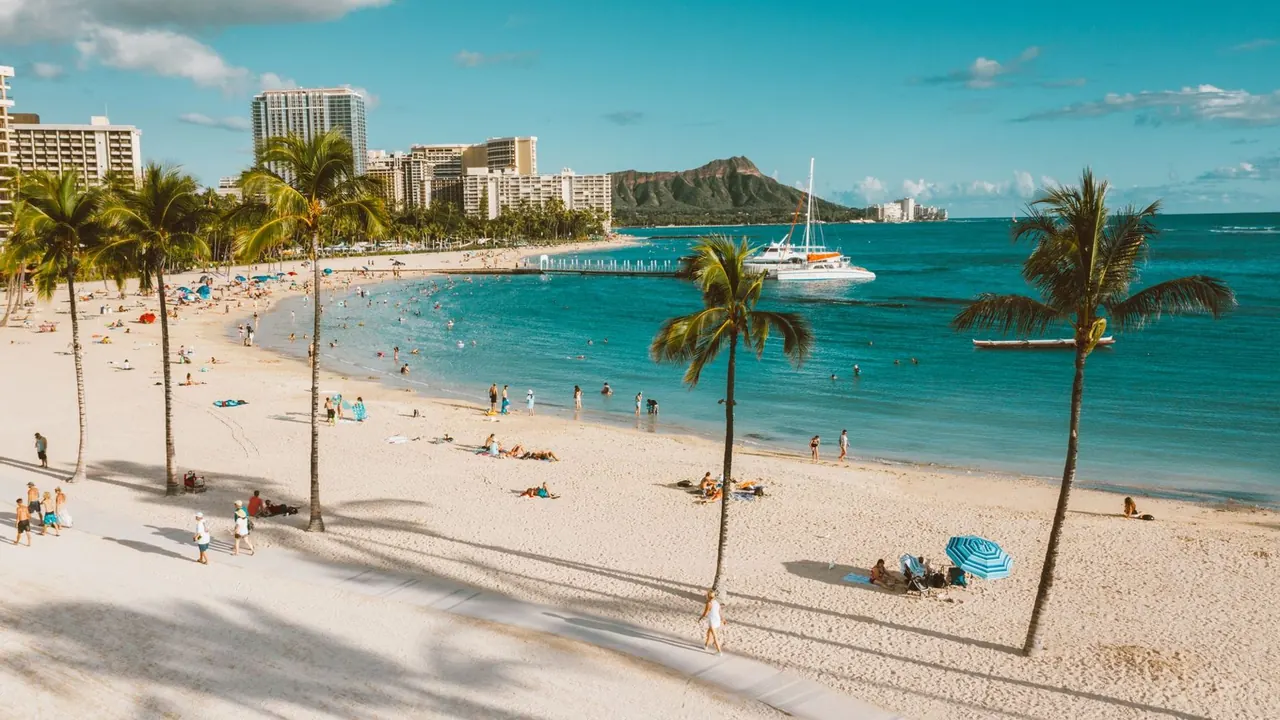
Photos: Anchorage by Frank K., CC BY 2.0, cropped; Honolulu by Jess Loiterton, Pexels License.
Anchorage or Honolulu?
Our verdict in twelve categories, each scored against the same fixed benchmark cities, and the climate month by month, so you can choose for your trip.
Choose Anchorage for
- prices
- nature and the outdoors
Anchorage is the choice for travellers who want wild country on the doorstep and don't mind cool weather or a hire car. Moose in the parks, trails into the Chugach Mountains, glaciers and beluga whales along Turnagain Arm make it a summer base for hiking, fishing and scenic driving. The city itself is plain and quiet after dark.
Choose Honolulu for
- beaches
- shopping
- food and drink
Honolulu suits people who want warm water and an easy pace. It has reef-sheltered beaches, a much broader local food scene, a royal and wartime history to explore, and a centre you can manage without a car. Families especially will find it simpler. Both are costly, but Honolulu costs more.
Scoreboard
Twelve categories on one fixed scale from 0 to 100. The shaded stretch is the gap between the two.
Your match
Pick a travel style or drag the sliders, and both match scores follow your weighting.
Wins on prices and nature and the outdoors with your weighting.
Wins on beaches and shopping with your weighting.
What matters to you?
Category by category
What the scores mean for a trip.
Beaches & swimming
Anchorage has no beach to speak of. Cook Inlet is cold and grey with glacial silt, and its mudflats are dangerous to walk on. In summer, the small city lakes such as Goose Lake give locals a brief, chilly swim.
Honolulu is built around its beaches. Waikiki has calm, warm water in the middle of town, Ala Moana and Kaimana are quieter, and the white sand at Kailua and Lanikai is less than an hour away. Swimmers just need to respect the currents on exposed shores and the North Shore's winter surf.
Food & drink
Anchorage is good for one thing in particular: wild Alaskan seafood in summer, such as salmon, halibut and king crab, plus reindeer sausage from the carts and a solid brewery scene around Spenard and midtown. Beyond that, expect diners and family restaurants.
Honolulu has far more variety. Hawaiian, Japanese, Chinese, Korean, Filipino and Portuguese cooking have blended into its everyday food: poke counters, plate lunches, malasadas and excellent ramen and izakaya. The best meals are casual ones in Kaimuki, Kapahulu and Chinatown, not in the resorts.
Culture & sights
Anchorage was largely rebuilt after the 1964 earthquake, so its sightseeing comes from institutions rather than streets. The Anchorage Museum and the Alaska Native Heritage Center are both excellent introductions to Alaska and its Indigenous peoples, with the floatplanes at Lake Hood as an extra.
Honolulu has more history you can actually stand in. Iolani Palace was the home of a Hawaiian monarchy, the Bishop Museum holds the finest Polynesian collection anywhere, and Pearl Harbor is a moving half-day. Each city still fills only two or three days of sightseeing.
Nightlife
Neither city is for clubbers. Honolulu has more going on in the evening: sunset mai tais on the Waikiki beachfront, cocktail and dive bars around Chinatown and Nuuanu Avenue, and a few dance nights.
Anchorage's evenings mean taprooms, pubs and dive bars spread between downtown and Spenard Road. They're livelier under the summer midnight sun and very quiet in the winter dark.
Nature & outdoors
Both cities have serious landscape right behind the houses, but of very different kinds. In Anchorage, the Chugach Mountains, Dall sheep and beluga whales along Turnagain Arm, and the glaciers at Portage give a sense of true wilderness, with skiing and the northern lights in winter.
Honolulu's outdoors is warm and green. You can climb the crater rim at Diamond Head, walk through rainforest to Manoa Falls, take on the steep Koolau ridge trails, then snorkel with turtles or paddle out to the islets off Kailua.
Day trips
From Anchorage, a day out means a long drive into the mountains, where the scenery matters more than the small places at the end of it. You can go through the single-lane tunnel to Whittier, visit the colony barns at Palmer and the spirit houses at Eklutna, or drive up to the gold camp at Independence Mine. All of them need a car.
Honolulu's day trips are shorter and all on one island. A single loop takes in the surf town of Haleiwa, the Byodo-In temple beneath the Koolau cliffs and the Polynesian Cultural Center. The neighbouring islands are a short flight away, but they deserve a stay of a few nights rather than a rushed day.
Good for families
Honolulu is the easier place to take children. Reef-protected lagoons at Ala Moana and Ko Olina, the aquarium and zoo at the Diamond Head end of Waikiki, a gentle first snorkel at Hanauma Bay and resort kids' clubs all keep the days simple.
Anchorage works for families who like the outdoors. There are bears and musk oxen at the Alaska Zoo, moose in the parks and floatplanes to watch at Lake Hood. The downsides are the driving and summer nights that never get dark.
Getting around
Downtown Anchorage is a small, walkable grid, but everything worth the trip lies beyond it, and the buses aren't designed for visitors. A rental car is close to essential.
In Honolulu you can manage several days on foot along Kalakaua Avenue and by TheBus, which reaches Pearl Harbor, Chinatown and even the North Shore. Many visitors hire a car only for a day's loop of the island.
Shopping & style
Honolulu is a real shopping destination. It has the luxury row on Kalakaua Avenue, the huge open-air Ala Moana Center, and island-made aloha shirts, koa bowls and ukuleles, with independent shops in Kakaako and Kaimuki.
Anchorage's shopping is smaller and more specialised. The worthwhile buys are Alaska Native art, ulu knives and qiviut scarves from downtown galleries and the summer weekend market, with good outdoor-gear shops for anyone kitting out a trip.
Affordability
Anchorage is the cheaper of two expensive destinations, and it gets noticeably cheaper in winter. Most of the cost comes from experiences such as glacier cruises and flightseeing, while the trails and parks that most visitors come for are free.
Honolulu costs more at almost every step. Waikiki hotel rooms, resort fees, sit-down meals and car hire all add up quickly. The main ways to save are eating at plate-lunch and poke counters and getting around by bus.
Live music & performing arts
The live performance offer is modest in both cities, and Honolulu has slightly more, mainly because its own music is everywhere. Slack-key guitar in hotel courtyards and free hula at Kuhio Beach let visitors hear Hawaiian music without planning ahead.
Anchorage centres on one formal venue, the Alaska Center for the Performing Arts, with its symphony, opera and touring shows. Its season runs mostly in winter, when visitors are few, though Alaska Native dance at the Heritage Center is there to see.
Wellness & relaxation
Honolulu does relaxation better. You can book lomilomi massage, use open-air resort spas and join yoga on the sand at dawn, while Kahala and the windward side offer quiet away from busy Waikiki.
Anchorage relaxes you mainly through space and silence. Its standout is the Nordic-style spa at Girdwood, where you can soak outdoors beneath the snowy peaks.
When should you go?
Pick your month. The climate figures are measured averages, not a forecast.
Anchorage in July
Honolulu in July
Daytime high, °C
Rainfall in the month, mm
Temperature and rainfall are climate normals, averaged over the years shown. Anchorage: 1991-2020 normals, Anchorage Air Force Base (7 km from centre). Honolulu: 1991-2020 normals, Honolulu International Airport (10.1 km from centre).
Anchorage has one real season. June to August is the time to go, with long light days and highs around 20°C in July. That is pleasant for hiking but never beach weather, and the inlet stays far too cold for swimming. Rain builds through late summer and peaks at about 80mm in September. From November to February the days stay below freezing, with highs near -6°C in January, and March is only just above it. Winter suits skiers and anyone hoping to see the northern lights, but it is hard going for exploring the city on foot.
In Honolulu, beach weather never stops. Daytime highs range from the high 20s in winter to about 32°C in August, and the sea stays warm all year, reaching 27°C in late summer and autumn. April to September is the driest stretch. From November to March showers are more frequent, but they pass quickly. On the hottest midsummer afternoons you're better off in the water than on the pavements.
Which traveller are you?
On a beach and sun trip, choose Honolulu. Anchorage's shore is silty mudflat in near-freezing water, while Waikiki, Lanikai and Hanauma Bay offer warm, sheltered swimming, beginner surf and snorkelling with turtles in any month of the year.
For an outdoors trip built around mountains, glaciers and big wildlife, choose Anchorage. Flattop, the Seward Highway, Portage Glacier and moose in the suburbs all lie within an hour. Honolulu's outdoors means volcanic ridges and reefs rather than ice and bears.
On a family trip with children, Honolulu is much easier. Calm lagoons, an aquarium and zoo next to the beach, kids' clubs and walkable Waikiki take a lot of the effort out of it. Anchorage appeals to outdoorsy families but means long drives and bright summer nights at bedtime.
Before you go
| Measure | Anchorage | Honolulu |
|---|---|---|
| Currency | US Dollar (USD) | US Dollar (USD) |
| Sockets | AB120 V, 60 Hz | AB120 V, 60 Hz |
| Driving side | Right | Right |
| Time zone | UTC-9, UTC-8 in summer | UTC-10 |
| Emergency number | 911 | 911 |
| Elevation | 31 m | 12 m |
| Main airport | Ted Stevens Anchorage International Airport (ANC)7 km from centre49 non-stop destinations | Daniel K. Inouye International Airport (HNL)7 km from centre56 non-stop destinations |
| Public holidays this year | 12 days | 13 days |
By the numbers
| Measure | Anchorage | Honolulu |
|---|---|---|
| City population | 291,247 | 350,964 |
| People per km² | 58 | 1,981 |
| Museums within 10 km | 5 | 12 |
| UNESCO World Heritage sites within 50 km | 0 | 0 |
| Swim season, months above 21 °C | None | 12 months |
Where else could you go?
Every comparison below shares a destination with this one, so you can follow Anchorage or Honolulu somewhere new.