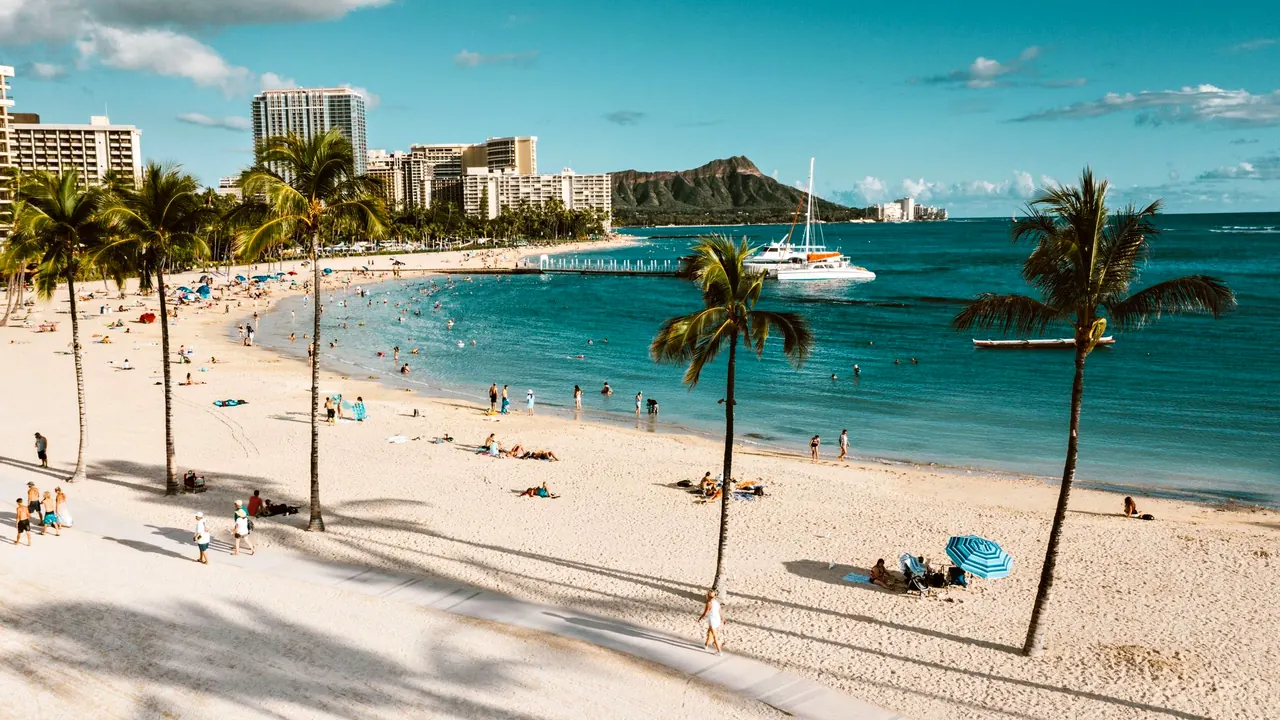
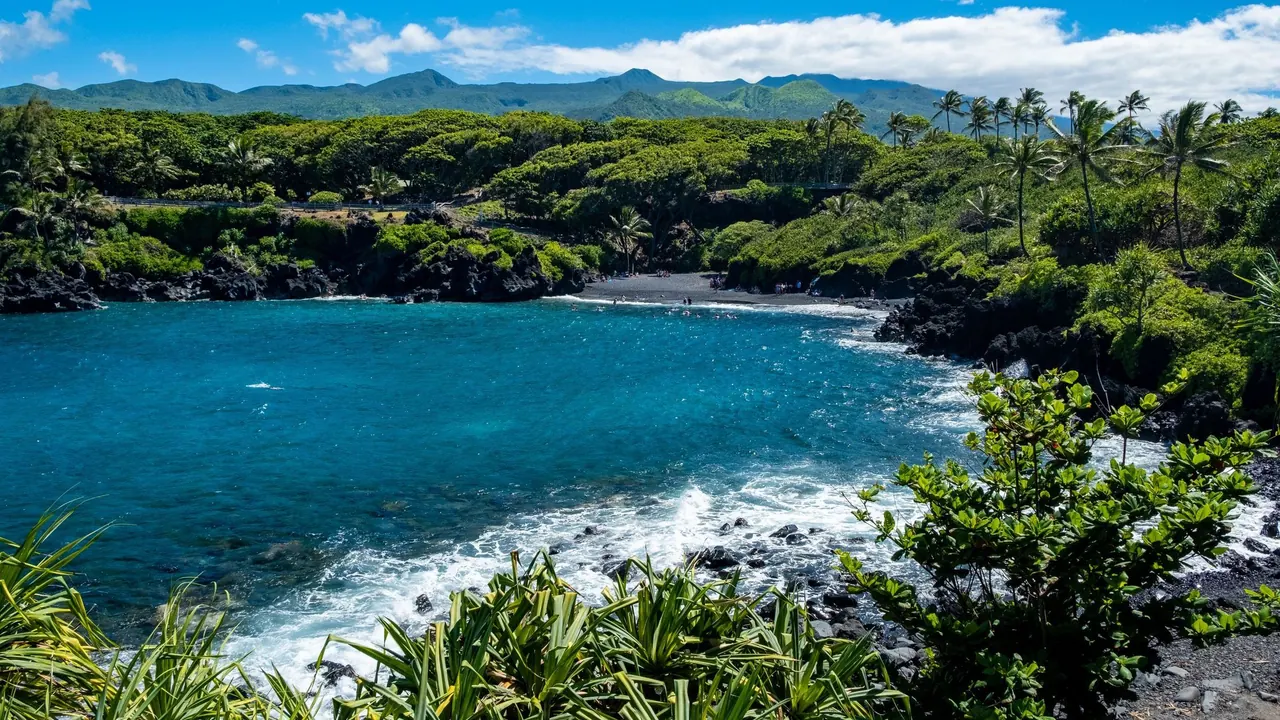
Photos: Honolulu by Jess Loiterton, Pexels License; Maui by Kelsey, Pexels License.
Honolulu or Maui?
Our verdict in twelve categories, each scored against the same fixed benchmark cities, and the climate month by month, so you can choose for your trip.
Choose Honolulu for
- shopping
- culture and sights
- nightlife
Honolulu suits travellers who want a city around their beach. From a Waikiki base you can walk to the sand, take the bus to Chinatown's noodle shops and bars, spend a morning at Pearl Harbor and an afternoon in the Bishop Museum, then hire a car for a day to loop the island. Families, first-timers and anyone who would be bored once the sun goes down will get more from it.
Choose Maui for
- wellness
- nature and the outdoors
- beaches
Maui is the better pick for a slower, landscape-led trip. Its west and south coasts are one long run of resort beaches, sunrise over the Haleakala crater and the drive to Hana are bigger experiences than anything on Oahu, and the resort spas and upcountry retreats are made for doing very little. You give up the museums, the evenings out and easy car-free days, and you pay even more for the privilege.
Scoreboard
Twelve categories on one fixed scale from 0 to 100. The shaded stretch is the gap between the two.
Your match
Pick a travel style or drag the sliders, and both match scores follow your weighting.
Wins on shopping and culture and sights with your weighting.
Wins on wellness and nature and the outdoors with your weighting.
What matters to you?
Category by category
What the scores mean for a trip.
Beaches & swimming
On beaches the two are level, and what differs is the setting. Honolulu's main beach is urban: Waikiki is narrow and crowded beneath the hotel towers, though gentle for swimming and first surf lessons, with calmer Ala Moana and Kaimana close by. The finest sand, at Kailua, Lanikai and Hanauma Bay, needs a short drive.
Maui has whole coastlines of it. The west runs from Kaanapali to the reef-sheltered bays of Napili and Kapalua, and the drier, sunnier south strings golden crescents from Kihei to Makena's Big Beach, so most hotels sit on sand you would choose anyway. Both see big winter surf on their north shores.
Food & drink
Honolulu eats better and more widely. Beyond poke and plate lunch it has serious Japanese cooking, from ramen and udon counters to izakaya, plus dim sum and produce markets in Chinatown and the local neighbourhoods of Kaimuki and Kapahulu.
Maui serves the same island staples, best found in the strip malls of Kahului, Wailuku and Kihei, and adds an upcountry farm side around Kula and Makawao with farm stands, a goat dairy and a winery. Outside that, the choice is mostly expensive resort dining in Wailea and Kaanapali.
Culture & sights
Honolulu has the sights that tell Hawaii's story. Iolani Palace, the only royal palace on American soil, the Bishop Museum's unrivalled Polynesian collections and the USS Arizona Memorial and battleship Missouri at Pearl Harbor make two or three full days.
Maui's heritage is spread thin: the Bailey House Museum in Wailuku, the sugar museum at Puunene and the great stone platform of Piilanihale Heiau near Hana. Much of its meaning lies in places such as Haleakala and Iao Valley rather than in anything you visit indoors.
Nightlife
Neither is a late-night place, but Honolulu at least has an evening scene. Chinatown and the streets around Nuuanu Avenue have cocktail and dive bars with some dance nights, Kakaako has craft breweries and Waikiki has a few clubs aimed at visitors. Maui has no clubs at all; a cluster of casual bars in Kihei and a handful in Paia are as lively as it gets, and most visitors are in bed early for a pre-dawn start.
Nature & outdoors
Both are superb outdoors, and the difference is scale against convenience. In Honolulu the landscape starts at the edge of town: Diamond Head's rim, the rainforest walk to Manoa Falls and the Koolau ridge trails are all half-day outings, with turtle snorkelling at Hanauma Bay a short drive away.
Maui's set pieces are grander and take longer to reach. Sunrise above the clouds on Haleakala's rim, the cinder cones of the crater floor, the waterfall pools at Kipahulu and the rainforest road to Hana are full-day affairs, and Molokini's sunken crater and Hookipa's windsurfing give the sea a similar edge.
Day trips
Both are islands and both lists are short, with Honolulu slightly ahead. A loop of Oahu takes in the surf town of Haleiwa, the Polynesian Cultural Center, the Byodo-In temple and the old pineapple country, and the neighbouring islands are a short flight away for those who stay over.
Maui's one real separate destination is Lanai by passenger ferry. Otherwise its outings are to small towns such as Paia, Makawao and Hana, or simply into the mountains and sea.
Good for families
Honolulu gives children more to do in a small area. The zoo and Waikiki Aquarium sit at the quiet end of Waikiki, Sea Life Park and a water park are within reach, the Ko Olina lagoons suit small swimmers, and older children get the Pearl Harbor ships and the Diamond Head climb.
Maui works well for a pure beach stay, with gentle west and south coast sand, resort kids' programmes, the Maui Ocean Center and winter whale-watching. It lacks zoos and theme parks, though, and its long winding drives and cold summit can wear out young passengers.
Getting around
Honolulu is far easier without a car. Waikiki is flat and walkable end to end, and TheBus reaches Chinatown, Pearl Harbor and even the North Shore, so a car is needed only for a day or two.
On Maui a hire car is close to essential, since the bus is too sparse for sightseeing. The famous drives are slow, with the hairpins and one-lane bridges of the Hana road and a climb of about two hours to the summit, though a car-free day along the beach paths of Wailea or Kaanapali is easy.
Shopping & style
Honolulu is a real shopping destination, Maui is not. Kalakaua Avenue's line of luxury fashion houses and the vast open-air Ala Moana Center sit alongside independent design and surf shops in Kakaako and Kaimuki, plus weekend swap meets.
Maui's shopping is a pleasant sideline: resort centres and Kahului malls for the basics, Paia's boho boutiques and Makawao's galleries for character, and upcountry coffee and lavender to take home.
Affordability
Honolulu leaves more room to trim the bill, though neither is cheap. The bus is cheap, Waikiki is walkable, the beaches, hikes and Pearl Harbor memorial cost little or nothing, and poke counters and food trucks keep meals down.
Maui has fewer ways to save. A hire car is hard to avoid, the resorts at Wailea and Kapalua charge top prices, and even Kihei condos are dear in the winter peak.
Live music & performing arts
Honolulu is the place to see Hawaiian music and hula done properly. It has free hula shows at Kuhio Beach and slack-key and falsetto music in hotel courtyards. The restored Hawaii Theatre and short seasons from the symphony and opera add more choice.
Maui's programme rests on the Maui Arts & Cultural Center in Kahului and community productions at the Iao Theater. Most visitors only see hula at a luau dinner show.
Wellness & relaxation
Maui is the more restful choice. The big resort spas of Wailea and Kapalua offer hydrotherapy circuits and lomilomi, the green hills around Haiku and Kula have yoga studios and small retreats, and Hana gives the deepest quiet in either place.
Honolulu has lomilomi, good hotel spas and dawn yoga on the sand, but Waikiki is dense and busy. Real calm means staying out at Kahala, Ko Olina or on the windward side.
When should you go?
Pick your month. The climate figures are measured averages, not a forecast.
Honolulu in July
Maui in July
Daytime high, °C
Rainfall in the month, mm
Temperature and rainfall are climate normals, averaged over the years shown. Honolulu: 1991-2020 (sunshine 1981-2010) normals, Honolulu International Airport (10.1 km from centre). Maui: 1991-2020 (sunshine 1981-2010, rainfall 1961-1990) normals, Kahului Airport (15.1 km from centre).
Both are warm enough for the beach in every month. Daytime highs start around 27°C in winter and reach 32°C in Honolulu in August, and the sea warms from 24°C through late winter and spring to 27°C in early autumn. Honolulu gets more sunshine than Maui in every month, and its wetter season, from about November to March, brings frequent but modest showers rather than washed-out days. Summer afternoons are hot and sticky for walking Chinatown or downtown, so do your sightseeing early in the day.
Maui's figures come from the dry leeward side, where most visitors stay on the west and south coasts. There the wet season is sharper, with rain peaking at 108mm in January, and from April to October it is almost completely dry, so late spring to early autumn is the surest time for a beach stay. Those figures don't cover the whole island. The windward Hana coast and the green upcountry hills stay wetter all year, so expect showers on the Hana road in any month. Whatever the month, the Haleakala summit is cold before dawn.
Which traveller are you?
On a culture and arts trip, Honolulu is the clear choice. Iolani Palace, the Bishop Museum's Polynesian collections, the Pearl Harbor memorials and free hula at Kuhio Beach fill several days, while Maui's history is scattered and fills perhaps one.
For a food and nightlife trip, Honolulu again. Japanese counters, Chinatown dim sum and Kaimuki's local spots give real range, and Chinatown's cocktail and dive bars keep going after dinner. Maui eats well enough but is mostly asleep by late evening.
On a relaxing and wellness trip, Maui wins. The big spas of Wailea and Kapalua have hydrotherapy circuits, Haiku and Kula offer small retreats and yoga, and quiet evenings come naturally, whereas Waikiki is dense and busy around its spas.
Before you go
| Measure | Honolulu | Maui |
|---|---|---|
| Currency | US Dollar (USD) | US Dollar (USD) |
| Sockets | AB120 V, 60 Hz | AB120 V, 60 Hz |
| Driving side | Right | Right |
| Time zone | UTC-10 | UTC-10 |
| Emergency number | 911 | 911 |
| Elevation | 12 m | - |
| Main airport | Daniel K. Inouye International Airport (HNL)7 km from centre56 non-stop destinations | Kahului International Airport (OGG)29 non-stop destinations |
| Public holidays this year | 13 days | 13 days |
By the numbers
| Measure | Honolulu | Maui |
|---|---|---|
| Population | 350,964 | 144,444 |
| People per km² | 1,981 | 77 |
| Museums within 10 km | 12 | - |
| UNESCO World Heritage sites within 50 km | 0 | - |
| Swim season, months above 21 °C | 12 months | 12 months |
Where else could you go?
Every comparison below shares a destination with this one, so you can follow Honolulu or Maui somewhere new.