United States
Maui
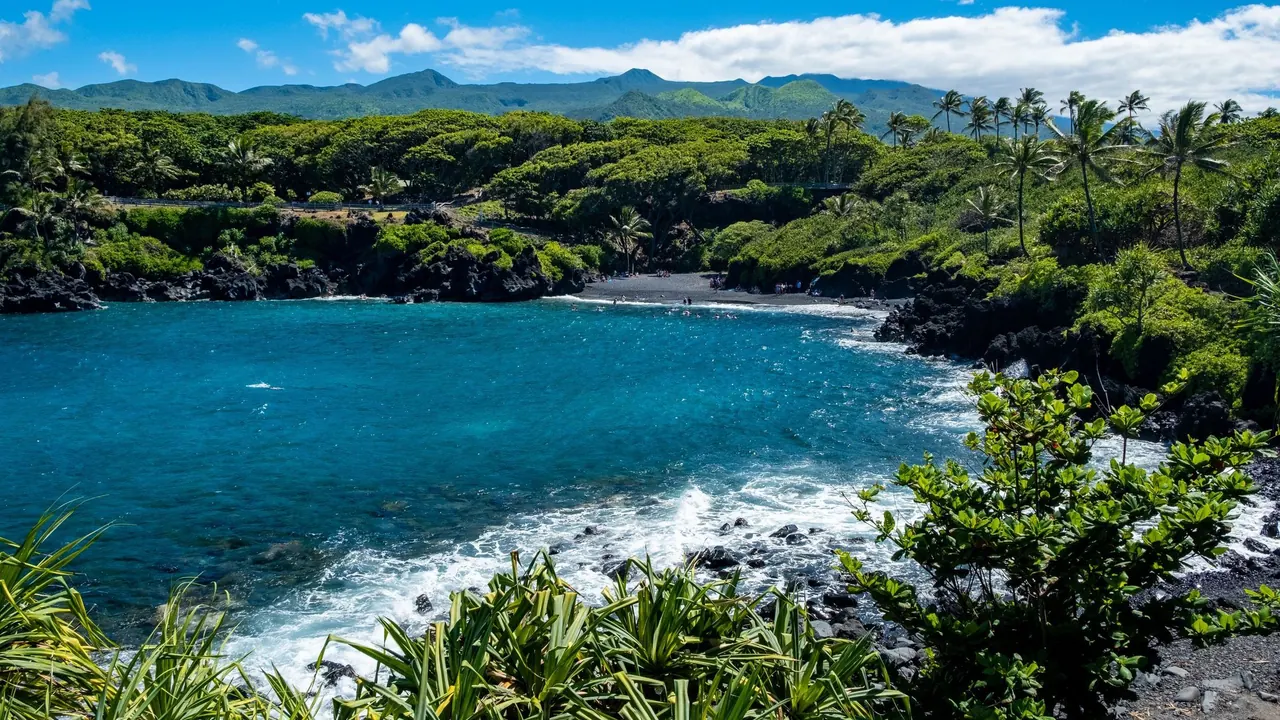
A black-sand bay near Hana on the east coast
- Beaches92
- Nature & outdoors92
- Families66
Photo: Kelsey, Pexels License
Maui lies in Hawaii, which has its own page.
Match
47
Every category weighted equally
- Beach & sun54
- Culture & arts38
- Food & nightlife39
- Family trip53
- Outdoors54
- Relax & unwind56
- Shopping & style42
- On a budget42
Maui in twelve categories
Our verdict on each, scored 0 to 100 against the same fixed benchmark cities, so a score means the same thing on every page.
Beaches & swimming. Scores 92 out of 100.
Food & drink. Scores 57 out of 100.
Culture & sights. Scores 28 out of 100.
Nightlife. Scores 18 out of 100.
Nature & outdoors. Scores 92 out of 100.
Day trips. Scores 32 out of 100.
Good for families. Scores 66 out of 100.
Getting around. Scores 42 out of 100.
Shopping & style. Scores 32 out of 100.
Affordability. Scores 9 out of 100.
Live music & performing arts. Scores 24 out of 100.
Wellness & relaxation. Scores 66 out of 100.
Maui category by category
Beaches & swimming
92Beaches are the reason most people come, and the island has a long list of them. The west coast runs from the resort strand of Kaanapali to the sheltered bays of Napili and Kapalua, where the water is often calm enough to swim straight out over reef. The south coast, from Kihei through Wailea to Makena, is drier and sunnier, with a chain of golden crescents and the wide, wild sweep of Big Beach at its end.
The sea stays warm all year, around 24°C in winter and close to 27°C by late summer. Winter swells batter the north shore and can raise the shorebreak elsewhere, so the west and south are where to stay for easy swimming. On the road to Hana, the black and red sand coves are better for looking at than for swimming.
Food & drink
57Eating here mixes the island's working-class local food with polished resort dining. The local side is the most rewarding: poke counters with fish cut that morning, plate lunches of kalua pork and rice, saimin noodle soup, malasadas and shave ice, much of it found in the strip malls and towns of Kahului, Wailuku and Kihei rather than in the resorts.
Upcountry, around Kula and Makawao, farms grow onions, greens and lavender, and there are farm stands, a goat dairy and a winery on the slopes of Haleakala. Wailea and Kaanapali have the expensive oceanfront dining rooms, some very good, many forgettable. The scene is enjoyable but narrow, and few visitors plan a trip around it.
Culture & sights
28The island's heritage is modest and scattered, and it is easy to miss. Wailuku has the Bailey House Museum, a missionary home with collections of Hawaiian artefacts, and the sugar museum in Puunene tells the story of the plantations that shaped the island's mixed population. Near Hana, Piilanihale Heiau is one of the largest ancient stone temple platforms in the islands, and Iao Valley carries the memory of a decisive battle of Hawaiian unification.
Much of the cultural meaning lies in places rather than buildings, above all Haleakala, a sacred mountain. A visitor interested in Hawaiian history finds enough for a day or two, but nobody comes here for sights.
Nightlife
18Maui goes to bed early. Days start before dawn for sunrise on the volcano or a snorkel trip, and most evenings end with a sunset drink and dinner. The liveliest strip is in Kihei, where a cluster of casual bars draws a younger crowd and stays open later than anywhere else on the island, and Paia has a few small bars. Resort lounges in Wailea and Kaanapali serve cocktails until the late evening. There are no real clubs, and anyone after a big night out will be disappointed.
Nature & outdoors
92The landscape climbs from reef to a 3,055m volcanic summit. At Haleakala National Park the crater is a vast, cindery bowl of red and grey cones, with trails such as Sliding Sands dropping into it; sunrise from the rim, above the clouds, is the island's signature experience. The Kipahulu end of the park, past Hana, has bamboo forest and waterfall-fed pools, and the road to Hana runs through rainforest, gulches and sea cliffs. Iao Valley's green spire rises close to Wailuku.
The water is just as strong. Humpback whales gather offshore from roughly December to April, Molokini's submerged crater offers clear snorkelling and diving, and Hookipa on the north shore is a world centre for windsurfing, with Peahi's giant winter waves nearby.
Day trips
32Most outings here are into landscape rather than to other places. The realistic separate destination is Lanai, reached by passenger ferry across the channel, with the quiet plantation-era square of Lanai City and a couple of beaches and lookouts. Molokai is close on the map but usually needs a short flight. On Maui itself, the surf town of Paia, the paniolo (cowboy) town of Makawao with its galleries, the old county seat of Wailuku and remote Hana each make part of a day. It is a short list, and the island's real excursions belong to its mountains and sea.
Good for families
66For families who want a beach vacation, it works well. The west and south coasts have gentle, sandy beaches where children can paddle and snorkel among turtles and reef fish, and the big resorts in Wailea and Kaanapali are built around pools and kids' programmes. The Maui Ocean Center in Maalaea is a good aquarium focused on Hawaiian reef life, and a winter whale-watching boat is a highlight for children.
There are no theme parks or large zoos, and long, winding drives such as the road to Hana or the climb up Haleakala can test young passengers, as can the cold at the summit. Choosing one coast and staying put makes it easy.
Getting around
42A hire car is the normal way to see the island, and roads are generally good. Kahului, the airport town, sits in the flat isthmus between the two volcanoes, and the west and south coasts are each within about an hour of it. The difficulty lies in the showpiece drives: the road to Hana is a slow procession of hairpins and one-lane bridges, and the climb to the Haleakala summit takes about two hours from the coast. The single highway to the west side backs up at busy times.
The public bus links the main towns but is too sparse for sightseeing. Within Wailea or Kaanapali, beach paths make a car-free day easy.
Shopping & style
32Shopping is a pleasant sideline. Open-air resort centres in Wailea and Kaanapali carry swimwear, resort fashion and a few luxury labels, while Kahului has the island's everyday malls. The more characterful buys are in the small towns: surf and boho boutiques in Paia, galleries and craft shops in Makawao, and aloha shirts, koa wood, local art and island-made foods such as coffee and lavender products from upcountry farms. There is no depth beyond that.
Affordability
9Maui is one of the most expensive places to vacation in the United States. Beachfront resorts in Wailea and Kapalua are priced at the top of the market, and even condos in Kihei are dear in the winter peak. Almost everything is shipped in, so groceries and restaurant meals cost well above mainland levels, and a hire car is an extra cost that cannot easily be avoided. Snorkel cruises, helicopter flights and luaus add up quickly. Local plate-lunch spots and self-catering soften the bill, but there is no cheap way to do the island.
Live music & performing arts
24Live performance is limited. The Maui Arts & Cultural Center in Kahului is the main venue, with touring concerts, local theatre and occasional hula festivals, and the historic Iao Theater in Wailuku stages community productions. Hawaiian music is the distinctive strand: slack-key guitar and ukulele can be heard in hotel lounges and at small concerts. Most visitors meet hula through luaus, dinner shows staged for guests with fire dancing and island food, which are entertaining but hardly a performing-arts scene.
Wellness & relaxation
66Maui has no thermal springs or bathing tradition, but it is built for unwinding. The large resort spas of Wailea and Kapalua are the main offer, with long treatment menus, hydrotherapy circuits and lomilomi, the flowing Hawaiian massage. Upcountry, in the green hills around Haiku and Kula, yoga studios and small retreats offer a quieter, more inward kind of rest.
The pace does the rest: early sunrises, little to do after dark and trade winds cooling the evenings. Hana, at the end of its long road, is the place for the deepest quiet.
Where to stay in Maui
Most visitors choose between the two dry, sunny coasts, each about an hour from the airport at Kahului. The south coast suits a first visit best. Kihei is the practical choice, a long strip of condos, local food counters and the island's only late-opening bars, good for younger travellers and anyone self-catering. Wailea, just south, is the polished resort end, with calm golden beaches, beach paths and large spas, and it suits families who want to settle by a pool and the sea.
The west coast is greener and more scenic. Kaanapali has a long resort beach and an easy walk between hotels and shops, good for families and couples. Napili and Kapalua, further north, are quieter, with sheltered bays for swimming over reef, though the single highway back to the rest of the island can be slow.
Upcountry, around Kula, Makawao and Haiku, suits a quiet stay among farms and yoga retreats, with the Haleakala summit a little closer. Paia, on the north shore, is a small surf town for windsurfers and anyone who prefers boutiques to resorts. Hana gives the deepest quiet, but works best as a night or two at the end of its long road. Most trips need only one base, perhaps with a night in Hana added.
When should you go?
Pick a month to see what it is like. The climate figures are measured averages, not a forecast.
Maui in July
Daytime high, °C
Rainfall in the month, mm
The whole year
Shaded against this city’s own year: the deepest cell is its best month for that figure and the palest its weakest.
Temperature and rainfall are climate normals, averaged over the years shown. Maui: 1991-2020 (sunshine 1981-2010, rainfall 1961-1990) normals, Kahului Airport (15.1 km from centre).
Before you go
| Measure | Maui |
|---|---|
| Currency | US Dollar (USD) |
| Sockets | AB120 V, 60 Hz |
| Driving side | Right |
| Time zone | UTC-10 |
| Emergency number | 911 |
| Main airport | Kahului International Airport (OGG)29 non-stop destinations |
| Public holidays this year | 13 days |
By the numbers
| Measure | Maui |
|---|---|
| Population | 144,444 |
| People per km² | 77 |
| Swim season, months above 21 °C | 12 months |