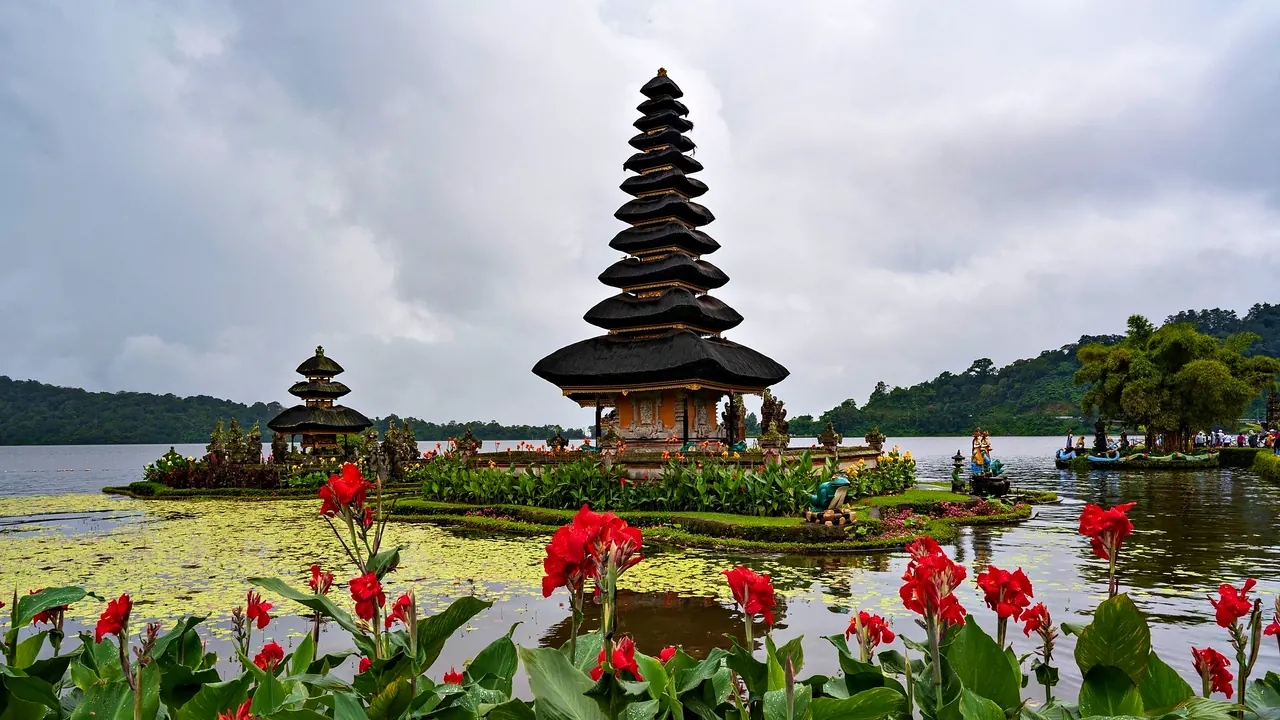
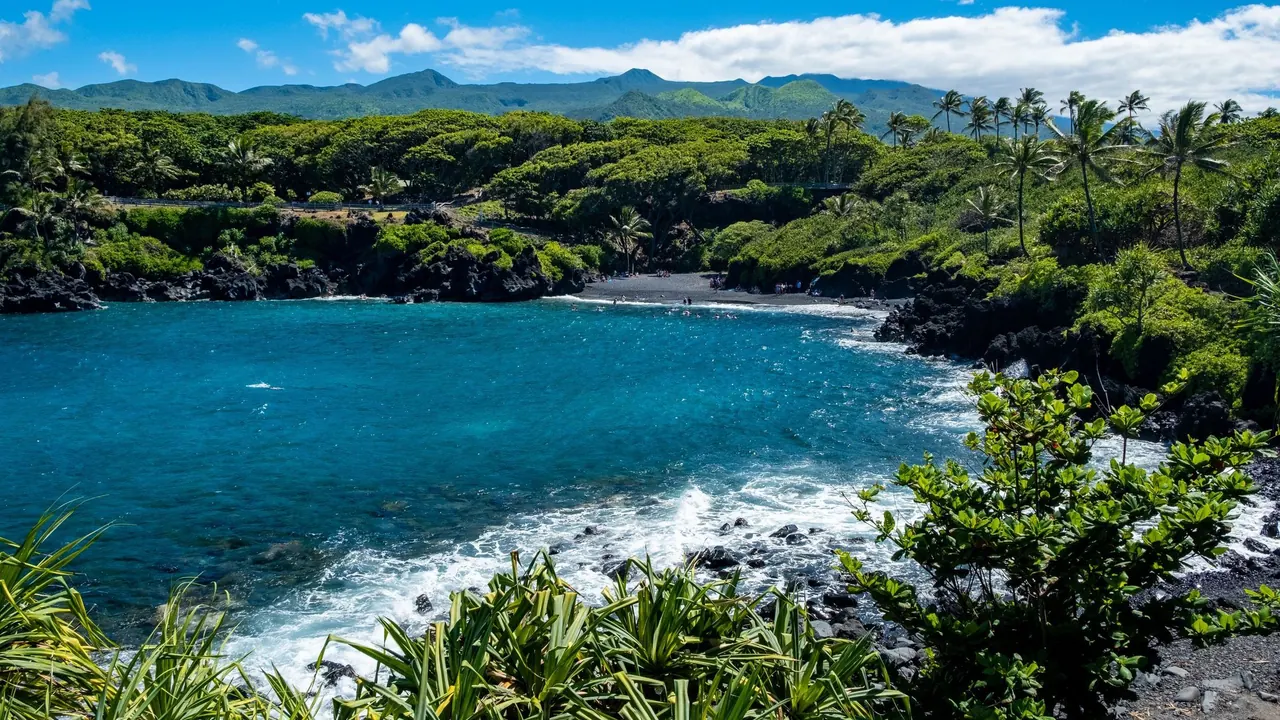
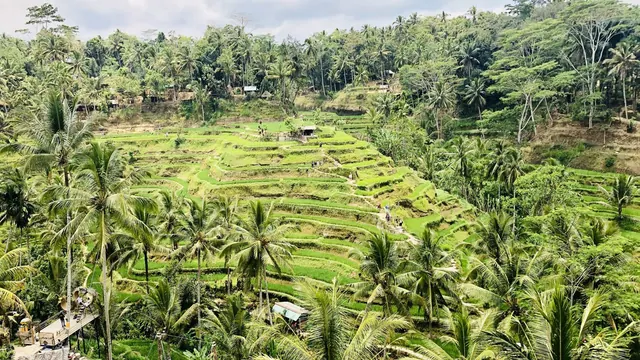
Photos: Bali by Evelin Magnus, Pexels License; Maui by Kelsey, Pexels License.
Bali or Maui?
Our verdict in twelve categories, each scored against the same fixed benchmark cities, and the climate month by month, so you can choose for your trip.
Choose Bali for
- prices
- nightlife
- culture and sights
Bali suits travellers who want an island with a whole culture laid over the beaches. Temples, daily offerings, nightly dance in Ubud, Balinese cooking at simple warungs, beach clubs on the southwest coast and yoga retreats in the rice valleys all fit into one stay. It also costs far less, so a pool villa and a daily massage are within reach. The price is the traffic: getting around the south is slow and tiring, and the best of the island means long drives.
Choose Maui for
- getting around
- beaches
- nature and the outdoors
Maui is the better choice when the trip is about the sea and the land and little else. Its west and south coasts have calmer, easier swimming. Haleakala's crater, the road to Hana and the winter whales give it some of the finest scenery in the Pacific, and the roads are far easier to drive. Evenings are quiet, the history is thin and almost everything costs a lot, so it rewards people who come for sunrise, snorkelling and early nights.
Scoreboard
Twelve categories on one fixed scale from 0 to 100. The shaded stretch is the gap between the two.
Your match
Pick a travel style or drag the sliders, and both match scores follow your weighting.
Wins on prices and nightlife with your weighting.
Wins on getting around and beaches with your weighting.
What matters to you?
Category by category
What the scores mean for a trip.
Beaches & swimming
Maui has the easier beaches. On the west coast, Napili and Kapalua are sheltered bays where you can swim straight out over the reef. On the drier south coast, Wailea's crescents lead down to the wide sweep of Big Beach. The one thing to plan around is the winter swell on the north shore.
Bali's beaches each do a different job. Kuta, Seminyak and Canggu are for surfing and sunsets, but you swim between the flags there. Sanur and Nusa Dua have calm lagoons, and the Bukit has its cliff coves, reached by steps. The sea is a couple of degrees warmer than Maui's.
Food & drink
Bali has a cuisine of its own, and Maui has a pleasant local food scene. Because Bali is Hindu, pork is central to its cooking: suckling pig, slow-cooked duck in banana leaf and lemongrass satay, eaten at warungs and morning markets. On top of that come Canggu's coffee roasters and the ambitious tasting menus of Ubud and Seminyak.
Maui's best eating is unpretentious: fresh poke, kalua pork plate lunches and saimin in Kahului, Wailuku and Kihei, plus farm stands upcountry around Kula. The oceanfront resort restaurants are expensive and uneven, and few people plan a trip around eating there.
Culture & sights
Here the two islands are far apart. In Bali, religion is part of everyday life, with offerings on the pavements, sea temples at Tanah Lot and Uluwatu, Besakih on the slopes of Mount Agung and the UNESCO-listed subak rice terraces of Jatiluwih. Ubud adds a palace, painting museums and rock-cut shrines, and village processions can appear at any time.
Maui's history comes down to a missionary house museum in Wailuku, the sugar museum at Puunene and the great stone platform of Piilanihale Heiau near Hana. Much of its meaning lies in sacred places like Haleakala rather than in buildings, and it fills a day or two at most.
Nightlife
Bali has a real night out, though only in the southwest. You can spend the afternoon at a pool club in Seminyak, Canggu or on the Uluwatu cliffs and stay as the DJs take over. Canggu has bar-hopping along the rice-field lanes, Seminyak has cocktail lounges, and the clubs of Kuta keep going until the early hours.
On Maui, evenings mostly end with a sunset drink and dinner, because the next day often starts before dawn. A few casual bars in Kihei and Paia are the liveliest it gets, and there are no clubs.
Nature & outdoors
Both islands are volcanic and both have sunrise climbs, but Maui's landscape has the wider range. It rises from the reef to Haleakala's red and grey cinder crater, which you can hike into on the Sliding Sands trail. The road to Hana runs through rainforest to the Kipahulu pools, humpback whales gather offshore from roughly December to April, and Molokini's sunken crater has very clear water for snorkelling.
Bali answers with the pre-dawn walk up Mount Batur, the crater lakes and waterfalls of Munduk, and rice terraces for walking and cycling. Its sea is famous too, with world-class surf breaks on the Bukit, the Tulamben wreck and manta rays off Nusa Penida.
Day trips
Neither island has much in the way of day trips, but Bali has more places worth visiting. Among the old Bali Aga villages, Tenganan keeps its double-ikat weaving and Penglipuran its single street of matching gateways. Sidemen and Amed make slow days out in the east, and Nusa Lembongan is a short boat ride from Sanur.
Maui's one real separate destination is Lanai, across the channel by ferry. Otherwise, the island's outings are drives through its scenery that stop in Paia, cowboy-town Makawao or Hana along the way.
Good for families
For families the two come out about even, but the trips feel different. Bali has more to do: a water park, a safari park, Ubud's Monkey Forest and villas with private pools, and children are made very welcome. On the other hand, you need to watch for stomach upsets and animal bites, and there are few pavements for pushchairs.
Maui is the more straightforward choice. Calm beaches have turtles to snorkel with, the Wailea and Kaanapali resorts have kids' programmes, and the Maui Ocean Center and a whale-watching boat are easy highlights. There are no theme parks, and the cold at the Haleakala summit catches small children out.
Getting around
Maui is the easier island to get around. With a hire car on good roads, both the west and south coasts are about an hour from the airport at Kahului. Only the famous drives are slow: the hairpins and one-lane bridges on the road to Hana, and the long climb up Haleakala.
Bali has no public transport a visitor can really use, and the roads linking the airport, Kuta, Canggu and Uluwatu are clogged for much of the day. Most people hire a driver by the day or use ride-hailing apps, and scooters are only for experienced riders.
Shopping & style
Bali is much the better island for shopping, and the best things to buy are crafts. On the road to Ubud, Celuk makes silver jewellery, Mas carves wood and Batubulan carves stone. Look out for ikat weaving from the east, and for linen, ceramics and furniture from designer-run boutiques in Seminyak and Canggu.
Maui's shopping is a pleasant extra. There are resort arcades in Wailea and Kaanapali, surf boutiques in Paia and galleries in Makawao. Good things to take home are aloha shirts, koa wood, and coffee or lavender from the upcountry farms.
Affordability
This is where the two islands differ most. In Bali, a villa with its own pool, a warung lunch, a massage and a driver for the day all cost little, and prices drop further inland and on the east and north coasts. Only the beach clubs, brunch cafés and clifftop resorts in the southwest charge close to Western prices.
Maui is among the most expensive vacations in the United States. Groceries and restaurants cost well above mainland levels because nearly everything arrives by ship, a hire car is hard to avoid, and boat trips and luaus quickly add up. Self-catering eases the bill, but only a little.
Live music & performing arts
Bali's dance and gamelan traditions are still very much alive, and easy to see. Ubud's palace courtyards stage Legong, Barong and shadow puppetry almost every night, the Kecak is chanted at sunset on the Uluwatu cliffs, and the Bali Arts Festival fills weeks of the dry season in Denpasar.
On Maui, Hawaiian music is the thing to look for: slack-key guitar and ukulele in hotel lounges. Touring shows and local theatre play at the Maui Arts & Cultural Center and the old Iao Theater in Wailuku. Most visitors only see hula at a luau dinner show.
Wellness & relaxation
Bali is one of the world's great places to slow down. Ubud and its valleys are full of yoga studios, meditation retreats and spas overlooking rice fields and river gorges, and a Balinese massage costs little at any level. There are also the dragon-spouted hot springs at Banjar and the purification ritual at Tirta Empul. Stay away from the noise of Kuta and Canggu if rest is the aim.
Maui's calm comes from its large resort spas in Wailea and Kapalua, which offer lomilomi massage and hydrotherapy, and from a few small yoga retreats in the hills around Haiku and Kula. Early nights and the remoteness of Hana make it restful in a simpler way.
When should you go?
Pick your month. The climate figures are measured averages, not a forecast.
Bali in July
Maui in July
Daytime high, °C
Rainfall in the month, mm
Temperature and rainfall are climate normals, averaged over the years shown. Bali: 1991-2020 normals, Denpasar / Ngurah-Rai (3.5 km from centre). Maui: 1991-2020 (sunshine 1981-2010, rainfall 1961-1990) normals, Kahului Airport (15.1 km from centre).
Around Bali's south coast, where most visitors stay, the year splits into a wet season and a dry one, and it is hot throughout. From December to March downpours are frequent and the sun shows less, with close to 400mm of rain in January. From May to October the island dries out, and from June to September there is very little rain. That is the time for the clearest water, volcano climbs and long temple drives. Daytime highs stay around 31°C all year, so walking Ubud's streets or the temple courtyards is humid work in any month. The sea is warm enough for swimming whenever you go.
Maui's weather here describes the dry leeward coasts in the west and south, where the resorts are. The windward slopes and the rainforest along the road to Hana stay wet in every season. On the resort coasts even January, the wettest month, brings only about a quarter of Bali's January rain, and from April to October rain is rare. Winter days of about 27°C are pleasant for walking, and summer is as hot as Bali. The sea is cooler, around 24°C from January to April, but still fine for swimming, and the wetter winter months are also whale season. During Bali's wet months, Maui's west and south coasts are the safer bet for sun. From June to September, Bali is at its best.
Which traveller are you?
On a beach and sun trip, Maui is the stronger pick. The bays at Napili and Kapalua and the golden crescents from Kihei to Makena give calm, easy swimming over reef. Bali's best-known sands are mostly surf beaches with strong rips.
On a trip on a tight budget, choose Bali without hesitation. Guesthouses, warung meals, drivers and massages all cost very little, especially around Ubud and Sidemen. Maui ships in almost everything, and there is no cheap way to see the island.
On a food and nightlife trip, Bali is clearly ahead. You can eat babi guling at a warung and dine on tasting menus in Ubud, then spend sunset at a Seminyak or Uluwatu beach club. Maui offers plate lunches, a few bars in Kihei and early nights.
Before you go
| Measure | Bali | Maui |
|---|---|---|
| Official language | Indonesian | - |
| Currency | Rupiah (IDR) | US Dollar (USD) |
| Sockets | CF50 Hz | AB120 V, 60 Hz |
| Driving side | Left | Right |
| Time zone | UTC+8 | UTC-10 |
| Emergency number | 112 | 911 |
| Main airport | Denpasar I Gusti Ngurah Rai International Airport (DPS)63 non-stop destinations | Kahului International Airport (OGG)29 non-stop destinations |
| Public holidays this year | - | 13 days |
By the numbers
| Measure | Bali | Maui |
|---|---|---|
| Population | 4,404,300 | 144,444 |
| People per km² | 782 | 77 |
| Swim season, months above 21 °C | 12 months | 12 months |
Where else could you go?
Every comparison below shares a destination with this one, so you can follow Bali or Maui somewhere new.