United States
Hawaii
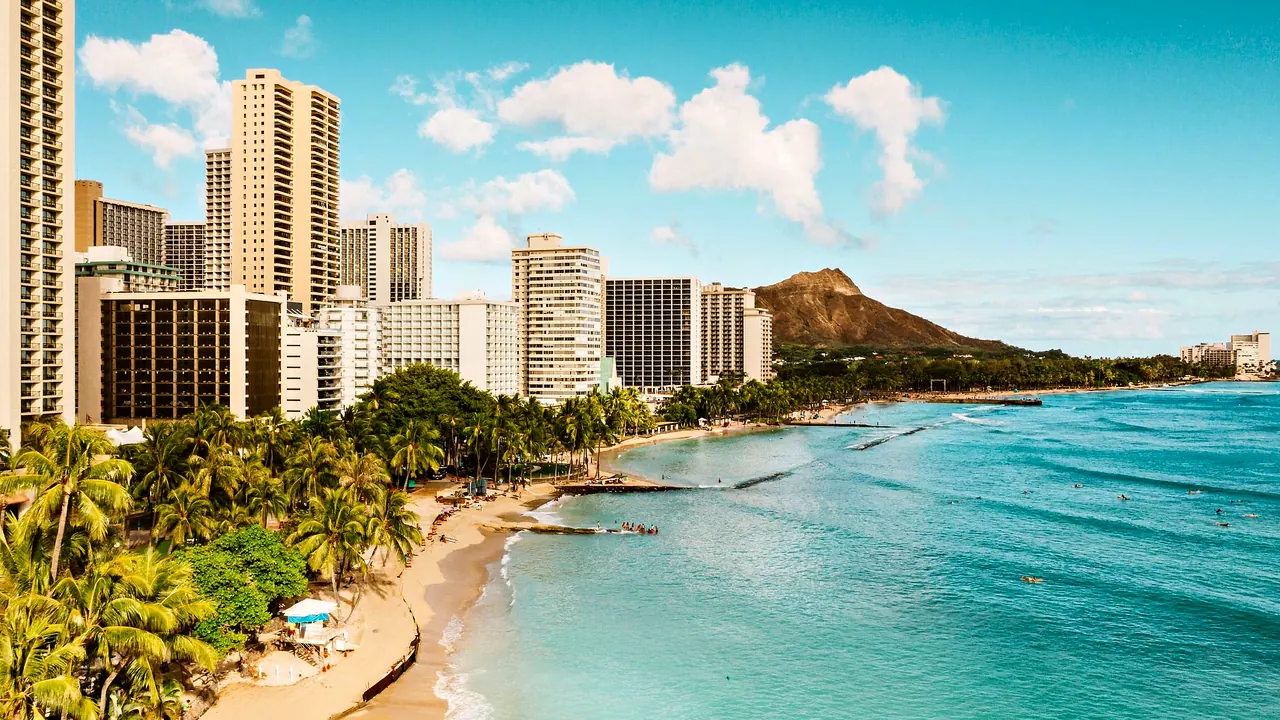
Waikiki Beach and Diamond Head on Oahu
- Beaches95
- Nature & outdoors89
- Families77
Photo: Jess Loiterton, Pexels License
Match
56
Every category weighted equally
- Beach & sun60
- Culture & arts51
- Food & nightlife51
- Family trip60
- Outdoors59
- Relax & unwind61
- Shopping & style54
- On a budget51
Hawaii in twelve categories
Our verdict on each, scored 0 to 100 against the same fixed benchmark cities, so a score means the same thing on every page.
Beaches & swimming. Scores 95 out of 100.
Food & drink. Scores 68 out of 100.
Culture & sights. Scores 58 out of 100.
Nightlife. Scores 40 out of 100.
Nature & outdoors. Scores 89 out of 100.
Day trips. Scores 35 out of 100.
Good for families. Scores 77 out of 100.
Getting around. Scores 45 out of 100.
Shopping & style. Scores 55 out of 100.
Affordability. Scores 12 out of 100.
Live music & performing arts. Scores 45 out of 100.
Wellness & relaxation. Scores 55 out of 100.
Hawaii category by category
Beaches & swimming
95The sea is warm enough to swim every month, from about 24°C in late winter to 27°C at the end of summer, and the beach is at the heart of nearly every stay. On Oahu, Waikiki gives a city beach with gentle surf and lessons for beginners, while Lanikai and Kailua on the windward side are softer, quieter and greener. Maui's west and south shores, around Kaanapali, Kapalua and Wailea, are the classic resort sands with calm mornings and good snorkelling off the rocks, and the Big Island's Kohala Coast has wide white crescents such as Hapuna set against black lava.
The seasons matter by direction. In winter, big swells hit the north shores, so the famous surf beaches become places to watch rather than swim, while south and west coasts stay calm. In summer the pattern largely reverses. Currents are strong on exposed beaches all year, so lifeguarded beaches and reef-sheltered coves are the safest choice for casual swimmers.
Food & drink
68Hawaii's food is a mix of Native Hawaiian, Japanese, Chinese, Korean, Filipino and Portuguese cooking that islanders treat as one cuisine. The everyday version is the plate lunch with rice and macaroni salad, poke sold by weight at supermarket and fish counters, loco moco, spam musubi, malasadas and shave ice. Kalua pork and laulau appear at family-style Hawaiian places and at luaus, and fresh ahi and other reef and deep-sea fish run through every menu.
Honolulu is where the eating is deepest, with ramen counters, izakaya, Korean barbecue and dim sum in Chinatown and Kapahulu, a strong Japanese influence, and chefs cooking modern island menus from local produce. The neighbour islands are thinner: farmers markets, food trucks and roadside fruit stands are the highlights, and resort restaurants can be costly for what they serve. Kona coffee, grown on the slopes above the Big Island's west coast, is worth seeking out at its source.
Culture & sights
58The islands' heritage is spread thin but genuinely its own. In Honolulu, Iolani Palace is the only royal palace on American soil, the residence of the last Hawaiian monarchs, and the Bishop Museum holds the finest collection of Hawaiian and Pacific artefacts anywhere. The Pearl Harbor memorials, including the sunken USS Arizona, draw visitors from across the world, and the Honolulu Museum of Art is a fine small collection with strong Asian holdings.
Away from Oahu, culture means sacred and historic sites in the landscape: the restored place of refuge at Puuhonua o Honaunau and the heiau temples of the Big Island's Kona and Kohala coasts, petroglyph fields in the lava, and old plantation and whaling towns with wooden storefronts. There is little historic architecture, and a visitor who travels mainly for museums and old towns will run out within a few days.
Nightlife
40Going out is concentrated in Honolulu. Waikiki has hotel bars, beachfront lounges at sunset and a few clubs, while Chinatown and the streets around it hold the city's more interesting cocktail bars, dive bars and dance nights. Bars close at around 2am, and the scene suits an evening out more than a long night.
On Maui, Kauai and the Big Island evenings revolve around sunset drinks, a resort bar and an early night before a dawn start, with a handful of livelier bars in the main towns. Most visitors come for the days, not the nights.
Nature & outdoors
89Each island has its own landscape, and most visitors pick one or two. The Big Island is the volcanic one: Hawaii Volcanoes National Park, where trails cross Kilauea's crater rim and lava fields, the summit road towards Mauna Kea, occasionally dusted with snow in winter, the green valleys of the wet Hamakua coast and night snorkels with manta rays off Kona. Kauai is the wildest island, with the sea cliffs of the Na Pali Coast, reached on the Kalalau Trail or by boat, and the red gorge of Waimea Canyon. On Maui the road climbs above the clouds to Haleakala's crater, and the Road to Hana winds past waterfalls and rainforest.
Oahu is gentler, with ridge hikes above Honolulu, Diamond Head crater and the Koolau cliffs on the windward side. In the water there is reef snorkelling with green turtles, surfing from beginner breaks to the North Shore's winter giants, outrigger canoeing and kayaking, and humpback whales off Maui from roughly December to April. Choose the island for the landscape: Hilo or Kona for volcanoes, Kauai for cliffs and long hikes, Maui for a mix of crater, rainforest and whales.
Day trips
35Outings here are mostly into the landscape, and the separate places to visit are small. From Honolulu, a day can take in the surf town of Haleiwa on the North Shore, the beach town of Kailua and the Polynesian heritage of the windward coast. On the Big Island, Hilo's old waterfront and farmers market, the ranching town of Waimea and the coffee villages above Kona make pleasant days out, and Maui has the upcountry towns of Makawao and Paia and a ferry to quiet Lanai.
The other islands are a flight away, so most visitors either stay on one island or split the trip between two rather than hop for the day.
Good for families
77Hawaii works well for children because so much of it is beach and water. Lagoon beaches such as those at Ko Olina on Oahu and the sheltered bays of Maui's south shore give calm, shallow swimming, and snorkelling with turtles can start very young. Honolulu adds the Waikiki Aquarium, the Honolulu Zoo and a marine park on the windward coast, and the Polynesian Cultural Center on the north side of Oahu turns island cultures into a full day of canoes, dances and games.
The resorts on Maui and the Big Island are built with families in mind, with pools, kids' clubs and lawns by the sea. Volcano visits and whale watching make memorable outings for older children. Strong surf on exposed beaches needs watching, and long drives on the neighbour islands can tire small passengers.
Getting around
45On Oahu, Waikiki is easy to walk and the island bus network reaches most of the coast, so a stay there can work without a car, though Honolulu's traffic is slow at rush hour. On Maui, Kauai and the Big Island a hire car is effectively essential: buses are sparse, and beaches, trailheads and towns sit far apart. The roads are good, but some routes are slow, such as the narrow, winding Road to Hana and the long drives across the Big Island.
Moving between islands means a short flight, with only a small ferry from Maui to Lanai, so most visitors pick one or two islands rather than trying to see them all.
Shopping & style
55Honolulu is the shopping centre of the islands. Kalakaua Avenue in Waikiki is lined with luxury labels, and the large open-air malls near Ala Moana hold most international brands. Local things worth buying include aloha shirts, from vintage prints to modern designers, koa wood crafts, Niihau shell lei, Hawaiian quilts, Kona coffee and macadamia nuts.
On the neighbour islands shopping means small galleries and boutiques in towns such as Paia, Hanapepe and Kailua-Kona, resort arcades and farmers markets. Much of what is sold in the tourist strips is generic souvenir stock, so the craft and design shops repay a little searching.
Affordability
12Hawaii is one of the most expensive places to vacation in the United States. Hotel rooms, especially at the beachfront resorts on Maui and Kauai, are costly in every season, and because most food and goods arrive by ship, restaurants and even supermarket shopping run well above mainland levels. A hire car is needed on most islands, and inter-island flights and boat tours add more.
The cheaper side exists: plate lunches, poke counters, food trucks and farmers markets feed a visitor well for less, Oahu's buses are cheap, and most beaches, trails and many park sites cost little. A condo with a kitchen, or a base in Waikiki rather than a resort, keeps a stay more manageable.
Live music & performing arts
45The live tradition here is Hawaiian music and dance. Hula is a living art taught in schools across the islands, and the Merrie Monarch Festival in Hilo, held each spring, is the world's foremost hula competition. Slack-key guitar, ukulele and Hawaiian vocal music can be heard at hotel lounges at sunset and at local festivals, and free hula shows at Waikiki are a gentle introduction. Luaus combine dinner with a staged Polynesian revue, polished entertainment rather than a deep cultural experience.
Formal performing arts are limited to Honolulu, where the restored Hawaii Theatre, the symphony and a small opera season give a modest programme, and touring acts and concerts fill out the year.
Wellness & relaxation
55Relaxation here comes from resort spas and a slow pace, not from bathing culture. There are no thermal baths, public bathhouses or hammams, and no local tradition of taking the waters, so wellness means booking a treatment or simply slowing down. The large resort coasts have big spa complexes, many with open-air treatment rooms in tropical gardens: Wailea and Kapalua on Maui, the Kohala Coast on the Big Island and Poipu on Kauai. Lomilomi, the traditional Hawaiian massage with long, flowing strokes, is offered almost everywhere.
For a restful stay the neighbour islands work far better than Waikiki, where the crowds and traffic follow you back from the beach. Kauai's north shore and the quieter parts of the Big Island draw yoga retreats and wellness stays, and the days there start early and end early.
Where to stay in Hawaii
For a first visit, Honolulu is the simplest base, and most visitors stay in Waikiki. It is walkable, the buses reach most of the coast, so you can manage without a car, and you have the islands' best eating, museums, shopping and evenings out close by. It suits first-timers, food lovers and anyone on a tighter budget. For quieter days on Oahu, Kailua on the windward side is greener and slower, and the lagoons at Ko Olina suit young families.
Maui is the usual second island, and a common pairing with Oahu. The west shore around Kaanapali and Kapalua, and Wailea on the south shore, are resort coasts with calm bays, good snorkelling and big spas, well suited to families and a slow beach stay. From December to April you can watch whales from the shore. You will need a hire car for Haleakala, the upcountry towns and the Road to Hana.
On a return trip, try the Big Island or Kauai. On the Big Island, the Kohala Coast and Kona give dry sunshine and beaches, while staying near Hilo puts you closer to the volcano. Walkers and anyone wanting a quiet stay tend to choose Kauai, with Poipu for sunnier beaches and the north shore for green, early-to-bed calm. Every change of island means a flight and a new hire car, so most trips keep to one or two bases.
When should you go?
Pick a month to see what it is like. The climate figures are measured averages, not a forecast.
Hawaii in July
Daytime high, °C
Rainfall in the month, mm
The whole year
Shaded against this city’s own year: the deepest cell is its best month for that figure and the palest its weakest.
Temperature and rainfall are climate normals, averaged over the years shown. Hawaii: 1991-2020 (sunshine 1981-2010) normals, Honolulu International Airport (10 km from centre).
Before you go
| Measure | Hawaii |
|---|---|
| Currency | US Dollar (USD) |
| Sockets | AB120 V, 60 Hz |
| Driving side | Right |
| Time zone | UTC-10 |
| Emergency number | 911 |
| Main airport | Daniel K. Inouye International Airport (HNL)56 non-stop destinations |
| Public holidays this year | 13 days |
By the numbers
| Measure | Hawaii |
|---|---|
| Population | 1,455,271 |
| Swim season, months above 21 °C | 12 months |
Compare Hawaii with
Every comparison with a written verdict behind it.