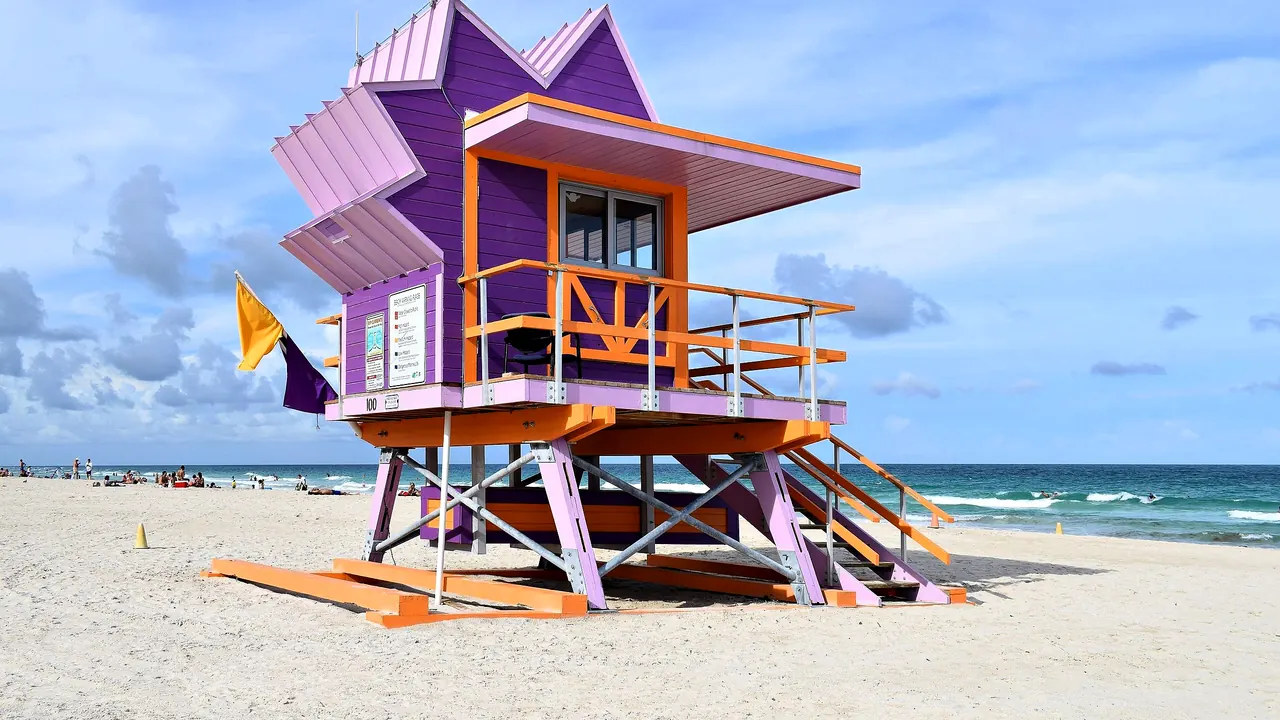
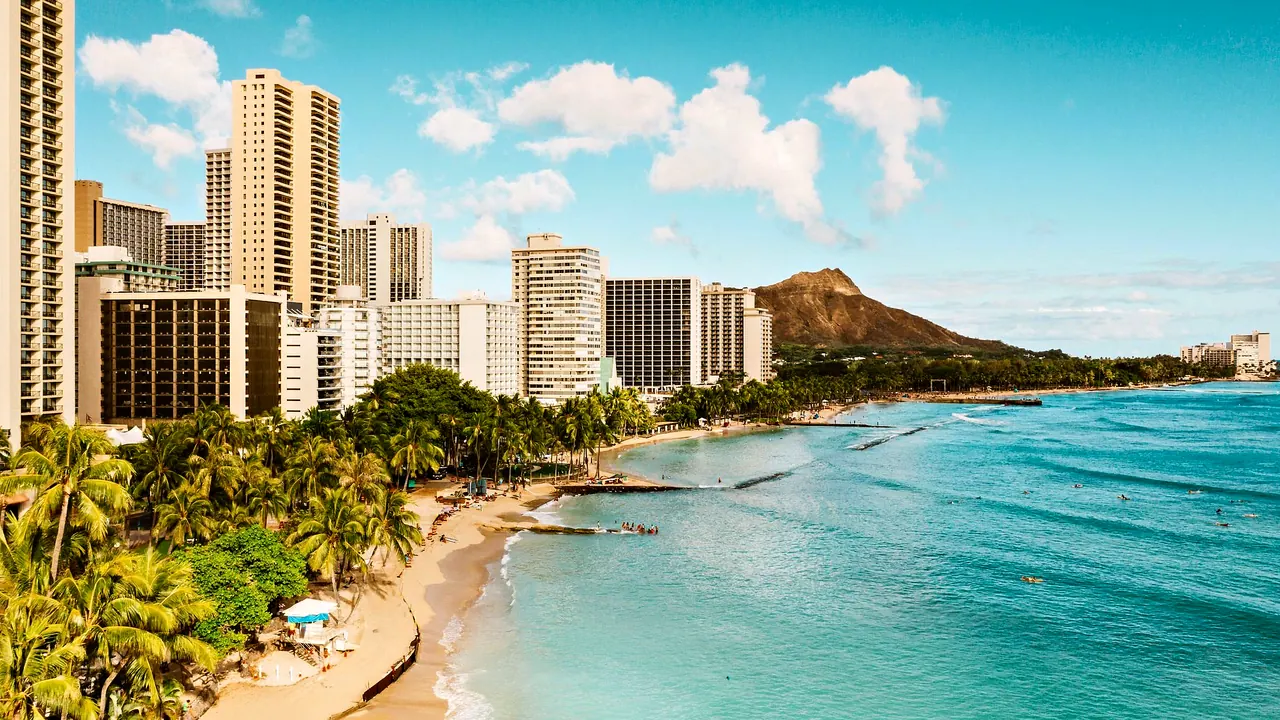
Photos: Miami by Rob Olivera, CC BY 2.0, cropped; Hawaii by Jess Loiterton, Pexels License.
Miami or Hawaii?
Our verdict in twelve categories, each scored against the same fixed benchmark cities, and the climate month by month, so you can choose for your trip.
Choose Miami for
- nightlife
- shopping
- prices
Pick Miami if you want a city with a long beach attached. The draw is late nights in South Beach and Wynwood, Cuban and Latin American cooking, the Art Deco streets and serious luxury shopping in the Design District and Bal Harbour, all beside warm Atlantic sand. Its nature means the Everglades and Biscayne Bay rather than mountains, and its summers are wet, so it is first and foremost a winter destination.
Choose Hawaii for
- nature and the outdoors
- families
- wellness
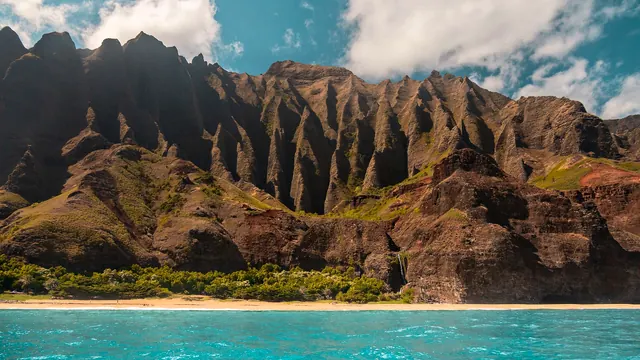
Hawaii suits a trip built around landscape and water. You get volcano trails on the Big Island, the Na Pali cliffs on Kauai, Haleakala and winter whales on Maui, and snorkelling with turtles almost anywhere. It works well for families and for anyone happy with quiet evenings and slow resort days. It is best done by choosing one or two islands and hiring a car, and you should accept that it is the dearer of the two and the nights end early.
Scoreboard
Twelve categories on one fixed scale from 0 to 100. The shaded stretch is the gap between the two.
Your match
Pick a travel style or drag the sliders, and both match scores follow your weighting.
Wins on nightlife and shopping with your weighting.
Wins on nature and the outdoors and families with your weighting.
What matters to you?
Category by category
What the scores mean for a trip.
Beaches & swimming
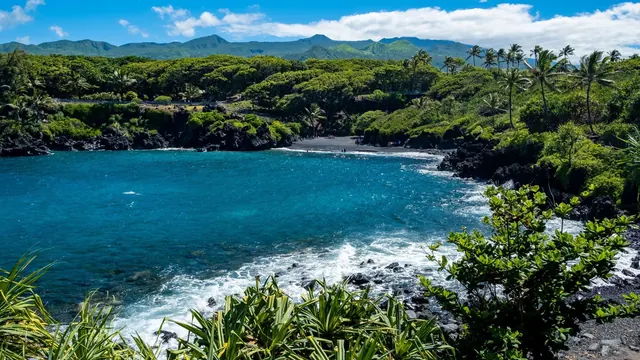
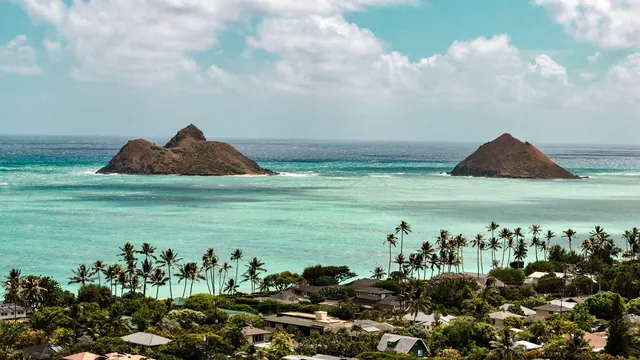
Both have warm sea all year, so the real difference is the setting. Hawaii's beaches are spread across several islands and backed by volcanic headlands and green ridges. There is Waikiki for easy surf lessons, Lanikai and Kailua for quiet, Kaanapali and Wailea for resort calm and snorkelling off the rocks, and Hapuna's white sand against black lava. The catch is that the surf changes with the season, so the safe shore depends on the month.
Miami offers one continuous strip of pale sand running from South Beach to Surfside, flat and lined with hotels, with Key Biscayne for shallower water. It is simpler to use day after day but far less dramatic, and seaweed and summer storms can get in the way.
Food & drink
These two are close, and the difference is where the cooking comes from. Hawaii's food is a Pacific and Asian mix: plate lunches, poke sold by weight, loco moco, malasadas and kalua pork. Honolulu's ramen counters, izakaya and Chinatown dim sum give it depth, and Kona coffee can be tasted where it grows. Away from Oahu it thins out to markets and food trucks.
Miami eats Cuban and Latin American. There is cafecito from the ventanita windows on Calle Ocho, croquetas, Peruvian ceviche, Haitian griot and stone crab in winter, and a chef-led upscale tier in Brickell and the Design District. It is also the better place for a late dinner.
Culture & sights
Neither is a place for old towns, and either can be seen in a few days. Hawaii's heritage is Native Hawaiian and Pacific. It has Iolani Palace, the Bishop Museum and the Pearl Harbor memorials, and on the Big Island the place of refuge at Puuhonua o Honaunau and heiau temples set in the lava.
Miami's heritage is urban and from the twentieth century: the Art Deco District along Ocean Drive, Vizcaya on the bay, the Perez Art Museum, the Wolfsonian and Wynwood's murals. In Hawaii the history sits out in the landscape, while in Miami you walk through it on streets of pastel hotels.
Nightlife
After dark Miami is in a different league. South Beach's big clubs with international DJs, downtown venues open until dawn, Wynwood's warehouse bars and salsa nights on Calle Ocho give you a choice any night of the week, as long as you have the budget and the stamina.
In Hawaii, going out mostly means Honolulu, with cocktail bars in Chinatown and hotel lounges in Waikiki, and the bars close at around 2am. On the other islands an evening is a sunset drink and an early night before a dawn hike or dive.
Nature & outdoors
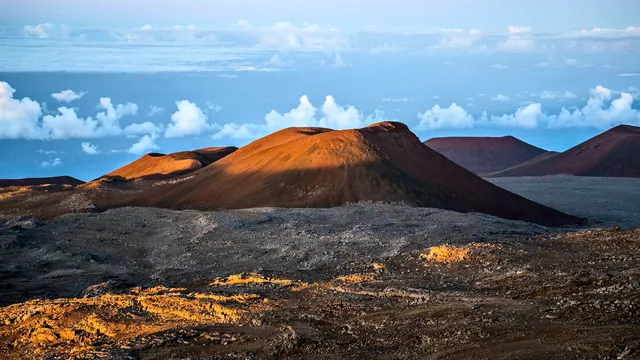
Hawaii is one of the great outdoor destinations, and each island has its own landscape. The Big Island has Kilauea's crater rim, Kauai has the Kalalau Trail and Waimea Canyon, and Maui has Haleakala above the clouds and the Road to Hana. In the water there are night snorkels with manta rays, green turtles and humpback whales in winter.
Miami has one great wild place, the Everglades, where alligators and wading birds line the Anhinga Trail. It adds mangrove kayaking in Biscayne National Park and reefs off Key Largo. The land is completely flat, and from June to September the heat and mosquitoes make it hard going.
Day trips
Miami has the more useful trips by road, though none of them is essential. You can reach Palm Beach's Gilded Age mansions and the Flagler Museum about an hour and a half north, the canals of Fort Lauderdale, and the seafood shacks and waterfront towns of Key Largo and Islamorada. Key West is too far for a day and works better as an overnight.
In Hawaii, days out stay on whichever island you are on: the surf town of Haleiwa on Oahu's North Shore, Hilo's old waterfront or ranching Waimea on the Big Island, or Makawao and Paia on Maui. The other islands are a flight away, apart from the small ferry from Maui to Lanai.
Good for families
Hawaii is the easier choice with children. The lagoons at Ko Olina and Maui's sheltered south shore give calm, shallow water, and snorkelling with turtles works even for young children. The Polynesian Cultural Center and volcano visits make days they will remember, and the resorts on Maui and the Big Island are built around pools and kids' clubs.
Miami has Zoo Miami, the aquarium at the Frost Science Museum and the Venetian Pool, and quieter sand at Key Biscayne and North Beach. But most outings need a car, the summers are punishing, and South Beach's party side is not what most parents are after.
Getting around
On Oahu you can manage without a car, which is more than most of Miami allows. Waikiki is easy to walk and the island bus reaches most of the coast, though Honolulu is slow at rush hour. On Maui, Kauai and the Big Island a hire car is essential, the drives can be long, and moving between islands means a flight.
Miami has walkable pockets rather than a network. You can get around South Beach on foot or by bike, and the Metromover links downtown and Brickell. The Metrorail does not reach the beach, though, so most visitors use ride-hailing in the city and hire a car for the Everglades or the Keys, and the main roads are congested.
Shopping & style
Miami is the stronger place to shop, especially at the luxury end. The major fashion houses have flagship stores in the Design District, Bal Harbour has its exclusive open-air mall, and there are the huge Aventura Mall and outlet malls on the western edge. There is little local character, though, beyond guayabera makers and cigar shops in Little Havana.
Hawaii's big-name shopping is mostly on Kalakaua Avenue and at Ala Moana in Honolulu. Where it does better is local craft: aloha shirts, koa wood, Niihau shell lei and Hawaiian quilts, best found in galleries in Paia or Hanapepe.
Affordability
Both are expensive, but Hawaii costs noticeably more. Resort rooms on Maui and Kauai, food brought in by ship, a hire car and inter-island flights all add to the bill. You can save with poke counters, plate lunches, a condo with a kitchen or a base in Waikiki.
Miami is somewhat easier on a budget. The beaches are free, Cuban lunch counters are cheap and the Metromover costs nothing, and summer brings lower room rates. The bill gets out of hand in the South Beach clubs and with hotel resort fees.
Live music & performing arts
Miami has the bigger stage programme. The Adrienne Arsht Center hosts Florida Grand Opera and touring Broadway shows, Miami City Ballet is a company of real standing, and the New World Symphony plays in its Frank Gehry building. Salsa and timba bands in Little Havana add the local sound, and the season is mostly in winter.
Hawaii's strength is its own tradition of hula, slack-key guitar and ukulele, with the Merrie Monarch hula festival in Hilo each spring. Formal arts in Honolulu are modest, and luau shows are entertainment rather than art.
Wellness & relaxation
Hawaii is the more restful choice. Resort spas at Wailea, Kapalua, the Kohala Coast and Poipu offer open-air treatment rooms and lomilomi massage, and Kauai's north shore draws yoga retreats where the days end early. There are no bathhouses anywhere on the islands.
Miami has spacious hotel spas and sunrise yoga on the sand, and it has the one thing Hawaii lacks, a long-established Russian and Turkish bath house in Miami Beach. But South Beach stays loud late into the night, so for calm you need Key Biscayne or Surfside.
When should you go?
Pick your month. The climate figures are measured averages, not a forecast.
Miami in July
Hawaii in July
Daytime high, °C
Rainfall in the month, mm
Temperature and rainfall are climate normals, averaged over the years shown. Miami: 1991-2020 (sunshine 1981-2010) normals, Miami International Airport (10 km from centre). Hawaii: 1991-2020 (sunshine 1981-2010) normals, Honolulu International Airport (10 km from centre).
Around the coasts where most visitors stay, Hawaii is warm in every month and the sea never drops below 24°C, so a beach trip works at any time of year. November to March is the wetter, slightly less sunny season, with showers rather than long spells of rain. April to September is the driest and brightest stretch. By August highs reach about 32°C, which is warm for long walks in the middle of the day.
Miami's year falls into two halves. December to March is the time to go. It is dry and sunny, with highs in the mid-twenties that suit walking the Art Deco streets, and the sea is still warm enough to swim. April is warmer and a little wetter, a good shoulder month. From May the rain climbs steeply to a peak of 267mm in June. Afternoon storms, highs near 33°C and heavy humidity then make the streets hard going, although the sea is at its warmest.
Which traveller are you?
For an outdoors trip, choose Hawaii. Pick one or two islands for the landscape you want and spend the days hiking and in the water. Miami's flat wetlands and bay are worth a day or two, but not a whole week.
On a food and nightlife trip, Miami is the better base. Dinner starts late, the clubs run until dawn and there is plenty of Cuban and Latin American cooking to work through. In Hawaii the day starts at dawn, so the nights end early.
On a family trip with children, Hawaii asks less of parents. Calm water is easy to find, the resorts do much of the entertaining, and nobody needs persuading to spend the day outdoors. Miami works best for families in winter, away from South Beach.
Before you go
| Measure | Miami | Hawaii |
|---|---|---|
| Currency | US Dollar (USD) | US Dollar (USD) |
| Sockets | AB120 V, 60 Hz | AB120 V, 60 Hz |
| Driving side | Right | Right |
| Time zone | UTC-5, UTC-4 in summer | UTC-10 |
| Emergency number | 911 | 911 |
| Elevation | 2 m | - |
| Main airport | Miami International Airport (MIA)7 km from centre197 non-stop destinations | Daniel K. Inouye International Airport (HNL)56 non-stop destinations |
| Public holidays this year | 11 days | 13 days |
By the numbers
| Measure | Miami | Hawaii |
|---|---|---|
| Population | 442,241 | 1,455,271 |
| People per km² | 3,046 | - |
| Museums within 10 km | 17 | - |
| UNESCO World Heritage sites within 50 km | 0 | - |
| Swim season, months above 21 °C | 12 months | 12 months |
Where else could you go?
Every comparison below shares a destination with this one, so you can follow Miami or Hawaii somewhere new.
- Miami Beachvs Miami
- Fort Lauderdalevs Miami
- Evergladesvs Miami
- Boca Ratonvs Miami
- Palm Beachvs Miami
- West Palm Beachvs Miami