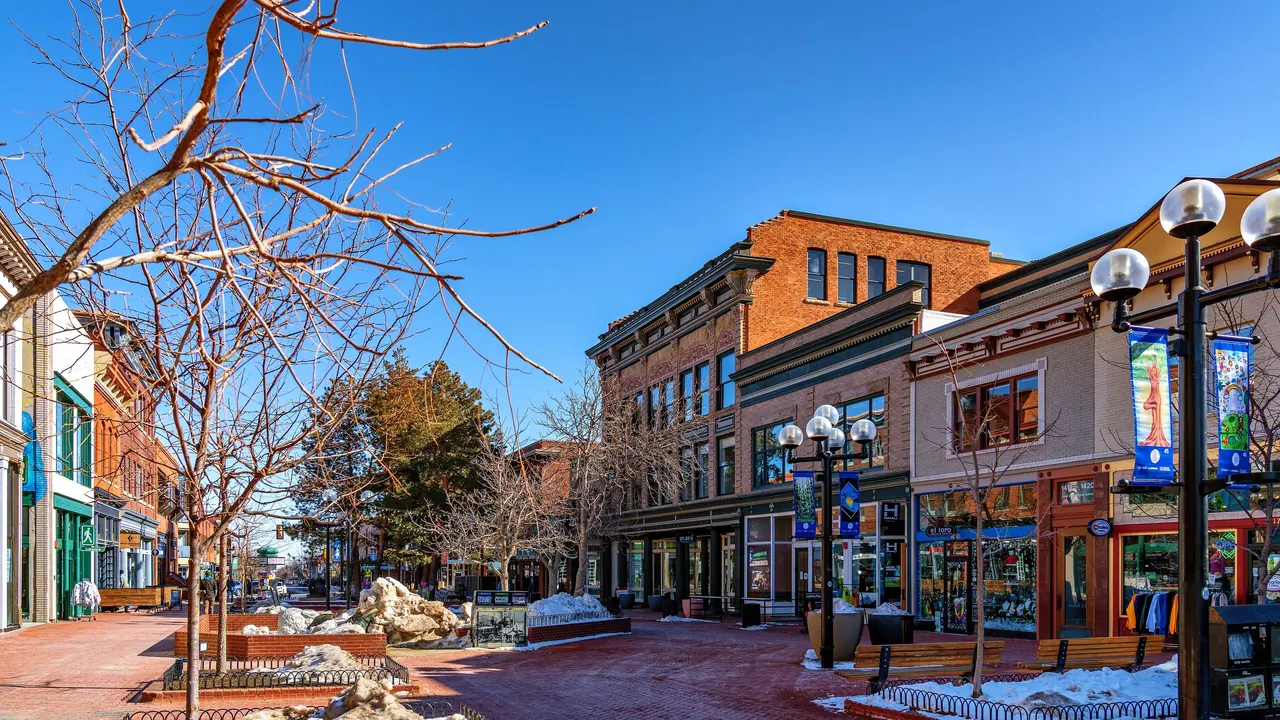
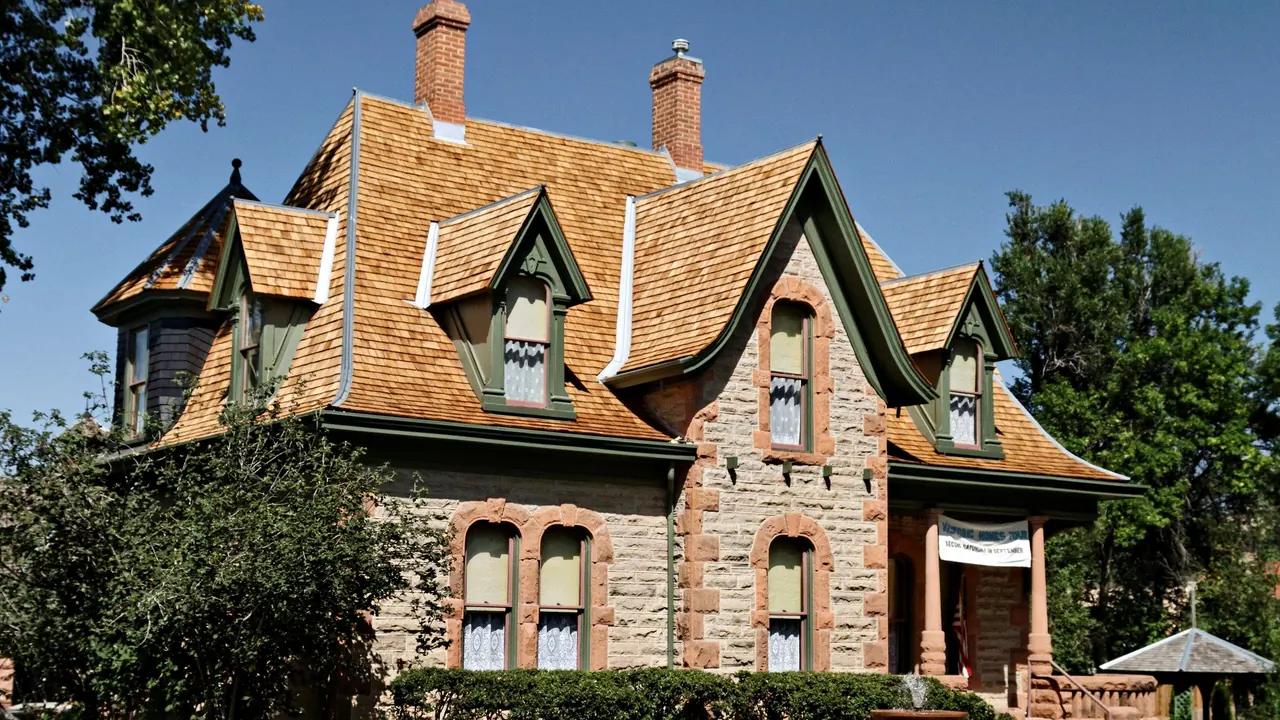
Photos: Boulder by Tony Webster, CC BY 2.0, cropped; Fort Collins by Gribeco, CC BY-SA 3.0, cropped.
Boulder or Fort Collins?
Our verdict in twelve categories, each scored against the same fixed benchmark cities, and the climate month by month, so you can choose for your trip.
Choose Boulder for
- wellness
- nature and the outdoors
- getting around
Boulder is the choice for a trip built around the outdoors. The Flatirons start at the edge of town, the trail network is immediately on hand, Eldorado Canyon's climbing walls are minutes away and the national park and ski area are close. On top of that, the town has the stronger live music, the yoga and meditation culture, and a compact centre you can manage without a car. The catch is the cost: this is an expensive place to sleep.
Choose Fort Collins for
- prices
- beaches
- food and drink
Fort Collins makes more sense if you want a relaxed, cheaper base with the mountains still within reach. It is also the better pick for a beer-focused trip, with its long-established breweries and taprooms all over town. The foothills, the Poudre canyon's rafting and fishing and the drive north into Wyoming give it plenty to do, and its walkable red-brick Old Town is a pleasant place to come back to in the evening, even if the scenery right on the doorstep is less dramatic.
Scoreboard
Twelve categories on one fixed scale from 0 to 100. The shaded stretch is the gap between the two.
Your match
Pick a travel style or drag the sliders, and both match scores follow your weighting.
Wins on wellness and nature and the outdoors with your weighting.
Wins on prices and beaches with your weighting.
What matters to you?
Category by category
What the scores mean for a trip.
Beaches & swimming
Neither town is anywhere near the sea, so swimming here is about cooling off for an afternoon. Boulder offers a small sandy swim area at the reservoir on the north-east edge of town and tubing down Boulder Creek through the centre.
Fort Collins has the bigger stretch of water. Horsetooth Reservoir in the foothills has a swim beach and coves that fill with paddleboards and boats on hot days. In both towns the season is essentially July and August.
Food & drink
Both towns eat reasonably well for their size, and both send serious diners to Denver, but the focus differs. Boulder's strength is the food: seasonal Front Range menus, a strong vegetarian and vegan streak, good bakeries, the Saturday farmers' market by the creek and lunch in the hand-carved Dushanbe Teahouse.
Fort Collins is stronger on drink. Its large, long-established breweries run tours north of Old Town, and smaller taprooms with food trucks outside are spread across the city, so beer lovers can fill more days here. The cooking itself is mostly gastropubs, burgers and tacos.
Culture & sights
Neither is a town to visit for museums, and a day covers either one. Boulder's few sights have more individual character: the 1898 Chautauqua with its wooden cottages beneath the Flatirons, the university's sandstone and red-tile campus, and I.M. Pei's atmospheric research laboratory on the mesa.
Fort Collins offers a historic district rather than landmarks. Its late nineteenth-century red-brick Old Town is built around a pedestrian square, with the Victorian Avery House, the Museum of Discovery and streets of Craftsman houses nearby for a stroll.
Nightlife
These are two casual university towns where nights end early and anything bigger means Denver. In Boulder the evening divides between taprooms and cocktail bars around Pearl Street and the louder student bars on University Hill, and the trail-minded crowd tends to go home early.
Fort Collins puts its nightlife in a few blocks around the Old Town square, with sports bars and rooftop patios alongside the pubs and a handful of dance clubs. That gives a weekend night there a little more of a crowd in one place.
Nature & outdoors
Both towns sit where the plains meet the mountains, but Boulder's mountain scenery is closer and more dramatic. The Flatirons rise straight behind town, more than 200km of protected trails start at places like Chautauqua Park, Eldorado Canyon's climbing walls are ten minutes south, and Rocky Mountain National Park and the Eldora ski area are within easy reach.
Fort Collins is very good, but its best ground is a short drive out: summit hikes at Horsetooth Mountain and Lory State Park, and the wild and scenic Cache la Poudre canyon, whose rafting and fly fishing Boulder cannot match. The national park is about an hour and a half away, and there is no downhill skiing nearby.
Day trips
The two lists overlap heavily, since each town is the other's day trip and both share Denver, Golden and Estes Park. Boulder has the practical advantage of an express bus to Denver in about 40 minutes, and it is closer to the old silver-mining towns of Georgetown and Idaho Springs.
Fort Collins looks north instead. Cheyenne, with its state capitol, frontier museum and summer rodeo, is under an hour away across the Wyoming line, and Laramie is a little further. From either town, almost every trip apart from Boulder to Denver needs a car.
Good for families
Both are safe, easy towns for children, and both send families to Denver for a zoo or aquarium. Boulder is slightly better for active families: tubing and the reservoir swim beach, gentle trails from the Chautauqua meadow, street performers on Pearl Street in the evening, and a planetarium and free weather exhibits for curious children. Bring water and hats for the altitude.
Fort Collins is flatter and quieter. Its hands-on Museum of Discovery, the city-run farm at Lee Martinez Park and the children's garden at Spring Creek suit smaller children especially well.
Getting around
Both towns have compact centres and some of the best cycling in the country, and both need a car for the mountains. Boulder makes the stay itself easier: Pearl Street, the campus and Chautauqua are all within a walk or short ride, creek paths with underpasses link them, and the express bus means a day in Denver without driving.
Fort Collins has a flat, walkable Old Town and a fast bus line running north to south. The rest of the city spreads into suburbs with sparse buses, though, so you will rely on a car more of the time.
Shopping & style
Neither town is a shopping destination, but Boulder gives you more to browse. The four brick-paved blocks of the Pearl Street Mall hold independent bookshops, galleries and boutiques, Twenty Ninth Street adds a mall-style district, and the climbing, running and cycling shops are unusually good.
Fort Collins has a pleasant few blocks in Old Town with boutiques, vintage clothing and Colorado-made gifts. Beyond that it is mostly chain retail along the highways.
Affordability
Fort Collins is clearly the cheaper base. Chain hotels and motels along the highways keep room rates middle of the road, and casual meals in the taprooms are reasonable, though you will probably need to add a hire car.
Boulder is one of the country's wealthier towns, with few hotels and high room rates, especially in summer, so many visitors stay elsewhere and drive in. In both towns, rooms climb sharply on graduation and football weekends, and the trails cost nothing.
Live music & performing arts
Boulder has more to hear, especially in summer. Touring rock, bluegrass and roots acts play most nights, the Colorado Music Festival fills the wooden Chautauqua Auditorium, the Colorado Shakespeare Festival stages outdoor plays on campus, and Red Rocks Amphitheatre is about 45 minutes away.
Fort Collins has the more conventional programme. The Lincoln Center hosts touring Broadway, dance and the local symphony, and the university arts centre stages opera during term, with free outdoor concerts on summer evenings. It is respectable but regional in scale.
Wellness & relaxation
Boulder takes wellness far more seriously. Yoga and meditation studios are everywhere, a Buddhist-inspired university gives the contemplative side real roots, and the spring-fed pool at Eldorado Springs is just south of town in summer.
Fort Collins offers the calm pace without the culture around it: a few day spas and yoga classes, shaded river paths and no hot springs nearby. Neither town is a place for serious soaking, but the pools at Idaho Springs are about an hour from Boulder and nearly two from Fort Collins.
When should you go?
Pick your month. The climate figures are measured averages, not a forecast.
Boulder in July
Fort Collins in July
Daytime high, °C
Rainfall in the month, mm
Where the figures come from
Boulder has no rain gauge within 25 km of the centre, so its rainfall comes from a gridded climate dataset read at the destination rather than from a gauge further away.
Boulder's sunshine is measured 45 km from the centre, at Denver / Stapleton International, Co..
Fort Collins has no rain gauge within 25 km of the centre, so its rainfall comes from a gridded climate dataset read at the destination rather than from a gauge further away.
Temperature and rainfall are climate normals, averaged over the years shown. Boulder: 2010-2025 (sunshine 1981-2010, rainfall 1991-2020) normals, Boulder / Valmont (6.1 km from centre). Fort Collins: 2006-2020 (rainfall 1991-2020) normals, Fort Collins / Redmond (16.1 km from centre).
The two towns share almost the same climate, with Fort Collins a few degrees colder in midwinter. September and early October are the best months for walking and hiking in both. The summer heat has eased, with highs in the mid-twenties in September, and these are among the drier months of the warm season. May is pleasant too, at around 20°C, but it is the wettest month in both towns at about 60mm, so do your high trails in the morning, before the afternoon storms build.
Summer, from June to August, is hot, with highs around 31°C. That suits the reservoirs and tubing on the creeks but makes midday walking in the streets tiring. Winters are dry and cold, with daytime highs near 7°C in Boulder and a little lower in Fort Collins. Only Boulder's data includes sunshine, and it shows a sunny town all year, with plenty of bright days even in the darkest months.
Which traveller are you?
On an outdoors trip, choose between rock and river. Boulder is the stronger base overall, especially for climbers, trail runners and road cyclists training at altitude. If rafting, fly fishing and camping along the Poudre canyon appeal more, Fort Collins is the better fit.
On a trip on a tight budget, choose Fort Collins. Its highway hotels and reasonably priced taprooms cost noticeably less than Boulder's limited, expensive rooms, and the foothills trails, river paths and Old Town are all free.
On a relaxing and wellness trip, Boulder suits you better. Yoga and meditation are part of everyday life there, and the spring-fed pool at Eldorado Springs is close by, while Fort Collins offers little beyond its calm pace.
Before you go
| Measure | Boulder | Fort Collins |
|---|---|---|
| Currency | US Dollar (USD) | US Dollar (USD) |
| Sockets | AB120 V, 60 Hz | AB120 V, 60 Hz |
| Driving side | Right | Right |
| Time zone | UTC-7, UTC-6 in summer | UTC-7, UTC-6 in summer |
| Emergency number | 911 | 911 |
| Elevation | 1,655 m | 1,525 m |
| Main airport | Denver International Airport (DEN)56 km from centre231 non-stop destinations | Denver International Airport (DEN)88 km from centre231 non-stop destinations |
| Public holidays this year | 12 days | 12 days |
By the numbers
| Measure | Boulder | Fort Collins |
|---|---|---|
| Population | 108,250 | 169,810 |
| People per km² | 1,628 | 1,181 |
| Museums within 10 km | 4 | 2 |
| UNESCO World Heritage sites within 50 km | 0 | 0 |
Where else could you go?
Every comparison below shares a destination with this one, so you can follow Boulder or Fort Collins somewhere new.
- Denvervs Boulder
- Estes Parkvs Fort Collins
- Estes Parkvs Boulder
- Breckenridgevs Boulder
- Denvervs Fort Collins
- Vailvs Boulder