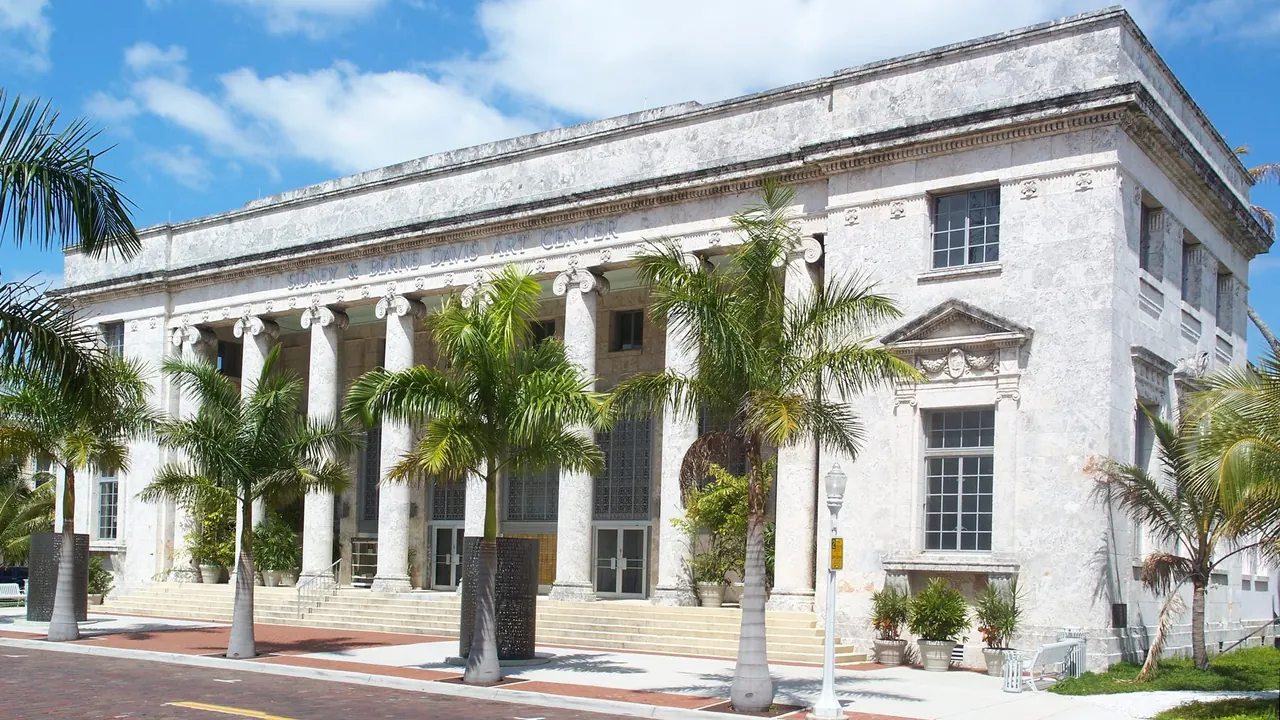
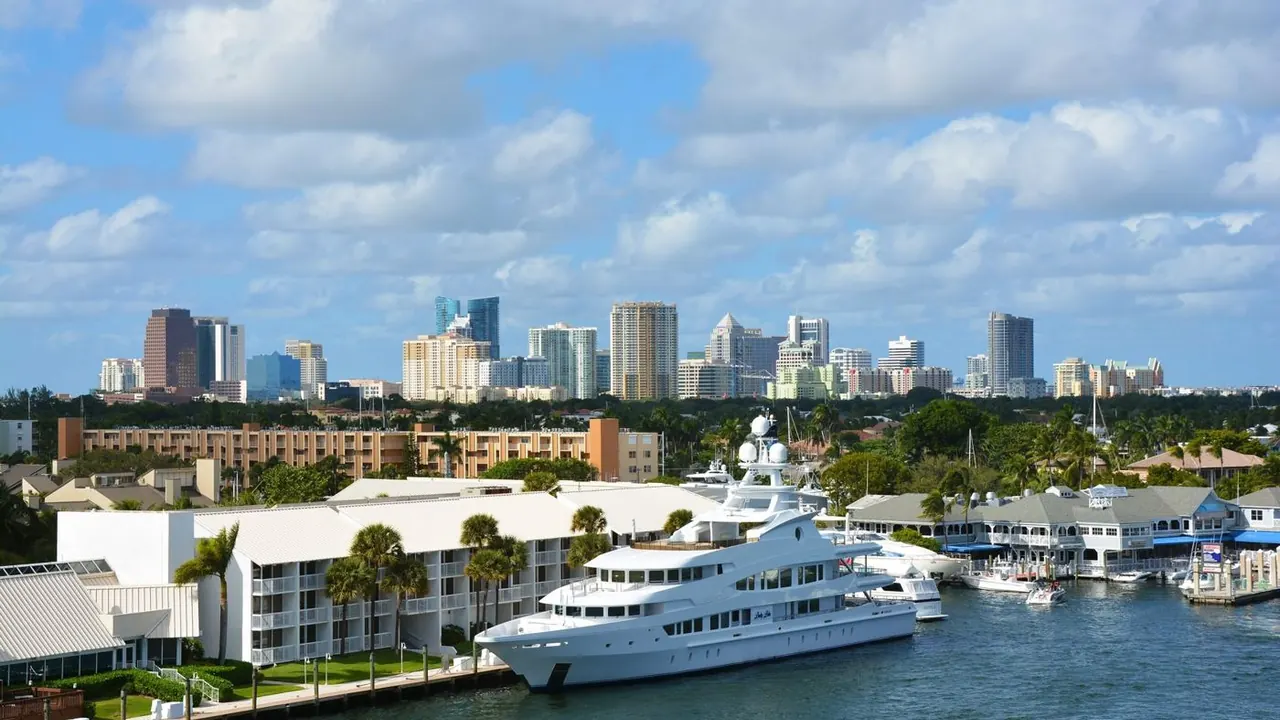
Photos: Fort Myers by Ebyabe, CC BY-SA 3.0, cropped; Fort Lauderdale by KeanoManu, CC BY-SA 4.0, cropped.
Fort Myers or Fort Lauderdale?
Our verdict in twelve categories, each scored against the same fixed benchmark cities, and the climate month by month, so you can choose for your trip.
Choose Fort Myers for
- prices
- culture and sights
- nature and the outdoors
Travellers who want a slower trip built around nature will be happier in Fort Myers. Its beaches are a drive away on the barrier islands, but the Gulf there is shallow and calm. Shelling on Sanibel and the birdlife of the Ding Darling refuge are real draws, and staying in town keeps costs a little lower. Expect quiet evenings, an older crowd in winter and a car for everything.
Choose Fort Lauderdale for
- nightlife
- getting around
- shopping
Fort Lauderdale is the better pick if the beach itself is the point and you want evenings out to go with it. The Atlantic sand runs right along the hotel strip, the sea stays warm through winter, and Las Olas, Himmarshee Street and Wilton Manors give you a real choice of nights out. Miami is close enough for a day trip or a bigger night. You can even manage without a car if you stay between the beach, downtown and the canals.
Scoreboard
Twelve categories on one fixed scale from 0 to 100. The shaded stretch is the gap between the two.
Your match
Pick a travel style or drag the sliders, and both match scores follow your weighting.
Wins on prices and culture and sights with your weighting.
Wins on nightlife and getting around with your weighting.
What matters to you?
Category by category
What the scores mean for a trip.
Beaches & swimming
In Fort Lauderdale the beach is part of the city: a broad, lifeguarded strip along A1A with water often clear to the bottom. At Lauderdale-by-the-Sea you can snorkel a reef straight from the shore, and the Atlantic stays comfortably warm for swimming through the winter.
From Fort Myers you drive half an hour or more to reach Estero Island, Lovers Key or Sanibel, and the Gulf turns cool in the winter months when most visitors come. In return you get flatter, shallower water for weak swimmers and the famous shelling on Sanibel and Captiva, which the Atlantic side can't match.
Food & drink
Neither city is a food destination, but Fort Lauderdale has more range. Las Olas is the place for sit-down dinners and the Intracoastal for dockside fish shacks. Jamaican, Haitian and Cuban cooking fills the western suburbs, and Miami is near enough for a serious meal.
Fort Myers sticks mostly to Gulf seafood eaten on a deck at sunset: grouper sandwiches and peel-and-eat shrimp. The River District has a small cluster of independent places and breweries, and chains line the highways.
Culture & sights
You can see either city's sights in a day, so culture won't decide this choice. Fort Lauderdale's sights lean towards art and the waterfront: the eccentric Bonnet House estate, the NSU Art Museum and the Stranahan trading post on the New River.
Fort Myers has the more substantial single sight in the Edison and Ford Winter Estates, with their laboratory and gardens. Around it are McGregor Boulevard, lined with royal palms, and the early twentieth-century brick streets of the River District.
Nightlife
Fort Lauderdale gives you a real choice of evenings: beach bars on A1A, late bars on Himmarshee Street with a young crowd, and wine terraces on Las Olas. There is also Wilton Manors, one of the country's best-known gay neighbourhoods, with drag shows along Wilton Drive. For clubs, Miami is a short trip away.
In Fort Myers most places wind down well before the small hours. The pubs and rooftop bars of the River District and the area around the pier at Fort Myers Beach are as lively as it gets, apart from spring break in March.
Nature & outdoors
Both are flat, and both are best outdoors in winter, but the kind of outdoors differs. In Fort Lauderdale it is on and under the water: kayaking the canals, diving the reefs and sunken wrecks close to shore, sport fishing for sailfish, and airboat rides in the Everglades less than an hour west.
Fort Myers is about wildlife and quiet paddling. Spoonbills feed at the Ding Darling refuge, a boardwalk runs through the old-growth cypress of Corkscrew Swamp, and the Great Calusa Blueway leads through mangrove tunnels. In winter, manatees gather on the Orange River.
Day trips
Fort Lauderdale has the stronger day out by far in Miami, under an hour away by car or fast train, with Art Deco Miami Beach, the murals of Wynwood and Little Havana. Palm Beach's Flagler Museum and Key Largo at the top of the Keys add variety.
From Fort Myers the trips are to smaller places: Naples, the island villages of Sanibel and Captiva, Boca Grande and the Koreshan utopian settlement. Sarasota's Ringling museum is the main cultural outing, and every one of these trips needs a car.
Good for families
Both suit young children well, and in both Orlando's theme parks are too far for a day trip. Fort Lauderdale has the better rainy-day museum, with an aquarium section at the Museum of Discovery and Science, as well as Everglades airboat rides and a butterfly garden. A few of its outings can be managed without a car.
Fort Myers has the calmer, shallower sea for toddlers, and hunting for shells on Sanibel keeps children busy for hours. Dolphins, manatees and the Shell Factory's animal park help too, though every outing means driving.
Getting around
In Fort Lauderdale you can stay without a car if you keep to the triangle of beach, Las Olas and downtown. Water taxis and free trolleys link the three, and trains run to Miami and the Palm Beaches.
Fort Myers has no such option. The city, the beaches, Sanibel and the reserves are scattered across the county, buses are sparse, and winter traffic over the bridges to the islands is slow. Plan on a hire car from the start.
Shopping & style
Fort Lauderdale gives shoppers more. Las Olas Boulevard has resort fashion and galleries, Sunrise has one of the country's largest outlet malls, and Palm Beach and Miami are within reach for luxury. Fort Myers has an outlet mall towards Estero and the usual open-air centres, but its most distinctive browsing is in the shell shops and galleries on Sanibel's Periwinkle Way.
Affordability
Neither city is cheap. Both have American menu prices with tips, a car to pay for and steep rates in the winter high season. Fort Myers leaves more room to save, because staying in town or near the interstate costs far less than staying on the islands, and its beaches and reserves cost little.
Fort Lauderdale stays expensive for more of the year, with spring weekends and the festive weeks on top of winter, and beach parking is rarely free. Older motels and apartments a few blocks back from the sand are the way round it.
Live music & performing arts
Fort Lauderdale has the busier stage across the year, with touring musicals, ballet and comedy at the Broward Center on the New River and touring bands in downtown venues. Miami's arts centre is close by. Fort Myers is more seasonal, but in winter it has what Fort Lauderdale lacks: a regional symphony orchestra, and a professional repertory company in a restored 1908 theatre. Broadway tours play the Barbara B. Mann hall, but in summer the programme largely stops.
Wellness & relaxation
Neither city has a bathing tradition, and in both a proper spa day means a resort hotel, so the choice comes down to the kind of calm you want. Fort Lauderdale gives you more ways to unwind in town: day spas along Las Olas, yoga on the sand at sunrise and slow morning walks on the promenade. Spring weekends fill the beach strip with noise, though, so its easy rhythm belongs to the rest of the year.
Sanibel and Captiva, across the causeway from Fort Myers, offer a stillness Fort Lauderdale's beachfront can't. Evenings end early, nothing rises much above the palms, and you get about the islands by bicycle rather than strolling past bars. You give up the choice of spas for a quiet that lasts the whole week.
When should you go?
Pick your month. The climate figures are measured averages, not a forecast.
Fort Myers in July
Fort Lauderdale in July
Daytime high, °C
Rainfall in the month, mm
Where the figures come from
Fort Myers has no rain gauge within 25 km of the centre, so its rainfall comes from a gridded climate dataset read at the city rather than from a gauge further away.
Temperature and rainfall are climate normals, averaged over the years shown. Fort Myers: 1991-2020 normals, Fort Myers / Page Park (4.5 km from centre). Fort Lauderdale: 1991-2020 normals, Fort Lauderdale (7.1 km from centre).
Both cities are best from about November to April, when the air is warm and dry enough for walking, cycling and sightseeing. From June to September highs climb past 31°C in both, with heavy afternoon storms, and midday outings become hard work. The biggest difference in winter is the sea. Fort Lauderdale's Atlantic stays around 25°C, warm enough for a proper swim in January, while the Gulf at Fort Myers drops to about 20°C, which feels bracing even on sunny days.
The rainy season is shaped differently in each city. Fort Lauderdale turns wet in May and stays wet into October. Fort Myers has a shorter, sharper wet season, peaking at around 244mm in June, but May and October stay fairly dry there. The Gulf is warm in those two months, which makes them good for combining the beach with time outdoors.
Which traveller are you?
On a food and nightlife trip, Fort Lauderdale is the clear choice. You get Las Olas terraces, Caribbean cooking in the western suburbs, late bars on Himmarshee Street and the drag shows of Wilton Manors, with Miami close by. In Fort Myers most places close early.
On a tight budget, Fort Myers is a little easier on the wallet. Rooms in town or near the interstate cost far less than on the islands, and its beaches and nature reserves make cheap days out. The hire car is still a cost you can't avoid.
For birdwatchers and wildlife lovers, Fort Myers has the edge. The Ding Darling refuge on Sanibel is one of the country's best places for roseate spoonbills and herons. Winter adds manatees on the Orange River and dolphin trips in the bays.
Before you go
| Measure | Fort Myers | Fort Lauderdale |
|---|---|---|
| Currency | US Dollar (USD) | US Dollar (USD) |
| Sockets | AB120 V, 60 Hz | AB120 V, 60 Hz |
| Driving side | Right | Right |
| Time zone | UTC-5, UTC-4 in summer | UTC-5, UTC-4 in summer |
| Emergency number | 911 | 911 |
| Elevation | 3 m | 11 m |
| Main airport | Southwest Florida International Airport (RSW)12 km from centre79 non-stop destinations | Fort Lauderdale Hollywood International Airport (FLL)7 km from centre138 non-stop destinations |
| Public holidays this year | 11 days | 11 days |
By the numbers
| Measure | Fort Myers | Fort Lauderdale |
|---|---|---|
| City population | 86,395 | 182,760 |
| People per km² | 681 | 1,829 |
| Museums within 10 km | 3 | 6 |
| UNESCO World Heritage sites within 50 km | 0 | 0 |
| Swim season, months above 21 °C | 10 months | 12 months |
Where else could you go?
Every comparison below shares a destination with this one, so you can follow Fort Myers or Fort Lauderdale somewhere new.