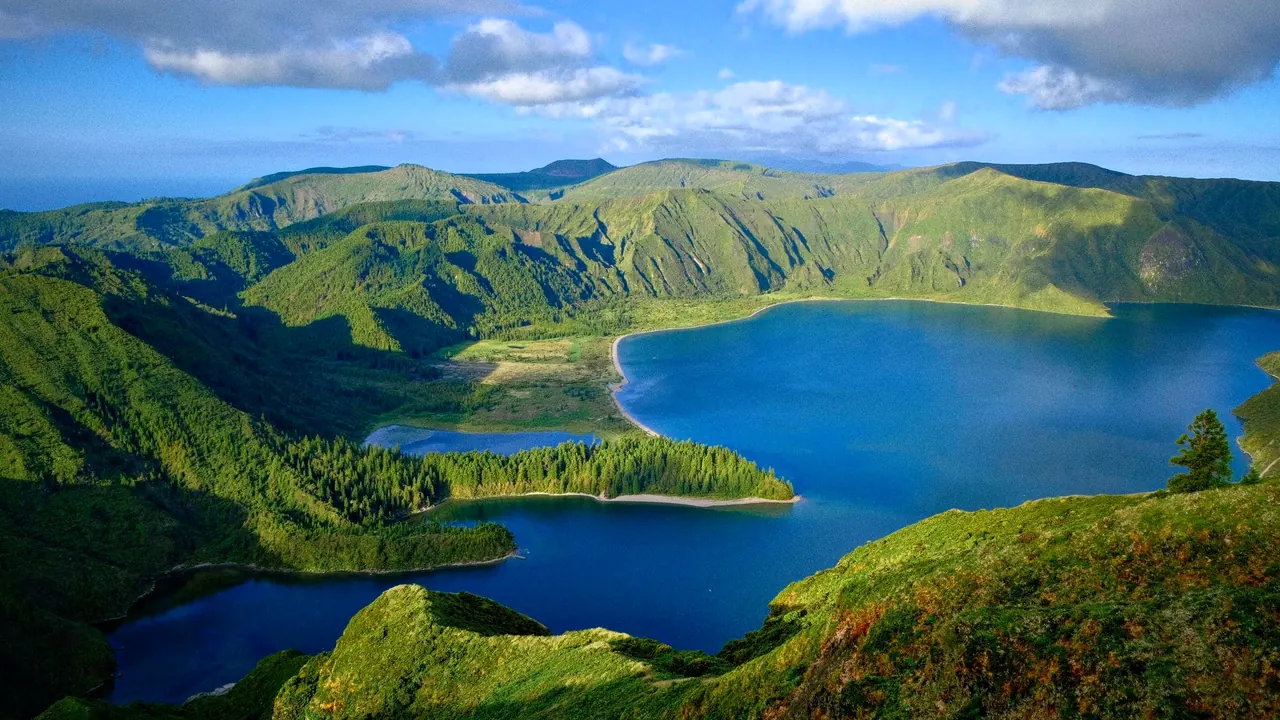
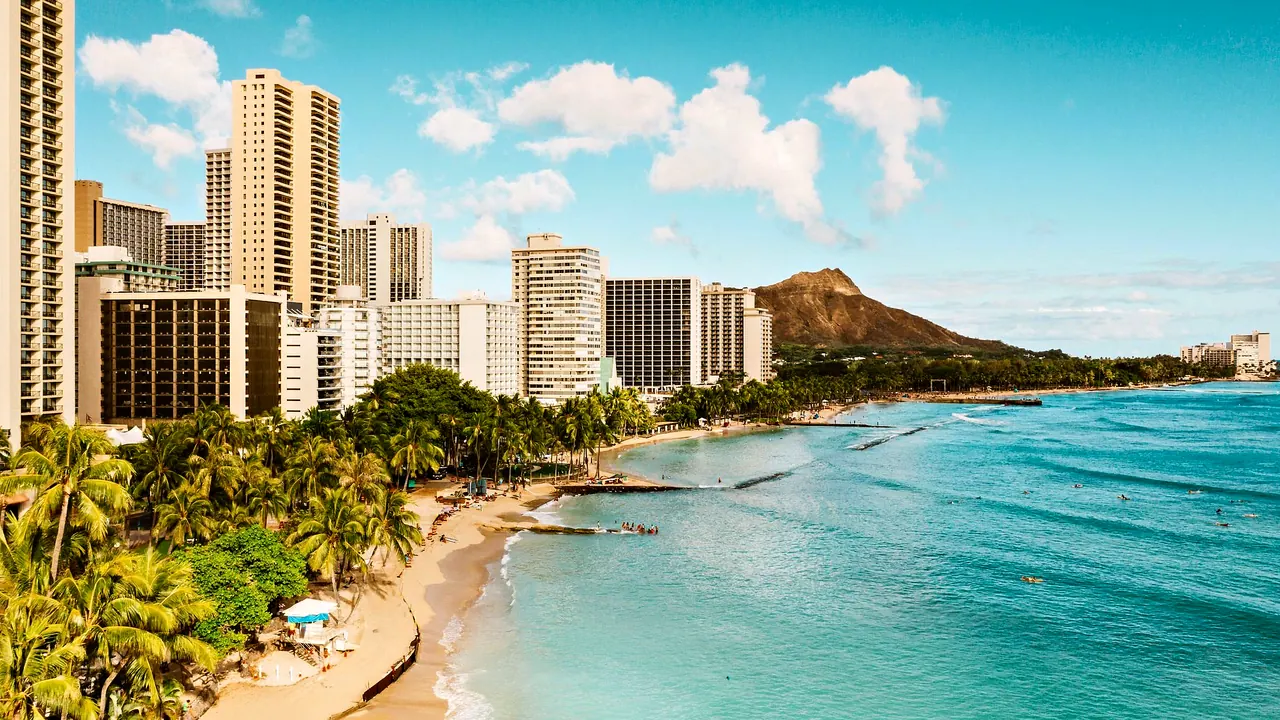
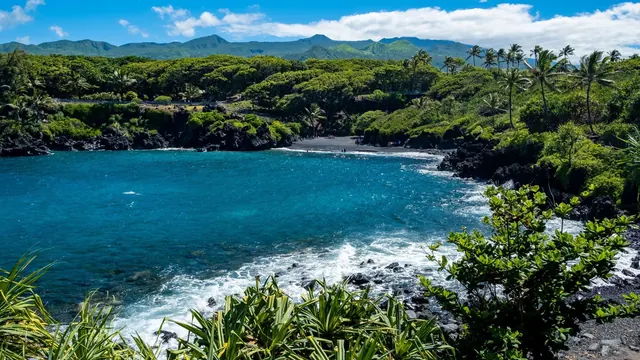
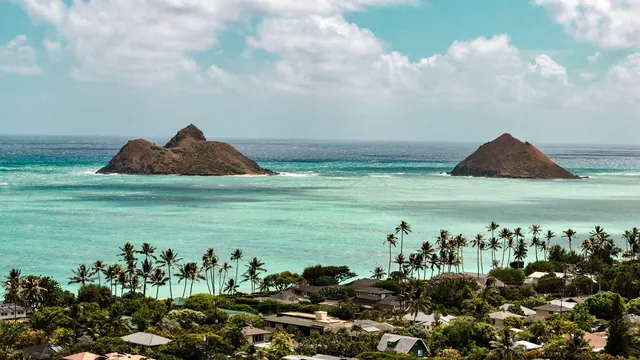
Photos: Azores by Leonardo Barucci, Pexels License; Hawaii by Jess Loiterton, Pexels License.
Azores or Hawaii?
Our verdict in twelve categories, each scored against the same fixed benchmark cities, and the climate month by month, so you can choose for your trip.
Choose Azores for
- prices
- wellness
- nature and the outdoors
The Azores suit travellers who come for the land itself: crater lakes, a volcano to climb, whales present all year and hot springs to soak in, followed by quiet evenings. Day to day they cost far less, and the thermal pools of Furnas give them a bathing tradition Hawaii does not have. The trade-off is plain. Swimming happens in rock pools and black-sand coves, the weather changes by the hour, and the night ends after dinner.
Choose Hawaii for
- beaches
- shopping
- families
Pick Hawaii when warm sea and sand are central to the trip, or when children are coming. Its beaches are swimmable in every month, its lagoons and resorts are built around families, and Honolulu adds a deeper choice of food, real shopping, hula and a modest night out. The landscapes are as dramatic as anything in the Atlantic, from Kilauea to the Na Pali cliffs, but you pay a great deal more for all of it.
Scoreboard
Twelve categories on one fixed scale from 0 to 100. The shaded stretch is the gap between the two.
Your match
Pick a travel style or drag the sliders, and both match scores follow your weighting.
Wins on prices and wellness with your weighting.
Wins on beaches and shopping with your weighting.
What matters to you?
Category by category
What the scores mean for a trip.
Beaches & swimming
This is the widest gap between the two. In the Azores swimming means lava rock pools, the concrete sea pools at Caloura and Biscoitos, and small black-sand coves such as Mosteiros. Santa Maria's pale sand at Praia Formosa is the exception, and even there a beach day fits around other plans in summer.
Hawaii is built around the beach. Waikiki has gentle surf and lessons, Lanikai and Kailua have quiet windward sand, Wailea and Kaanapali have calm mornings and snorkelling off the rocks, and Hapuna's white crescent sits against Big Island lava. The water is warm in every month, and you just pick the calmer coast for the season.
Food & drink
The Azores cook plainly and close to the land. There is cozido lifted out of the hot ground at Furnas, Terceira's clay-pot alcatra, sharp São Jorge cheese, grilled limpets, and white wine from Pico's lava-walled vineyards. It is honest and distinctive, but beyond Ponta Delgada and Angra the choice narrows to village grills and fish houses.
Hawaii has more range, mostly in Honolulu, where ramen counters, izakaya, Korean barbecue and Chinatown dim sum sit beside plate lunches and poke sold by weight. The neighbour islands thin out to food trucks and farmers markets, but the mixed island cooking still gives more variety from day to day.
Culture & sights
Neither is a trip for museums and old towns, but Hawaii gives you more to see. The finest sight in the Azores is Angra do Heroísmo on Terceira, a World Heritage grid of pastel streets with a cathedral and a fortress. Add Ponta Delgada's basalt churches and Pico's stone-walled vineyards, and the heritage is characterful but small, with a flight between each piece.
Honolulu has institutions of real weight: Iolani Palace, the Pacific collections of the Bishop Museum and the Pearl Harbor memorials. Beyond Oahu, culture moves into the landscape, with Puuhonua o Honaunau and the lava petroglyphs. Only for historic town architecture do the Azores come out ahead.
Nightlife
Evenings in the Azores are short. Ponta Delgada has a handful of bars near the marina and the old centre that fill up mainly at weekends, and in Horta, yachtsmen crossing the Atlantic drink in harbourside bars hung with their crews' flags. The late nights belong to the summer festas, above all the Sanjoaninas in Angra and Terceira's village Holy Spirit festivals, when bands and food stalls keep the streets full.
Hawaii gives you far more choice, though nearly all of it is in Honolulu. There are sunset lounges and hotel bars in Waikiki, and cocktail bars, dive bars and dance nights in Chinatown, open until around 2am. On Maui, Kauai and the Big Island, an evening is a sunset drink and an early night, much as it is on an Azorean island.
Nature & outdoors
Both are great volcanic island landscapes, and either repays a trip built around the outdoors. The Azores are greener, cooler and mistier. You get the crater lakes of Sete Cidades and Lagoa do Fogo, the fumaroles of Furnas, the hard climb up Pico, sperm whales all year and manta rays off Santa Maria.
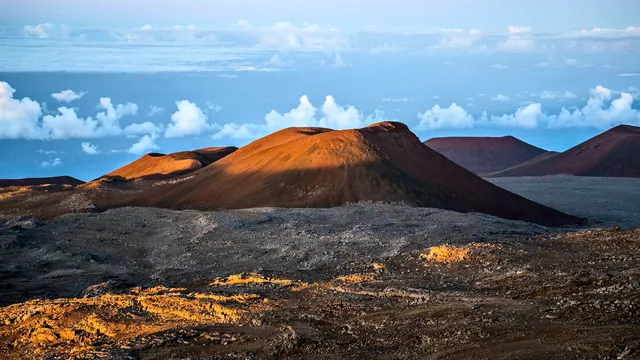
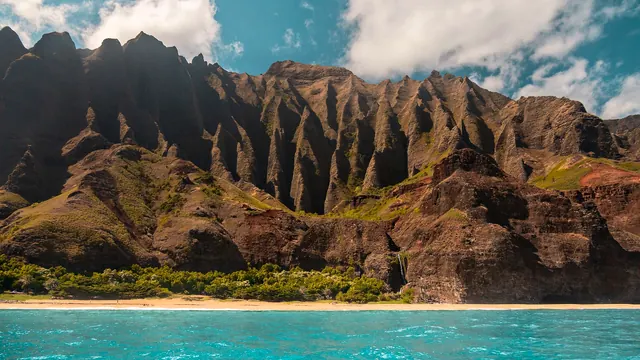
Hawaii is bigger in scale and warmer in the water. There is volcano country on the Big Island, the Na Pali cliffs and Waimea Canyon on Kauai, Haleakala on Maui, and reef snorkelling with turtles. Its humpbacks come only in winter, but its weather is far more reliable than the Azorean mist that often hides the craters.
Day trips
In both, a day out mostly means landscape, and the towns along the way are small. The best Azorean outing is the ferry in the central group, from Horta to Pico's wine cellars or São Jorge's cheese dairies. On São Miguel you link Ribeira Grande, Furnas and the tea estates instead.
Hawaii's equivalents are Haleiwa and Kailua from Honolulu, Hilo and the Kona coffee villages on the Big Island, and the ferry from Maui to Lanai. In both, other islands usually mean a flight, so a second base works better than a day trip.
Good for families
For children, Hawaii is the easier choice. The Azores do have good outdoor moments: whale-watching boats, warm pools at Furnas and lunch dug out of hot ground. But little is made for children, rock pools and swell need close watching, and rain can wipe out a plan at short notice.
In Hawaii the beaches do much of the work. The lagoons at Ko Olina and the sheltered bays of Maui's south shore give calm, shallow swimming and turtle snorkelling. Honolulu adds an aquarium, a zoo and the Polynesian Cultural Center, and the resorts come with pools and kids' clubs.
Getting around
On most islands in both places you want a hire car, and moving between islands usually means a flight. In the Azores the roads are quiet and every main sight on São Miguel is under an hour from Ponta Delgada. Buses are rare, though, and Atlantic weather can cancel both the central-island ferries and the flights.
Hawaii has a slight edge because Oahu works without a car. Waikiki is easy to walk and the buses reach most of the coast. The neighbour islands mean longer, slower drives, such as the Road to Hana.
Shopping & style
In the Azores, shopping is for food and crafts to take home: São Jorge cheese, north-coast tea, Pico wine, embroidery and scrimshaw. Ponta Delgada's market hall is the best stop, and beyond that there is little.
Hawaii is a real shopping destination by comparison. It has luxury labels on Kalakaua Avenue and international brands in the Ala Moana malls. Aloha shirts, koa wood and Niihau shell lei are worth finding among the generic souvenir stock.
Affordability
The Azores cost far less. Village restaurants serve large portions, local wine and cheese are cheap, and the crater lakes and trails are free. The costs come from the hire car, whale trips and inter-island flights, and from July and August, when cars and rooms are scarce.
Hawaii is expensive in every season, from beachfront resorts to supermarket shopping, because most goods arrive by ship. Plate lunches, food trucks, Oahu's buses and a condo with a kitchen soften the cost, but a stay still costs much more than in the Azores.
Live music & performing arts
In the Azores, music follows the parish calendar. Filarmónica brass bands play at processions, the chamarrita is danced at village festas, and Angra holds an autumn jazz festival. Outside festival time, an evening of music is hard to find.
Hawaii has a living tradition you can actually see. Hula is taught across the islands and celebrated at Hilo's Merrie Monarch Festival each spring, and slack-key guitar plays in hotel lounges at sunset. Honolulu adds a symphony and the restored Hawaii Theatre, though luaus are staged shows rather than the real thing.
Wellness & relaxation
Here the Azores have something Hawaii lacks altogether: a bathing culture fed by volcanic heat. You can soak in the iron-orange pool of the Terra Nostra garden at Furnas, the warm waterfall at Caldeira Velha or the hot sea inlet at Ponta da Ferraria. Then you return to quiet roads and early evenings.
Hawaii's relaxation is the resort kind, with big spas at Wailea, Kapalua, Kohala and Poipu, lomilomi massage, and yoga retreats on Kauai's north shore. It is polished and warm, but you book it rather than bathe in it, and Waikiki is far from restful.
When should you go?
Pick your month. The climate figures are measured averages, not a forecast.
Azores in July
Hawaii in July
Daytime high, °C
Rainfall in the month, mm
Temperature and rainfall are climate normals, averaged over the years shown. Azores: 1991-2020 normals, Ponta Delgada / Nordela Acores (2.3 km from centre). Hawaii: 1991-2020 (sunshine 1981-2010) normals, Honolulu International Airport (10 km from centre).
The Azores are mild rather than warm. On São Miguel, where most visitors stay, daytime highs stay in the high teens from December to April. That is pleasant for walking but wet, and the rain is heaviest in late autumn and winter, peaking around 170mm in December. June to September is the time to go. July is the driest month, August reaches about 26°C and the sea warms to 23°C by late summer, the only stretch when swimming is really pleasant. It is never too hot for hiking.
Hawaii is warm all year, and the sea never drops much below 24°C, so there is no off-season for the beach. Where most visitors stay, the drier and sunnier half of the year runs from April to September, with the most sunshine in early summer. November to March brings more showers, though still far less rain than an Azorean winter. Late summer reaches about 32°C, hot enough to keep long walks to the morning.
Which traveller are you?
On a beach and sun trip, Hawaii wins easily. The sea is warm enough in every month, the sand runs from Waikiki to Wailea and Hapuna, and you can snorkel with turtles off the shore. The Azores offer rock pools, black-sand coves and changeable Atlantic weather.
For a trip on a tight budget, the Azores go much further. Generous village meals, cheap local wine and cheese and free crater trails keep the days modest, especially outside July and August. Hawaii stays expensive in every season, even if you live on plate lunches and Oahu's buses.
On a relaxing and wellness trip, the Azores have the edge. Warm volcanic pools at Furnas, Caldeira Velha and Ponta da Ferraria give you real outdoor soaking, and the slow island pace does the rest. Hawaii has resort spas and lomilomi massage, but no bathing tradition.
Before you go
| Measure | Azores | Hawaii |
|---|---|---|
| Official language | Portuguese | - |
| Currency | Euro (EUR) | US Dollar (USD) |
| Sockets | CF230 V, 50 Hz | AB120 V, 60 Hz |
| Driving side | Right | Right |
| Time zone | UTC-1, UTC in summer | UTC-10 |
| Emergency number | 112 | 911 |
| Main airport | João Paulo II Airport (PDL)25 non-stop destinations | Daniel K. Inouye International Airport (HNL)56 non-stop destinations |
| Public holidays this year | 15 days | 13 days |
By the numbers
| Measure | Azores | Hawaii |
|---|---|---|
| Population | 236,440 | 1,455,271 |
| People per km² | 102 | - |
| Swim season, months above 21 °C | 4 months | 12 months |
Where else could you go?
Every comparison below shares a destination with this one, so you can follow Azores or Hawaii somewhere new.
- Madeiravs Azores
- Canary Islandsvs Azores
- Tenerifevs Azores
- Isles of Scillyvs Azores
- Californiavs Hawaii
- San Diegovs Hawaii