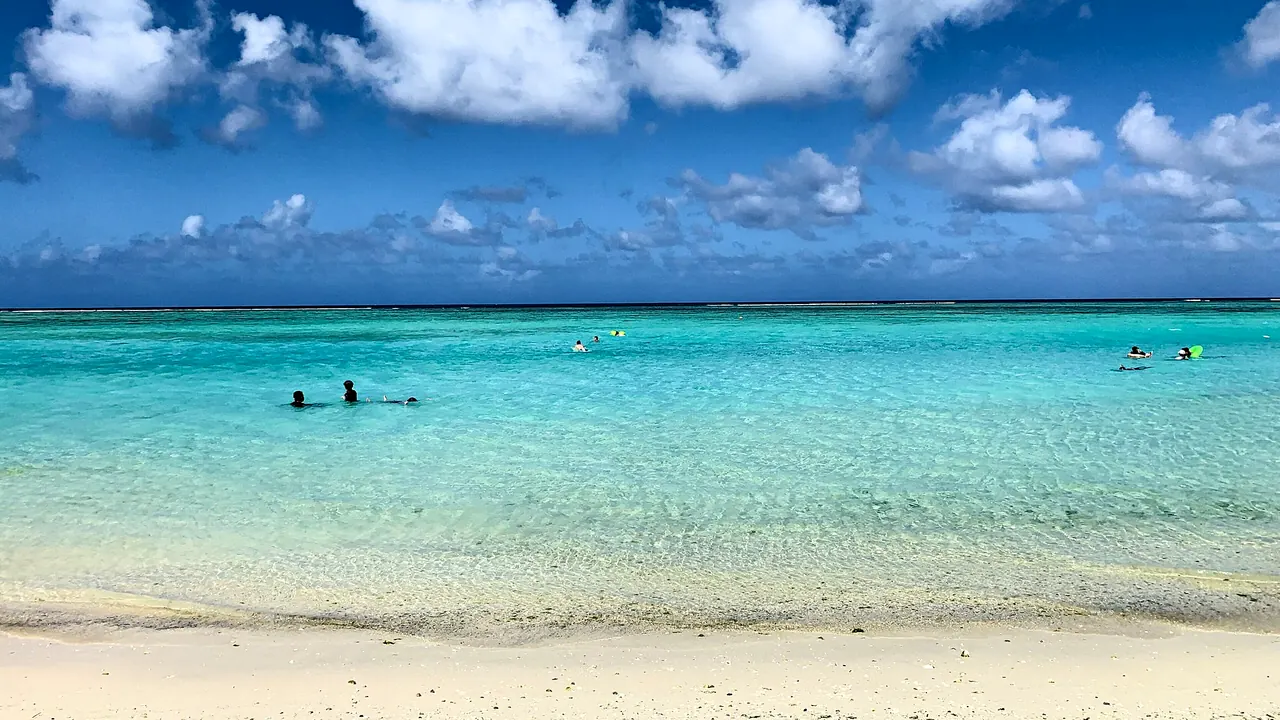
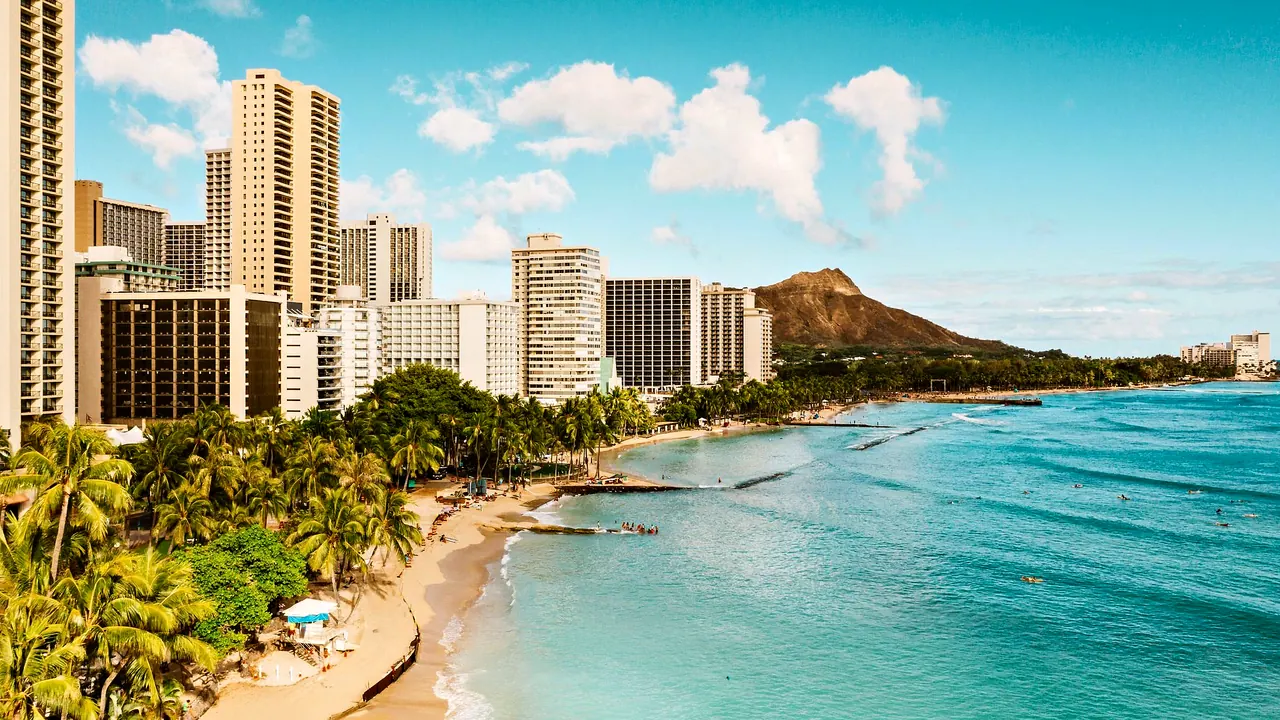
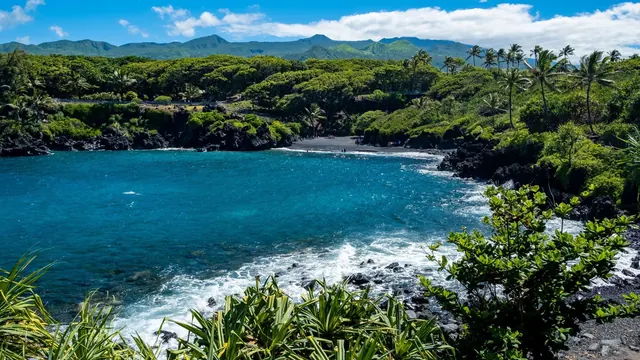
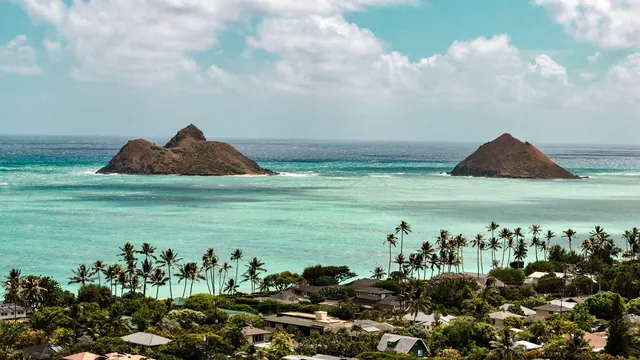
Photos: Guam by Daniel Ramirez from Honolulu, USA, CC BY 2.0, cropped; Hawaii by Jess Loiterton, Pexels License.
Guam or Hawaii?
Our verdict in twelve categories, each scored against the same fixed benchmark cities, and the climate month by month, so you can choose for your trip.
Choose Guam for
- prices
- getting around
Guam suits a short, uncomplicated beach stay where everything is close at hand. The calm reef lagoon at Tumon, the resort pools, the duty-free shopping and the restaurants all sit along one bay, and the war sites and southern villages are within an easy drive. It is somewhat less costly than Hawaii, and divers have the Apra Harbor wrecks. Expect a few relaxed days rather than a long list of things to do.
Choose Hawaii for
- nature and the outdoors
- live music and the arts
- food and drink
Hawaii is the better pick for a longer trip where the landscape is the point: volcanoes on the Big Island, Kauai's sea cliffs, Haleakala's crater and whales off Maui. It also offers more of nearly everything else, from Honolulu's food and museums to hula and family days out. The trade-off is a steeper bill, and you have to choose which one or two islands to see.
Scoreboard
Twelve categories on one fixed scale from 0 to 100. The shaded stretch is the gap between the two.
Your match
Pick a travel style or drag the sliders, and both match scores follow your weighting.
Wins on prices and getting around with your weighting.
Wins on nature and the outdoors and live music and the arts with your weighting.
What matters to you?
Category by category
What the scores mean for a trip.
Beaches & swimming
Guam's beach life is essentially one bay. Tumon's reef-sheltered lagoon is shallow, clear and gentle, Gun Beach below the cliffs has the best snorkelling, and the sea stays a touch warmer than Hawaii's. Past the bay, the open eastern shore is better for looking at than swimming in.
Hawaii gives you far more choice: beginner surf at Waikiki, the soft, quiet sand at Lanikai and Kailua, the resort crescents of Kaanapali and Wailea, and white Hapuna against black lava. Because the safe side of each island changes with the winter and summer swells, you can almost always find calm water somewhere.
Food & drink
Guam's own Chamorro cooking is worth finding: red rice, kelaguen and smoky fiesta barbecue. The trouble is finding it. The Chamorro Village night market and the local diners are where it lives, while Tumon mostly serves ramen, Korean barbecue and hotel buffets.
Hawaii's mixed island cuisine is everywhere, from plate lunches and poke by weight to malasadas and shave ice, and it runs much deeper in Honolulu's Chinatown and Kapahulu. The neighbour islands rely more on food trucks and farmers markets, but Kona coffee at its source is a highlight.
Culture & sights
Both destinations remember the Pacific War, but in different ways. Guam keeps the landing beaches and gun emplacements at Asan and Agat, while Hawaii has the Pearl Harbor memorials over the sunken USS Arizona. Guam adds latte stones and a Spanish layer, with the Plaza de España, the cathedral and Fort Soledad above Umatac, all of which fit into a day or two.
Hawaii goes further. Iolani Palace was home to the last Hawaiian monarchs, the Bishop Museum holds the finest Pacific collection anywhere, and on the Big Island you can visit heiau temples and the place of refuge at Puuhonua o Honaunau. Even so, museum lovers will run out of things to see within a few days.
Nightlife
Guam's going-out scene is one road, Pale San Vitores in Tumon, with hotel lounges, sports bars, karaoke rooms and a couple of dance clubs that feel much the same every night. Hawaii has a little more to offer, and almost all of it is in Honolulu, where Chinatown's cocktail and dive bars give an evening more character than Waikiki's hotel bars. On both, most nights end with a sunset drink and an early bed.
Nature & outdoors
Guam's best scenery is underwater. Divers come for the Blue Hole, the coral walls and the two wrecks from different world wars lying side by side in Apra Harbor. On land you get the cliffs at Two Lovers Point, Ritidian Point and short walks to waterfalls in the green south, in forests left oddly silent by introduced snakes.
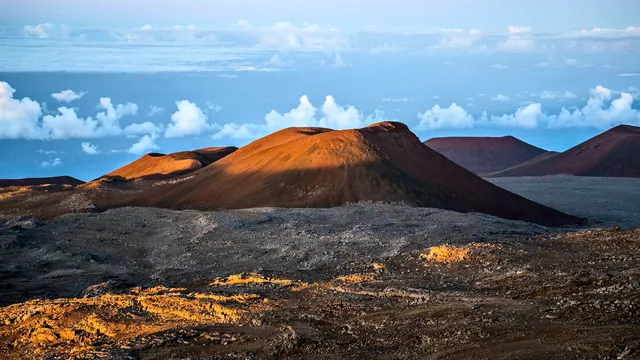
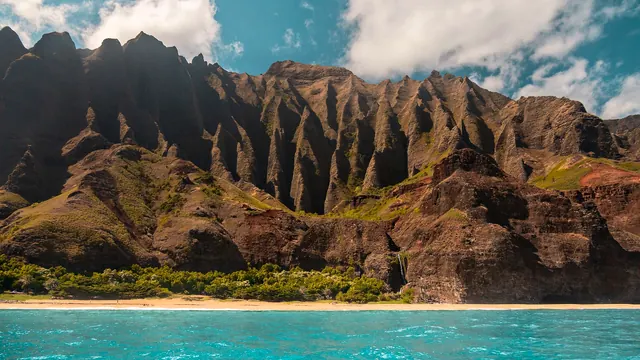
Hawaii is in another league. It has live volcanic terrain at Kilauea, the Na Pali cliffs and Waimea Canyon on Kauai, Haleakala's crater above the clouds, and the rainforest on the Road to Hana. In the water there are green turtles, manta rays off Kona and humpback whales in winter.
Day trips
Neither is a place for day trips, but Guam has less to offer. Its one real outing is the drive through Umatac, Merizo and Inarajan, and Rota and Saipan need an overnight stay.
Hawaii has more small places to aim for on each island: the surf town of Haleiwa from Honolulu, Hilo's waterfront and the ranching town of Waimea on the Big Island, and the upcountry towns of Makawao and Paia on Maui. From Maui you can also take the ferry to Lanai.
Good for families
Guam is very easy with small children, as long as water and sand are enough. Tumon's shallow lagoon, the resort pools and the restaurants are all on one stretch, and the Fish Eye observatory at Piti shows children reef fish without anyone getting wet. There is little to fill extra days.
Hawaii gives families more to do. Honolulu has its aquarium and zoo, the Polynesian Cultural Center can fill a whole day, and children can snorkel with turtles and visit volcanoes. The price is longer drives on the neighbour islands, which Guam's short distances avoid.
Getting around
The two are broadly level, but the problems differ. Guam is a single island about 50km long. Shuttle buses cover Tumon and Hagåtña, and with a rental car nothing else is more than an hour or so away.
In Hawaii, Oahu is the one island where you can manage without a car, thanks to walkable Waikiki and a bus network that reaches most of the coast. Elsewhere you need a hire car for long, sometimes winding drives, and moving between islands means a flight.
Shopping & style
Both offer brand-name shopping. Guam has the duty-free gallery and luxury boutiques along Tumon's hotel road plus American malls and an outlet centre, all helped by the lack of sales tax. Honolulu answers with Kalakaua Avenue and the big malls near Ala Moana.
Where Hawaii pulls ahead is local goods: aloha shirts, koa wood, Niihau shell lei, quilts and Kona coffee, along with small galleries in Paia and Hanapepe. On Guam, local craft hardly goes beyond the woven items at Chamorro Village.
Affordability
Guam is expensive, priced like a resort in any developed country, with imported food and a rental car on top. Even so, it is easier on the wallet than Hawaii, where beachfront resorts on Maui and Kauai, inter-island flights and boat tours push costs very high.
Both have cheaper ways to eat: night-market stalls and barbecue stands on Guam, plate lunches, poke counters and food trucks in Hawaii. In Hawaii, a condo or a Waikiki base with Oahu's buses also helps.
Live music & performing arts
On Guam, live performance mostly means hotel dinner shows of Pacific dance and the music at parish fiestas, with only the occasional symphony or university production.
Hawaii has a real living tradition. Hula is taught in schools and celebrated at Hilo's Merrie Monarch Festival, the world's foremost hula competition, and you can hear slack-key guitar and ukulele at sunset lounges. In Honolulu, the restored Hawaii Theatre, a symphony and a small opera season add a modest formal programme.
Wellness & relaxation
Neither place has a bathing tradition, so rest means resort spas and a slow pace. Guam keeps it simple, with a spa in most Tumon hotels and massage shops along the main road, which is enough for a few easy days.
Hawaii makes more of it. There are big open-air spa complexes at Wailea, Kapalua, the Kohala Coast and Poipu, and lomilomi massage is offered almost everywhere. Kauai's north shore and the quieter parts of the Big Island also host yoga retreats, as long as you stay away from Waikiki's crowds.
When should you go?
Pick your month. The climate figures are measured averages, not a forecast.
Guam in July
Hawaii in July
Daytime high, °C
Rainfall in the month, mm
Temperature and rainfall are climate normals, averaged over the years shown. Guam: 1991-2020 normals, Agana, Guam International Airport (3.1 km from centre). Hawaii: 1991-2020 (sunshine 1981-2010) normals, Honolulu International Airport (10 km from centre).
Guam is hot and humid all year, with daytime highs that barely move from 30°C and a sea warm enough for long swims in any month. The steady heat makes midday walking hard work whatever the season, so what really changes is the rain. January to May is the drier, sunnier half of the year and the best time to go. From July to October heavy downpours are the rule, peaking at around 445mm in August, and this is also typhoon season.
Measured where most visitors stay, Hawaii is drier and sunnier all year round, and its seasons run the other way: summer is the driest and brightest stretch, and the light rain falls mostly in winter. Highs run from about 27°C in winter to 32°C in August, so winter is the more comfortable time for exploring on foot. The sea is cooler than Guam's, close to 24°C in late winter, but still fine for swimming. Both destinations work from January to May. Between July and October, Hawaii is clearly the better choice.
Which traveller are you?
On an outdoors trip, Hawaii wins easily. You can hike Kilauea's crater rim, walk the Kalalau Trail above the Na Pali Coast, drive up to Haleakala or watch humpbacks off Maui. Away from its reefs, Guam has a handful of short jungle walks and clifftop viewpoints.
On a tight budget, Guam is the easier of the two, though neither is cheap. It has no sales tax, the night market at Chamorro Village and the roadside barbecue stands help, and a single small island saves you the inter-island flights and boat tours that push up a Hawaiian bill.
For a culture and arts trip, choose Hawaii. Iolani Palace and the Bishop Museum go deeper than anything on Guam. Hula is a living art there, with the Merrie Monarch Festival in Hilo and slack-key guitar at sunset. Guam's heritage sites and village fiestas fill a day or two.
Before you go
| Measure | Guam | Hawaii |
|---|---|---|
| Official language | English, Chamorro | - |
| Currency | US Dollar (USD) | US Dollar (USD) |
| Sockets | AB110 V, 60 Hz | AB120 V, 60 Hz |
| Driving side | Right | Right |
| Time zone | UTC+10 | UTC-10 |
| Emergency number | 911 | 911 |
| Main airport | Antonio B. Won Pat International Airport (GUM)17 non-stop destinations | Daniel K. Inouye International Airport (HNL)56 non-stop destinations |
| Public holidays this year | - | 13 days |
By the numbers
| Measure | Guam | Hawaii |
|---|---|---|
| Population | 153,836 | 1,455,271 |
| People per km² | 283 | - |
| Swim season, months above 21 °C | 12 months | 12 months |
Where else could you go?
Every comparison below shares a destination with this one, so you can follow Guam or Hawaii somewhere new.