United States
Big Island
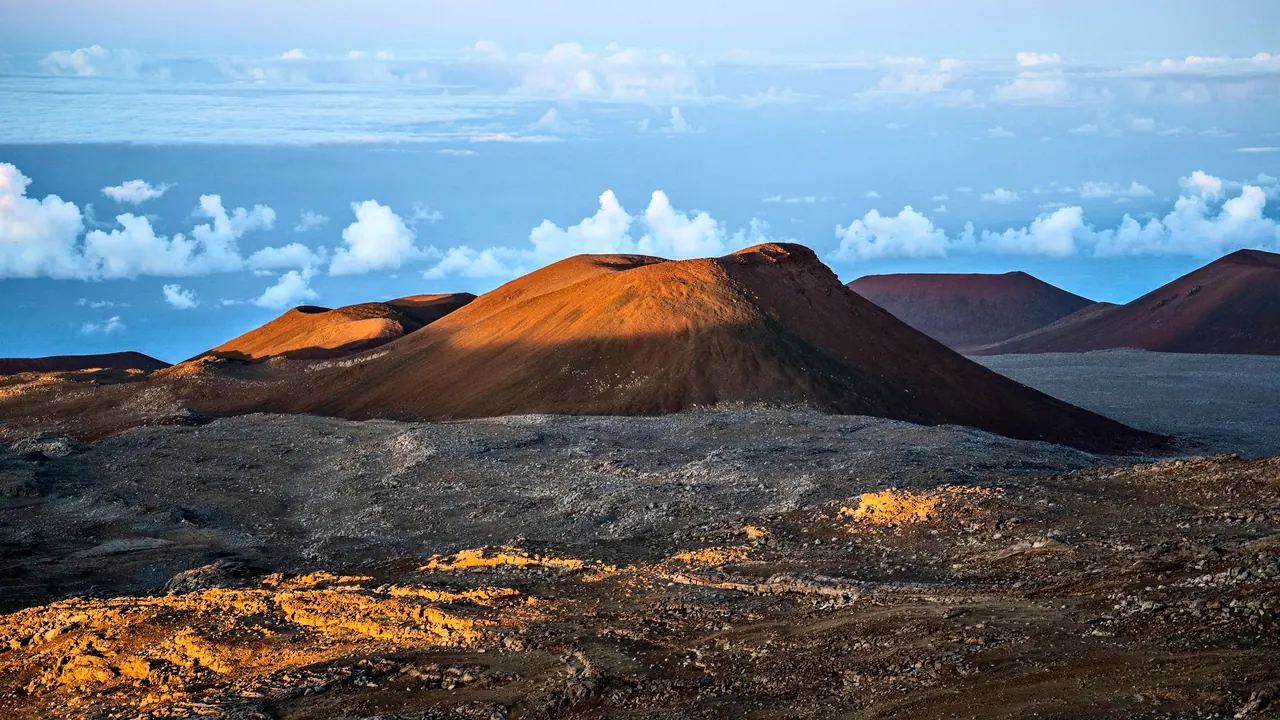
Cinder cones on Mauna Kea at sunset
- Nature & outdoors94
- Beaches78
- Families60
Photo: Tim & Martin Klement, Pexels License
Big Island lies in Hawaii, which has its own page.
Match
44
Every category weighted equally
- Beach & sun49
- Culture & arts38
- Food & nightlife37
- Family trip51
- Outdoors52
- Relax & unwind51
- Shopping & style39
- On a budget41
Big Island in twelve categories
Our verdict on each, scored 0 to 100 against the same fixed benchmark cities, so a score means the same thing on every page.
Beaches & swimming. Scores 78 out of 100.
Food & drink. Scores 50 out of 100.
Culture & sights. Scores 40 out of 100.
Nightlife. Scores 15 out of 100.
Nature & outdoors. Scores 94 out of 100.
Day trips. Scores 35 out of 100.
Good for families. Scores 60 out of 100.
Getting around. Scores 38 out of 100.
Shopping & style. Scores 28 out of 100.
Affordability. Scores 18 out of 100.
Live music & performing arts. Scores 30 out of 100.
Wellness & relaxation. Scores 47 out of 100.
Big Island category by category
Beaches & swimming
78The island's swimming beaches are concentrated on the dry, sunny Kohala Coast north of Kona. Hapuna and Kauna'oa are broad crescents of pale sand with clear, calm water in summer. Anaeho'omalu Bay is sheltered and shallow. The sea is warm all year, around 24°C in late winter and 27°C in late summer. Snorkelling from shore, at Kahalu'u Bay and the lava ledges of Honaunau, often brings you close to green sea turtles.
The rest of the coastline is mostly young black lava. The black-sand and green-sand beaches in the south are better for looking at than for swimming, and winter swells make the north and west shores rough. Stay on the Kohala Coast if beach days are the point of the trip.
Food & drink
50Eating here is casual and local. Plate lunches come with rice and macaroni salad. Poke counters sell fresh ahi cut and seasoned to order, and loco moco, malasadas and shave ice are everyday treats. Kona coffee is the island's speciality. It is grown on the slopes above Kailua-Kona and Holualoa, where farms invite visitors in to taste it. The farmers' markets, above all the big one in Hilo, are full of tropical fruit, macadamias and local chocolate.
Fine dining is found mostly inside the Kohala Coast resorts, where it is polished and costly, and in the ranch town of Waimea, which cooks well with produce from the upland farms. Kona and Hilo have a modest spread of restaurants, and the best meals there tend to be the simple ones.
Culture & sights
40This is the island of Kamehameha, and its heritage is Hawaiian rather than built in stone and glass. Pu'uhonua o Honaunau is a restored place of refuge with carved wooden images and royal grounds on the lava shore. Pu'ukohola Heiau is the great temple Kamehameha raised before unifying the islands. Hulihe'e Palace in Kailua-Kona was a royal summer home. There are petroglyph fields along the Kohala Coast, and an obelisk marks where Captain Cook died at Kealakekua Bay.
Hilo has the small Lyman Museum, an astronomy centre linked to Mauna Kea, and a low wooden downtown. These sites reward an interested visitor, but they are spread thinly across the island.
Nightlife
15Evenings on the island are early ones. Kailua-Kona has a short run of open-air bars along the seafront on Ali'i Drive, good for a sunset drink and a little noise. The resorts have lounges with live Hawaiian music. Little stays open late, and Hilo and the rural towns are quiet after dinner. Many visitors spend their nights stargazing or on a manta ray snorkel rather than going out.
Nature & outdoors
94The island is still being made, and that is why people come. Hawai'i Volcanoes National Park has trails across steaming craters, through lava tubes and over black flows that run down to the sea. When Kilauea is erupting, the glow of lava at night is unforgettable. Mauna Kea rises to 4,207m, high above the clouds and most of the moisture in the air. Visitors watch the sunset from the summit and do their stargazing lower down, around the visitor station at about 2,800m, where the dry, dark sky is among the clearest anywhere. Snow sometimes falls on the summit in winter.
The wet Hamakua Coast and the Hilo side have rainforest, Akaka Falls and the deep green cleft of Waipio Valley, with its lookout at the end of the road. On the Kona side, night snorkels with manta rays, spinner dolphins in the bays and humpback whales from December to April take you out onto the water. The range is huge, but the island is big, so plan nights on both the Kona side and the volcano side.
Day trips
35Outings here are to small towns rather than famous places. Hilo makes the best day out from the Kona side, with its old wooden downtown, bayfront and market. Waimea is ranch country, cool and green, with a cowboy heritage. Hawi and Kapa'au at the northern tip have galleries and the original Kamehameha statue. Holualoa and the coffee farms on the slopes above Kona make a pleasant half day of tastings. The plantation town of Honoka'a sits on the way to Waipio.
The other Hawaiian islands all need a flight, so the list ends there. Most days out on the island are about volcanoes, valleys and the sea rather than towns.
Good for families
60For families who like the outdoors, the island works well. The Kohala Coast resorts have pools, lagoons and calm beaches in summer. Shallow snorkelling spots such as Kahalu'u let children swim among fish and turtles. Hawai'i Volcanoes National Park has a Junior Ranger programme and lava tubes to walk through. Hilo has a small free zoo and an astronomy centre that suits curious children.
The island is safe, relaxed and welcoming. What it lacks is purpose-built attractions, and getting between the Kona and Hilo sides means long drives that test young passengers. Winter surf can make some beaches unsafe for small swimmers.
Getting around
38You will need a car. The island bus network is sparse and not built for visitors, and taxis are few outside Kona. The roads are good and mostly quiet, and driving here is a pleasure. The belt highway circles the island, and the Saddle Road cuts across between Mauna Kea and Mauna Loa.
The distances are what take the effort. From Kona to the volcano park is about two and a half hours each way, and Hilo is around an hour and a half across the saddle. Many visitors split their stay between the Kona side and Hilo or Volcano village rather than drive it all in one day. A four-wheel drive is needed for the Mauna Kea summit road.
Shopping & style
28Shopping is for local things, not fashion. Kona coffee straight from the farms is the obvious thing to take home, along with macadamias, local honey and chocolate. Galleries in Holualoa, Hawi and Volcano village sell koa woodwork, ceramics and island art. Hilo's farmers' market adds crafts and aloha shirts. Beyond that, Kona and the Kohala Coast have resort shopping centres with familiar resortwear and souvenirs, and serious shoppers will find little else.
Affordability
18The island is expensive, as all of Hawai'i is. Almost everything is shipped in. Kohala Coast resort rooms are among the costliest in the country, a hire car is unavoidable, and restaurant and supermarket prices are well above mainland levels. Guided tours, from manta snorkels to summit trips, add up quickly. The cheaper way is to stay in Kona condos or on the Hilo side, eat plate lunches and market food, and spend the days on beaches and in the national park, where access costs little.
Live music & performing arts
30Live performance here means Hawaiian music and hula. Every spring Hilo hosts the Merrie Monarch Festival, the most important hula competition in the world, a week of chant and dance with deep cultural weight. Seats are famously hard to get, but the town fills with free performances and craft fairs around it. During the rest of the year, resorts stage luau shows of varying authenticity, slack-key guitarists play in hotel lounges, and the historic theatres in Hilo and Waimea host small programmes of concerts and films. There is no opera, orchestra or real theatre scene.
Wellness & relaxation
47The island's pace is slow, and that is most of its appeal for rest. Days settle into early mornings, long afternoons and early nights. The large Kohala Coast resorts have well-equipped spas, many of them offering lomilomi, the traditional Hawaiian massage. Yoga and meditation retreats gather in the rainforest of Puna and on the coffee slopes above Kona.
There is no bathing tradition to build a trip around. Despite the volcanic ground there are no public thermal baths, so wellness here means a treatment or a retreat rather than a soak. The Kohala Coast suits pampering, while the Hilo side and Volcano village suit quiet, misty seclusion.
Where to stay in Big Island
Most visitors start on the dry, sunny west side. The Kohala Coast is the base for beach days, families and pampering, with resort pools, spas and calm sandy bays in summer, though it is the most expensive place to sleep and evenings end early. Kailua-Kona, further south, is a small seaside town of condos with a few open-air bars on Ali'i Drive. It suits travellers on a tighter budget and anyone who wants a sunset drink, and it is close to the snorkelling at Kahalu'u, the coffee farms above town and the manta ray night snorkels.
The east side is wetter, greener and cheaper. Hilo is a low-key town with an old wooden downtown and a big farmers' market, and it makes a good base for the Hamakua Coast, Akaka Falls and Waipio Valley. Volcano village sits in misty rainforest at the edge of the national park. It suits walkers and anyone after a quiet stay, and when Kilauea is erupting the lava glow is a short drive away after dark.
The volcano park is about two and a half hours' drive from Kona, so on a first visit it is best to split the stay between the Kona side and Hilo or Volcano village. Waimea, cool ranch country with good cooking, suits a second visit spent exploring the north by car.
When should you go?
Pick a month to see what it is like. The climate figures are measured averages, not a forecast.
Big Island in July
Daytime high, °C
Rainfall in the month, mm
The whole year
Shaded against this city’s own year: the deepest cell is its best month for that figure and the palest its weakest.
Where the figures come from
Big Island has no rain gauge within 25 km of the centre, so its rainfall comes from a gridded climate dataset read at the destination rather than from a gauge further away.
Temperature and rainfall are climate normals, averaged over the years shown. Big Island: 2006-2020 (rainfall 1991-2020) normals, Kailua Kona / Mahaiula (12.1 km from centre).
Before you go
| Measure | Big Island |
|---|---|
| Currency | US Dollar (USD) |
| Sockets | AB120 V, 60 Hz |
| Driving side | Right |
| Time zone | UTC-10 |
| Emergency number | 911 |
| Main airport | Ellison Onizuka Kona International Airport at Keāhole (KOA)20 non-stop destinations |
| Public holidays this year | 13 days |
By the numbers
| Measure | Big Island |
|---|---|
| Population | 198,449 |
| People per km² | 19 |
| Swim season, months above 21 °C | 12 months |
Compare Big Island with
Every comparison with a written verdict behind it.