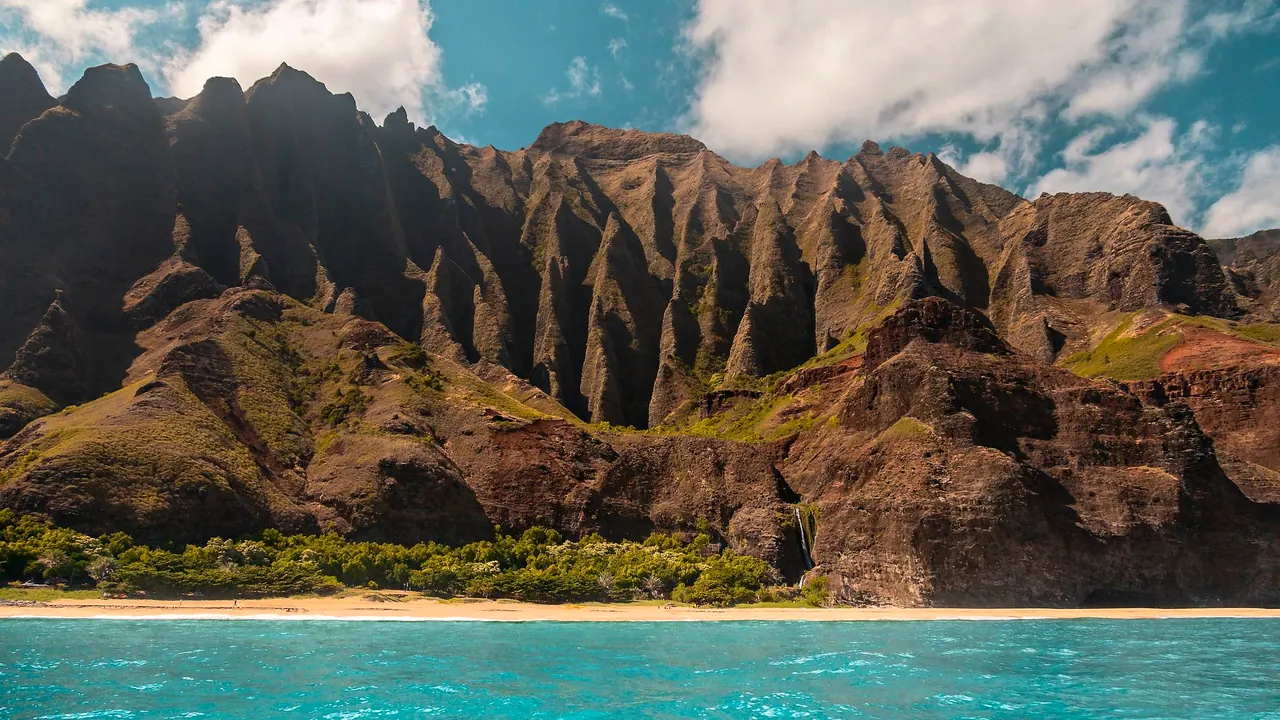
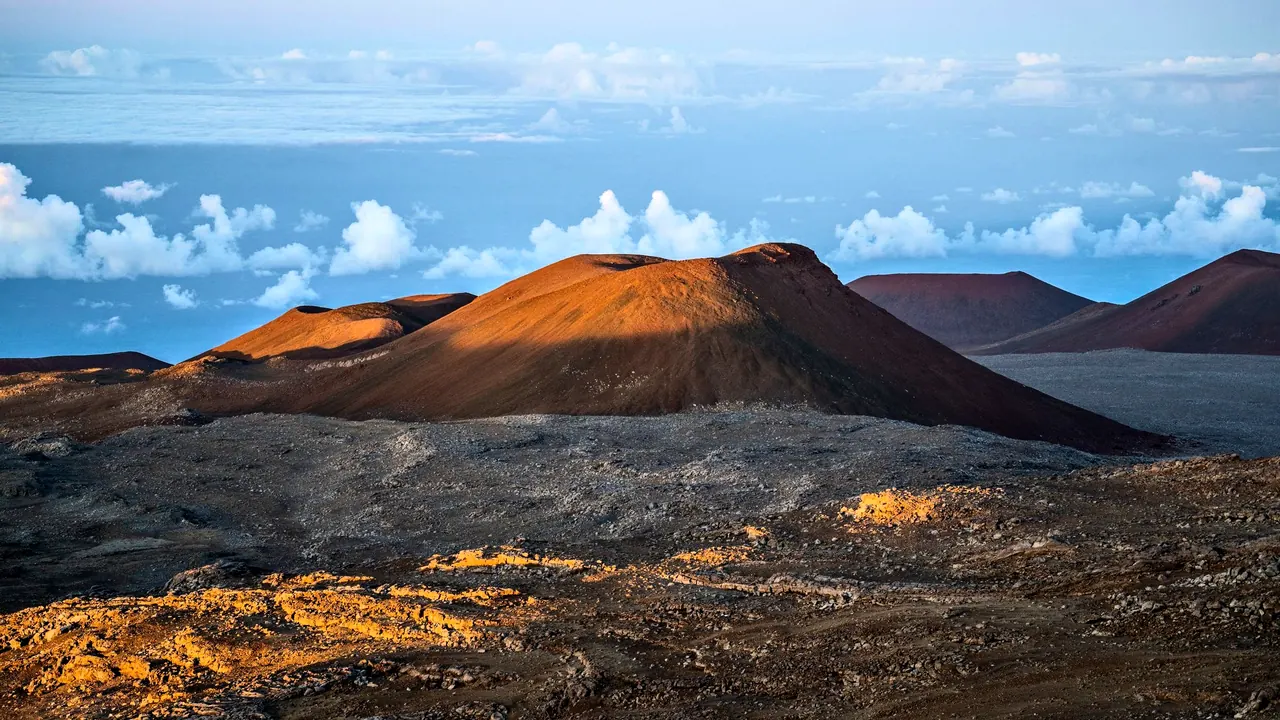
Photos: Kauai by Jess Loiterton, Pexels License; Big Island by Tim & Martin Klement, Pexels License.
Kauai or Big Island?
Our verdict in twelve categories, each scored against the same fixed benchmark cities, and the climate month by month, so you can choose for your trip.
Choose Kauai for
- beaches
- wellness
- families
Kauai is the better choice for a slower, more compact trip built around beaches and scenery. The Na Pali cliffs and Waimea Canyon are as fine as anything on the bigger island, its swimming beaches at Poipu and on the summer north shore are the better of the two, and one road links it all. Evenings and heritage sites are thinner, but people who come for sand, green mountains and early nights rarely miss them.
Choose Big Island for
- culture and sights
- live music and the arts
- day trips
Big Island suits travellers who want more than one kind of day. It has a live volcano, the night sky over Mauna Kea, Hawaiian heritage sites such as Pu'uhonua o Honaunau, hula in Hilo and a wider range of food, from Kona coffee farms to the kitchens of Waimea. In return you face long drives and probably nights on both sides of the island, but there is more to do away from the water.
Scoreboard
Twelve categories on one fixed scale from 0 to 100. The shaded stretch is the gap between the two.
Your match
Pick a travel style or drag the sliders, and both match scores follow your weighting.
Wins on beaches and wellness with your weighting.
Wins on culture and sights and live music and the arts with your weighting.
What matters to you?
Category by category
What the scores mean for a trip.
Beaches & swimming
Both islands have warm sea all year and turtles close to shore, but Kauai has more good beaches, spread around its coast. Poipu's sheltered coves stay calm most of the year, and in summer the north shore adds Hanalei Bay, Tunnels and the Anini lagoon, in mountain settings that Big Island cannot match.
On Big Island the swimming is concentrated on the Kohala Coast. Hapuna and Kauna'oa are broad crescents of pale sand, and the snorkelling at Kahalu'u and Honaunau is excellent. Most of the rest of the shoreline is lava, and the black and green sands are for looking at. On both islands winter swells close part of the coast, and rip currents call for care.
Food & drink
The everyday food is much the same on both islands: poke, plate lunches, malasadas and shave ice. Big Island goes further. You can taste Kona coffee on the farms above Kailua-Kona, browse the big Hilo farmers' market and eat in Waimea, where restaurants cook with produce from the upland farms.
Kauai's range is narrower. Most of the sit-down choice is along the Kapaa and Wailua coast and in Lihue, food trucks gather in Kapaa and Hanalei, and Poipu and Princeville rely on resort dining rooms. You will eat well and simply there, but with less variety.
Culture & sights
Big Island has the stronger Hawaiian heritage, because it is the island of Kamehameha. It has the place of refuge at Pu'uhonua o Honaunau, the great temple at Pu'ukohola Heiau, Hulihe'e Palace, the Kohala petroglyph fields and Kealakekua Bay, where Cook died. They are spread out, but several are worth a special trip.
Kauai's sights are stops on a drive rather than destinations. They include the Kauai Museum and Grove Farm in Lihue, the Russian fort ruins at Waimea and the heiau along the Wailua River. On Kauai, Hawaiian culture shows more in place names and hula than in historic sites.
Nightlife
Neither island is a place for going out, but Big Island has slightly more going on in the evening. Kailua-Kona's open-air bars along Ali'i Drive give a sunset drink some company, and a manta ray night snorkel or stargazing below Mauna Kea makes a memorable night. Kauai is quieter still: resort bars in Poipu and Princeville, a few local bars in Kapaa and an island where most people are asleep early, ready for a dawn hike or boat trip.
Nature & outdoors
Both islands are outstanding for the outdoors, but they offer different landscapes. Big Island is a land still being formed. Hawai'i Volcanoes National Park has crater trails and lava tubes, the lava glows at night when Kilauea is erupting, and the sky over Mauna Kea is exceptionally dark, with the Hamakua rainforest and Waipio Valley on the wet side.
Kauai is older and greener, a place of carved cliffs and canyons. You can see the Na Pali Coast from the Kalalau Trail or a boat, look over Waimea Canyon from the Kokee forests and paddle up the Wailua River to waterfalls. Both have whales offshore from December to April. Kauai's sights are closer together, while Big Island's wider range means long drives between them.
Day trips
Big Island has more towns to visit, and they are more varied. Hilo's wooden downtown and market make a full day out from the Kona side, and ranch-country Waimea, Hawi at the northern tip and the coffee farms of Holualoa add more choice.
Kauai's list is shorter: half days in Hanalei, Koloa, Hanapepe and Waimea, all along one road. They are easy to combine with a beach or a hike but are rarely the main point of a day. On both islands, reaching the other islands means a flight.
Good for families
Both suit a family that wants an outdoor vacation. Each has calm water for small children and turtles to spot, and neither has a theme park. Kauai has sheltered swimming at Poipu, Lydgate's rock-walled pools and Anini, plus a plantation train ride, and the drives between them are short.
Big Island has the lagoons of the Kohala Coast resorts, shallow snorkelling at Kahalu'u, the Junior Ranger programme and lava tubes in the volcano park, and a small zoo in Hilo, which Kauai lacks. The price is long car journeys between the Kona and Hilo sides.
Getting around
On both islands you need a hire car, and the bus is of little use to visitors. What differs is the scale. Big Island's belt highway and Saddle Road are quiet and pleasant to drive, but Kona to the volcano park takes about two and a half hours each way, so many visitors split their stay between two bases. The Mauna Kea summit road needs a four-wheel drive.
Kauai's single highway never closes the loop, and traffic between Lihue and Kapaa can be slow. Still, the whole island is about two and a half hours from end to end, so one well-chosen base covers most of a trip.
Shopping & style
Neither island is a place to shop for clothes, but Big Island gives a souvenir hunt a little more to work with. Its coffee can be bought from the growers themselves on the Kona slopes, which beats any shop's version, and the Hilo market sells crafts and aloha shirts alongside its produce. Galleries in the coffee village of Holualoa and up at Volcano are good for carved koa and pottery, and the Kohala Coast resort centres cover resortwear and the swimsuit you forgot to pack.
Kauai's shopping is more beach town, with surf shops and small boutiques along the streets of Hanalei and Old Kapaa. What it has that Big Island lacks is the Niihau shell lei, a delicate necklace strung from shells gathered on the closed neighbouring island, and a fine one is worth seeking out. Beyond that, both islands sell much the same honey, fruit and aloha shirts.
Affordability
Both islands are expensive for the same reasons: almost everything is shipped in, room rates are high and you cannot do without a hire car. Big Island gives slightly more room to economise, with Kona condos and the Hilo side as cheaper bases, while Kauai has no budget districts to choose instead.
On both, free beaches, trails and lookouts, along with plate lunches and market food, keep daily spending down. The big extras are the tours: manta snorkels and summit trips on Big Island, and boat and helicopter trips along Na Pali on Kauai.
Live music & performing arts
Hawaiian music and hula are living traditions on both islands, but Big Island has the Merrie Monarch Festival. It is held in Hilo every spring, is the most important hula competition in the world, and fills the town with free performances. Its historic theatres in Hilo and Waimea also put on small programmes of concerts.
On Kauai, live performance mostly means a resort luau, slack-key and ukulele players at restaurants and the occasional community hula gathering, with no regular theatre.
Wellness & relaxation
For rest, both islands rely on slow days, resort spas offering lomilomi massage and yoga retreats. Neither has thermal baths or any bathing tradition. Kauai's calm is more even across the island, from the soft, rainy quiet of Hanalei and Princeville to the open-air spas of Poipu.
On Big Island the pampering is concentrated on the Kohala Coast, while the Puna rainforest, the coffee slopes above Kona and misty Volcano village suit a quieter retreat.
When should you go?
Pick your month. The climate figures are measured averages, not a forecast.
Kauai in July
Big Island in July
Daytime high, °C
Rainfall in the month, mm
Where the figures come from
Big Island has no rain gauge within 25 km of the centre, so its rainfall comes from a gridded climate dataset read at the destination rather than from a gauge further away.
Temperature and rainfall are climate normals, averaged over the years shown. Kauai: 1991-2020 normals, Lihue Airport (3.9 km from centre). Big Island: 2006-2020 (rainfall 1991-2020) normals, Kailua Kona / Mahaiula (12.1 km from centre).
Both islands are warm enough for the beach in every month. Daytime highs stay in the high twenties and reach about 30°C in late summer, and neither gets too hot for walking. The sea is a little cooler in late winter and warmest from late summer into autumn. Big Island's figures come from a single station and show rain in every month, heaviest in April and May at around 210mm. The island is large, though, and one station's record does not describe all of it. Expect some showers whenever you go, and remember that the Kohala Coast is the dry, sunny side.
Kauai's record shows a clearer dry season. From April to September rainfall drops to about 40mm to 55mm a month, and May and June are the sunniest months. This is also when the north shore is calm enough to swim. From October to March the rain returns, heaviest in December and March, there is less sun, and winter surf takes over the north coast, so winter visitors do best on the south shore around Poipu.
Which traveller are you?
For a beach and sun trip, choose Kauai. You can swim on the south, east and, in summer, north coasts, so each day can have a different beach, and the dry months bring long sunny spells. On Big Island, beach days mean staying on the Kohala Coast.
On a culture and arts trip, Big Island gives far more. It has Kamehameha's temple at Pu'ukohola, the place of refuge at Honaunau, Hulihe'e Palace, Hilo's museum and historic theatre, and the Merrie Monarch hula festival in spring. Kauai's heritage amounts to a handful of roadside stops.
For a food and nightlife trip, neither island is ideal, but Big Island is the stronger of the two. To the poke and plate lunches it adds Kona coffee farms, Hilo's big market and Waimea's farm cooking, and Ali'i Drive in Kailua-Kona keeps a few bars going after sunset.
Before you go
| Measure | Kauai | Big Island |
|---|---|---|
| Currency | US Dollar (USD) | US Dollar (USD) |
| Sockets | AB120 V, 60 Hz | AB120 V, 60 Hz |
| Driving side | Right | Right |
| Time zone | UTC-10 | UTC-10 |
| Emergency number | 911 | 911 |
| Main airport | Lihue Airport (LIH)14 non-stop destinations | Ellison Onizuka Kona International Airport at Keāhole (KOA)20 non-stop destinations |
| Public holidays this year | 13 days | 13 days |
By the numbers
| Measure | Kauai | Big Island |
|---|---|---|
| Population | 66,921 | 198,449 |
| People per km² | 47 | 19 |
| Swim season, months above 21 °C | 12 months | 12 months |
Where else could you go?
Every comparison below shares a destination with this one, so you can follow Kauai or Big Island somewhere new.