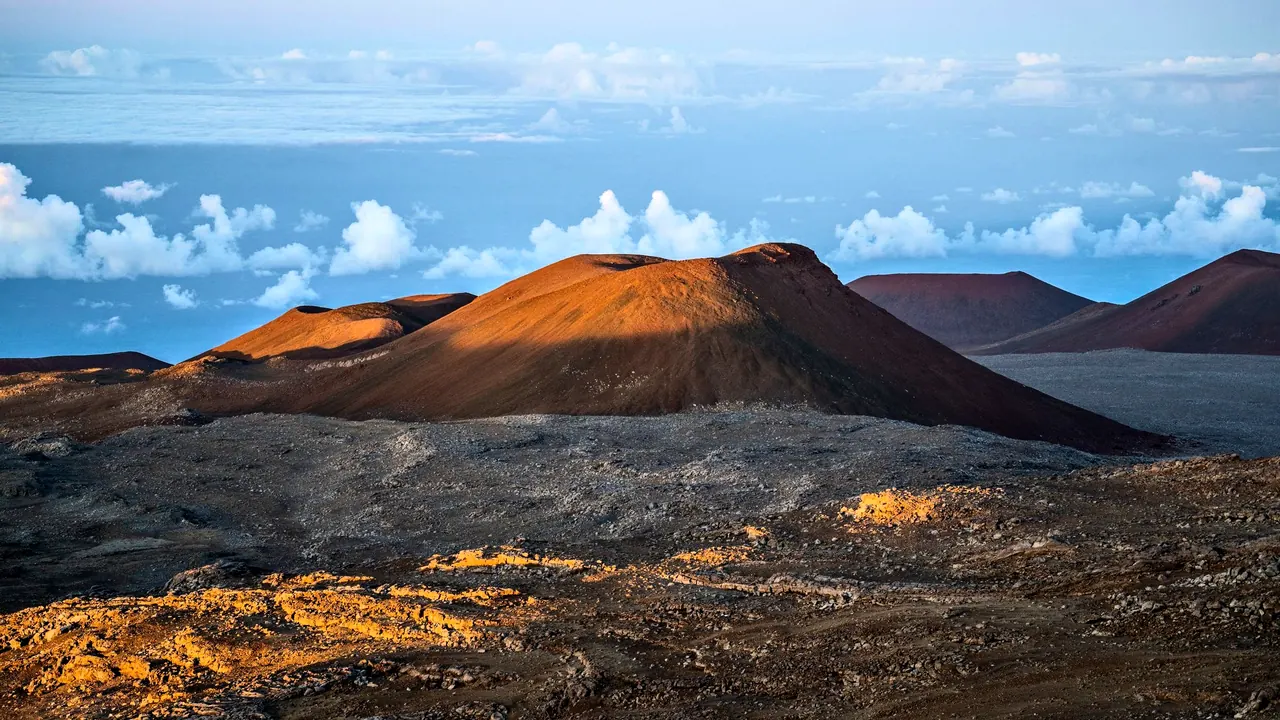
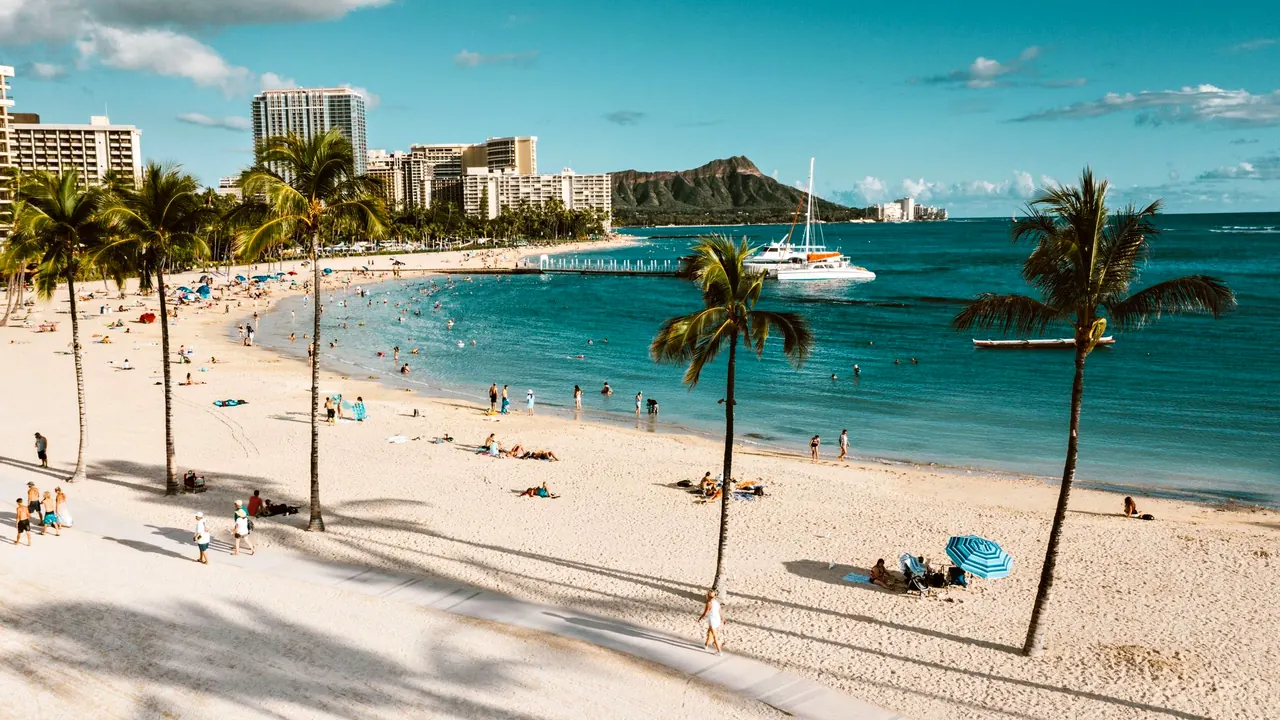
Photos: Big Island by Tim & Martin Klement, Pexels License; Honolulu by Jess Loiterton, Pexels License.
Big Island or Honolulu?
Our verdict in twelve categories, each scored against the same fixed benchmark cities, and the climate month by month, so you can choose for your trip.
Choose Big Island for
- nature and the outdoors
- prices
Big Island suits travellers who want the landscape to be the main event: walking over steaming craters in Hawai'i Volcanoes National Park, watching the sun go down from high on Mauna Kea, snorkelling at night with manta rays. In return it asks for a hire car, long drives and nights split between the Kona side and the volcano side. Its evenings are quiet and there is little else to do, which is exactly what some people want.
Choose Honolulu for
- shopping
- nightlife
- food and drink
Honolulu is the easier pick for a first trip to Hawaii, for families, and for anyone who wants beaches, good food and some life after dark without much driving. Waikiki's sheltered water, the Bishop Museum and Pearl Harbor, the eating in Chinatown and Kaimuki, and rainforest trails close to the sand can all be reached from one base. The price of that convenience is hotel towers and crowded beaches.
Scoreboard
Twelve categories on one fixed scale from 0 to 100. The shaded stretch is the gap between the two.
Your match
Pick a travel style or drag the sliders, and both match scores follow your weighting.
Wins on nature and the outdoors and prices with your weighting.
Wins on shopping and nightlife with your weighting.
What matters to you?
Category by category
What the scores mean for a trip.
Beaches & swimming
Honolulu has the better beaches. Waikiki's calm, reef-sheltered sand is a walk from the hotels and suits gentle swimming and first surf lessons. Kailua and Lanikai are within about forty minutes, and Hanauma Bay is a sheltered first snorkel close to town.
Big Island's good swimming is concentrated on the Kohala Coast, where Hapuna and Kauna'oa are wide pale crescents and Kahalu'u and Honaunau bring turtles close to shore. Most of the rest of its coast is black lava, so a beach trip there means choosing your base with care.
Food & drink
Both share the same local staples of plate lunch, poke and shave ice. Honolulu adds far more depth on top of them: very good Japanese food from ramen counters to izakaya, dim sum and noodle shops in Chinatown, and traditional Hawaiian dishes such as laulau and kalua pig that are easy to find.
Big Island eats more simply. Its strengths are Kona coffee tasted on the farms above Kailua-Kona and Holualoa, the big Hilo market, and Waimea's cooking with upland produce. Away from the costly resort dining rooms, the choice in Kona and Hilo is modest.
Culture & sights
Big Island's history is something you drive out to and stand in. Kamehameha's temple at Pu'ukohola Heiau, the carved wooden figures at the place of refuge at Pu'uhonua o Honaunau, the Kohala petroglyphs and the Cook obelisk on Kealakekua Bay are powerful on their own lava shores. They lie far apart, though, and Hilo's Lyman Museum is modest, so you take them one at a time between beach and volcano days.
Honolulu gathers the same Hawaiian story, and a later one, within a short ride. The palace of the last Hawaiian monarchs and the coral-block Kawaiahao Church are a few streets apart downtown, and the Bishop Museum shows Polynesian craft of a quality nothing on Big Island matches. Pearl Harbor adds the Pacific war, and the Honolulu Museum of Art adds Asian art, so a visitor keen on culture fills two or three full days and needs no car to do it.
Nightlife
Neither place stays up late, but Honolulu at least gives you a choice. You can start with beachfront mai tais in Waikiki, then move on to the cocktail and dive bars around Nuuanu Avenue in Chinatown or the breweries of Kakaako. On Big Island an evening out means a few seafront bars on Ali'i Drive in Kona, and most visitors spend their nights stargazing or out with the mantas instead.
Nature & outdoors
Both are superb for nature, and Big Island has the edge in scale. It has an active volcano, with lava glowing at night when Kilauea erupts, the high, dry summit of Mauna Kea, and the rainforest and waterfalls of the Hamakua Coast, all on one island.
Honolulu's advantage is how close it all is. Diamond Head, the Manoa Falls trail and the steep Koolau ridges sit just behind the beaches, and the reefs, surf and kayaking off Kailua need no long drive.
Day trips
Day trips are limited from both, and what differs is the distance involved. On Oahu the whole loop fits into one easy day, taking in surf-town Haleiwa, the Polynesian Cultural Center and the Byodo-In temple. Big Island's outings to Hilo, ranching Waimea and Hawi at the northern tip mean long stretches of driving, and the days out there are really about the landscape between the towns.
Good for families
Honolulu makes things easier with children. The zoo and aquarium are at the quiet end of Waikiki, Ala Moana and Ko Olina are calm enough for small swimmers, and Sea Life Park, surf lessons and resort kids' clubs keep all ages busy.
Big Island works best for families who like the outdoors. Children can earn a Junior Ranger badge in the volcano park, walk through lava tubes and snorkel the shallows at Kahalu'u. There are few purpose-built attractions, though, and the drives between the Kona and Hilo sides are long.
Getting around
In Honolulu you can do without a car for several days. Waikiki is flat and easy to walk, and TheBus reaches Pearl Harbor, Chinatown and the North Shore, so a car for a day or two is enough to loop the island.
On Big Island a car is essential from the start, and on the Mauna Kea summit road you need a four-wheel drive. The roads are quiet and pleasant, but the volcano park is about two and a half hours from Kona, which is why many visitors split their stay.
Shopping & style
Honolulu is a genuine shopping destination. It has luxury fashion houses along Kalakaua Avenue, the huge open-air Ala Moana Center, and independent and surf labels in Kakaako and Kaimuki, along with ukuleles, Hawaiian quilts and vintage aloha shirts. Big Island's shopping is about buying where things are made: coffee straight from the farms, and koa woodwork and ceramics from the galleries of Holualoa, Hawi and Volcano village.
Affordability
Both are expensive, because almost everything is shipped in. The difference lies in where the money goes. On Big Island a hire car is unavoidable and the Kohala resorts are costly, so you save by staying in a Kona condo or on the Hilo side. In Honolulu you can do without a car thanks to the cheap bus, though Waikiki rooms and resort fees take their share. In both places plate lunches and the free beaches and trails keep the daily costs down.
Live music & performing arts
Honolulu offers more through the year. There are free hula shows at Kuhio Beach and musicians in hotel courtyards, and the restored Hawaii Theatre, the symphony and the opera put on short seasons. Big Island's great moment is the Merrie Monarch Festival in Hilo each spring, the most important hula competition in the world. Outside that week it is mostly luau shows and slack-key guitar in resort lounges.
Wellness & relaxation
Rest feels much the same in both, with lomilomi massage, good resort spas and no thermal baths. The setting is what differs. Big Island offers misty seclusion around Volcano village and retreats in the Puna rainforest. In Honolulu you get dawn yoga on the sand at Waikiki, but because Waikiki is so dense, real quiet means basing yourself at Kahala, Ko Olina or on the windward side.
When should you go?
Pick your month. The climate figures are measured averages, not a forecast.
Big Island in July
Honolulu in July
Daytime high, °C
Rainfall in the month, mm
Where the figures come from
Big Island has no rain gauge within 25 km of the centre, so its rainfall comes from a gridded climate dataset read at the destination rather than from a gauge further away.
Temperature and rainfall are climate normals, averaged over the years shown. Big Island: 2006-2020 (rainfall 1991-2020) normals, Kailua Kona / Mahaiula (12.1 km from centre). Honolulu: 1991-2020 (sunshine 1981-2010) normals, Honolulu International Airport (10.1 km from centre).
Both destinations are warm all year. Daytime highs run from about 27°C in winter to around 30°C in late summer, and the sea is warm enough for swimming in every month. The real difference is rain. Where Big Island's figures are measured, it rains steadily all year and most heavily in April and May, when monthly totals pass 200mm. That is why beach stays gather on the drier, sunnier Kohala Coast, and winter swells make the north and west shores rough as well.
Honolulu is much drier, above all from April to September, when monthly rain stays around 20mm or less and the days are long and sunny. In high summer highs reach 31°C, so street walks are best done early or late. From November to March brief showers return and the exposed coasts get bigger surf, but it stays pleasant for both the beach and the town.
Which traveller are you?
For an outdoors trip, Big Island is the stronger choice. Here you walk across active volcanic ground, stargaze from the slopes of Mauna Kea, look down into Waipio Valley and snorkel with mantas at night, and the sheer scale of it repays the long drives.
On a family trip with young children, Honolulu is easier. Calm, reef-protected water, the zoo and aquarium in Waikiki, the Ko Olina lagoons and kids' clubs all sit close together, and you avoid the long car journeys that Big Island's distances force on small passengers.
On a food and nightlife trip, Honolulu wins clearly. It has Japanese counters, dim sum in Chinatown and local eating in Kaimuki, then cocktail bars, Kakaako breweries and some dance nights, while Big Island's evenings end soon after a sunset drink in Kona.
Before you go
| Measure | Big Island | Honolulu |
|---|---|---|
| Currency | US Dollar (USD) | US Dollar (USD) |
| Sockets | AB120 V, 60 Hz | AB120 V, 60 Hz |
| Driving side | Right | Right |
| Time zone | UTC-10 | UTC-10 |
| Emergency number | 911 | 911 |
| Elevation | - | 12 m |
| Main airport | Ellison Onizuka Kona International Airport at Keāhole (KOA)20 non-stop destinations | Daniel K. Inouye International Airport (HNL)7 km from centre56 non-stop destinations |
| Public holidays this year | 13 days | 13 days |
By the numbers
| Measure | Big Island | Honolulu |
|---|---|---|
| Population | 198,449 | 350,964 |
| People per km² | 19 | 1,981 |
| Museums within 10 km | - | 12 |
| UNESCO World Heritage sites within 50 km | - | 0 |
| Swim season, months above 21 °C | 12 months | 12 months |
Where else could you go?
Every comparison below shares a destination with this one, so you can follow Big Island or Honolulu somewhere new.
- Mauivs Big Island
- Mauivs Honolulu
- Kauaivs Honolulu
- Oahuvs Big Island
- Kauaivs Big Island
- Los Angelesvs Honolulu