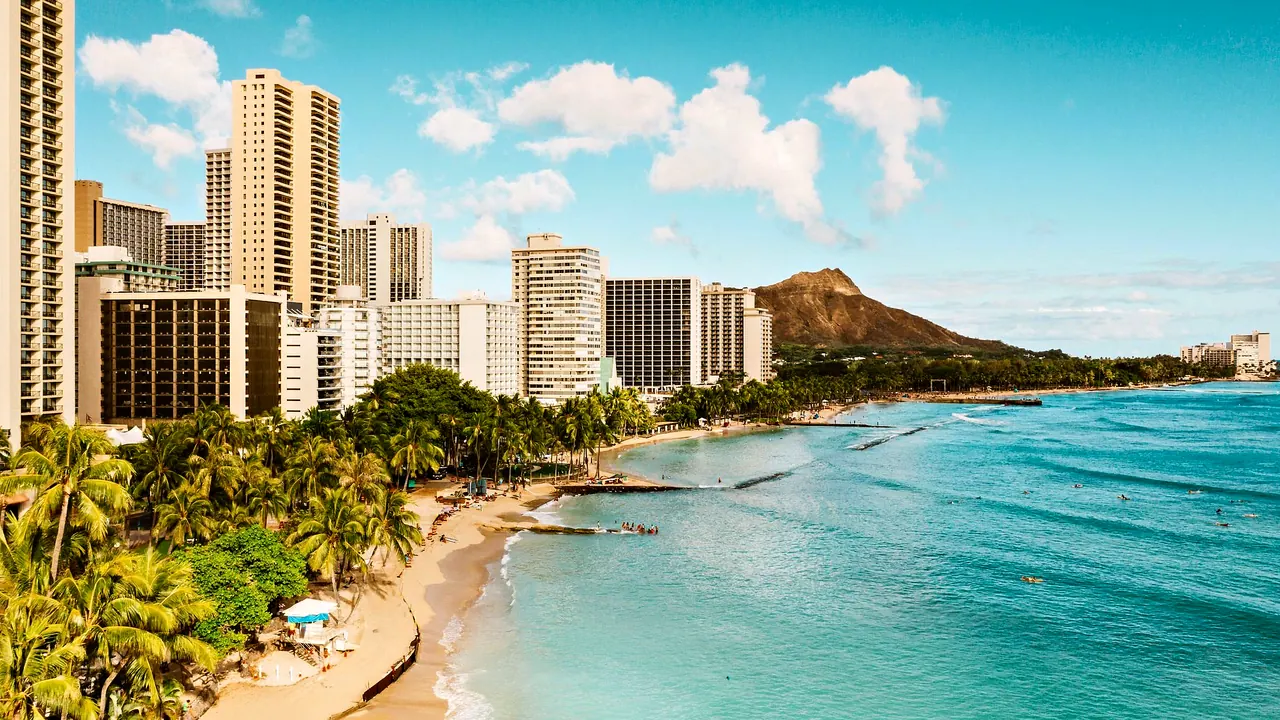
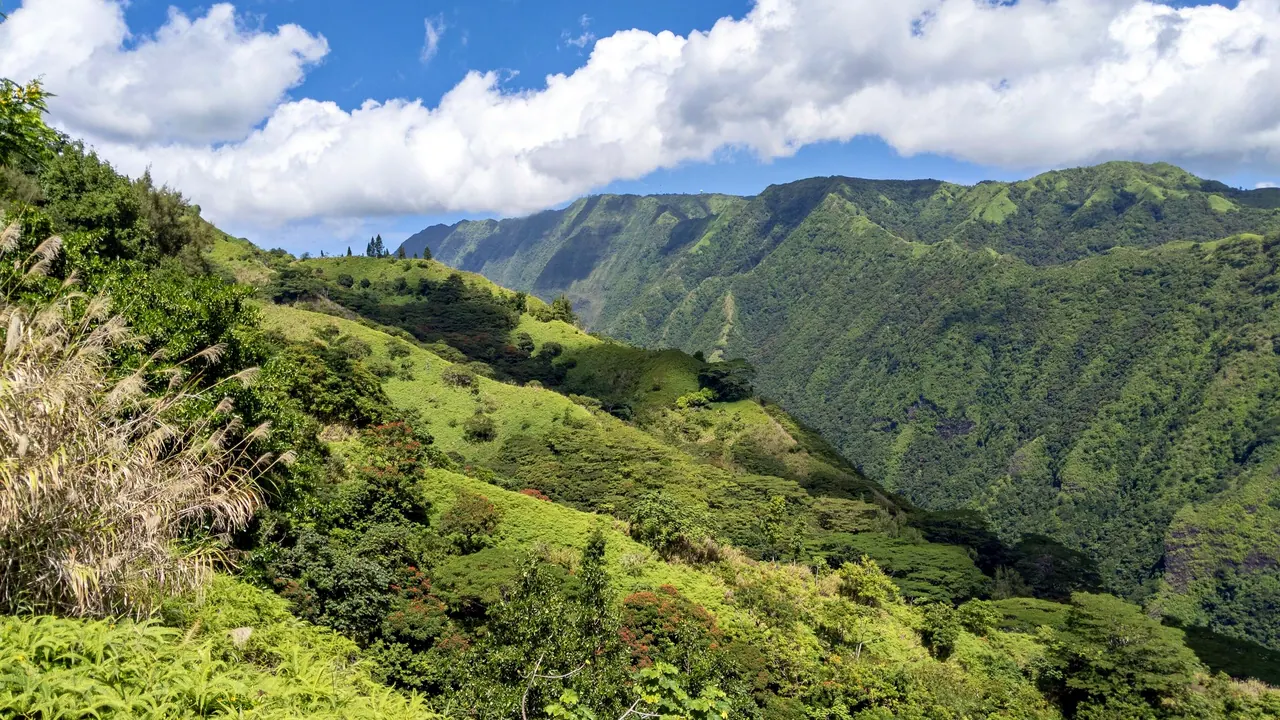
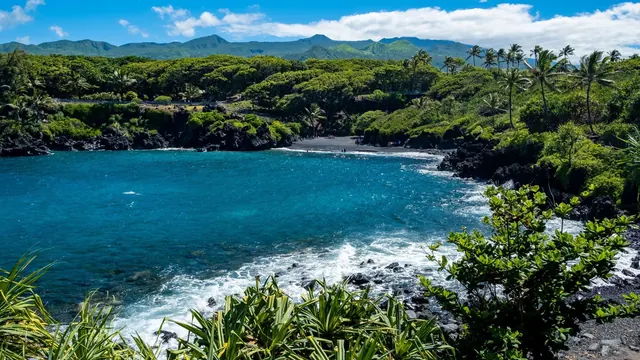
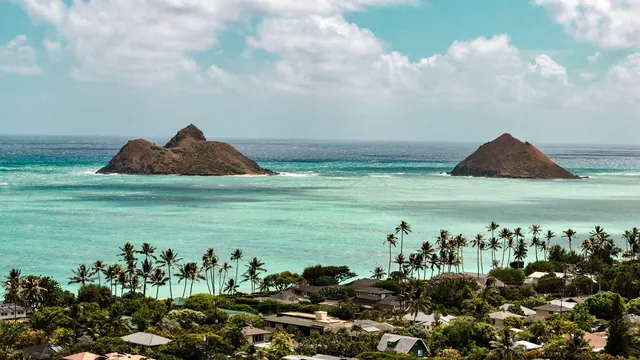
Photos: Hawaii by Jess Loiterton, Pexels License; Tahiti by Matthew Dillon from Hollywood, CA, USA, CC BY 2.0, cropped.
Hawaii or Tahiti?
Our verdict in twelve categories, each scored against the same fixed benchmark cities, and the climate month by month, so you can choose for your trip.
Choose Hawaii for
- families
- culture and sights
- beaches
Hawaii is the stronger all-round choice, especially for a first big island trip or one with children. It has better beaches, more to eat, more culture and many more things built for visitors, and you can choose your island to suit the trip: Oahu for a city base with Waikiki and Honolulu's museums, Maui or the Big Island for resort coasts and volcanoes, Kauai for cliffs and long hikes.
Choose Tahiti for
- day trips
- prices
Tahiti makes more sense as the way into French Polynesia than as a destination on its own. It suits travellers who want warm lagoon water, a mix of Polynesian and French life with baguettes and roulottes, and a wild, mountainous interior with few people on it, and who are happy to spend their beach days on Moorea or the islands further out. It is quieter and less developed than Hawaii, and that is most of its appeal.
Scoreboard
Twelve categories on one fixed scale from 0 to 100. The shaded stretch is the gap between the two.
Your match
Pick a travel style or drag the sliders, and both match scores follow your weighting.
Wins on families and culture and sights with your weighting.
Wins on day trips and prices with your weighting.
What matters to you?
Category by category
What the scores mean for a trip.
Beaches & swimming
Hawaii has far more and far better beaches. The windward sands of Lanikai and Kailua, the resort bays of Wailea and Kaanapali and the white crescent of Hapuna against black lava give a choice that Tahiti cannot match. Because the swell moves between north and south shores with the seasons, there is always a calm coast somewhere.
On Tahiti the water matters more than the sand. The lagoon is warmer than Hawaii's and very calm inside the reef, but the main island's beaches are small, many of them black volcanic sand, and the pale-sand stretches near Punaauia are limited. Most visitors keep their real beach days for Moorea.
Food & drink
Hawaii eats better, mostly because of Honolulu. Ramen counters, izakaya, Korean barbecue and dim sum in Chinatown sit beside plate lunches, poke counters and malasadas, and modern island cooking adds another layer. Kona coffee at its source is a bonus on the Big Island.
Tahiti's food is simpler but has its own character. Poisson cru, the roulottes on the Papeete waterfront at Place Vaiete and French bakeries in every village give a Polynesian and French mix you will not find in Hawaii, but the restaurant choice is small.
Culture & sights
Hawaii has more history you can visit. Iolani Palace, the Bishop Museum and the USS Arizona memorial at Pearl Harbor are among the most visited sites in the Pacific, and the Big Island adds Puuhonua o Honaunau, heiau temples and petroglyph fields.
Tahiti's sights take a day or two: the Musée de Tahiti et des Îles at Punaauia, the marae at Arahurahu and Pointe Venus, where Cook watched the transit of Venus. Papeete has little old architecture, and Hawaii's towns have little more, so neither suits a trip built around old towns.
Nightlife
Neither is chosen for its nights, but Honolulu gives you more options. Chinatown's cocktail and dive bars and Waikiki's sunset lounges make for a proper evening out. Tahiti's going out comes down to a few waterfront bars and clubs in Papeete, busiest at weekends with locals and sailors, and the hotel bar everywhere else.
Nature & outdoors
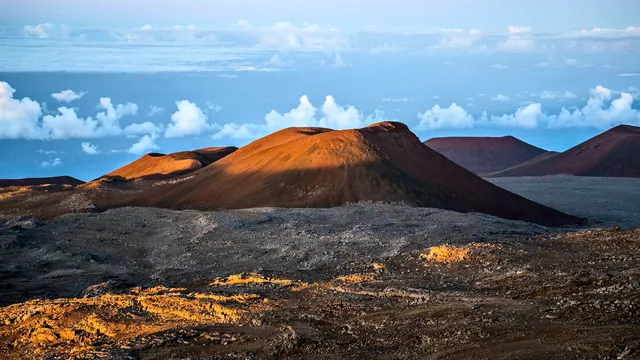
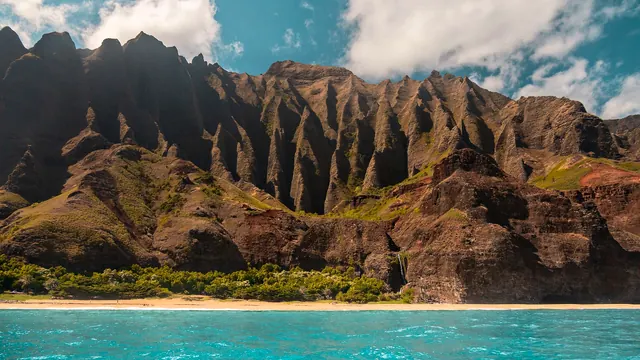
Both are outstanding, but the landscapes differ. Hawaii spreads its scenery across several islands: Kilauea's active crater on the Big Island, the Na Pali cliffs and Waimea Canyon on Kauai, and the crater of Haleakala above the clouds on Maui. Its trails, roads and lookouts are easy for independent visitors to reach.
Tahiti puts its wildness into one high island, with ridges above 2,000m, rainforest valleys like the Papenoo, and ridge climbs often best done with a guide. Teahupo'o's wave and diving with sharks in the passes are its signature sights at sea. Whale seasons fall at opposite times of year, roughly December to April off Maui and July to October off Tahiti.
Day trips
The two are close here. Tahiti has the better single outing: Moorea, about half an hour by ferry, makes a full day of bays, pineapple plantations and lagoon, with Tahiti Iti and Teahupo'o as a second drive.
Hawaii's days out are smaller places: Haleiwa and Kailua from Honolulu, Hilo and Waimea on the Big Island, Paia and Makawao on Maui. In both, the better-known islands are a flight away and work best as stays of their own.
Good for families
Hawaii is much easier with children. Ko Olina's lagoons and Maui's south shore bays give shallow, calm swimming, and Honolulu has the Waikiki Aquarium, the zoo and the Polynesian Cultural Center for days off the beach. Resorts with kids' clubs make the neighbour islands simple too.
Tahiti is safe and friendly to families, and its warm lagoons suit first snorkels, but there is no zoo, aquarium or theme park. A family trip there means a slow resort stay, with waterfalls and canoe outings for older children.
Getting around
Hawaii has one advantage: on Oahu you can manage without a car, since Waikiki is walkable and the island buses reach most of the coast. On the other islands you need a hire car, and drives such as the Road to Hana are slow.
On Tahiti a car is close to essential from the start. The buses are of little use to visitors, though the single coastal road makes it hard to get lost. The frequent ferries from Papeete make Moorea easier to reach than any second Hawaiian island, which needs a flight.
Shopping & style
Honolulu is a real shopping city, with the luxury labels on Kalakaua Avenue, the big malls near Ala Moana, and aloha shirts, koa wood and Niihau shell lei to take home. Tahiti's shopping is mainly about one thing, black pearls, best compared among Papeete's jewellers, plus pareos, carvings and monoi oil from the upper floor of the Marché de Papeete.
Affordability
Both are among the most expensive island destinations, and neither is cheap at any time of year. Nearly everything is shipped in, so hotels, meals and car hire cost a lot in both places.
The ways to spend less are different. In Hawaii, plate lunches, poke counters, Oahu's cheap buses and a condo in Waikiki rather than a resort help. On Tahiti, family-run pensions and the roulottes where local people eat are the main savings.
Live music & performing arts
Hawaii has more live performance. Hula is taught across the islands, the Merrie Monarch Festival in Hilo each spring is the world's foremost hula competition, and slack-key guitar plays in hotel lounges at sunset. Honolulu adds the restored Hawaii Theatre, a symphony and a small opera season.
Tahiti's ori Tahiti dance, with its fast hips and toere drums, peaks at the Heiva in July, a festival of real cultural weight. For the rest of the year it is mostly hotel dinner shows, and formal theatre and classical music are almost absent.
Wellness & relaxation
Neither has a bathing tradition, so both rely on resort spas. Hawaii has more of them, in Wailea, Kapalua, Poipu and on the Kohala Coast, with lomilomi massage almost everywhere, and Kauai's north shore draws yoga retreats.
Tahiti's equivalent is taurumi, a firm massage with tiare-scented monoi oil, given at lagoon-facing spas around Punaauia. For real quiet, the villages of Tahiti Iti or the islands further out suit better than the busy west coast.
When should you go?
Pick your month. The climate figures are measured averages, not a forecast.
Hawaii in July
Tahiti in July
Daytime high, °C
Rainfall in the month, mm
Temperature and rainfall are climate normals, averaged over the years shown. Hawaii: 1991-2020 (sunshine 1981-2010) normals, Honolulu International Airport (10 km from centre). Tahiti: 1991-2020 normals, Tahiti-Faaa (5.3 km from centre).
Both are warm enough for the beach every month, but the rain falls very differently. Hawaii's figures come from the dry leeward resort coasts where most visitors stay, and there November to March brings some showers while April to September is dry and very sunny. The windward side, such as the Hamakua coast and around Hilo, is far wetter and greener whatever the month. June to September is the hottest stretch, reaching about 32°C in August, which makes midday walks tiring. The sea is coolest from January to April at about 24°C, still pleasant for swimming, and warmest from August to October.
Tahiti is hot all year, so the rain decides when to go. December to February is properly wet, with about 280mm in December and less sun. July and August are the driest months at about 43mm, and May to October is best for hiking and clear lagoon days, though even then there is less sunshine than in a Hawaiian summer. From November to July the sea is warmer than Hawaii's, reaching about 29°C from February to April. In August and September it is slightly cooler than Hawaii's, and in October the two are level.
Which traveller are you?
On a beach and sun trip, Hawaii is the safer choice. Base yourself on a single island, Oahu or Maui say, and you can try a different beach every day in any season, because one coast is always calm. On Tahiti the lagoon is lovely, but proper beach days mean the ferry to Moorea.
On a family trip with children, Hawaii makes the days far easier to fill. Between swims there are lava fields and crater rims on the Big Island and whale-watching boats off Maui in winter. Tahiti has little built for children, so the lagoon is most of the programme.
On a culture and arts trip, Hawaii gives you more to fill the days, with royal and Pacific history gathered in Honolulu and a living hula tradition. Tahiti's museum and marae are soon seen, so a trip built around them only makes sense for the Heiva in July.
Before you go
| Measure | Hawaii | Tahiti |
|---|---|---|
| Official language | - | French |
| Currency | US Dollar (USD) | CFP Franc (XPF) |
| Sockets | AB120 V, 60 Hz | - |
| Driving side | Right | Right |
| Time zone | UTC-10 | UTC-10 |
| Emergency number | 911 | 112 |
| Main airport | Daniel K. Inouye International Airport (HNL)56 non-stop destinations | Fa'a'ā International Airport (PPT)30 non-stop destinations |
| Public holidays this year | 13 days | 16 days |
By the numbers
| Measure | Hawaii | Tahiti |
|---|---|---|
| Population | 1,455,271 | 178,133 |
| People per km² | - | 171 |
| Swim season, months above 21 °C | 12 months | 12 months |
Where else could you go?
Every comparison below shares a destination with this one, so you can follow Hawaii or Tahiti somewhere new.
- Mooreavs Tahiti
- Bora Boravs Tahiti
- Cook Islandsvs Tahiti
- American Samoavs Tahiti
- Mamanuca Islandsvs Tahiti
- Californiavs Hawaii