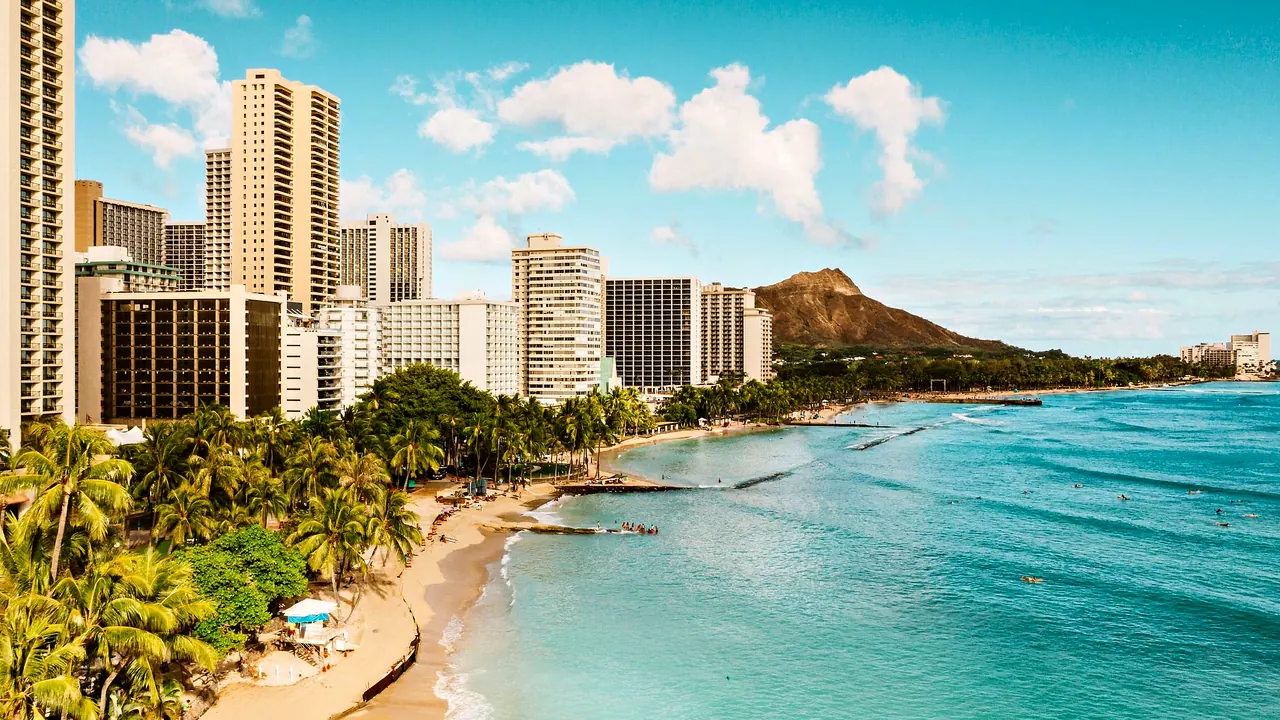
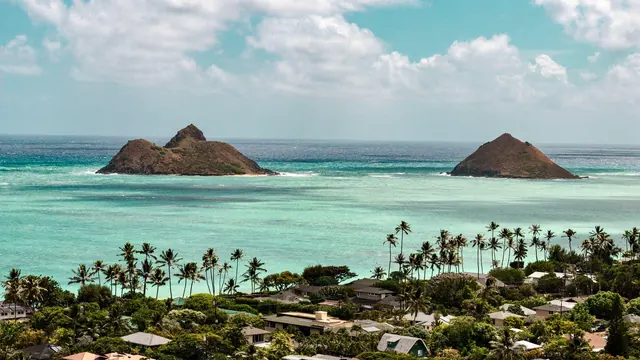
Photos: Hawaii by Jess Loiterton, Pexels License.
Galápagos or Hawaii?
Our verdict in twelve categories, each scored against the same fixed benchmark cities, and the climate month by month, so you can choose for your trip.
Choose Galápagos for
- nature and the outdoors
- prices
Galápagos is the choice for travellers who want wildlife above everything else and accept a trip organised around it. Sea lions on the harbour benches, tortoises in the Santa Cruz highlands and hammerheads off the far northern islands are the point of going. A live-aboard cruise or a run of guided boat trips gives you close encounters you won't find anywhere else. In return you get plain food, quiet evenings and early starts.
Choose Hawaii for
- shopping
- live music and the arts
- food and drink
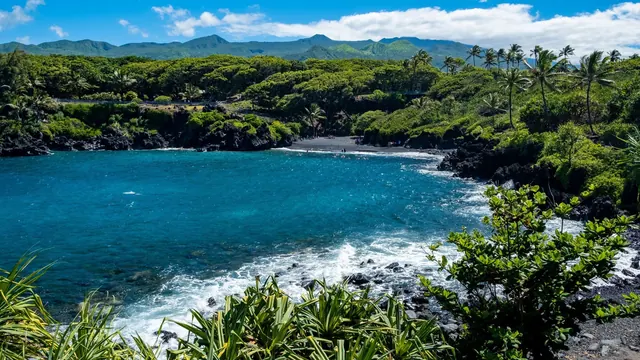
If you want a broader vacation centred on the sea, Hawaii gives you far more to fill the hours between outings. There are warm beaches on every island, a real food culture in Honolulu, hula and slack-key music, resort spas and calm lagoons for children, all alongside volcanoes and sea cliffs. It suits couples, families and mixed groups who want comfort and variety as much as nature.
Scoreboard
Twelve categories on one fixed scale from 0 to 100. The shaded stretch is the gap between the two.
Your match
Pick a travel style or drag the sliders, and both match scores follow your weighting.
Wins on nature and the outdoors and prices with your weighting.
Wins on shopping and live music and the arts with your weighting.
What matters to you?
Category by category
What the scores mean for a trip.
Beaches & swimming
Galápagos beaches are lovely to look at, with white powdery sand, black lava and sea lions sharing the shore. They are places for snorkelling and watching wildlife, though, not long days on a towel. The best are Playa Mansa at the end of Tortuga Bay and the long town beach at Puerto Villamil, and from June the water is cool enough that many swimmers want a wetsuit.
Hawaii is a true beach destination, and the sand is at the centre of most stays. Waikiki's gentle surf, the quieter windward bays at Lanikai and Kailua and the resort shores of Wailea and Kaanapali each feel different. Whatever the season, some coast is calm, as long as you stick to lifeguarded or reef-sheltered spots.
Food & drink
In Galápagos you eat fish, ceviche and spiny lobster in season, best at the evening grill kiosks in Puerto Ayora. Beyond seafood the menus repeat, because nearly everything is shipped in from the mainland. Hawaii has a cuisine of its own, blending Hawaiian, Japanese, Korean, Filipino and Portuguese cooking into plate lunches, poke and kalua pork.
Honolulu's Chinatown and Kapahulu add ramen, dim sum and modern island cooking. On the Big Island you can drink Kona coffee on the slopes where it grows, a small pleasure Galápagos has nothing to match.
Culture & sights
In Galápagos, culture means science: the Charles Darwin Research Station and its tortoise programme, the interpretation centre on San Cristóbal, and a few traces of a penal colony and whalers on Isabela and Floreana. The towns themselves have little to look at.
Hawaii has a deeper heritage of its own. In Honolulu there are Iolani Palace, the Pacific collections of the Bishop Museum and the Pearl Harbor memorials, and on the Big Island there are the place of refuge and the heiau temples. Neither suits a trip built around museums and old streets, but Hawaii fills several days where Galápagos fills an afternoon.
Nightlife
Galápagos evenings end early. Puerto Ayora has a few waterfront bars and a modest place to dance at weekends, and the main entertainment is sea lions asleep on the harbour benches. In Honolulu you can have a proper night out, with sunset lounges in Waikiki and cocktail and dive bars around Chinatown, although away from Oahu evenings also settle into sunset drinks and an early night.
Nature & outdoors
Both are volcanic islands of world standing, but they reward different things. Galápagos is about wildlife within arm's reach: dancing boobies, frigatebird colonies on North Seymour, waved albatrosses on Española, marine iguanas and giant tortoises. In the water you meet penguins, sea lions, and hammerheads at Gordon Rocks. The cost is a park where you walk fixed trails with a guide and have little freedom to wander.
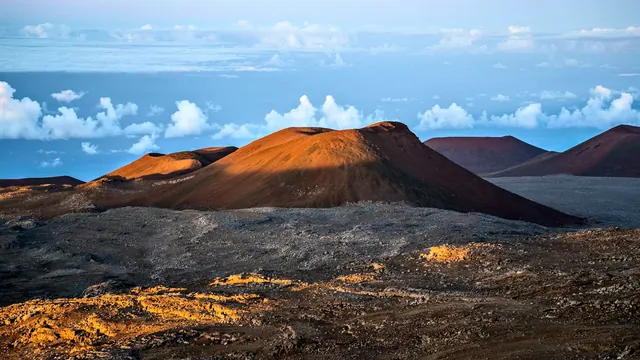
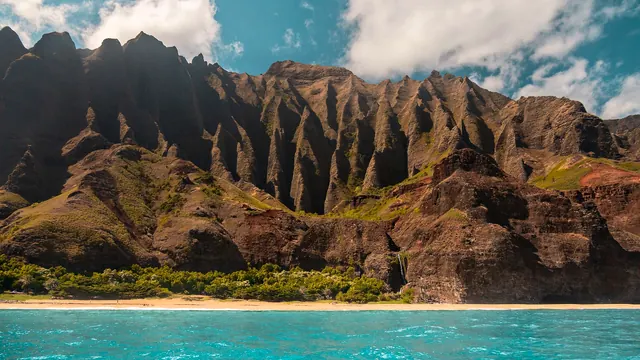
Hawaii is stronger on landscape, and you can explore it on your own: Kilauea's crater rim, Haleakala above the clouds, the Na Pali cliffs from the Kalalau Trail and the red gorge of Waimea Canyon. Its marine life is excellent too, from green turtles to winter humpbacks and Kona's manta rays. Still, the close encounters with fearless animals put Galápagos ahead.
Day trips
From a land base in Galápagos, day trips are boat outings to wildlife sites or a two-hour crossing to the small port towns of Isabela or San Cristóbal, and there are no historic towns to visit. Hawaii gives a little more variety on each island: the surf town of Haleiwa, Hilo's old waterfront, the ranching town of Waimea, Maui's upcountry towns and the ferry to Lanai. Hopping between the main islands still means a flight.
Good for families
Galápagos suits children old enough to snorkel and walk for a few hours, and for them sea lion pups and the tortoise breeding centres can be unforgettable. With toddlers it is hard work, because of the rough speedboat crossings, the early starts and the lack of anything built for children.
Hawaii is far easier at every age. The lagoons at Ko Olina and the bays of Maui's south shore are shallow and calm. Honolulu adds an aquarium, a zoo and the Polynesian Cultural Center, and the resorts on Maui and the Big Island have pools and kids' clubs.
Getting around
The hard part in both is moving between islands, but Galápagos makes it harder. Speedboats take about two hours and the water is often choppy. Most visitor sites can only be reached on a booked guided boat, which is why many people choose a live-aboard cruise instead.
Hawaii lets you get around more independently. On Oahu the buses mean you can manage without a car. On the other islands a hire car takes you to beaches and trailheads at your own pace, although inter-island travel is by plane and roads such as the Road to Hana are slow.
Shopping & style
Shopping in Galápagos means the souvenir shops along Avenida Charles Darwin in Puerto Ayora and a few galleries, and Ecuadorian crafts are better bought on the mainland. Honolulu has real shopping, from the luxury labels on Kalakaua Avenue to the malls near Ala Moana. Hawaii also has local goods worth taking home, such as aloha shirts, koa wood, Niihau shell lei and Kona coffee.
Affordability
Both are among the most expensive trips of their kind, but the money goes in different places. In Galápagos it goes on flights from the mainland, park entry fees and, above all, guided tours and cruises. You can't avoid those, because most sites need a guide, so staying in a simple guesthouse in Puerto Ayora or Puerto Villamil only saves so much.
In Hawaii most of the cost is beachfront hotels, a hire car and restaurant meals, while the beaches and trails themselves cost little. Plate lunches, poke counters and a condo with a kitchen give you more ways to economise than Galápagos does.
Live music & performing arts
Galápagos has no stage life beyond the occasional local band at a waterfront bar. Hawaii has a living tradition of hula and slack-key guitar. You can hear it at sunset in hotel lounges, and it is at its best at Hilo's Merrie Monarch Festival each spring. Honolulu adds a modest programme of symphony, opera and touring shows, with the restored Hawaii Theatre as its main stage.
Wellness & relaxation
A Galápagos trip is rarely restful, because early starts, choppy crossings and guided walks fill the days. Only the sandy streets of Puerto Villamil and a few lodge spas give real calm. Hawaii is better for unwinding, with large resort spas at Wailea, Kapalua, the Kohala Coast and Poipu, lomilomi massage almost everywhere and yoga retreats on Kauai's north shore. It works best away from busy Waikiki.
When should you go?
Pick your month. The climate figures are measured averages, not a forecast.
Galápagos in July
Hawaii in July
Daytime high, °C
Rainfall in the month, mm
Where the figures come from
Galápagos's temperatures are measured 81 km from the centre, at San Cristobal Galapagos.
Galápagos has no rain gauge within 25 km of the centre, so its rainfall comes from a gridded climate dataset read at the destination rather than from a gauge further away.
Temperature and rainfall are climate normals, averaged over the years shown. Galápagos: 1961-1990 (rainfall 1991-2020) normals, San Cristobal Galapagos (81.3 km from centre). Hawaii: 1991-2020 (sunshine 1981-2010) normals, Honolulu International Airport (10 km from centre).
Galápagos has two clear seasons, measured around the port towns where most visitors stay. From January to April the days are at their hottest, the sea is calm and at its warmest, about 27°C in February and March, and there are a few showers. May is the sweet spot: it is almost dry and has the most sunshine of the year, and the sea is still warm. From June the cold current takes over. The air cools, the sea drops to around 22°C so a wetsuit helps for snorkelling, and from July to October there is a little less sun. It stays almost rainless until the new year, and this is when the marine life is richest.
Around Hawaii's main resort coasts the sea is warm enough to swim in any month, between 24°C and 27°C. From October to March showers are more frequent and big swells reach the north shores. April to September is drier and much sunnier, with highs around 31°C in summer that make midday hikes hard work. Hawaii gets clearly more sunshine than Galápagos in every month of the year.
Which traveller are you?
On an outdoors trip, Galápagos wins. Animals that never learned to fear people, guided walks across raw lava and snorkelling with penguins, rays and sea lions make it unmatched for wildlife, even though the park keeps you to fixed trails with a guide.
For a beach and sun trip, Hawaii is the clear choice. The sea is warm every month, the beaches range from the city beach at Waikiki to the white crescents of the Kohala Coast, and the sun is far more reliable. In Galápagos the beaches fill only a few hours.
On a food and nightlife trip, Hawaii is far ahead. Honolulu has poke counters, ramen, Korean barbecue and plate lunches, followed by cocktail bars in Chinatown. Galápagos offers grilled fish at Puerto Ayora's kiosks and a few waterfront bars that are quiet by late evening.
Before you go
| Measure | Galápagos | Hawaii |
|---|---|---|
| Official language | Spanish, Shuar, Northern Quichua | - |
| Currency | US Dollar (USD) | US Dollar (USD) |
| Sockets | AB120 V, 60 Hz | AB120 V, 60 Hz |
| Driving side | Right | Right |
| Time zone | UTC-6 | UTC-10 |
| Emergency number | 911 | 911 |
| Main airport | Seymour Galapagos Ecological Airport (GPS)3 non-stop destinations | Daniel K. Inouye International Airport (HNL)56 non-stop destinations |
| Public holidays this year | 11 days | 13 days |
By the numbers
| Measure | Galápagos | Hawaii |
|---|---|---|
| Population | 25,000 | 1,455,271 |
| Swim season, months above 21 °C | 12 months | 12 months |
Where else could you go?
Every comparison below shares a destination with this one, so you can follow Galápagos or Hawaii somewhere new.
- Californiavs Hawaii
- San Diegovs Hawaii
- Alaskavs Hawaii
- Floridavs Hawaii
- Key Westvs Hawaii
- Florida Keysvs Hawaii