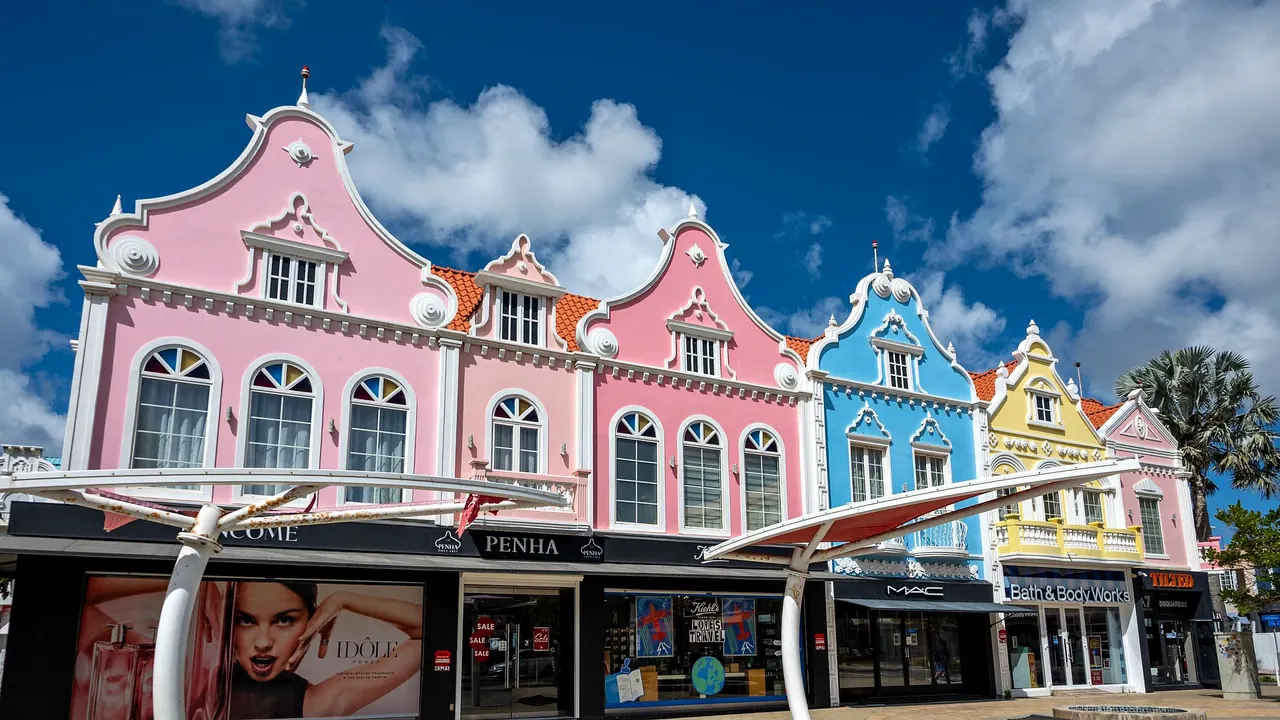
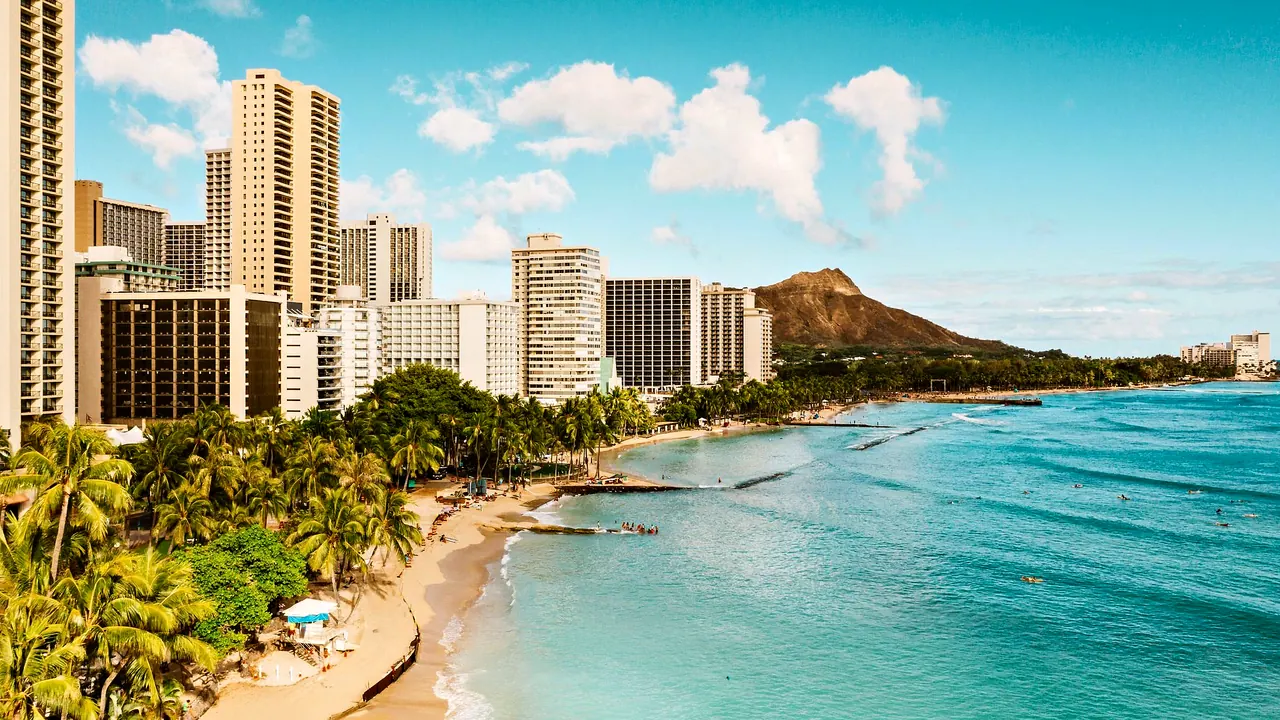
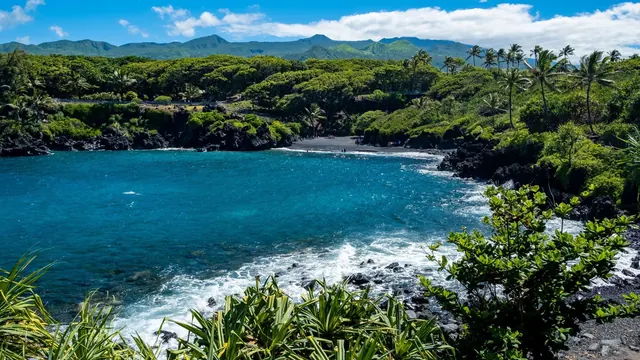
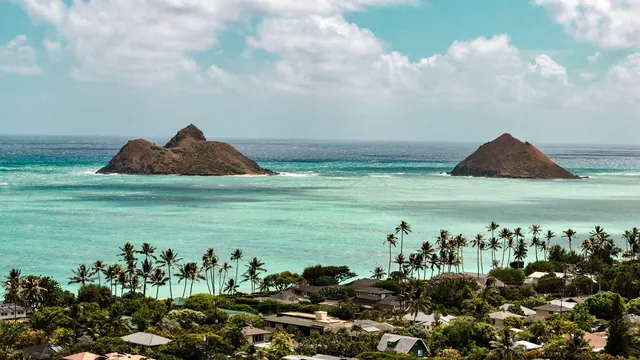
Photos: Aruba by xiquinhosilva, CC BY 4.0, cropped; Hawaii by Jess Loiterton, Pexels License.
Aruba or Hawaii?
Our verdict in twelve categories, each scored against the same fixed benchmark cities, and the climate month by month, so you can choose for your trip.
Choose Aruba for
- getting around
- prices
- nightlife
Aruba suits a vacation that is mostly about the beach and doing very little else. One sheltered coast of calm, clear water, a dry climate, short distances and buses along the hotel strip let you settle in and stop planning. It works well for couples and families who want sun, sand and an easy routine. If you want museums, varied food or a landscape to explore, you will run out of things to do within a few days.
Choose Hawaii for
- nature and the outdoors
- culture and sights
- live music and the arts
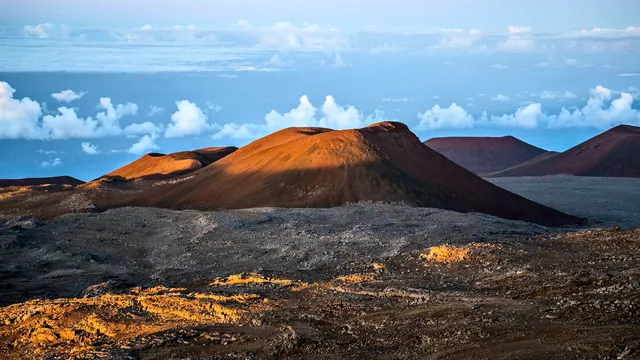
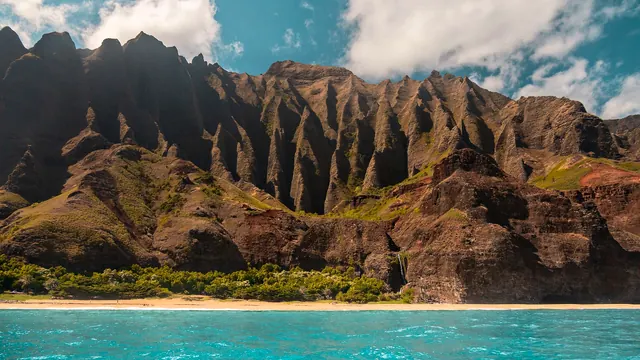
Hawaii is the better choice if you want the beach to be only part of the trip. Volcano trails on the Big Island, the Na Pali cliffs on Kauai and Haleakala's crater on Maui add a lot, and so do Honolulu's food, its palace and Pearl Harbor, and a living hula tradition. In return you will need a hire car on most islands and flights between them, so plan to pick one or two islands rather than see everything.
Scoreboard
Twelve categories on one fixed scale from 0 to 100. The shaded stretch is the gap between the two.
Your match
Pick a travel style or drag the sliders, and both match scores follow your weighting.
Wins on getting around and prices with your weighting.
Wins on nature and the outdoors and culture and sights with your weighting.
What matters to you?
Category by category
What the scores mean for a trip.
Beaches & swimming
Both have excellent beaches, and the difference is in kind. Aruba has one kind of beach, and it is consistently good. The sheltered west coast has soft white sand at Eagle Beach and the busier Palm Beach, the sea stays calm all year, and Baby Beach is an almost enclosed lagoon for gentle swimming.
Hawaii has much more variety. You can choose between the city beach and beginner surf at Waikiki, quieter Lanikai, Maui's resort sands and white crescents against black lava on the Kohala Coast. But you need to read the season: winter swells make the north shores places to watch rather than swim, and currents are strong on exposed beaches all year.
Food & drink
Hawaii eats far better. Its mixed island cooking runs from plate lunches, poke counters and malasadas to kalua pork. Honolulu's Chinatown and Kapahulu add ramen, izakaya and Korean barbecue, and Kona coffee can be drunk where it is grown.
In Aruba, most meals are steaks, seafood grills and international menus along the resort strips. These are competent but rarely memorable. The Dutch Caribbean dishes, such as keshi yena and pastechi, and the fish restaurants on jetties along the south coast are worth searching out.
Culture & sights
Hawaii has much more to see. Iolani Palace was the home of the last Hawaiian monarchs, the Bishop Museum holds the finest collection of Pacific artefacts, and the USS Arizona memorial at Pearl Harbor is a moving visit. Beyond Oahu there are places of refuge, heiau temples and petroglyph fields in the lava of the Big Island.
Aruba's heritage is small: Fort Zoutman and its museum in Oranjestad, the lone Alto Vista Chapel, the ruins of the gold mills and the murals of San Nicolas. Neither destination has much historic architecture, but Hawaii's history can fill several days.
Nightlife
Neither destination is a reason to travel for nightlife, and the evenings carry similar weight. What differs is where they happen. In Aruba nearly everything is on the Palm Beach strip, a short walk from the hotels, with beach bars, late casinos and the party buses that tour the island's bars, which are good fun for groups. Oranjestad has a smaller cluster of bars and clubs that local people fill at weekends.
In Hawaii, going out mostly means Honolulu. Chinatown's cocktail bars, dive bars and dance nights are more interesting than the hotel lounges of Waikiki, but the scene suits an evening out more than a long night. If you stay on Maui, Kauai or the Big Island, expect a sunset drink and an early night before a dawn start.
Nature & outdoors
Hawaii is in a different league. It has active volcano country in Hawaii Volcanoes National Park, the sea cliffs and long trails of Kauai, Haleakala's crater above the clouds and rainforest waterfalls on the Road to Hana. In the sea there are reef turtles, mantas, whales and surf breaks for every level.
Aruba's landscape is dry cactus scrub and boulder fields, with Arikok National Park, its caves and the Natural Pool to explore. Its real outdoor strength is on the water: steady winds for windsurfing and kitesurfing near Fisherman's Huts, and diving on the Antilla wreck.
Day trips
Neither is a base for touring other places, but Hawaii gives a little more. From Honolulu you can spend a day in the surf town of Haleiwa or the beach town of Kailua. The Big Island has Hilo's old waterfront and the ranching town of Waimea, and from Maui a ferry runs to Lanai.
In Aruba, San Nicolas and Savaneta are short drives that fit into an ordinary beach day. Curaçao and Bonaire are a flight away, so they are a separate trip rather than a day out.
Good for families
Hawaii gives families more to build days around. Beyond the lagoons at Ko Olina and Maui's sheltered bays, there are the Waikiki Aquarium, the Honolulu Zoo, the Polynesian Cultural Center, and volcano and whale-watching trips for older children.
Aruba is easier but smaller in scope. The water is calm, English is spoken everywhere and the drives are short, which helps with toddlers. The attractions are modest, though, such as the butterfly farm and the donkey sanctuary, and there is no zoo or aquarium.
Getting around
Aruba is much simpler. Buses run along the west coast between Oranjestad and the beaches, and a hire car for a day or two reaches the rest of the island within about forty minutes. The only real gaps are the rough track to the Natural Pool in Arikok, which needs a four-wheel drive or a tour, and the thin bus service to the southeast. You can sort both out in a single day, and the rest of the stay needs no car at all.
In Hawaii you can manage without a car only in Waikiki and on Oahu's buses. On Maui, Kauai and the Big Island you will need a hire car for the whole stay, routes like the Road to Hana are slow, and every change of island means a flight.
Shopping & style
The difference is between duty-free counters and things made on the islands. Aruba's shopping is mostly jewellery, watches and perfume in the malls near the harbour in Oranjestad, aimed at cruise passengers. Aloe products and Dutch cheese are the local things to take home.
Hawaii offers more on both counts. Kalakaua Avenue and the large malls near Ala Moana cover the international brands, and aloha shirts, koa wood, Niihau shell lei and Hawaiian quilts make souvenirs with real character. On the other islands, Paia and Hanapepe have small galleries.
Affordability
Both are expensive, because nearly everything is imported, and Aruba is only slightly less costly. In Hawaii, hire cars, flights between islands and boat tours add to the bill. Aruba's small size and buses save on transport, but its resort meals and rooms are priced just as high.
You can cut costs in similar ways in both places: food trucks and local eateries, a kitchen of your own, and supermarkets. Hawaii also has poke counters, plate lunches and free beaches and trails.
Live music & performing arts
Hawaii has a real living tradition. Hula is taught across the islands, and Hilo's Merrie Monarch Festival is the world's leading hula competition. You can hear slack-key guitar at sunset, and Honolulu has the Hawaii Theatre and a symphony.
In Aruba, the main event is Carnival, with tumba music and road marches in the weeks before Lent. For the rest of the year there are folk evenings at Fort Zoutman and dinner bands.
Wellness & relaxation
The two are broadly even, and neither has thermal baths or a bathing tradition. Aruba is restful because of its scale: a constant trade wind, adults-only hotels and nowhere far to go, with aloe-based treatments as the local touch.
Hawaii has lomilomi massage, open-air treatment rooms in gardens at Wailea and on the Kohala Coast, and yoga retreats on Kauai's north shore. For a restful stay, though, choose a neighbour island over busy Waikiki.
When should you go?
Pick your month. The climate figures are measured averages, not a forecast.
Aruba in July
Hawaii in July
Daytime high, °C
Rainfall in the month, mm
Where the figures come from
Aruba has no rain gauge within 25 km of the centre, so its rainfall comes from a gridded climate dataset read at the destination rather than from a gauge further away.
Temperature and rainfall are climate normals, averaged over the years shown. Aruba: 2005-2025 (rainfall 1991-2020) normals, Queen Beatrix Airport (8.5 km from centre). Hawaii: 1991-2020 (sunshine 1981-2010) normals, Honolulu International Airport (10 km from centre).
Both are warm enough for the beach in every month. Aruba is hot and dry for most of the year. Afternoons reach 33°C in August and September, when the trade wind is the main relief for anyone walking around Oranjestad. Rain is scarce from February to August, and the wetter spell runs from October to December, peaking at about 76mm in November. Even then the showers are short, and the sea is at its warmest in autumn, around 29°C.
Hawaii's figures describe the drier leeward resort coasts. Windward areas such as Hilo and the Hamakua coast get far more rain all year. On the leeward side, winter afternoons stay in the high twenties, which is pleasant for hiking and sightseeing, but the sea cools to about 24°C from January to April and showers come from November to March. From April to September it is dry, with June down to about 12mm, and the long, sunny days of May to August are the most reliable for the beach.
Which traveller are you?
For an outdoors trip, Hawaii is the clear choice. You can walk across Kilauea's lava fields, hike the Kalalau Trail along the Na Pali Coast, snorkel at night with manta rays off Kona and watch humpbacks off Maui. Aruba has Arikok and steady kitesurfing winds, but much less variety.
On a culture and arts trip, Hawaii gives far more. It has Iolani Palace, the Bishop Museum's Pacific collections, Pearl Harbor, the sacred sites of the Big Island and a living hula tradition led by the Merrie Monarch Festival. In Aruba, the forts, chapels and murals can be seen within a day or two.
For a beach and sun trip with as little effort as possible, Aruba is the simpler option. The west coast stays calm, dry and sunny for most of the year, the beaches are a short bus ride apart, and you never need to plan around seasonal swells or flights between islands.
Before you go
| Measure | Aruba | Hawaii |
|---|---|---|
| Official language | Dutch, Papiamento | - |
| Currency | Aruban Florin (AWG) | US Dollar (USD) |
| Sockets | ABF127 V, 60 Hz | AB120 V, 60 Hz |
| Driving side | Right | Right |
| Time zone | UTC-4 | UTC-10 |
| Emergency number | 911 | 911 |
| Main airport | Queen Beatrix International Airport (AUA)35 non-stop destinations | Daniel K. Inouye International Airport (HNL)56 non-stop destinations |
| Public holidays this year | 12 days | 13 days |
By the numbers
| Measure | Aruba | Hawaii |
|---|---|---|
| Population | 106,739 | 1,455,271 |
| People per km² | 553 | - |
| Swim season, months above 21 °C | 12 months | 12 months |
Where else could you go?
Every comparison below shares a destination with this one, so you can follow Aruba or Hawaii somewhere new.
- Curaçaovs Aruba
- Bonairevs Aruba
- Punta Canavs Aruba
- Puerto Ricovs Aruba
- St Thomasvs Aruba
- Saint-Martinvs Aruba