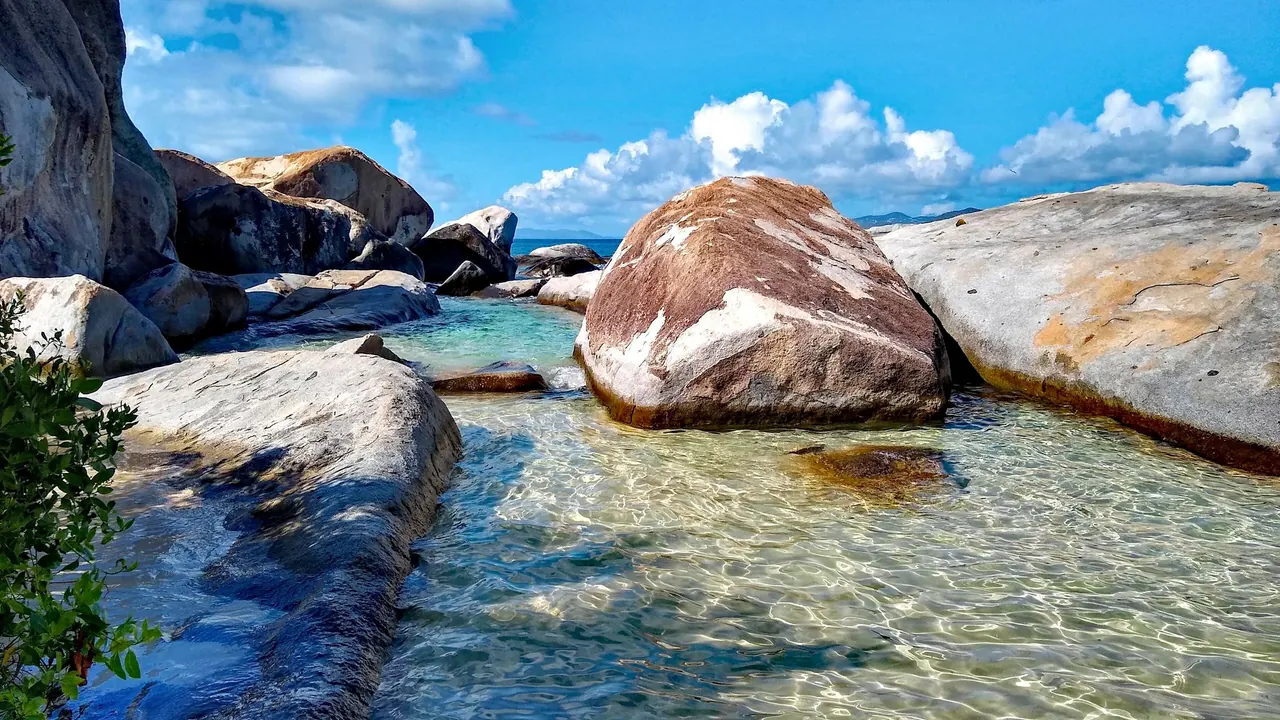
Photos: British Virgin Islands by P. Hughes, CC BY-SA 4.0, cropped.
British Virgin Islands or Culebra?
Our verdict in twelve categories, each scored against the same fixed benchmark cities, and the climate month by month, so you can choose for your trip.
Choose British Virgin Islands for
- nightlife
- wellness
- food and drink
The British Virgin Islands suit travellers who want to move. Dozens of islands sit close together around a sheltered channel, so the best way to spend the trip is on a chartered yacht, sailing short passages between anchorages, beach bars and snorkelling spots. Polished resorts on Virgin Gorda and the private islands add comfort and spa time, and the evenings have more going on. In return, the islands are about as expensive as the Caribbean gets.
Choose Culebra for
- prices
- beaches
Culebra is one small island where you unpack once and stay. Flamenco Beach and the turtle reefs off Tamarindo are the whole point, with a quiet fishing town for supper and an early night. It costs noticeably less, especially if you rent somewhere with a kitchen, but you give up the island-hopping, the resort polish and nearly all nightlife.
Scoreboard
Twelve categories on one fixed scale from 0 to 100. The shaded stretch is the gap between the two.
Your match
Pick a travel style or drag the sliders, and both match scores follow your weighting.
Wins on nightlife and wellness with your weighting.
Wins on prices and beaches with your weighting.
What matters to you?
Category by category
What the scores mean for a trip.
Beaches & swimming
For sand and sea the two are evenly matched, and both have warm, clear water all year. The difference is spread. The British Virgin Islands scatter their great beaches across many islands: Cane Garden Bay on Tortola, the granite pools of The Baths on Virgin Gorda, White Bay on Jost Van Dyke and the empty reef-fringed shores of Anegada. Many are best reached by boat.
Culebra puts its best beach within easy reach. Flamenco's long horseshoe of white sand, with the old tanks in the shallows, is the centrepiece, and the snorkelling beaches near Dewey and Tortuga Beach on Culebrita fill out the week. Facilities and shade are sparse, so you bring your own.
Food & drink
The British Virgin Islands give a food lover more to look forward to. Spiny lobster grilled on Anegada's beaches, rotis and conch fritters in Road Town and the resort dining rooms of Virgin Gorda make a varied, if casual, week.
Culebra is plainer. Dewey's seafood places and food trucks serving mofongo and empanadillas are pleasant, but menus are short, and many visitors keep a cooler from the grocery stores and save a fish dinner for an occasional treat.
Culture & sights
Neither is a sightseeing trip, and either will fill an afternoon at most. What differs is the story. The British Virgin Islands show colonial and plantation history: the Old Government House Museum in Road Town, a working rum distillery at Cane Garden Bay and the Cornish engine house of the Copper Mine on Virgin Gorda. Culebra's past is military, told in a small museum in a former navy powder magazine and in the tanks on Flamenco, alongside the canal and drawbridge of Dewey.
Nightlife
The British Virgin Islands have a real evening life, built around the sailing crowd. Boats gather at Great Harbour and White Bay on Jost Van Dyke and in the Bight at Norman Island for rum punch and music, Trellis Bay holds full-moon parties with fire sculptures, and New Year's Eve on Jost Van Dyke is a regional event.
Culebra has a handful of open-air bars in Dewey that fill at sunset and sometimes have a band at weekends. Most of the island is asleep soon after dinner. Neither has clubs.
Nature & outdoors
Both are about what lies under the water, and they are close in strength. The British Virgin Islands add sailing: the sheltered Sir Francis Drake Channel with its steady trade winds is the reason many come, and the wreck of the RMS Rhone is a celebrated dive. On land there are short forest trails on Sage Mountain, the boulder scramble at The Baths and flamingos on Anegada.
Culebra is more about wildlife close to shore. Much of it is a wildlife refuge, the Luis Pena reserve has some of the healthiest reefs around Puerto Rico, and green turtles and rays are routine sightings from Tamarindo. Seabird colonies and nesting turtles add to it, though the land itself is low scrub.
Day trips
The British Virgin Islands have more places to go for a day. Ferries reach Spanish Town on Virgin Gorda and Great Harbour on Jost Van Dyke, and with a passport you can cross to the Danish warehouses and stepped streets of Charlotte Amalie on St Thomas, or to Cruz Bay and the Annaberg plantation ruins on St John.
From Culebra, outings mostly mean boat trips to uninhabited Culebrita and the cays. Vieques and Fajardo on the main island are within reach, but neither makes a simple day out, so most people stay put.
Good for families
Both work for families who love the water, with calm, shallow bays, snorkelling straight from the beach and an unhurried, safe pace, and neither has anything built for children. The British Virgin Islands are a little easier, with resort beaches on Virgin Gorda and Cane Garden Bay as simple bases, and a charter that older children will remember.
Culebra's waist-deep snorkelling, where children see turtles easily, is a real draw. The ferry or small plane crossing and limited medical care make it better for school-age children than for toddlers.
Getting around
Both take effort, but the effort comes at different points. In the British Virgin Islands the challenge is moving between islands: hire cars on Tortola's steep left-hand roads, ferries to Virgin Gorda and Jost Van Dyke, and fewer links to Anegada. That is why a charter yacht or a single resort makes sense.
On Culebra the hard part is arriving, by a ferry from Ceiba that is often full at weekends or a small plane. Once there, distances are short: Dewey is walkable, vans run to Flamenco and a golf cart covers the rest.
Shopping & style
Neither is a place to shop, though the British Virgin Islands have a little more. Road Town's Main Street sells local art, spices and rum, and the marinas stock sailing gear and resort wear. Serious shoppers cross to the duty-free streets of Charlotte Amalie. Culebra has a few souvenir shops and local artists in Dewey, and anything you really need is best bought before the crossing.
Affordability
Culebra is the gentler bill, though not a cheap one. Prices are at US levels and everything comes by boat, but guesthouses, small inns and rentals with kitchens let you cook, and the beaches and snorkelling cost little.
The British Virgin Islands are among the dearest choices in the region. Resorts and villas are priced for a well-off market, taxis are costly and a yacht charter is a large outlay even when shared. Winter is the most expensive season on both.
Live music & performing arts
Neither has a theatre or concert life, but the British Virgin Islands have a living local sound. Fungi, played by scratch bands on washboards and gourds, turns up at beach bars, and the Emancipation Festival in Road Town and a beach music festival at Cane Garden Bay give the year its occasions. Culebra's live music amounts to a weekend band in Dewey and its annual patron saint festival.
Wellness & relaxation
The British Virgin Islands offer more to a traveller who wants to be looked after. Resort spas with open-air treatment rooms and yoga decks above the sea are found on Virgin Gorda's North Sound and the private islands, which are the most restful stays.
Culebra has no big resorts and only a few independent massage therapists and guesthouse yoga sessions. Its rest comes from the island itself: little traffic, early nights and long empty afternoons.
When should you go?
Pick your month. The climate figures are measured averages, not a forecast.
British Virgin Islands in July
Culebra in July
Daytime high, °C
Rainfall in the month, mm
Where the figures come from
British Virgin Islands's temperatures are measured 40 km from the centre, at C. Amalie / St. Thomas Airport.
British Virgin Islands has no rain gauge within 25 km of the centre, so its rainfall comes from a gridded climate dataset read at the destination rather than from a gauge further away.
Culebra's temperatures are measured 34 km from the centre, at C. Amalie / St. Thomas Airport.
Culebra has no rain gauge within 25 km of the centre, so its rainfall comes from a gridded climate dataset read at the destination rather than from a gauge further away.
Culebra's sunshine is measured 75 km from the centre, at San Juan / Int., Puerto Rico.
Temperature and rainfall are climate normals, averaged over the years shown. British Virgin Islands: 1991-2020 normals, C. Amalie / St. Thomas Airport (39.7 km from centre). Culebra: 1991-2020 normals, C. Amalie / St. Thomas Airport (33.7 km from centre).
The two are almost identical for warmth. Where most visitors stay, daytime highs sit around 29°C from December to March and climb to 32°C through the summer, and the sea is warm enough to swim in every month, peaking at 29°C in late summer and autumn. Neither ever gets cold, but summer afternoons are hot for walking the steep island roads.
Late winter and spring are the driest stretch on both, with February the lowest. Rain builds from August, and the autumn months are the wettest. The British Virgin Islands stay wetter for longer, with November the peak at 154mm and December still damp. Culebra eases sooner in December. Its sunniest month is March, so for the two together, February to April is the safest window.
Which traveller are you?
On a relaxing and wellness trip, the British Virgin Islands do more of the work. A small-island resort takes care of meals, treatments and boat transfers while you read and swim. Culebra's rest is one you make yourself: a rented house, your own cooking and early nights.
For a food and nightlife trip, the British Virgin Islands are the clear choice. Grilled lobster on Anegada, painkillers at Jost Van Dyke's beach bars and dinghy rides between anchorages make up the evenings. Culebra offers a sunset drink in Dewey, then sleep.
On a tight budget, Culebra makes the money go further. One inexpensive ferry gets you there, shared vans reach Flamenco and a mask is all you need for the turtles off Tamarindo. The British Virgin Islands spread their best beaches across separate islands, so most days mean paying for a boat.
Before you go
| Measure | British Virgin Islands | Culebra |
|---|---|---|
| Official language | English | Spanish, English |
| Currency | US Dollar (USD) | US Dollar (USD) |
| Sockets | AB110 V, 60 Hz | AB120 V, 60 Hz |
| Driving side | Left | Right |
| Time zone | UTC-4 | UTC-4 |
| Emergency number | 999 | 911 |
| Main airport | Terrance B. Lettsome International Airport (EIS)8 non-stop destinations | Luis Munoz Marin International Airport (SJU)59 non-stop destinations |
| Public holidays this year | 14 days | 21 days |
By the numbers
| Measure | British Virgin Islands | Culebra |
|---|---|---|
| Population | 39,369 | - |
| People per km² | 257 | - |
| Swim season, months above 21 °C | 12 months | 12 months |
Where else could you go?
Every comparison below shares a destination with this one, so you can follow British Virgin Islands or Culebra somewhere new.
- St Johnvs British Virgin Islands
- Viequesvs Culebra
- St Thomasvs British Virgin Islands
- US Virgin Islandsvs British Virgin Islands
- St Thomasvs Culebra
- US Virgin Islandsvs Culebra