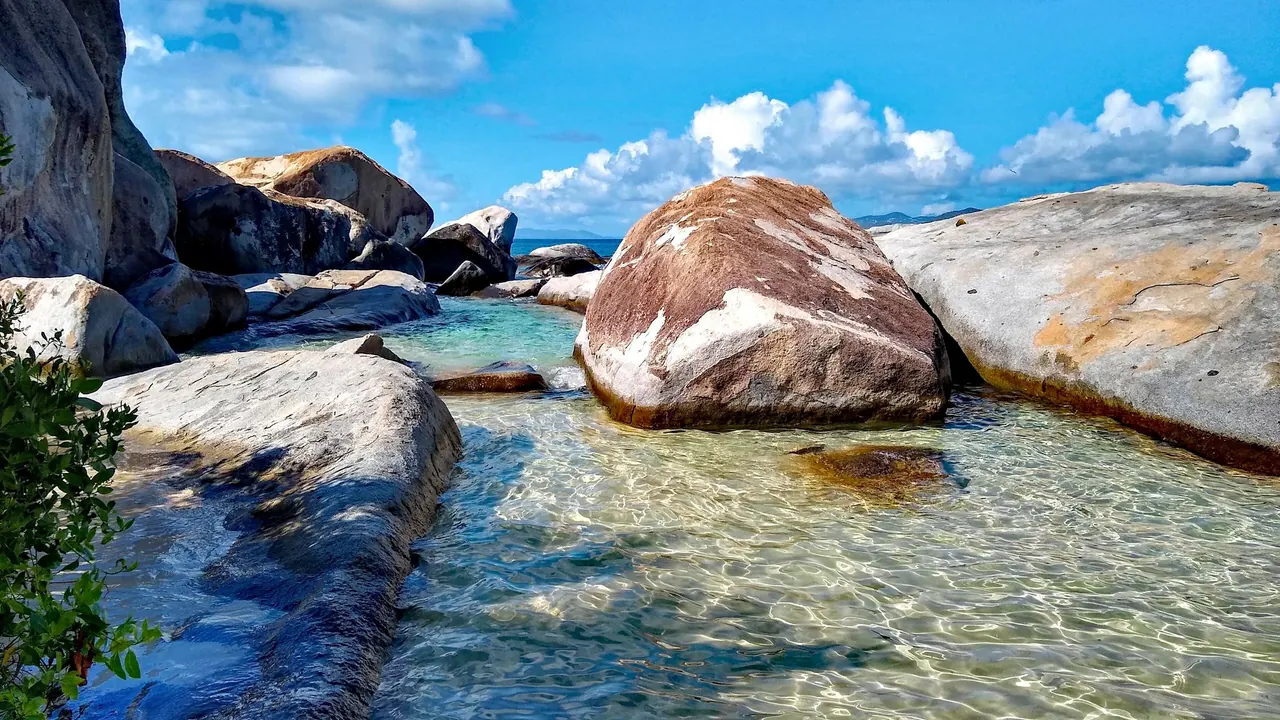
Photos: British Virgin Islands by P. Hughes, CC BY-SA 4.0, cropped.
British Virgin Islands or St Croix?
Our verdict in twelve categories, each scored against the same fixed benchmark cities, and the climate month by month, so you can choose for your trip.
Choose British Virgin Islands for
- wellness
- nightlife
- beaches
The British Virgin Islands suit travellers who want the sea to be the whole trip. Dozens of islands sit close together in sheltered water, so you can sail between them or take ferries, spend each day on a different beach and finish the evening at an anchorage bar. They also offer the more secluded resort stays. The cost is high, and there is very little to see on land.
Choose St Croix for
- culture and sights
- prices
- shopping
St Croix is the better pick if you want beaches and reefs plus a sense of place. Christiansted's Danish waterfront, the forts, the plantation ruins and Crucian cooking at roadside stands give it a history and a local character the British islands mostly lack. It is one island explored by car rather than a chain explored by boat, which costs a little less but means fewer outings beyond it.
Scoreboard
Twelve categories on one fixed scale from 0 to 100. The shaded stretch is the gap between the two.
Your match
Pick a travel style or drag the sliders, and both match scores follow your weighting.
Too close to call, 2 points apart
Wins on wellness and nightlife with your weighting.
Wins on culture and sights and prices with your weighting.
What matters to you?
Category by category
What the scores mean for a trip.
Beaches & swimming
The British Virgin Islands have the larger and more varied beach map. You get the granite boulders and grottoes of The Baths on Virgin Gorda, the classic bay at Cane Garden Bay on Tortola, White Bay on Jost Van Dyke where people wade ashore from their boats, and the empty reef-fringed sands of Anegada. Many of the best are reached by water.
St Croix has fewer beaches, but most can be reached by car. Sandy Point and Rainbow Beach on the west end face the sunset, and at Cane Bay you can snorkel straight from the sand. The exception is Buck Island's white beach, which is a short boat trip away.
Food & drink
St Croix gives you more to eat that is local. Crucian cooking means johnny cakes, saltfish and pates from roadside stands, kallaloo and roti from the island's Indo-Caribbean kitchens, and Christiansted has a proper cluster of restaurants in its old streets. The rum distilleries near Frederiksted add a visit of their own.
In the British islands, meals are mostly beach grills and resort dining rooms. The highlights are Anegada's spiny lobster cooked over oil drums and a painkiller cocktail on Jost Van Dyke, but outside Road Town the choice soon narrows.
Culture & sights
This is where the two differ most. Christiansted's arcaded ochre waterfront, the Steeple Building and Fort Christiansvaern form a national historic site. Frederiksted's red-walled fort, the sugar mills on the hills, the Whim estate and the Columbus landing site at Salt River give St Croix a compact but meaningful story of Danish rule, slavery and sugar.
The British Virgin Islands have the Old Government House Museum in Road Town, the working rum distillery at Cane Garden Bay and the Cornish engine house of the Copper Mine on Virgin Gorda. That is a pleasant afternoon, not a reason to choose them.
Nightlife
Neither island has clubs, but the British Virgin Islands have more going on after dark. The sailing crowd moves by dinghy between bars at Great Harbour, White Bay and the Bight at Norman Island. Trellis Bay holds full-moon parties with fire sculptures, and New Year's Eve on Jost Van Dyke draws boats from across the region.
St Croix is quieter. Evenings centre on the open-air bars along Christiansted's boardwalk and in its old courtyards, and most places close early, except in the Crucian Christmas Festival season.
Nature & outdoors
Both are at their best underwater, but they reward different trips. The British islands are made for sailing among small islands, diving the wreck of the RMS Rhone and snorkelling the Caves at Norman Island. On land you can walk Sage Mountain or scramble through The Baths, or see flamingos on Anegada.
St Croix gives you Buck Island's marked underwater trail through elkhorn coral and a reef wall at Cane Bay close enough to dive from the beach. It also has night kayaking through bioluminescent water at Salt River and leatherback turtles nesting at Sandy Point.
Day trips
Neither offers much here, but from Tortola outings are easier. Ferries run to Virgin Gorda and Jost Van Dyke, Anegada is a short flight away, and Charlotte Amalie and Cruz Bay in the US Virgin Islands are close by if you carry a passport.
St Croix lies about 60km south of the rest of the chain. Apart from moving between Christiansted and Frederiksted, the only real outing is a seaplane or a long boat crossing to St Thomas or St John, which takes a full day.
Good for families
The two are much alike for families. Both have calm, warm water, easy snorkelling and nothing built for children, so no zoos or aquariums. In the British islands, the easiest bases are Cane Garden Bay or a Virgin Gorda resort, and a charter yacht can be a real adventure for older children, though boat transfers need managing with toddlers.
St Croix keeps everything on one island. Turtles, tide pools and a fort to explore add some variety, and American families need no passport. Every outing does mean a drive, though.
Getting around
In the British Virgin Islands you get around by ferry, and on St Croix by hire car, and that shapes each trip more than anything else. In the British islands you plan around sailings, with fewer boats out to Anegada, and drive on the left on Tortola's steep, narrow roads. Many visitors avoid the logistics entirely by chartering a yacht or by staying at one resort.
St Croix is a single island with one road network. Christiansted to Frederiksted is about forty minutes' drive, usually in a left-hand-drive American car kept to the left. Christiansted is pleasant to walk around, but buses are sparse, so reaching beaches and sights spread across the island means driving.
Shopping & style
St Croix has a little more to buy. Christiansted's arcaded streets have jewellers making the Crucian hook bracelet, galleries of Caribbean art and shops selling local rum and hot sauce.
In the British islands, shopping is limited to a few shops on Road Town's Main Street and the marina stores selling sailing gear and swimwear. Shoppers on both islands end up taking the boat to the duty-free streets of St Thomas.
Affordability
St Croix is the cheaper of the two, though only by comparison. In the British Virgin Islands, resorts and villas are priced for a wealthy market, taxis are expensive, and even a shared yacht charter is a big outlay, especially in the winter peak.
St Croix is still costly, because almost everything is shipped in and a hire car adds to every day. Even so, small guesthouses in Christiansted, local food stands and free beaches make a stay there easier to manage.
Live music & performing arts
Both islands have their own scratch-band music, fungi in the British islands and quelbe on St Croix, and neither has a concert or theatre season. St Croix has slightly more to offer: the stilt-walking mocko jumbies, the Crucian Christmas Festival, a small performing arts centre and open-air jazz on the Frederiksted waterfront.
In the British Virgin Islands, the main occasions are the Emancipation Festival in Road Town in late summer and the beach music festival at Cane Garden Bay.
Wellness & relaxation
For a proper rest with some pampering, the British Virgin Islands give more. Neither island has thermal baths or a spa tradition of its own. In the British islands, though, the resorts on Virgin Gorda's North Sound and on the private islands have open-air treatment rooms and yoga on decks above the water. Avoid Tortola around Road Town if you want quiet.
St Croix relies mostly on its slow pace. It has a handful of resort spas and massage studios and the odd yoga class. The real draw is a villa on the east end hills or a stay on the quiet West End, where the evenings end early.
When should you go?
Pick your month. The climate figures are measured averages, not a forecast.
British Virgin Islands in July
St Croix in July
Daytime high, °C
Rainfall in the month, mm
Where the figures come from
British Virgin Islands's temperatures are measured 40 km from the centre, at C. Amalie / St. Thomas Airport.
British Virgin Islands has no rain gauge within 25 km of the centre, so its rainfall comes from a gridded climate dataset read at the destination rather than from a gauge further away.
St Croix has no rain gauge within 25 km of the centre, so its rainfall comes from a gridded climate dataset read at the destination rather than from a gauge further away.
Temperature and rainfall are climate normals, averaged over the years shown. British Virgin Islands: 1991-2020 normals, C. Amalie / St. Thomas Airport (39.7 km from centre). St Croix: 2000-2020 (rainfall 1991-2020) normals, Christiansted, Henry E. Rohlsen Airport (11.5 km from centre).
The two islands share almost the same year. Days are hot in every month, the sea holds around 26°C even in winter, and you can swim whenever you go. Around Tortola the summer is slightly hotter, reaching 32°C. The real difference is rain. Both are driest from February to April, but St Croix is the drier of the two then, with about 34mm in February, so late winter and early spring there bring the most settled beach weather.
From August the wet season sets in on both. St Croix peaks at around 142mm in September, and the British Virgin Islands stay wet later into the year, with November the wettest month at about 154mm and December still damp. For a dry trip, go to either island between January and April. Avoid the late autumn in particular in the British islands.
Which traveller are you?
On a culture and arts trip, St Croix is the one to choose, though its history is compact rather than deep. Its two Danish towns and plantation past give a beach week a day or two of real interest. The British islands have far less to see on land.
For a relaxing and wellness trip, the British Virgin Islands are better, as long as you can afford to stay put. If you pick one quiet resort and travel only by boat, you will find a deeper calm than on St Croix, where most days start with a drive.
For a sailing trip, the British Virgin Islands are the clear choice. The Sir Francis Drake Channel offers short hops, steady trade winds and a different anchorage every night, so the charter becomes the whole vacation. St Croix lies alone to the south, too far out for easy island-hopping.
Before you go
| Measure | British Virgin Islands | St Croix |
|---|---|---|
| Official language | English | English |
| Currency | US Dollar (USD) | US Dollar (USD) |
| Sockets | AB110 V, 60 Hz | - |
| Driving side | Left | Left |
| Time zone | UTC-4 | UTC-4 |
| Emergency number | 999 | 911 |
| Main airport | Terrance B. Lettsome International Airport (EIS)8 non-stop destinations | Henry E. Rohlsen Airport (STX)9 non-stop destinations |
| Public holidays this year | 14 days | 18 days |
By the numbers
| Measure | British Virgin Islands | St Croix |
|---|---|---|
| Population | 39,369 | 41,004 |
| People per km² | 257 | 191 |
| Swim season, months above 21 °C | 12 months | 12 months |
Where else could you go?
Every comparison below shares a destination with this one, so you can follow British Virgin Islands or St Croix somewhere new.
- St Johnvs British Virgin Islands
- St Thomasvs British Virgin Islands
- US Virgin Islandsvs British Virgin Islands
- St Johnvs St Croix
- St Thomasvs St Croix
- Culebravs British Virgin Islands