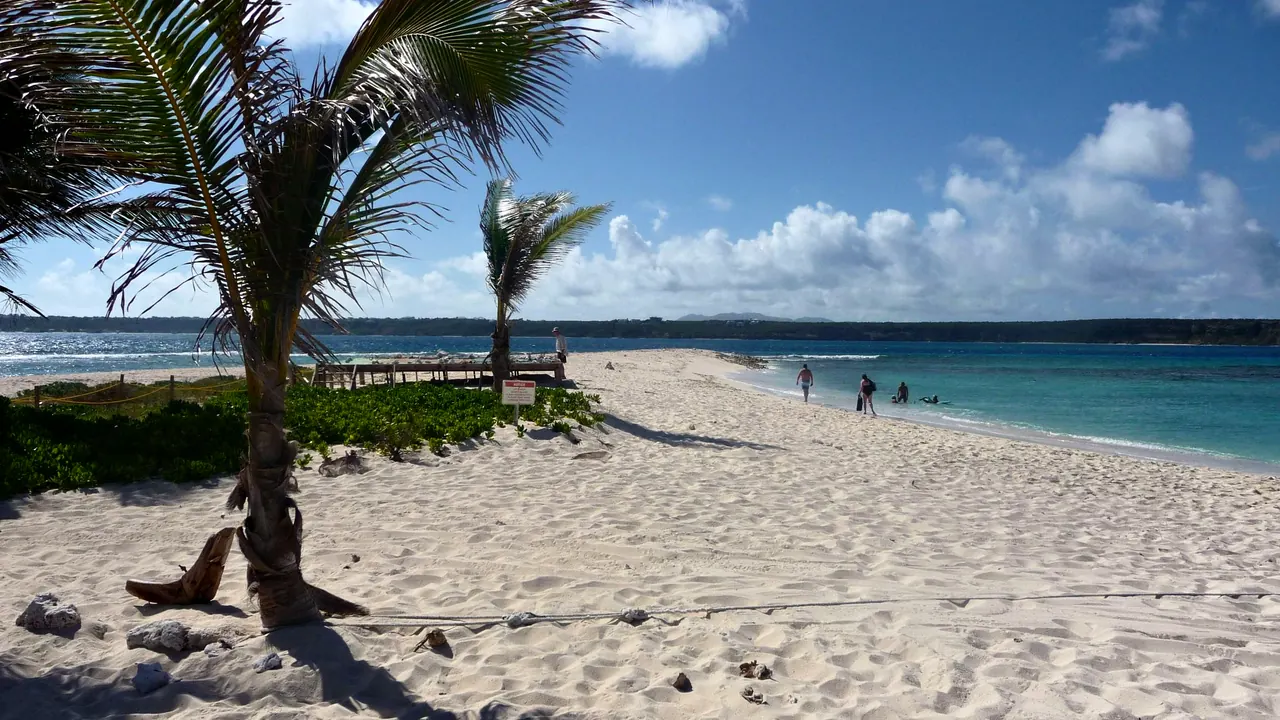
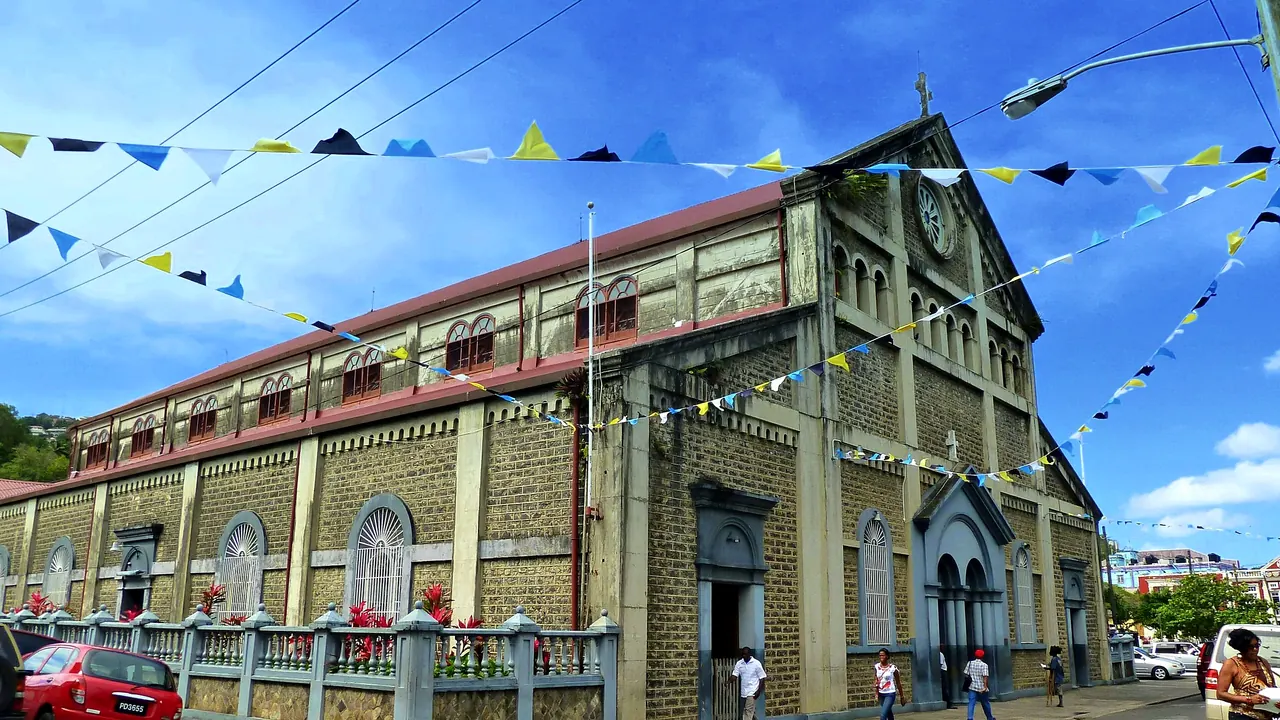
Photos: Anguilla by alljengi, CC BY-SA 2.0, cropped; Castries by Edgar El, CC BY 3.0, cropped.
Anguilla or Castries?
Our verdict in twelve categories, each scored against the same fixed benchmark cities, and the climate month by month, so you can choose for your trip.
Choose Anguilla for
- food and drink
- beaches
- getting around
Anguilla is for travellers who want a trip of sand, sea and long dinners, repeated happily for a week. The flat coral island has the finer and quieter beaches, with no cruise pier and no high-rises, and its beachfront restaurants at the west end and Sandy Ground are the better kitchen of the two. It is expensive, though, and there is little to do away from the shore.
Choose Castries for
- nature and the outdoors
- prices
- shopping
Pick Castries if you want the island itself to be part of the trip. St Lucia is steep and volcanic, and from its capital you can reach the Pitons, rainforest trails, the Sulphur Springs and a ferry to Martinique. There is also a Friday street party in Gros Islet and a market where local food is cheap. The beaches are good rather than outstanding, and the capital is a working port, so most visitors stay in Rodney Bay.
Scoreboard
Twelve categories on one fixed scale from 0 to 100. The shaded stretch is the gap between the two.
Your match
Pick a travel style or drag the sliders, and both match scores follow your weighting.
Wins on food and drink and beaches with your weighting.
Wins on nature and the outdoors and prices with your weighting.
What matters to you?
Category by category
What the scores mean for a trip.
Beaches & swimming
Both have warm, clear Caribbean water, but Anguilla's beaches are in another league. It has powdery white coral sand on more than thirty bays, from Shoal Bay East to the sheltered curve of Maundays Bay, sandbars such as Sandy Island just offshore, and no cruise crowds to share them with.
Castries is a working cruise port, and the beaches beside its airport are handy rather than memorable. The best sand is Reduit Beach in Rodney Bay, a golden curve with gentle water, and Marigot Bay and the coves of Anse Cochon to the south are good for snorkelling. The swimming is good, but you have to travel to it.
Food & drink
Anguilla is the better place for a memorable dinner. Polished beachfront restaurants along the west end and at Sandy Ground make the evening meal the main event. Grilled crayfish and snapper, or ribs from a roadside lolo at the weekend, keep local cooking well represented.
Castries has more everyday food culture: green fig and saltfish, bouyon and roti at the Central Market, and the Friday fish fry in Gros Islet. Beyond that the choice is narrow, and the better restaurants are in the resorts around Rodney Bay. Eating there is cheaper, not better.
Culture & sights
Neither island is a sightseeing destination, but Castries gives you more to look at. The Cathedral Basilica on Derek Walcott Square is a real highlight, with Dunstan St Omer's murals of Black saints in Caribbean colours. The forts and barracks on Morne Fortune and Pigeon Island tell the story of the long fight between Britain and France for the island.
Anguilla's history fits into a morning or two: Wallblake House in The Valley, the Heritage Collection Museum in East End and the Amerindian carvings in Fountain Cavern.
Nightlife
Castries, or rather Rodney Bay and Gros Islet just north of it, has more going on after dark. The Friday jump-up in Gros Islet is a real street party, with sound systems playing soca and dancehall between the fish grills, and Rodney Bay adds a strip of bars and a couple of clubs.
On Anguilla the evening is usually the dinner itself. The beach bars at Sandy Ground and the Sunday afternoon sessions are the exceptions, and there are no clubs at all.
Nature & outdoors
This is where the two differ most. St Lucia is a volcanic island of steep ridges and rainforest. It has the twin Pitons near Soufrière, guided climbs of Gros Piton, forest reserves where the St Lucia parrot lives, zip lines, and a marine reserve beneath the peaks.
Anguilla is flat, dry and covered in scrub, so its outdoors is the sea. There is snorkelling at Little Bay, diving on reefs and wrecks around Prickly Pear Cays and Dog Island, and kitesurfing in the trade winds. On land you get cliff walks and birdwatching at the salt ponds, and little else.
Day trips
Castries has more variety on its own island. The coast road runs south past Anse La Raye and Marigot Bay to Soufrière, with its cocoa estates and the Diamond botanical garden. The standout is the fast ferry to Fort-de-France on Martinique, a French Caribbean town.
From Anguilla the one real outing is the short ferry to Saint Martin, for Marigot, Grand Case and Philipsburg. A chartered boat to St Barths is an occasional treat, and there are no other towns to visit on Anguilla itself.
Good for families
Both work for children who are happy on a beach, and neither has a zoo, aquarium or theme park. The difference is in kind. Anguilla has calm, shallow bays such as Rendezvous Bay and Meads Bay, almost no traffic and a quiet that suits small children. St Lucia gives older children more adventure, with zip lines, dolphin trips and the drive-in volcano, but it also means long, winding drives.
Getting around
Anguilla is simpler once you have arrived. The island is about 26km long, traffic is light and any beach is a short drive in a hire car. There are no proper buses, though, and getting there usually means a flight to Sint Maarten and then a ferry.
Around Castries, the minibuses to Rodney Bay are cheap and easy. Beyond the north road, the steep, narrow roads south make every outing to Soufrière a long one, and most visitors end up using taxis or tours.
Shopping & style
Castries has more to buy, though not a great deal. The malls by the cruise piers sell duty-free jewellery and liquor, and the craft arcade at the Central Market has spices, cocoa sticks, baskets and carvings. Batik from Morne Fortune and pottery from Choiseul make better souvenirs.
Anguilla has a few galleries and some resort boutiques, and keen shoppers take the ferry to Saint Martin.
Affordability
Both are expensive islands, but Anguilla is costlier still. Most places to stay are high-end resorts and villas, and even groceries are priced for an island that imports nearly everything. The roadside lolos are the main way to save.
St Lucia also leans towards resorts and fixed taxi fares, but it has a local economy a visitor can use: cheap minibuses, market lunches, the Gros Islet fish fry and beer in rum shops. If you eat and travel like a resident, the bill comes down noticeably.
Live music & performing arts
Neither island has a theatre or a classical scene, and both depend on festivals. St Lucia's are bigger: the Saint Lucia Jazz and Arts Festival on Pigeon Island, and Carnival in summer with steelpan and calypso. Steel bands play on Friday nights in Gros Islet, and the La Rose and La Marguerite flower festivals add folk tradition.
Anguilla has its reggae festival in March and the Summer Festival in August. The rest of the year it has reggae and string bands at the beach bars around Sandy Ground at weekends.
Wellness & relaxation
On Anguilla, the island itself is the rest. The bays are quiet, there are no high-rises or cruise ships, and days drift from beach to lunch to an early night. The larger resorts add spas with treatment rooms open to the sea breeze.
St Lucia has the Sulphur Springs near Soufrière, where you coat yourself in warm volcanic mud and soak in mineral pools, and resort spas that use local cocoa, coconut and volcanic clay. Castries is a busy port, though, so this kind of rest means staying out of town or making a long drive south.
When should you go?
Pick your month. The climate figures are measured averages, not a forecast.
Anguilla in July
Castries in July
Daytime high, °C
Rainfall in the month, mm
Where the figures come from
Castries's temperatures are measured 29 km from the centre, at Hewanorra International Airport.
Castries has no rain gauge within 25 km of the centre, so its rainfall comes from a gridded climate dataset read at the destination rather than from a gauge further away.
Castries's sunshine is measured 66 km from the centre, at Le Lamentin.
Temperature and rainfall are climate normals, averaged over the years shown. Anguilla: 1991-2020 normals, Juliana Airport, Saint Maarten (14.5 km from centre). Castries: 2005-2020 (sunshine 1991-2020, rainfall 1991-2020) normals, Hewanorra International Airport (29.3 km from centre).
Both islands are warm all year, with daytime highs of about 29°C to 32°C and sea warm enough to swim in every month, so the real difference is rain. Anguilla, measured around its main beach areas, is the drier and sunnier of the two. February to April is the most settled stretch, and the rain only builds properly in October and November, to about 164mm a month. It is never too cool for the beach, though late summer afternoons are hot.
Castries is wetter and cloudier all through the year. Its best months are February to May, when showers stay moderate. From June the rain sets in hard and peaks in October at 311mm, which also turns the rainforest trails to mud. If you want to mix beach days with hiking, late winter and spring are the months to aim for, and they matter much more on St Lucia than on Anguilla.
Which traveller are you?
For a beach and sun trip, choose Anguilla. Sand is the whole point of the island, the weather is drier and sunnier, and a different bay is only minutes away each morning. From Castries, the best beaches mean a ride north or south.
On an outdoors trip, Anguilla's flat, dry land leaves you mostly with the sea, so Castries is the better base. St Lucia's volcanic peaks and forested interior fill days on foot as well as underwater, ideally in the drier spring months.
On a tight budget, Anguilla is hard to justify, because even simple meals and groceries cost a lot. Castries is still expensive, but as a working capital it has a local economy beside the resorts, and living as St Lucians do keeps costs down.
Before you go
| Measure | Anguilla | Castries |
|---|---|---|
| Official language | English | English |
| Currency | East Caribbean Dollar (XCD) | East Caribbean Dollar (XCD) |
| Sockets | A110 V, 60 Hz | G240 V, 50 Hz |
| Driving side | Left | Left |
| Time zone | UTC-4 | UTC-4 |
| Emergency number | 911 | Police 999, ambulance 911, fire 911 |
| Elevation | - | 2 m |
| Main airport | Clayton J. Lloyd International Airport (AXA)15 non-stop destinations | Hewanorra International Airport (UVF)31 km from centre13 non-stop destinations |
| Public holidays this year | 14 days | 12 days |
By the numbers
| Measure | Anguilla | Castries |
|---|---|---|
| Population | 16,293 | 20,000 |
| People per km² | 167 | 253 |
| Museums within 10 km | - | 0 |
| UNESCO World Heritage sites within 50 km | - | 1 |
| Swim season, months above 21 °C | 12 months | 12 months |
Where else could you go?
Every comparison below shares a destination with this one, so you can follow Anguilla or Castries somewhere new.
- Saint-Martinvs Anguilla
- Sint Maartenvs Anguilla
- St Bartsvs Anguilla
- Kingstownvs Castries
- Basseterrevs Anguilla
- Roseauvs Castries