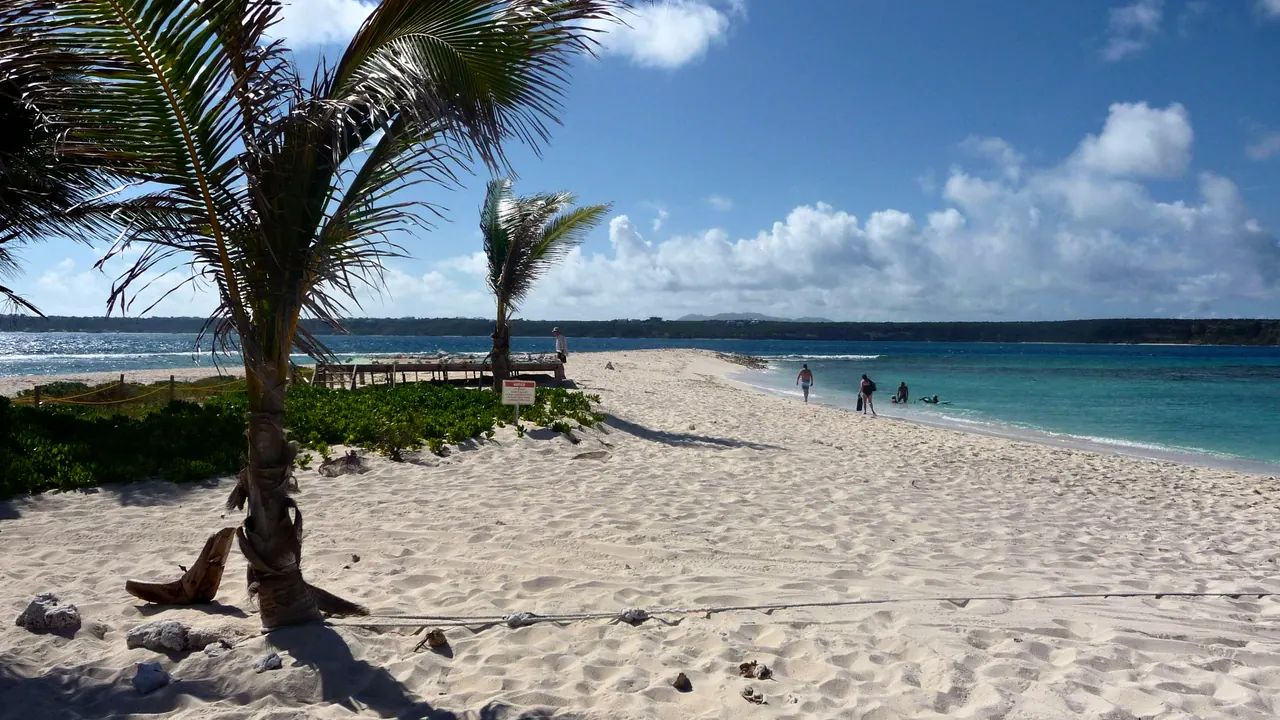
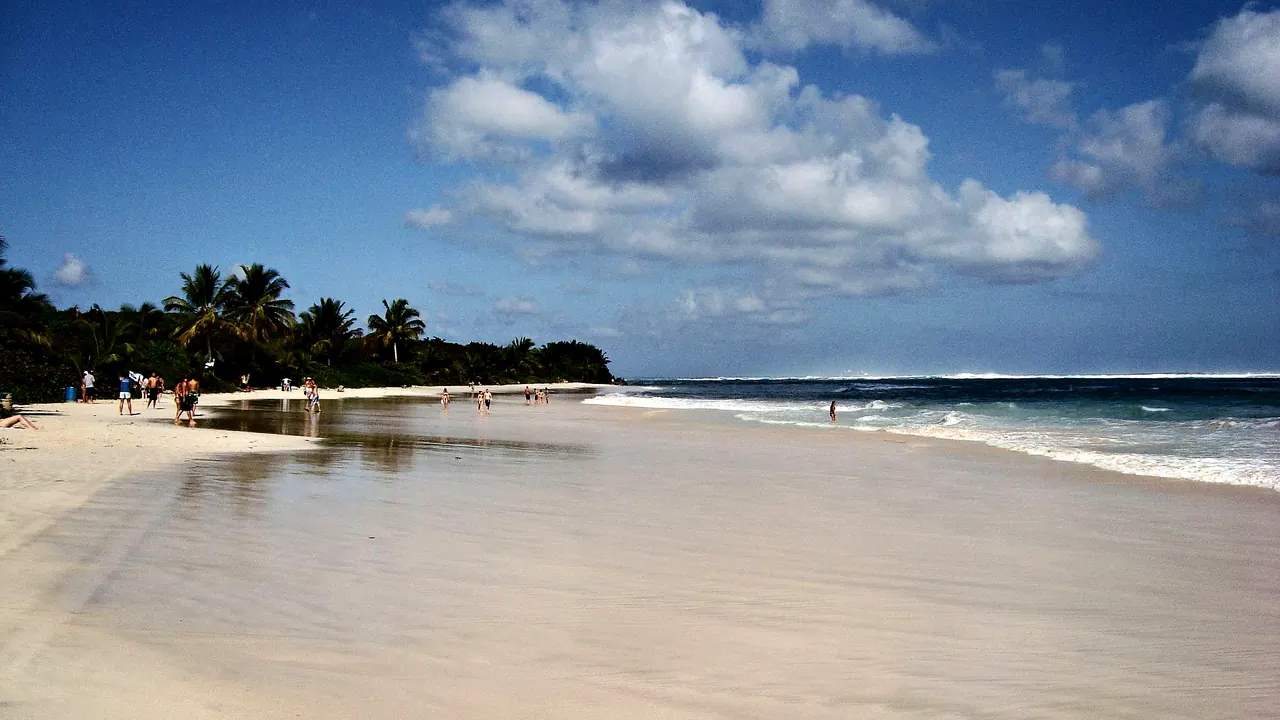
Photos: Anguilla by alljengi, CC BY-SA 2.0, cropped; Culebra by Jose L. Dominguez, CC BY-SA 3.0, cropped.
Anguilla or Culebra?
Our verdict in twelve categories, each scored against the same fixed benchmark cities, and the climate month by month, so you can choose for your trip.
Choose Anguilla for
- food and drink
- day trips
- nightlife
Anguilla suits a polished beach vacation where the evenings matter as much as the days. It has a long run of sandy bays at the west end and at Shoal Bay East, resort spas, serious seafood dinners and a weekend beach-bar scene at Sandy Ground. It costs a great deal more, but a hire car gets you around easily, and Saint Martin is a short ferry ride away when you want a change.
Choose Culebra for
- prices
- nature and the outdoors
Pick Culebra if the water itself is the point. The wildlife refuge and the marine reserve off the west coast give better snorkelling and diving, with turtles and rays a few strokes from the beach. The stay also costs noticeably less, especially in a rental with a kitchen. In return you accept short menus, almost no nightlife, basic beach facilities and a ferry or small plane that needs planning.
Scoreboard
Twelve categories on one fixed scale from 0 to 100. The shaded stretch is the gap between the two.
Your match
Pick a travel style or drag the sliders, and both match scores follow your weighting.
Wins on food and drink and day trips with your weighting.
Wins on prices and nature and the outdoors with your weighting.
What matters to you?
Category by category
What the scores mean for a trip.
Beaches & swimming
Both islands are first and foremost beach destinations, and their sand and water are equally good: white, calm and warm. The difference is in what surrounds them. Anguilla has more than thirty beaches, and its west-end bays, among them Meads, Rendezvous and Maundays, are backed by resorts and villas, with food and drinks close at hand. Shoal Bay East adds snorkelling just offshore.
Culebra centres on Flamenco, one sweeping horseshoe bay with the painted tanks at one end, while its smaller beaches near Dewey have reef and seagrass right off the sand. Facilities are sparse, so you bring your own shade and water. On both islands, winter swells can make the north-facing beaches rough.
Food & drink
Anguilla gives you far more to look forward to at dinner. The west-end beaches and Sandy Ground have a string of accomplished beachfront restaurants, crayfish and snapper are on most menus, and the roadside lolos grill ribs and chicken on weekend afternoons.
Culebra's eating is a handful of casual places and food trucks in Dewey, good for mofongo or grilled fish, and the menus shrink when ferry supplies run low. Many visitors cook for themselves. Neither island has markets or a deep food culture, but only Anguilla makes a meal the high point of the day.
Culture & sights
Neither island is a place for sightseeing, and a morning covers the essentials of either. Anguilla's history is in Wallblake House, the Heritage Collection Museum and the Amerindian carvings in Fountain Cavern. Culebra's is told in a small museum in an old navy powder magazine, focused on the island's settlement and its decades as a naval firing range, and you can see it in the tanks on Flamenco and the ruined lighthouse on Culebrita.
Nightlife
Anguilla at least has a night out to offer. Sandy Ground's beach bars stay open late at weekends with dancing on the sand, and Sunday sessions at beach bars around the island run on into the evening. On Culebra, a sunset drink at one of Dewey's open-air bars, sometimes with a band at weekends, is about as late as it gets. Neither island has clubs.
Nature & outdoors
Culebra is the better island if you want to be in the water rather than beside it. Much of it lies within a national wildlife refuge, the Luis Pena reserve has some of the healthiest reefs around Puerto Rico, and you will often see green turtles and rays when snorkelling from Tamarindo or Carlos Rosario. Seabird colonies on the cays and turtles nesting in spring and summer add to it.
Anguilla has decent snorkelling at Little Bay and the cays, plus diving on wrecks, but its real outdoor draw is the wind: sailing, kitesurfing and its own wooden racing sloops. On land both islands are low, dry and scrubby, with cliff walks on Anguilla and short hikes up Monte Resaca on Culebra.
Day trips
Anguilla has a real neighbour on its doorstep. Saint Martin is about twenty minutes away by ferry, with Marigot and the restaurants of Grand Case on the French side and duty-free Philipsburg on the Dutch side, and St Barths can be reached by chartered boat.
From Culebra the outings are to Culebrita and the empty cays, which are lovely but more beach days than visits to somewhere new. Vieques and the main island need a flight or a long crossing, so most people stay put.
Good for families
For children, both islands offer much the same: calm, shallow water, a safe and quiet island and nothing built for them on land. Anguilla's gently shelving bays at Rendezvous, Meads and Shoal Bay West, along with its family-minded resorts, make it the easier choice with toddlers. Culebra suits school-age children who can snorkel, since turtles appear in waist-deep water at Tamarindo, but the ferry or small plane and the limited medical care count against very young ones.
Getting around
Anguilla is the simpler island to reach and to get around, though both need some planning. You fly into Sint Maarten and take a short ferry across. From there, a hire car puts any beach on the 26km island within a short drive on quiet roads.
Culebra's ferry from Ceiba takes an hour or more, often fills up at weekends and does not always run on time. The alternative is a small plane. Once you are there, Dewey is walkable and shared vans run to Flamenco, but the steep roads to the other beaches call for a golf cart or jeep, and the cays need a water taxi.
Shopping & style
Shopping is no reason to choose either island. Anguilla has a few galleries of local painters and sculptors, resort boutiques, and sea salt, hot sauce and rum to take home, and duty-free Saint Martin is a short ferry ride away. Culebra has a handful of souvenir and beachwear shops and some artists' jewellery in Dewey, so buy what you need before the crossing.
Affordability
Culebra is much easier on the wallet, though it is not cheap. Its guesthouses, small inns and rentals with kitchens let you cook for yourself, and the beaches, the snorkelling and the ferry cost little, even if a golf cart adds to the daily bill.
Anguilla is expensive on almost every count. Most places to stay are high-end resorts and villas, and meals, drinks, taxis and groceries all carry the cost of an island that imports nearly everything. The lolos and the few simple guesthouses help only a little.
Live music & performing arts
Anguilla has a real live music calendar for an island its size: reggae, soca and string bands at weekend beach bars, the long-standing reggae festival in March, and calypso and soca during the August Summer Festival. Culebra has a band in Dewey on some weekends and music for its patron saint festival once a year. Neither has a theatre or concert hall.
Wellness & relaxation
Both islands restore you mainly through their slow pace, but only Anguilla adds proper spas. Its luxury resorts have extensive treatment rooms open to the sea breeze, so a massage or a full spa day fits easily around the beach. Culebra has no big resorts, just a few independent massage therapists and yoga at some guesthouses, and its rest comes from empty afternoons and early nights.
When should you go?
Pick your month. The climate figures are measured averages, not a forecast.
Anguilla in July
Culebra in July
Daytime high, °C
Rainfall in the month, mm
Where the figures come from
Culebra's temperatures are measured 34 km from the centre, at C. Amalie / St. Thomas Airport.
Culebra has no rain gauge within 25 km of the centre, so its rainfall comes from a gridded climate dataset read at the destination rather than from a gauge further away.
Culebra's sunshine is measured 75 km from the centre, at San Juan / Int., Puerto Rico.
Temperature and rainfall are climate normals, averaged over the years shown. Anguilla: 1991-2020 normals, Juliana Airport, Saint Maarten (14.5 km from centre). Culebra: 1991-2020 normals, C. Amalie / St. Thomas Airport (33.7 km from centre).
Both islands are warm all year, with daytime highs of 29°C in winter rising to 32°C in late summer, and the sea is warm enough for swimming in every month. So the season is chosen by rain, not heat. On Anguilla the driest stretch runs from February to April, and the rain builds from late summer to a peak in October and November, at over 160mm a month. Culebra follows a similar pattern, but its wettest months come a little earlier, from August to November, with September the wettest.
Sunshine sets them further apart. Culebra is brightest from March to July and noticeably duller in November and December. Anguilla's sunshine stays steadier through the year, which gives it the edge for a winter trip. In spring the two are close, with Culebra slightly sunnier. Late summer is hot on both, though neither island asks for much walking in the heat of the day.
Which traveller are you?
On a trip on a tight budget, Culebra is the sensible choice. A guesthouse or a rental with a kitchen keeps costs down, and its best assets, the beaches and the reef snorkelling, cost almost nothing. On Anguilla, the resorts, imported food and taxis make it hard to save money anywhere.
For a food and nightlife trip, Anguilla wins clearly. Long seafood dinners on the west-end beaches, ribs from the roadside lolos at weekends and beach bars that stay open late at Sandy Ground give the evenings some shape. Culebra offers short menus and an early night.
On an outdoors trip built around snorkelling and diving, Culebra has the edge. Its wildlife refuge and the Luis Pena reserve put turtles, rays and healthy reef within reach of the shore. Anguilla is the better pick if sailing and kitesurfing in the trade winds matter more.
Before you go
| Measure | Anguilla | Culebra |
|---|---|---|
| Official language | English | Spanish, English |
| Currency | East Caribbean Dollar (XCD) | US Dollar (USD) |
| Sockets | A110 V, 60 Hz | AB120 V, 60 Hz |
| Driving side | Left | Right |
| Time zone | UTC-4 | UTC-4 |
| Emergency number | 911 | 911 |
| Main airport | Clayton J. Lloyd International Airport (AXA)15 non-stop destinations | Luis Munoz Marin International Airport (SJU)59 non-stop destinations |
| Public holidays this year | 14 days | 21 days |
By the numbers
| Measure | Anguilla | Culebra |
|---|---|---|
| Population | 16,293 | - |
| People per km² | 167 | - |
| Swim season, months above 21 °C | 12 months | 12 months |
Where else could you go?
Every comparison below shares a destination with this one, so you can follow Anguilla or Culebra somewhere new.
- Saint-Martinvs Anguilla
- Sint Maartenvs Anguilla
- Viequesvs Culebra
- St Thomasvs Culebra
- US Virgin Islandsvs Culebra
- St Bartsvs Anguilla