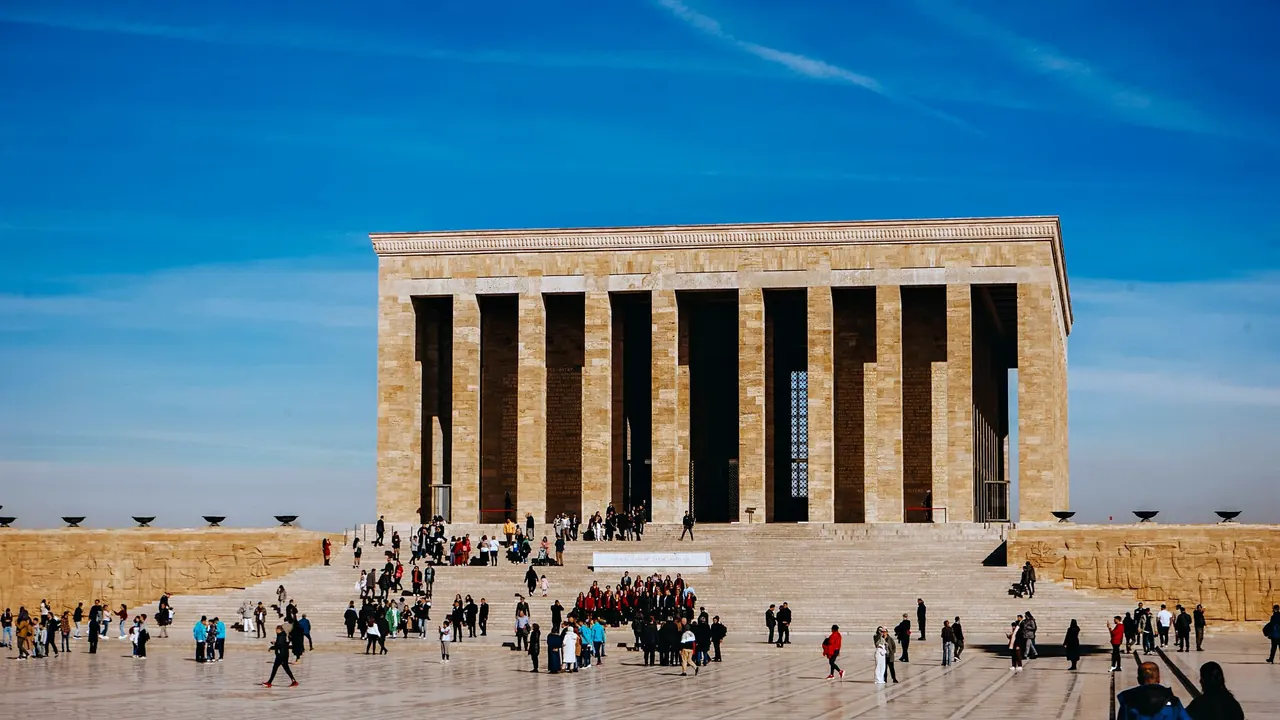
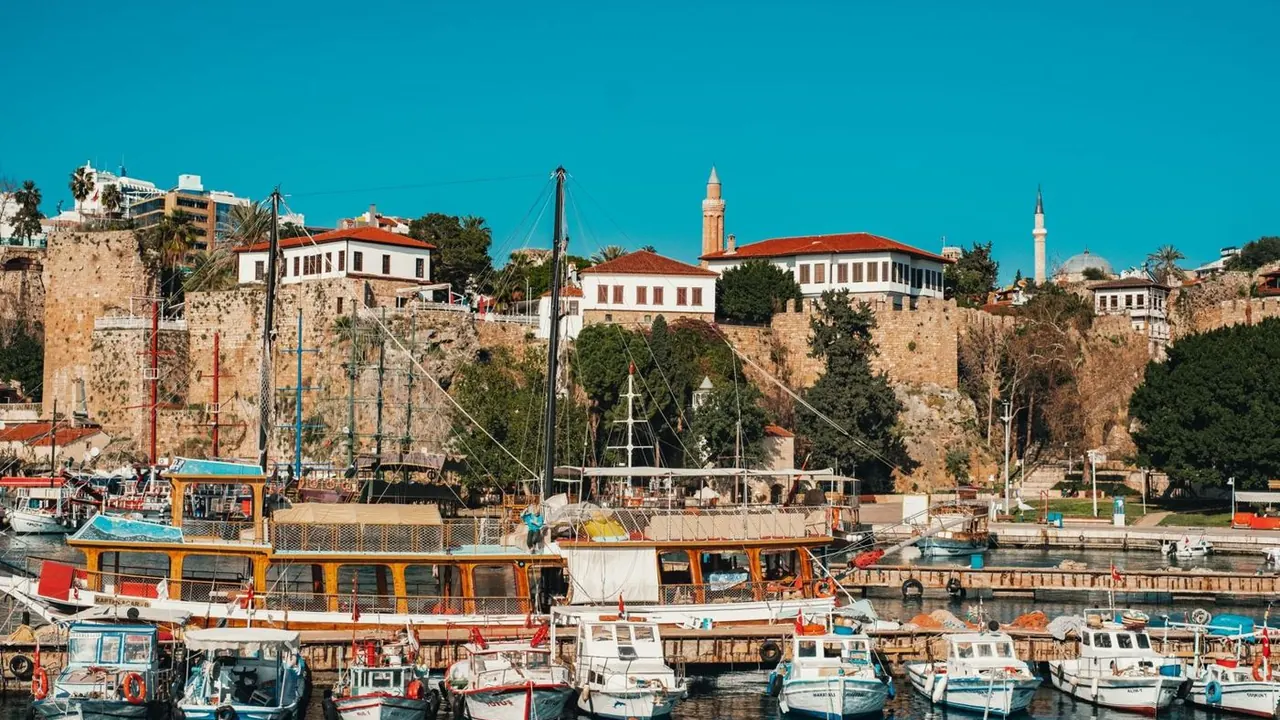
Photos: Ankara by Batuhan Kocabaş, Pexels License; Antalya by Furkan Tumer, Pexels License.
Ankara or Antalya?
Our verdict in twelve categories, each scored against the same fixed benchmark cities, and the climate month by month, so you can choose for your trip.
Choose Ankara for
- live music and the arts
- prices
- culture and sights
Ankara suits the traveller who wants Turkey's working capital rather than its resort coast: two or three days of serious museums led by the Museum of Anatolian Civilizations and Anıtkabir, an evening at the State Opera or a symphony concert, and fast trains to Konya and Eskişehir. It is cheaper to live in day to day, and it rewards a curious adult more than a family looking for sun.
Choose Antalya for
- beaches
- nature and the outdoors
- families
Antalya is the choice when the sea and the landscape matter. It has long beaches at Konyaaltı and Lara, the Taurus mountains rising straight behind them, and ancient cities like Aspendos, Perge and Termessos within easy reach. Families, walkers and anyone who wants to swim will find far more here, provided they avoid the hottest weeks of high summer.
Scoreboard
Twelve categories on one fixed scale from 0 to 100. The shaded stretch is the gap between the two.
Your match
Pick a travel style or drag the sliders, and both match scores follow your weighting.
Wins on live music and the arts and prices with your weighting.
Wins on beaches and nature and the outdoors with your weighting.
What matters to you?
Category by category
What the scores mean for a trip.
Beaches & swimming
Ankara has no beach at all. It sits on the plateau several hours from the coast, its lakes are for rowing rather than swimming, and in summer a dip means a hotel or municipal pool.
Antalya is a proper beach city. It offers the long pebble sweep of Konyaaltı with deep, clear water, sand at Lara, and pine-fringed coves towards Kemer and Phaselis. The sea stays swimmable from late spring well into autumn, though the main beaches fill up in midsummer.
Food & drink
The two eat about equally well, but in different ways. Ankara's strength is everyday Anatolian cooking: steam-tray stews in esnaf lokantası canteens, kebab and pide, and its own baked Ankara tava. The diplomatic and student districts of Kızılay and Tunalı Hilmi add meyhanes and a few upmarket tables.
Antalya brings the coast to the table, with fish from the Gulf, piyaz dressed with tahini beside grilled köfte, and markets heaped with citrus and pomegranates from the plain. The trap there is Kaleiçi, where menus aimed at visitors are broad but shallow, so the better meals are in the plain köfte houses and coastal fish restaurants.
Culture & sights
Ankara has the slight edge within the city. The Museum of Anatolian Civilizations traces the peninsula from Çatalhöyük through the Hittites, and Anıtkabir shows the young Republic's architecture at its most deliberate. Around them are the citadel, the Temple of Augustus and the Roman baths, all good for two or three full days.
Antalya's sights in town are more compact: Hadrian's Gate, the Yivli Minare and the Ottoman lanes of Kaleiçi make a pleasant half-day, with the Perge statues in the Antalya Museum as the highlight. Its real heritage lies in the ruins outside the city.
Nightlife
Antalya is a little livelier, at least in season. Summer evenings fill Kaleiçi's courtyard bars and the harbour, and there are beach clubs and big open-air venues along Konyaaltı and Lara, though they are spread out and you need taxis between them. In winter it shrinks to a few local bars.
Ankara works the other way round. Its multi-storey bar buildings off Kızılay are busiest with students in term time and quieter in summer, and long rakı dinners matter more than dancing.
Nature & outdoors
Ankara's surroundings are open steppe, golden in summer and austere in winter. The lakes, the Atatürk Forest Farm and Soğuksu's pine forest an hour north are welcome escapes, but proper hiking means travelling far.
Antalya is one of the country's great outdoor bases. The Taurus mountains drop straight into the sea, the Lycian Way sets off over cliffs past Olympos, and the Düden falls pour into the Mediterranean within the city. Add rafting, diving, sailing and winter skiing at Saklıkent, and the gap is wide.
Day trips
Ankara does better than its location suggests, mainly thanks to high-speed trains to Konya's Mevlana Museum and Eskişehir's painted Odunpazarı quarter. Gordion and Beypazarı are an easy drive, and Hattusa makes a long day.
Antalya has more within reach, and much of it is outstanding. The theatre at Aspendos, Perge's colonnaded street, Termessos on its peak and Side's temple are all close, and Myra and the sunken city at Kekova make a long, rewarding day. The catch is that most need a car or a tour.
Good for families
Ankara is friendly to children, and the dinosaurs at the MTA museum and the climb-aboard trains at the Rahmi M. Koç Museum are real treats. Even so, it has no big attraction built for children, and its hilly, traffic-heavy streets wear small legs out.
Antalya is built around family vacations. Resort pools and kids' clubs, a water park in Belek, a tunnel aquarium and Lara's shallow sandy water cover most days. Midsummer heat and Kaleiçi's uneven lanes with a pushchair are the main drawbacks.
Getting around
Both are manageable at the centre and harder beyond it, but the shape differs. Ankara runs along a north-south spine where metro lines and the Ankaray meet at Kızılay, which is efficient for Ulus and Çankaya. Between districts, though, its broad boulevards and steep climbs make taxis the norm.
Antalya's centre is walkable, and the tram links the airport, the old town and Konyaaltı. The resort coast and the ruins, however, stretch for tens of kilometres with thin public transport, so a hire car or tours do most of the work.
Shopping & style
Neither is a shopping destination, and both rely on large malls of chain stores. The character differs in the old quarters. Ankara's Samanpazarı below the citadel has coppersmiths, honey and angora wool goods that carry the city's old name.
Antalya's Kaleiçi sells carpets, ceramics and leather with plenty of haggling and repetition, and its weekly neighbourhood markets are the better place for spices and dried fruit.
Affordability
Ankara is the cheaper stay. As a government and business city it has none of the tourist mark-up, so hotels, canteen meals, transport and taxis all stay low, and the main extras are alcohol and international chains.
Antalya can be good value if you eat in local köfte houses or book an all-inclusive package, but rooms by the sea, beach clubs, boat trips and Kaleiçi restaurants are priced for foreigners.
Live music & performing arts
Ankara has the fuller formal calendar because it is home to the national institutions. These include the State Opera and Ballet near Ulus, the Presidential Symphony Orchestra, the Bilkent Symphony Orchestra and the State Theatres, with tickets that are easy to come by.
Antalya has its own opera, ballet and theatre companies in winter. Its standout is the summer festival on the Roman stage at Aspendos, a single memorable evening rather than a season to plan around.
Wellness & relaxation
Antalya is the more restful choice. Old hammams in Kaleiçi sit alongside extensive resort spas in Lara, Belek and Kemer, and the rhythm of shaded afternoons and evenings by the sea does the rest, at least outside the summer crowds.
Ankara's bathing is more workaday, with a few neighbourhood hammams in Ulus and Hamamönü that serve mainly locals. Its real asset is the thermal towns of Kızılcahamam and Haymana, each about an hour out, built around mineral springs.
When should you go?
Pick your month. The climate figures are measured averages, not a forecast.
Ankara in July
Antalya in July
Daytime high, °C
Rainfall in the month, mm
Temperature and rainfall are climate normals, averaged over the years shown. Ankara: 1991-2020 normals, Ankara / Central (4.1 km from centre). Antalya: 1991-2020 normals, Antalya (23.4 km from centre).
Ankara has a continental plateau climate. Winters are cold, with daytime highs around 5°C in January and snow fairly common, while July and August are hot, dry and very sunny at about 31°C. For walking the citadel and the museums, June, September and early October are the best months, with warm, bright days and little rain. May is pleasantly mild but shares the year's wettest spell with April, so showers are likely.
Antalya is milder in winter but much wetter, with the heaviest rain around December at about 273mm, so the cool months bring grey spells as well as sunny days. The sea is warm enough for swimming from late May to October and peaks at 29°C in August. In July and August the daytime heat reaches about 35°C, which is fine for the beach but hard going for ruins and trails, so spring and autumn suit sightseeing best. Through the year Antalya is the warmer and sunnier of the two, while Ankara is more comfortable for walking in high summer.
Which traveller are you?
On a family trip with children, Antalya is the easy pick. Resorts in Lara, Belek and Kemer have pools, slides and kids' clubs, Lara's sand shelves gently, and there is a big aquarium and a water park. Ankara offers good museums and parks but little built for children.
For an outdoors trip, Antalya is far better. It has the Lycian Way, the Tahtalı cable car, rafting in Köprülü Canyon, diving and paragliding along the coast. Around Ankara there is mostly bare steppe, with Soğuksu's pine forest the best walking nearby.
On a trip on a tight budget, Ankara stretches money further. Prices are set for civil servants and students rather than tourists, so canteen meals, comfortable hotels, metro rides and even opera tickets stay cheap. In Antalya, costs climb quickly once you are near the sea or in Kaleiçi.
Before you go
| Measure | Ankara | Antalya |
|---|---|---|
| Official language | Turkish | Turkish |
| Currency | Turkish Lira (TRY) | Turkish Lira (TRY) |
| Sockets | CF230 V, 50 Hz | CF230 V, 50 Hz |
| Driving side | Right | Right |
| Time zone | UTC+3 | UTC+3 |
| Emergency number | 112 | 112 |
| Elevation | 938 m | 30 m |
| Main airport | Esenboğa International Airport (ESB)25 km from centre92 non-stop destinations | Antalya International Airport (AYT)9 km from centre172 non-stop destinations |
| Public holidays this year | 14 days | 14 days |
By the numbers
| Measure | Ankara | Antalya |
|---|---|---|
| City population | 5,803,482 | 2,426,356 |
| People per km² | - | 1,712 |
| Museums within 10 km | 51 | 5 |
| UNESCO World Heritage sites within 50 km | 0 | 0 |
| Swim season, months above 21 °C | - | 7 months |
Where else could you go?
Every comparison below shares a destination with this one, so you can follow Ankara or Antalya somewhere new.