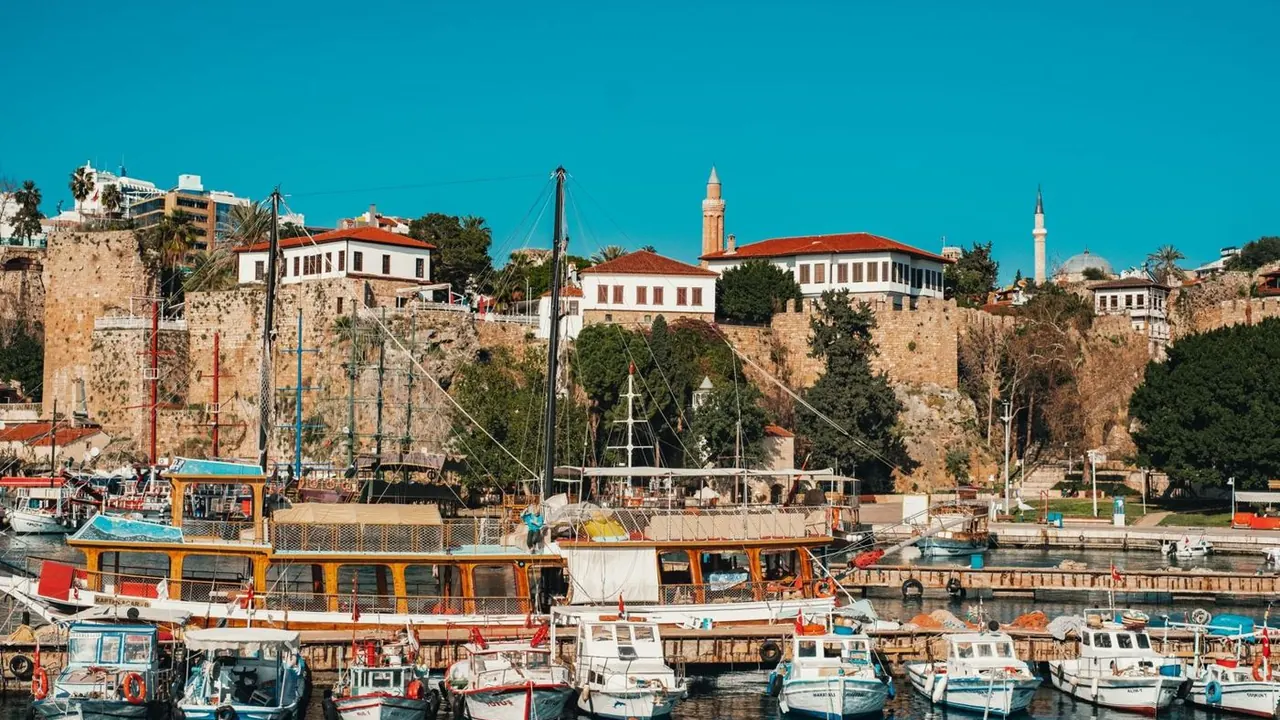
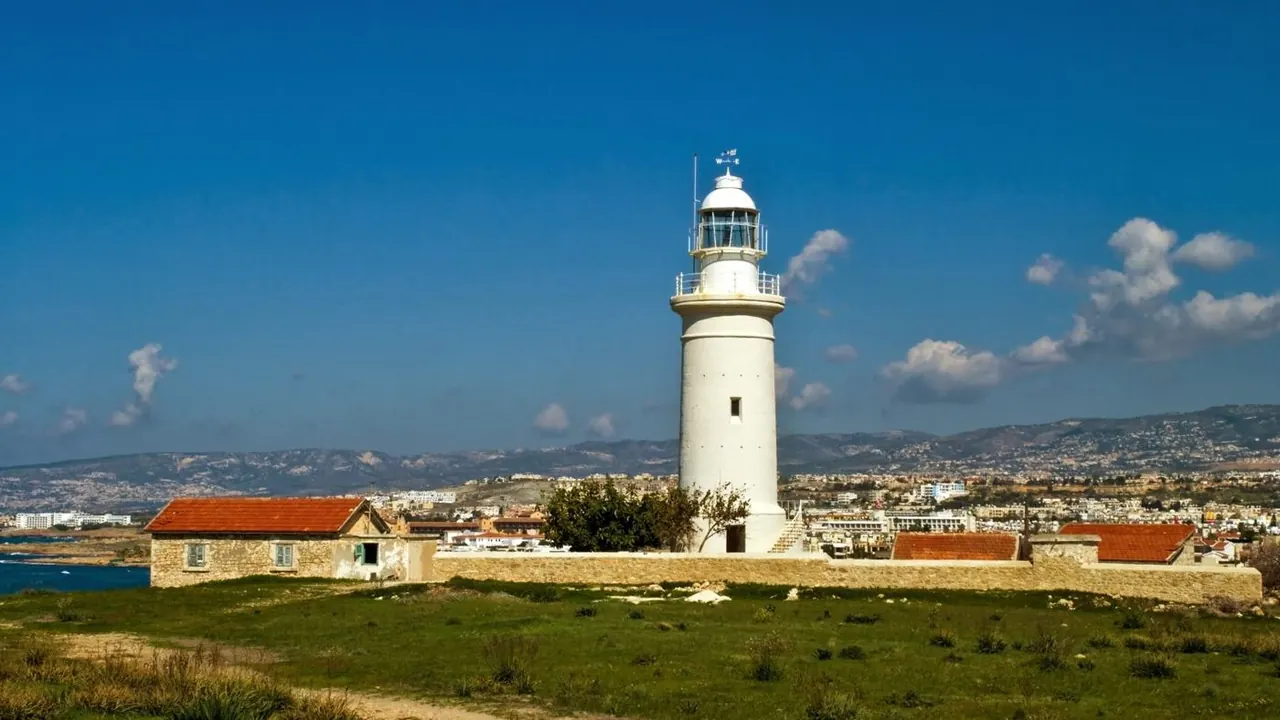
Photos: Antalya by Furkan Tumer, Pexels License; Paphos by Nikodem Nijaki, CC BY-SA 3.0, cropped.
Antalya or Paphos?
Our verdict in twelve categories, each scored against the same fixed benchmark cities, and the climate month by month, so you can choose for your trip.
Choose Antalya for
- wellness
- shopping
- live music and the arts
Antalya is the bigger, broader choice. It suits travellers who want a real city with a long beach on its doorstep, mountains rising straight behind it, and a run of ancient sites such as Aspendos, Perge and Termessos within a day's reach. It also wins on the extras that fill out a week: Ottoman hammams, cheap köfte houses, rafting and cable cars, and more going on after dark. Pick it if you want to mix beach days with an active, varied trip and keep the costs down.
Choose Paphos for
- culture and sights
Paphos is the smaller and gentler of the two, and its best things sit close together. The Roman mosaics and rock-cut tombs of Kato Paphos are right in town, the sandy shallows of Coral Bay are a short ride north, and the meze tavernas of the hill villages are a short drive inland. It suits couples and families who want an easy-going sea vacation with first-rate history close by, a milder summer than Antalya's, and evenings that end over a long dinner rather than in a club.
Scoreboard
Twelve categories on one fixed scale from 0 to 100. The shaded stretch is the gap between the two.
Your match
Pick a travel style or drag the sliders, and both match scores follow your weighting.
Wins on wellness and shopping with your weighting.
Wins on culture and sights with your weighting.
What matters to you?
Category by category
What the scores mean for a trip.
Beaches & swimming
Antalya has the better beaches right in the city. Konyaaltı runs for kilometres of clear, quickly deepening water beneath the mountains, Lara offers sand to the east, and you can swim off the rocks in the old harbour. Within an hour you can add the pine-backed coves near Kemer and the long sands of Belek.
In Paphos the town beaches are thin strips of sand and shingle with rocky entries, so a proper beach day usually means taking a bus or driving to Coral Bay or out to the wild Akamas coast. The water is just as warm and clear on both coasts. Antalya simply gives you more beach with less effort.
Food & drink
Antalya eats better. You get grilled şiş köfte with tahini-dressed piyaz, slow-cooked tandır lamb and Gulf fish, and the neighbourhood markets are piled with citrus and pomegranates from the plain. The best of it is in the plain kebab houses of the modern city, not in Kaleiçi.
Paphos has a different way of eating: the long meze, with halloumi, sausage and kleftiko, best in Ktima and the hill villages with local Laona wine. Both cities share the same trap. The harbour and resort strips cook for package visitors, and in both you eat better if you head inland or into town.
Culture & sights
For history you can see on foot, Paphos is ahead. The Roman villa mosaics of the House of Dionysus, the odeon and the Tombs of the Kings form a UNESCO-listed group right beside the harbour, and the floors are among the finest anywhere in the Mediterranean.
Antalya's centre gives you a pleasant walk instead: in through Hadrian's Gate, then through Kaleiçi's Ottoman lanes to the Yivli Minare. Its best sight is the Antalya Museum, full of statues from Perge. The really great ruins lie out of town, so in Antalya history is a day trip rather than a stroll.
Nightlife
After dark, Antalya spreads out across several quarters. There are courtyard bars in the lanes of Kaleiçi, terraces round the old harbour, and big open-air venues and beach clubs on Konyaaltı and Lara. You will need taxis between them, but you can change scene during a night out, which Paphos does not really allow.
In Paphos, going out mostly means one strip, Bar Street in Kato Paphos. It has pubs, karaoke and a few clubs, and it suits a group on a party week. Away from it, evenings are cocktails on the seafront and long taverna dinners. Both towns go quiet in winter, though Antalya keeps a handful of bars open for locals and students.
Nature & outdoors
Antalya's setting is grander. The Taurus range drops straight into the sea, the Düden falls pour off a cliff inside the city, and nearby you can raft Köprülü Canyon, walk the Lycian Way past Olympos or ride a cable car up to about 2,365m on Tahtalı Dağı.
Paphos offers quieter, smaller landscapes: the roadless Akamas peninsula, where turtles nest, the narrow walls of Avakas Gorge, and mouflon in the Paphos Forest. The Troodos pine forests take about an hour and a half to reach. Both coasts are good for diving, and Paphos is known for its wrecks.
Day trips
Around Antalya there are enough ancient cities to fill a week of outings. The theatre at Aspendos is one of the best-preserved anywhere, Termessos stands alone on its mountain peak, and Side pairs its temple of Apollo with a seaside town. Longer days take you to Alanya's castle, to Myra and the church of St Nicholas at Demre, or by boat over the sunken city at Kekova. Most are easiest by car or on a tour.
Paphos offers a shorter list, but it is close at hand. Aphrodite's sanctuary at Kouklia, clifftop Kourion, Kolossi castle and Limassol all lie within about an hour along the coast, and the painted Troodos chapels and the wine villages around Omodos are inland. Nicosia gives you something Antalya cannot: a walk across the line into the northern half of a divided capital.
Good for families
Antalya does a little more for children. Belek has a large theme and water park, the city aquarium with its walk-through tunnel helps on the hottest afternoons, and the resorts at Lara and Kemer have kids' clubs. The drawbacks are fierce midsummer heat and Kaleiçi's steep lanes, which are hard going with a pushchair.
Paphos is easier day to day. The flat seafront promenade suits pushchairs, Coral Bay is shallow, and the mosaics and tombs keep older children interested. Outside the hotel strip, though, almost everything needs a car.
Getting around
Antalya is easier without a car. Its trams link the airport, bus station, old town and Konyaaltı, and buses and plentiful taxis fill the gaps. Like Paphos, though, its ruins and trails are poorly served by public transport.
Paphos has buses between Kato Paphos, Ktima and Coral Bay, but they do little for the villages and gorges, so most visitors hire a car and drive on the left.
Shopping & style
Antalya gives a shopper far more to do, even if little of it is fashionable. In the old town's lanes you bargain for rugs, painted ceramics, Turkish delight and leather. When the afternoon heat peaks, the big malls of the modern city offer air-conditioned chain stores. Best of all are the weekly street markets where locals buy cheese, olives and household goods, which are the place to stock up on edible souvenirs. Luxury labels and independent designers are largely missing.
Paphos has much less in town: one covered market in Ktima with produce, lacework and baskets, and a seafront given over to swimwear and trinkets. Nothing there matches Antalya's malls or its neighbourhood markets, so the better buys mean a drive into the hills, where villages sell their own lace, pots, honey and wine.
Affordability
Antalya is the cheaper trip. Köfte houses, bakeries, markets and the tram cost little, and all-inclusive resorts can work out well for families. Kaleiçi's restaurants and boat trips are where the bills climb.
Paphos is priced like a eurozone resort. Meze dinners give fair value for the amount of food, but car hire, which you can hardly do without, adds to the total. In both places spring and autumn bring the rates down.
Live music & performing arts
Each city has one great open-air opera event: the summer festival on the Roman stage at Aspendos near Antalya, and Paphos's Aphrodite Festival in front of the harbour castle in early autumn.
Antalya has more beyond that, with a state opera, ballet and theatre company performing through the winter. In Paphos, the rest of the year mostly means folk music at taverna nights.
Wellness & relaxation
A Turkish bath is what Antalya offers and Paphos does not: steam, a hard scrub and a foam massage on hot marble, either in the old town or at your own resort. None of the bathhouses is famous, and the centre in midsummer is anything but calm. The most restful version of Antalya is a spring or autumn stay with long breakfasts and evenings by the sea once the heat lifts.
Paphos has nothing comparable in town, so rest comes from the setting rather than a ritual. That means a massage at a seafront hotel, a walk along the promenade, or an afternoon in a hill village a short drive inland. It is at its best outside the summer peak, when the coast empties and the light turns soft.
When should you go?
Pick your month. The climate figures are measured averages, not a forecast.
Antalya in July
Paphos in July
Daytime high, °C
Rainfall in the month, mm
Where the figures come from
Paphos has no rain gauge within 25 km of the centre, so its rainfall comes from a gridded climate dataset read at the city rather than from a gauge further away.
Temperature and rainfall are climate normals, averaged over the years shown. Antalya: 1991-2020 normals, Antalya (23.4 km from centre). Paphos: 1991-2020 normals, Paphos Airport (8.4 km from centre).
Both coasts are warm enough for swimming from late spring to well into autumn, with the sea around 22°C even in November. The real difference is summer heat. Antalya reaches about 35°C in July and August, too hot for sightseeing in the middle of the day or for walking inland, though its long, cloudless days suit a lazy beach week. Paphos peaks a few degrees lower at around 31°C, so it is a little easier to explore in high summer.
Winter separates them more. Antalya's rains are heavy, peaking at about 273mm in December, which makes the coldest months damp and grey for a beach city. Paphos is much drier, with about 97mm at its wettest and slightly milder days, so it makes the better winter escape. For walking, ruins and hiking, both are at their best in April and May and again in October.
Which traveller are you?
On an outdoors trip, Antalya is the stronger base. The Taurus mountains give you the Lycian Way, rafting in Köprülü Canyon and a cable car up Tahtalı Dağı, on a much bigger scale than the gorges and Akamas trails around Paphos.
For a culture and arts trip, Paphos makes the more rewarding short stay. Its UNESCO-listed mosaics, the Tombs of the Kings and the castle all lie within walking distance in town, while Antalya's major ruins mean driving out to Perge, Aspendos and Termessos.
On a relaxing and wellness trip, Antalya has the edge thanks to its bathing tradition. The old hammams of Kaleiçi and the large resort spas of Belek and Lara offer much more than Paphos, where wellness mostly means a hotel spa and a slow pace.
Before you go
| Measure | Antalya | Paphos |
|---|---|---|
| Official language | Turkish | Turkish, Greek, Modern Greek |
| Currency | Turkish Lira (TRY) | Euro (EUR) |
| Sockets | CF230 V, 50 Hz | G240 V, 50 Hz |
| Driving side | Right | Left |
| Time zone | UTC+3 | UTC+2, UTC+3 in summer |
| Emergency number | 112 | 112 |
| Elevation | 30 m | 72 m |
| Main airport | Antalya International Airport (AYT)9 km from centre172 non-stop destinations | Paphos International Airport (PFO)8 km from centre59 non-stop destinations |
| Public holidays this year | 14 days | 17 days |
By the numbers
| Measure | Antalya | Paphos |
|---|---|---|
| City population | 2,426,356 | 35,961 |
| People per km² | 1,712 | 1,987 |
| Museums within 10 km | 5 | 4 |
| UNESCO World Heritage sites within 50 km | 0 | 2 |
| Swim season, months above 21 °C | 7 months | 6 months |
Where else could you go?
Every comparison below shares a destination with this one, so you can follow Antalya or Paphos somewhere new.