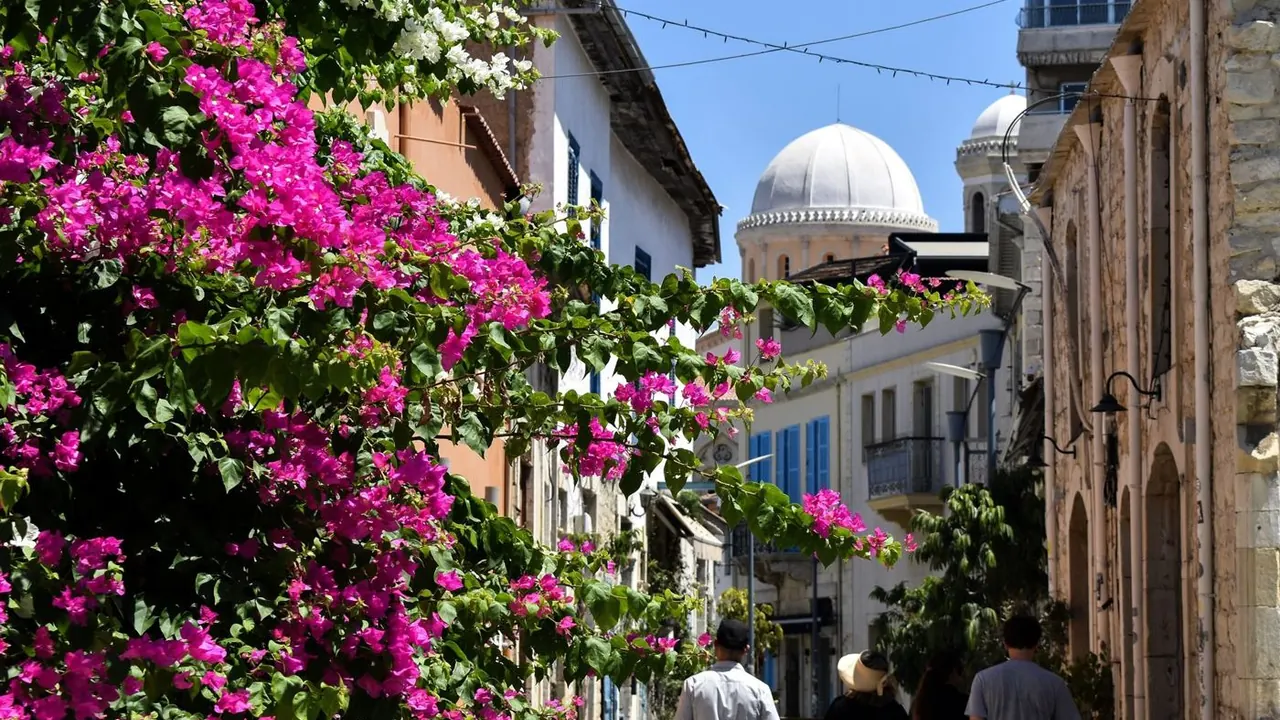
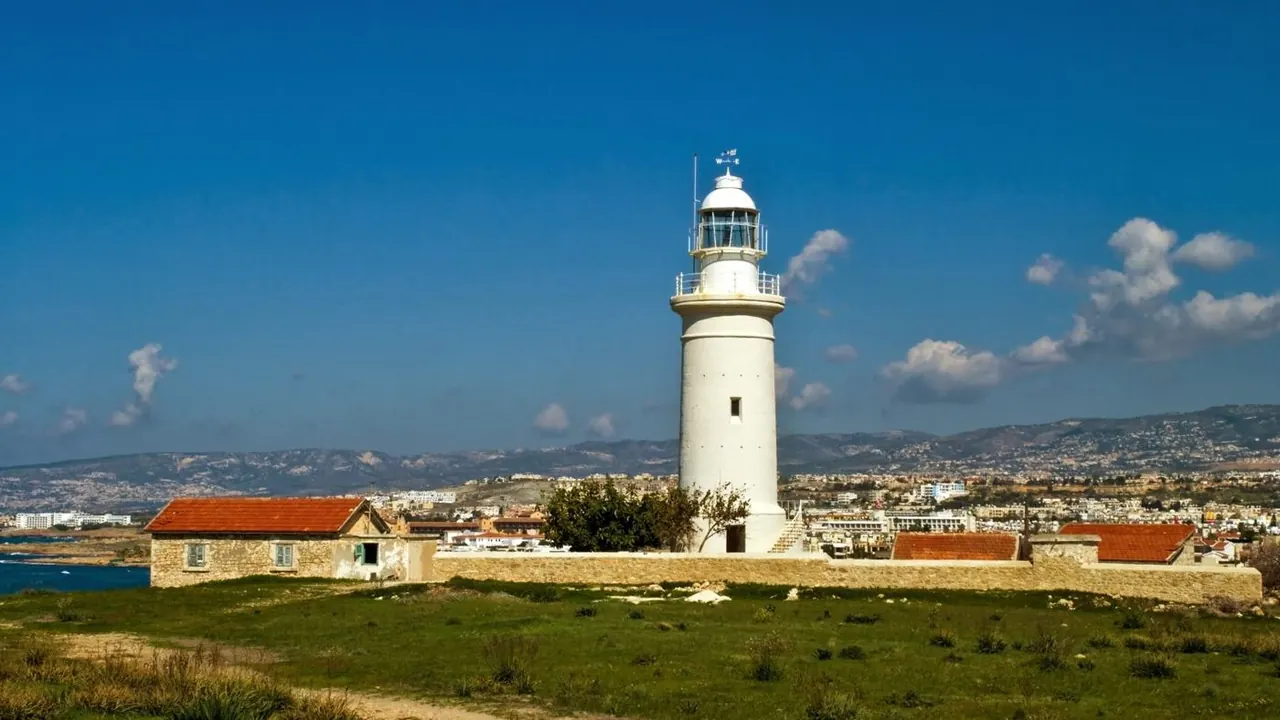
Photos: Limassol by Julian Lupyan, CC0; Paphos by Nikodem Nijaki, CC BY-SA 3.0, cropped.
Limassol or Paphos?
Our verdict in twelve categories, each scored against the same fixed benchmark cities, and the climate month by month, so you can choose for your trip.
Choose Limassol for
- shopping
- food and drink
- nightlife
Limassol suits travellers who want a beach vacation with a proper town around it. Its old town has the better meze tavernas, a livelier evening scene around Saripolou Square and the wine villages close by, and from the middle of the south coast it puts Kourion, the Troodos churches, Lefkara and Nicosia all within easy reach. Choose it if you plan to eat well, go out at night and spend several days touring the island by car.
Choose Paphos for
- culture and sights
- prices
- nature and the outdoors
Paphos is the stronger pick when ancient history matters more than nightlife. The UNESCO-listed mosaics of Kato Paphos and the Tombs of the Kings are right in town, Coral Bay gives families an easy sandy day, and the wild Akamas coast starts just to the north. It is a little gentler on the wallet too, and suits a slower, resort-paced stay with archaeology and coastal walks.
Scoreboard
Twelve categories on one fixed scale from 0 to 100. The shaded stretch is the gap between the two.
Your match
Pick a travel style or drag the sliders, and both match scores follow your weighting.
Too close to call, 2 points apart
Wins on shopping and food and drink with your weighting.
Wins on culture and sights and prices with your weighting.
What matters to you?
Category by category
What the scores mean for a trip.
Beaches & swimming
Both cities have the same strengths and the same weak spot: warm, clear water for a long season, and town beaches that are practical rather than lovely. The difference is in the layout. Limassol has a long, continuous run of grey sand and fine shingle with calm, shallow water from Dasoudi to Amathus, plus the quieter Lady's Mile, so you can swim straight from most of the city.
In Paphos the town strips are short, with rocky entries and breakwaters, and the best sand means a trip to Coral Bay or the wild shore of Lara Bay. Limassol's own day-trip beaches lean on scenery instead, with Governor's Beach under chalk cliffs and the sheltered cove at Pissouri.
Food & drink
Limassol is the better place to eat. Both cities rely on the meze and both say the best versions are inland, but Limassol adds fish tavernas by the old port, a covered municipal market and old-town coffee shops, and it is the centre of Cypriot wine, with Xynisteri, Maratheftiko and the sweet Commandaria made in the villages above it.
Paphos offers the same generous village meze in Ktima and the Laona and Kathikas hills, but its harbour and resort strip lean heavily towards English breakfasts and international menus. In Paphos you have to go looking for good food, while in Limassol it is easier to find without leaving town.
Culture & sights
Paphos is in a different league for history. Its UNESCO-listed archaeological park holds Roman floor mosaics among the finest in the Mediterranean, with the odeon and the rock-cut Tombs of the Kings a short walk away, and these easily fill two or three days without a car.
Limassol's own offer is the small castle museum, a few streets of the old mixed quarter and the ruins of Amathus at the edge of town. Kourion is close, but for a trip built around ancient sites, Paphos puts them on your doorstep.
Nightlife
Limassol has the more rounded night out. The old-town lanes around Saripolou Square fill with people drinking outside until late, the marina and seafront add smarter cocktail bars, and the large local and international resident crowd keeps it from being purely seasonal.
Paphos evenings concentrate on Bar Street in Kato Paphos, with pubs, karaoke and a few clubs aimed at groups on a summer party week, and much of it closes from November to March. Neither city is built for a serious club weekend.
Nature & outdoors
The two are close here, but the landscapes differ. Paphos has wild coast on its doorstep: the roadless Akamas peninsula with its sea caves and nesting turtles, the limestone walls of Avakas Gorge, and the Paphos Forest with its mouflon and Cedar Valley.
Limassol is nearer the high Troodos, about an hour to the pine trails around Mount Olympos and the Caledonia waterfall, and has the Akrotiri salt lake with its winter flamingos. Pick Paphos for coastal hiking and Limassol for the mountains, and avoid midsummer in either.
Day trips
Limassol's central position gives it the wider choice. Kourion and Kolossi are minutes away, Paphos's mosaics are under an hour west, and Choirokoitia, Lefkara and the Green Line in Nicosia are all about an hour or less to the east, so you can cover both ends of the south coast from one base.
From Paphos the outings lean west and inland: Aphrodite's sanctuary at Kouklia, Omodos, the painted Troodos churches and the slower harbour at Latchi. Nicosia and the eastern sites are a long day from there.
Good for families
Both work for a beach-based family vacation, with resort pools, kids' clubs, a waterpark nearby and tavernas that welcome children late. Paphos has a bit more variety beyond the sand, with Coral Bay's gentle shallows, coastal boat trips and mosaics and tombs that hold older children's attention. Limassol's advantage is calm, shallow water along the city beaches and a long promenade for scooters right in town.
Getting around
Neither is easy without a car, since there is no railway on the island and buses rarely reach the villages, gorges and ruins. Limassol is a long coastal ribbon held together by its seafront promenade and coast-road buses, with good intercity coaches. Paphos is smaller, with a flat, walkable Kato Paphos but a steep climb up to Ktima.
Shopping & style
Limassol is the better option for shopping, though neither is a reason to visit. It has high-street chains on Anexartisias and Makarios Avenue, upmarket boutiques at the marina, out-of-town malls and a few old-town workshops selling ceramics and leather.
Paphos has the Ktima covered market and a seafront of beachwear and gift shops. In both, the best buys are lace, wine, carob and honey from the villages.
Affordability
Paphos comes out somewhat cheaper overall, but how big the gap is depends on how you travel. In Limassol most of the extra cost is the room, because its coast and marina are among the dearest places to stay on the island. In return, the long city beachfront, the coast-road buses and the intercity coaches let you manage part of a stay without a car.
In Paphos beds cost less. However, the beaches, gorges and villages that fill most of a stay usually need a hire car, and that narrows the difference. In both cities July and August push room rates up sharply, and you save most in winter and the shoulder seasons.
Live music & performing arts
Neither city has much of a stage, but Limassol has more of a calendar. The restored Rialto and Pattihio theatres run drama, concerts and dance through the cooler months, and the carnival before Lent fills the streets.
Paphos depends mostly on taverna folk nights, with one standout event, the open-air Aphrodite Festival opera staged in front of the harbour castle in early autumn. Ancient venues feature in both, Kourion's clifftop theatre for Limassol and the odeon for Paphos.
Wellness & relaxation
This is level, since neither has thermal springs and relaxation in both means resort hotel spas plus a slow Mediterranean pace. Limassol's coast hotels tend to offer steam rooms alongside pools, with the cool pines of Troodos near for real quiet. Paphos has the edge for empty, softly lit shoulder-season walks with its inland villages close at hand.
When should you go?
Pick your month. The climate figures are measured averages, not a forecast.
Limassol in July
Paphos in July
Daytime high, °C
Rainfall in the month, mm
Where the figures come from
Limassol has no rain gauge within 25 km of the centre, so its rainfall comes from a gridded climate dataset read at the city rather than from a gauge further away.
Limassol's sunshine is measured 59 km from the centre, at Larnaca Airport.
Paphos has no rain gauge within 25 km of the centre, so its rainfall comes from a gridded climate dataset read at the city rather than from a gauge further away.
Temperature and rainfall are climate normals, averaged over the years shown. Limassol: 1998-2020 (sunshine 1991-2020, rainfall 1991-2020) normals, Akrotiri (11.6 km from centre). Paphos: 1991-2020 normals, Paphos Airport (8.4 km from centre).
Limassol and Paphos share almost the same climate, as you would expect of neighbours on one coast. The sea is comfortable for swimming from June into November and warmest in August, at about 27°C off Limassol and a degree warmer off Paphos. Midsummer is hot in both. Limassol reaches 31°C through July and August, and Paphos runs a touch cooler in July. That suits a beach day but makes sightseeing at midday hard going. There is almost no rain from May to October.
For the ancient sites, the old towns and walks in the Akamas or the Troodos, the best months are April, May, October and early November, when it is warm without being punishing. The rain sets in during November and peaks in December at about 97mm. Winter stays mild, though, with days around 17°C at their coolest. Limassol's sunshine records show long, bright summers and fairly sunny winters as well.
Which traveller are you?
On a culture and arts trip, Paphos is the better base. Its UNESCO-listed Roman mosaics, the House of Dionysus and the Tombs of the Kings sit in town, while Limassol's own sights fill a day and most of its heritage needs a drive.
For a food and nightlife trip, Limassol wins clearly. Its old-town tavernas, fish restaurants by the old port and nearby wine villages make for better eating, and the bars around Saripolou Square stay busy later than anything in Paphos beyond Bar Street.
On a trip on a tight budget, Paphos stretches the money a little further. Limassol's marina and beachfront hotels charge Western European resort prices, while Paphos runs closer to an ordinary Mediterranean resort, with fair village meze and cheap entry to its archaeological park.
Before you go
| Measure | Limassol | Paphos |
|---|---|---|
| Official language | Turkish, Greek, Modern Greek | Turkish, Greek, Modern Greek |
| Currency | Euro (EUR) | Euro (EUR) |
| Sockets | G240 V, 50 Hz | G240 V, 50 Hz |
| Driving side | Left | Left |
| Time zone | UTC+2, UTC+3 in summer | UTC+2, UTC+3 in summer |
| Emergency number | 112 | 112 |
| Elevation | 10 m | 72 m |
| Main airport | Larnaca International Airport (LCA)58 km from centre112 non-stop destinations | Paphos International Airport (PFO)8 km from centre59 non-stop destinations |
| Public holidays this year | 17 days | 17 days |
By the numbers
| Measure | Limassol | Paphos |
|---|---|---|
| City population | 107,970 | 35,961 |
| People per km² | 2,405 | 1,987 |
| Museums within 10 km | 2 | 4 |
| UNESCO World Heritage sites within 50 km | 3 | 2 |
| Swim season, months above 21 °C | 6 months | 6 months |
Where else could you go?
Every comparison below shares a destination with this one, so you can follow Limassol or Paphos somewhere new.