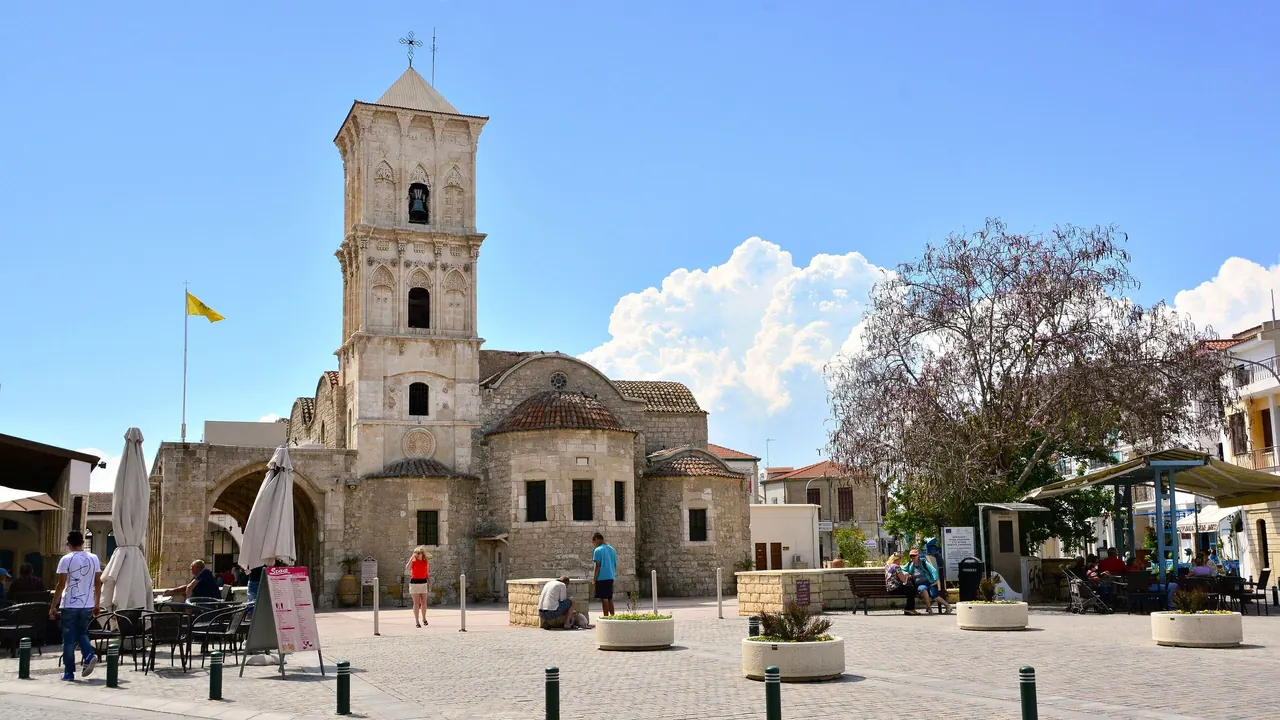
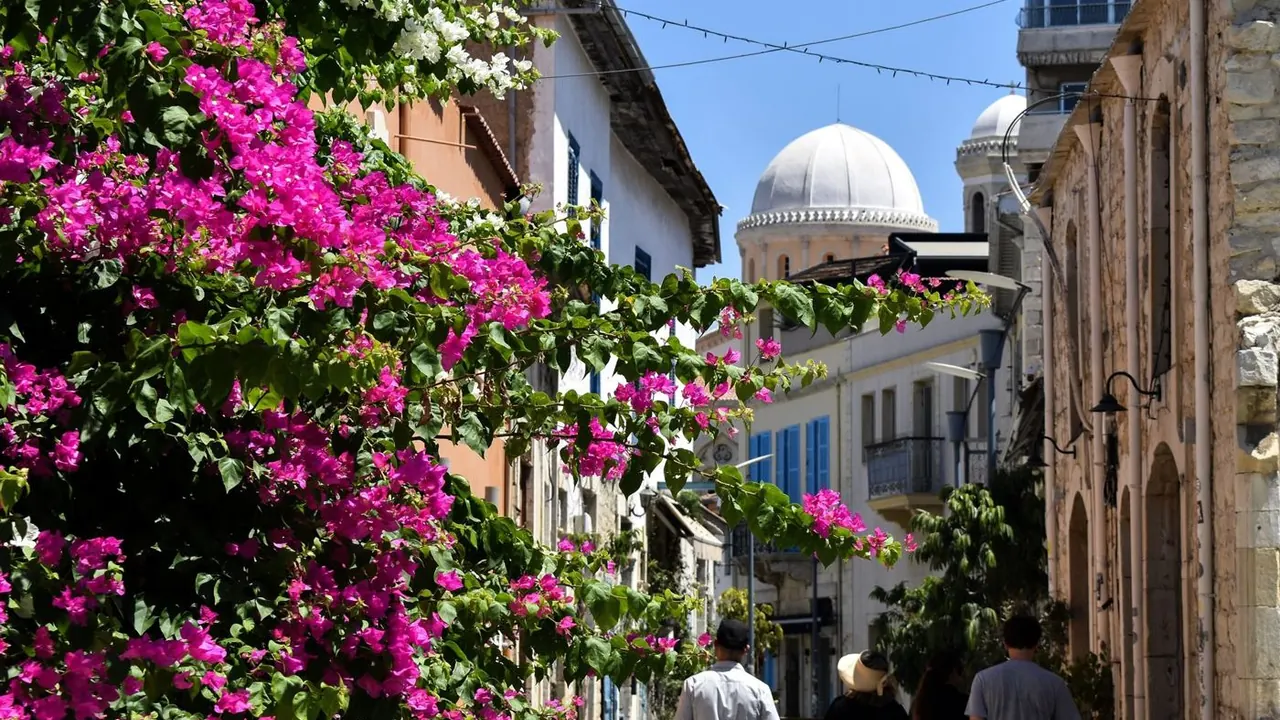
Photos: Larnaca by Mike McBey, CC BY 2.0, cropped; Limassol by Julian Lupyan, CC0.
Larnaca or Limassol?
Our verdict in twelve categories, each scored against the same fixed benchmark cities, and the climate month by month, so you can choose for your trip.
Choose Larnaca for
- prices
- getting around
Larnaca suits a calm, low-effort beach stay. The town is small and flat, the airport is minutes away, and the shallow water at Finikoudes sits right below the old centre. It costs a little less than its neighbour and makes sense if you mostly want the sea, a seafront coffee and an easy evening stroll.
Choose Limassol for
- nightlife
- shopping
- live music and the arts
Limassol is the better pick for a fuller trip with more going on after dark and more to see beyond town. It has the busier bar quarter around Saripolou Square, the island's wine villages on the slopes behind it, and the Troodos and Kourion close enough for day trips. You pay a little more for it, and the city is spread out along the coast.
Scoreboard
Twelve categories on one fixed scale from 0 to 100. The shaded stretch is the gap between the two.
Your match
Pick a travel style or drag the sliders, and both match scores follow your weighting.
Wins on prices and getting around with your weighting.
Wins on nightlife and shopping with your weighting.
What matters to you?
Category by category
What the scores mean for a trip.
Beaches & swimming
Both cities are equally good for a beach stay. Each has easy, gently shelving town beaches of grey sand rather than postcard scenery, and the same warm sea from May into November. The difference is where the better beaches are. Larnaca's Finikoudes sits right in front of the old centre, Mackenzie has beach bars and low-flying planes, and the white sand of Ayia Napa and Protaras is under an hour east.
Limassol's beaches run in a long strip along the hotel coast, with quieter Lady's Mile to the west. Its best swimming spots are short drives away: the chalk cliffs at Governor's Beach, the open bay below Kourion and the sheltered cove at Pissouri.
Food & drink
The basics are the same in both cities: the long meze meal, grilled fish by the harbour and thick Cypriot coffee. Limassol takes it further. Its family tavernas in the old town and the hill villages are a step up, the covered municipal market is worth a visit, and the vineyard villages towards Troodos make Xynisteri, Maratheftiko and Commandaria on the city's doorstep.
In Larnaca the good meals tend to be in fish tavernas towards Mazotos or in inland villages. The promenade is mostly tourist menus, and for more variety people head to Limassol or Nicosia.
Culture & sights
Neither city is a culture destination in itself, and you can see the sights of either in a day or two. Larnaca has more that stands out. The ninth-century Church of Saint Lazarus with its carved iconostasis, Hala Sultan Tekke on the Salt Lake and the Phoenician foundations of Kition give it a longer history to explore.
Limassol has its medieval castle museum, the old mixed quarter around it and the hillside ruins of Amathus. Its bigger heritage, such as Kourion, is a drive out of town.
Nightlife
Limassol has the livelier evenings. Bars fill the old-town lanes around Saripolou Square until the early hours, the marina has smarter cocktail bars, and a few large clubs on the tourist strip stay open late in summer. Its big international resident community also keeps things going outside the peak months.
Larnaca is quieter. There are late cocktail bars behind Finikoudes and DJ beach bars at Mackenzie in summer, but the town goes quiet in winter. For real clubbing you travel to Ayia Napa.
Nature & outdoors
Limassol is better placed for the outdoors because the Troodos mountains rise right behind it. Within about an hour you can be on the summit trails near Mount Olympos or walking to the Caledonia waterfall, which stay cool while the coast is hot. There are also cliff walks at Cape Aspro and Pissouri.
Larnaca's surroundings are flatter and drier. Its strengths are the flamingos on the Salt Lake in winter, the Zenobia wreck dive offshore and the sea caves of Cape Greco an hour east. Both cities have their own salt lake with wintering flamingos.
Day trips
Both cities sit on the south coast with much of Cyprus within reach, but Limassol has more good outings nearby. Kourion and Kolossi are just west, Paphos is under an hour, and the painted churches and wine villages such as Omodos make an easy inland day.
From Larnaca, Nicosia is closer, at about forty minutes. Lefkara, Choirokoitia and Stavrovouni are all near, and Famagusta in the north can be reached through a crossing point. Paphos and the Troodos churches are a long drive from there.
Good for families
Both work equally well for a family beach vacation built around shallow, calm water, with the same lack of attractions made for children once you leave the sand. Larnaca's advantage is size. Its small, calm town and the paddling beach at Finikoudes sit beside the promenade playgrounds, and the airport is only minutes away, which makes travel days shorter.
Limassol has more to fill the days around the beach. There are resort hotels with kids' clubs, a large waterpark a short drive west and a small zoo in the municipal gardens. Families with older children may find it better for that reason.
Getting around
Larnaca is the easier town to get around without a car. The seafront, the old town, Saint Lazarus and the fort are all a short flat walk apart, and the airport is a quick ride away. Limassol stretches for many kilometres along the coast. Its old town and marina are walkable, but reaching the hotel strip means taking the coastal buses or a taxi.
Neither city escapes the island's basic limit: there is no railway and inland buses are sparse. Most visitors in either place hire a car and drive on the left.
Shopping & style
Limassol has more shopping. It has the main fashion chains on Anexartisias and Makarios Avenue, a few upmarket boutiques at the marina and old-town workshops selling ceramics, leather and local design. Larnaca's Ermou and Zinonos Kitieos streets cover the basics and little more.
The best things to take home from either are much the same: Lefkara lace and silver, halloumi and Commandaria. Larnaca adds pottery from the Skala workshops, and Limassol adds carob syrup and wine bought directly from the villages.
Affordability
Larnaca is the cheaper of the two. It is moderately priced overall, with generous meze, cheap bakery snacks and free or low-cost sights. Prices only climb along the Finikoudes promenade. Limassol counts among the dearer places on the island, and its marina, beachfront hotels and seafront cocktails charge Western European resort prices in summer.
In both cities, eating away from the seafront and travelling outside July and August cut costs the most. Factor in a hire car, which you will want in either.
Live music & performing arts
Neither city is somewhere to plan a trip around performances, but Limassol has more to see. The restored Rialto and Pattihio theatres put on drama and touring concerts in the cooler months. In summer, ancient Greek plays are staged at sunset in the theatre at Kourion, and the pre-Lenten carnival fills the streets.
Larnaca has its municipal theatre, open-air shows at the fort during the summer Larnaca Festival and bouzouki nights in tavernas. For orchestras and larger concerts, people from both cities go to Nicosia.
Wellness & relaxation
The two are much alike here. Neither has a bathing tradition of its own, so in both the spas belong to the resort hotels along the coast, and what each really offers is a slow pace. Larnaca keeps it simple: long coffees on the seafront, an evening walk along Finikoudes and a mild winter with few people about, all in a small town where nothing needs planning.
Limassol gives you more choice if you want treatments as well as rest. Its large resort hotels have well-equipped spas with pools, steam rooms and full treatment menus. When the coast feels too lively, the hill villages and cool pine air of the Troodos are close at hand.
When should you go?
Pick your month. The climate figures are measured averages, not a forecast.
Larnaca in July
Limassol in July
Daytime high, °C
Rainfall in the month, mm
Where the figures come from
Limassol has no rain gauge within 25 km of the centre, so its rainfall comes from a gridded climate dataset read at the city rather than from a gauge further away.
Limassol's sunshine is measured 59 km from the centre, at Larnaca Airport.
Temperature and rainfall are climate normals, averaged over the years shown. Larnaca: 1991-2020 normals, Larnaca Airport (3.7 km from centre). Limassol: 1998-2020 (sunshine 1991-2020, rainfall 1991-2020) normals, Akrotiri (11.6 km from centre).
The two share almost the same sunny year, so the real choice is about heat. The sea is warm enough to swim from May, at about 20°C, and peaks at around 27°C in August and September in both. That makes June to October the beach months, with swimming still pleasant into November. High summer is hotter in Larnaca, which reaches about 33°C in July and August against roughly 31°C in Limassol. In both cities those months are too hot for walking the streets in the middle of the day.
Rain is almost absent from June to September and comes from November to February, peaking at about 98mm in December in each city. Limassol is a little wetter through the winter and spring. For sightseeing, walking and the hills, April, May, October and early November are the kindest months in both. Winter is mild but changeable.
Which traveller are you?
On a food and nightlife trip, Limassol is the stronger choice. Its old-town lanes around Saripolou Square stay busy until late, the meze is better and has a local wine country behind it, while evenings in Larnaca are quieter and shorter.
For a trip on a tight budget, Larnaca stretches the money further. It is cheaper overall than Limassol, whose marina and seafront charge resort prices. The compact centre and an airport just outside town also mean fewer taxis and less need for a hire car.
On an outdoors trip, Limassol has the edge, with pine trails on Mount Olympos within about an hour and cliff walks at Pissouri. Divers are the exception: the Zenobia wreck off Larnaca is a world-famous dive.
Before you go
| Measure | Larnaca | Limassol |
|---|---|---|
| Official language | Turkish, Greek, Modern Greek | Turkish, Greek, Modern Greek |
| Currency | Euro (EUR) | Euro (EUR) |
| Sockets | G240 V, 50 Hz | G240 V, 50 Hz |
| Driving side | Left | Left |
| Time zone | UTC+2, UTC+3 in summer | UTC+2, UTC+3 in summer |
| Emergency number | 112 | 112 |
| Elevation | 26 m | 10 m |
| Main airport | Larnaca International Airport (LCA)5 km from centre112 non-stop destinations | Larnaca International Airport (LCA)58 km from centre112 non-stop destinations |
| Public holidays this year | 17 days | 17 days |
By the numbers
| Measure | Larnaca | Limassol |
|---|---|---|
| City population | 59,200 | 107,970 |
| People per km² | 1,868 | 2,405 |
| Museums within 10 km | 4 | 2 |
| UNESCO World Heritage sites within 50 km | 2 | 3 |
| Swim season, months above 21 °C | 6 months | 6 months |
Where else could you go?
Every comparison below shares a destination with this one, so you can follow Larnaca or Limassol somewhere new.
- Paphosvs Limassol
- Paphosvs Larnaca
- Alanyavs Limassol
- Alanyavs Larnaca
- Antalyavs Limassol
- Antalyavs Larnaca