Photos: Larnaca by Mike McBey, CC BY 2.0, cropped; Nicosia by Zairon, CC BY-SA 4.0, cropped.
Larnaca or Nicosia?
Our verdict in twelve categories, each scored against the same fixed benchmark cities, and the climate month by month, so you can choose for your trip.
Choose Larnaca for
- beaches
- families
- getting around
Larnaca suits a sun-and-sea vacation where the beach is the point of the day. Finikoudes lies just below the old town with shallow, calm water, the airport is minutes away and children are easy here. Its sights fill a day or two, and evenings mean a seafront stroll rather than a night out.
Choose Nicosia for
- culture and sights
- live music and the arts
- shopping
Choose Nicosia if you want a city to explore rather than a shore to lie on. The walled old town, split by the Green Line, gives you the Cyprus Museum, the Selimiye Mosque and both halves of a divided capital on foot. It also has better meze, livelier bars and the island's concerts and theatre. The sea is a day out here, not part of the daily routine.
Scoreboard
Twelve categories on one fixed scale from 0 to 100. The shaded stretch is the gap between the two.
Your match
Pick a travel style or drag the sliders, and both match scores follow your weighting.
Too close to call, 1 point apart
Wins on beaches and families with your weighting.
Wins on culture and sights and live music and the arts with your weighting.
What matters to you?
Category by category
What the scores mean for a trip.
Beaches & swimming
This is where the two differ most. In Larnaca the sea is part of every day. Finikoudes sits beneath the palm-lined promenade with shallow water you can wade far out into, Mackenzie has beach bars under the flight path, and quieter strips run east towards Dhekelia.
Nicosia has no shore of its own. The nearest sand is Larnaca's, about 45 minutes away, or the Kyrenia coast over the mountains, so swimming is an outing and a hotel pool fills the gap in between. Larnaca is also the shorter drive to Nissi Beach and Fig Tree Bay.
Food & drink
Both kitchens are built on meze, halloumi, souvla and kleftiko, and both take coffee seriously, from thick Cypriot cups to iced frappé. Nicosia eats better because it has two cuisines. There are tavernas in the old lanes around Faneromeni and Chrysaliniotissa, and across the Green Line there are kebab grills, lahmacun and syrupy pastries near the Selimiye Mosque.
Larnaca's strengths are fresh fish near the old harbour and along the coast to Mazotos, and village tavernas inland. Its seafront menus lean towards visitors, though, and fine dining is thin, so people looking for variety drive to the capital.
Culture & sights
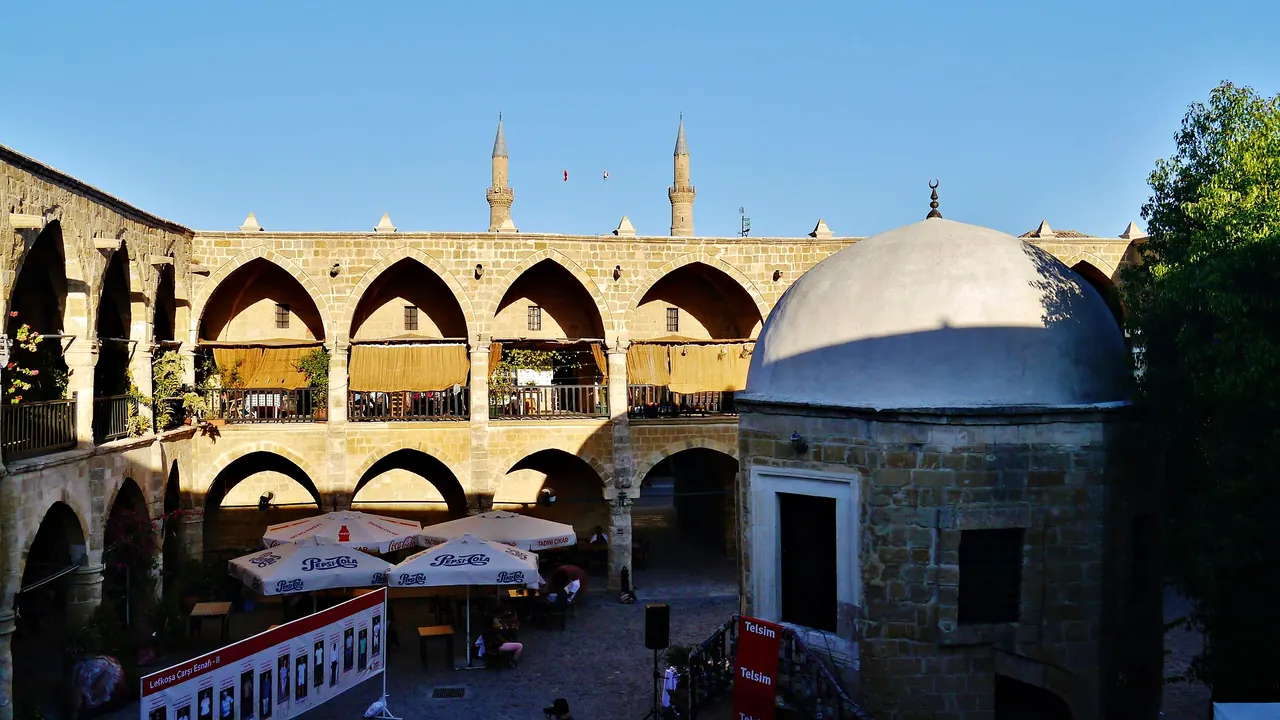
Nicosia is the place for sightseeing. Its Venetian walls with their heart-shaped bastions enclose a city cut in two by the Green Line. On the two sides you find the Cyprus Museum's antiquities, the Byzantine icons of the Archbishop's Palace, and the Gothic cathedral that became the Selimiye Mosque beside the Büyük Han caravanserai. It fills two or three days well.
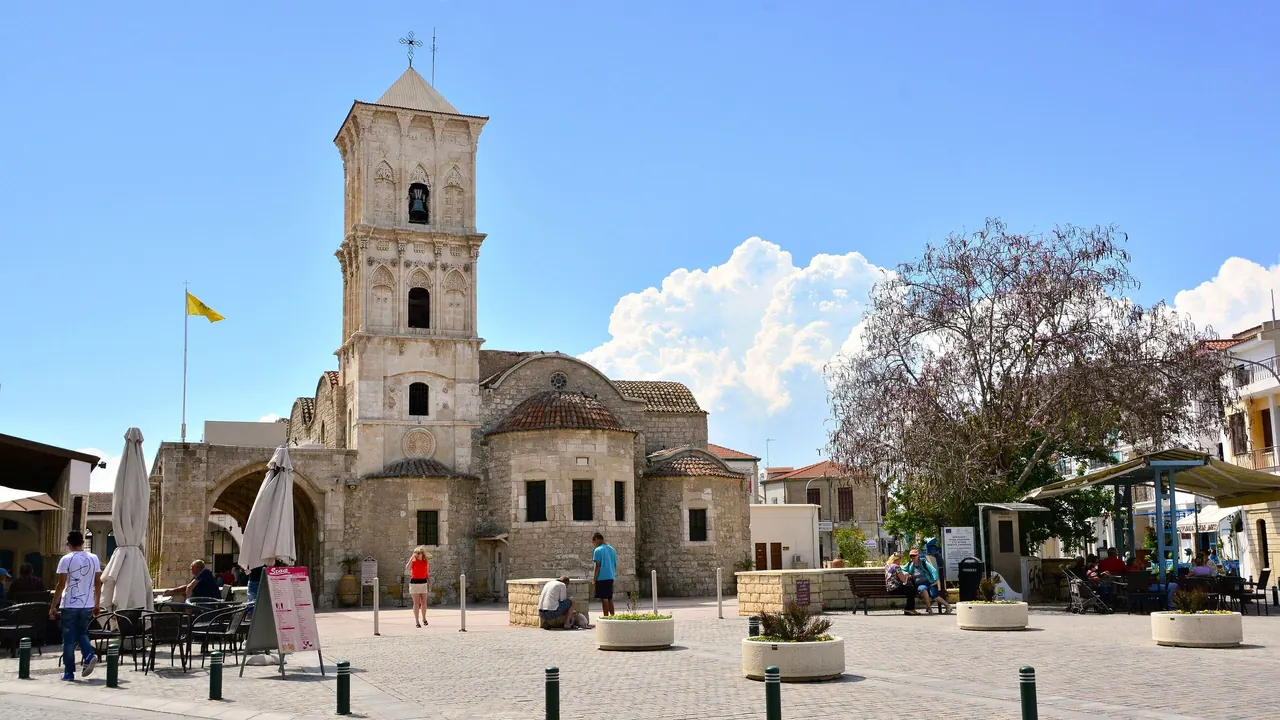
Larnaca's list is shorter: the ninth-century Church of Saint Lazarus with its carved iconostasis, Hala Sultan Tekke by the Salt Lake, the foundations of ancient Kition and the potters of Skala. A day or two covers it, and many visitors add Nicosia's museums as a day out.
Nightlife
Neither is a nightlife destination, but Nicosia has more of a going-out scene. Students and young professionals fill the pavement bars around Faneromeni Square from about midnight, and a few clubs on the avenues outside the walls carry on later.
Larnaca's evenings are mostly a summer affair, with cocktail bars along Finikoudes and DJs at Mackenzie Beach, and the town goes quiet in winter. From either city, anyone who wants proper clubbing heads to Ayia Napa.
Nature & outdoors
For time outdoors the two are about even, but the activities differ. Larnaca's nature is at sea level: flamingos on the Salt Lake in winter, the Zenobia wreck offshore, one of the best-known dives anywhere, and the sea caves of Cape Greco for kayaking and snorkelling.
Nicosia looks to the hills. The Kyrenia range has trails along its ridge with views to the sea, and the pine forests of the Troodos are closer, about an hour away. In both cities summer pushes walking into spring and autumn.
Day trips
Both make good bases for touring a small island, and the difference is direction. From Larnaca the easy days lie inland and along the south coast. Lefkara, Choirokoitia and Stavrovouni are close, Nicosia is forty minutes up the road, and Limassol and Kourion lie further west.
Nicosia is the better base for the north. Kyrenia's harbour, Bellapais Abbey and St Hilarion are about forty minutes over the hills, Famagusta and Salamis lie to the east, and the painted churches of the Troodos are nearer. From either city Paphos is a long day, and a car helps.
Good for families
Larnaca is the easier choice with children. Finikoudes shelves gently enough for small children to paddle, the promenade has playgrounds and ice cream, and the airport is so close that travel days are short. The camel park near Mazotos and the Ayia Napa waterpark add a couple of outings.
Nicosia is welcoming, and families eat out together late into the evening, but it has no zoo, aquarium or theme park, and every swim needs a car. July and August are hard work with little ones, so it works best as a day trip from the coast.
Getting around
Neither is easy without a car, but Larnaca is simpler. Its small, flat centre puts the seafront, Saint Lazarus and the fort within an easy walk of each other, and the airport is a short ride away, so a beach stay works on foot.
Nicosia's walled old town is just as walkable, and the Ledra Street crossing takes you north in minutes. Beyond the walls, though, the suburbs are built for driving, local buses are of little use and pavements are patchy. Both cities rely on intercity buses and hire cars, with traffic on the left.
Shopping & style
Nicosia has more to browse. Ledra and Onasagorou streets have the chains and some small independents, the avenues outside the walls carry the designer brands, and across the line the covered Bandabulya market sells spices, textiles and copperware.
Larnaca has little beyond a couple of high streets and a mall, though its local buys are good: pottery from Skala, lace and silver from nearby Lefkara, and bottles of Commandaria. Neither city is a reason to travel for shopping.
Affordability
Costs are much the same in both, and the savings come in different places. In Larnaca the promenade cafés charge more than the streets behind them, beachfront rooms cost more in high summer, and winter brings much cheaper stays.
Nicosia's hotels are fewer and aimed at business travellers, so rooms stay mid-range. Meals are good value, though, and crossing to the northern half makes eating and shopping cheaper still. In both cities a hire car is the main extra cost.
Live music & performing arts
As the capital, Nicosia has the island's formal stage: the Cyprus Symphony Orchestra, the state theatre company, and old-town bars playing rebetiko, jazz and indie. In summer there are open-air concerts in the moat. Most drama is in Greek, so music is the better bet for visitors.
Larnaca has much less: the summer festival at the fort, a municipal theatre and weekend bouzouki in some tavernas. Music lovers staying there travel to the capital for concerts.
Wellness & relaxation
Rest in Larnaca comes from the pace of the place rather than from any bathing tradition. The town has no baths of its own and leaves spas to the resort hotels east of town, but long coffees on the seafront, evening walks along the promenade and a mild, quiet winter make for an unhurried stay.
Nicosia offers steam rather than sea air. The domed 16th-century Omeriye Hammam, beside a former church, still gives steam and massage, and the Büyük Hamam carries the Ottoman habit on across the line. For cooler, deeper rest, the pine villages of the Troodos are about an hour away. Both cities suit a slow trip better than a dedicated spa vacation.
When should you go?
Pick your month. The climate figures are measured averages, not a forecast.
Larnaca in July
Nicosia in July
Daytime high, °C
Rainfall in the month, mm
Where the figures come from
Nicosia's temperatures are measured 40 km from the centre, at Larnaca Airport.
Nicosia's station stands 218 m below the city centre, so the centre is likely a little cooler than the figures say.
Nicosia has no rain gauge within 25 km of the centre, so its rainfall comes from a gridded climate dataset read at the city rather than from a gauge further away.
Temperature and rainfall are climate normals, averaged over the years shown. Larnaca: 1991-2020 normals, Larnaca Airport (3.7 km from centre). Nicosia: 1991-2020 normals, Larnaca Airport (40.4 km from centre).
The two share the same warmth and long sunny days through the year, so the difference lies in what you do with the heat. From June to September highs reach 33°C, which is too hot for walking the streets at midday. That matters more in Nicosia, where walking the old town is the reason to come, and less in Larnaca, where the sea is a few steps away. Larnaca's water is pleasant for swimming from May and peaks around 27°C in late summer, staying swimmable into November.
Both are almost dry from June to September, and the rain arrives in winter. Larnaca gets the heavier share in December and January, with about 98mm in December, while Nicosia's rain is spread a little more evenly and includes the odd shower in May and September. For sightseeing in Nicosia, April and May or October and November are best, with highs between 23°C and 28°C. Larnaca is at its best from late spring to autumn.
Which traveller are you?
On a beach and sun trip, Larnaca is the clear choice. Finikoudes lies at the foot of the old town, the sea stays warm from May into November, and the white sand of Ayia Napa and Protaras is within an hour. From Nicosia, every swim means a drive.
For a culture and arts trip, Nicosia gives far more. The Cyprus Museum, the Venetian walls, the Selimiye Mosque and Büyük Han, along with orchestra concerts and theatre, fill several days, while Larnaca's handful of sights take one or two.
On a family trip with young children, Larnaca is much easier. Gently shelving sand, playgrounds along the promenade and an airport minutes away make for calm days. Nicosia has little built for children and is hard going in the summer heat.
Before you go
| Measure | Larnaca | Nicosia |
|---|---|---|
| Official language | Turkish, Greek, Modern Greek | Turkish, Greek, Modern Greek |
| Currency | Euro (EUR) | Euro (EUR) |
| Sockets | G240 V, 50 Hz | G240 V, 50 Hz |
| Driving side | Left | Left |
| Time zone | UTC+2, UTC+3 in summer | UTC+2, UTC+3 in summer |
| Emergency number | 112 | 112 |
| Elevation | 26 m | 220 m |
| Main airport | Larnaca International Airport (LCA)5 km from centre112 non-stop destinations | Larnaca International Airport (LCA)41 km from centre112 non-stop destinations |
| Public holidays this year | 17 days | 17 days |
By the numbers
| Measure | Larnaca | Nicosia |
|---|---|---|
| City population | 59,200 | 56,848 |
| People per km² | 1,868 | 1,112 |
| Museums within 10 km | 4 | 19 |
| UNESCO World Heritage sites within 50 km | 2 | 2 |
| Swim season, months above 21 °C | 6 months | 6 months |
Where else could you go?
Every comparison below shares a destination with this one, so you can follow Larnaca or Nicosia somewhere new.
- Limassolvs Larnaca
- Limassolvs Nicosia
- Paphosvs Nicosia
- Paphosvs Larnaca
- Alanyavs Nicosia
- Alanyavs Larnaca