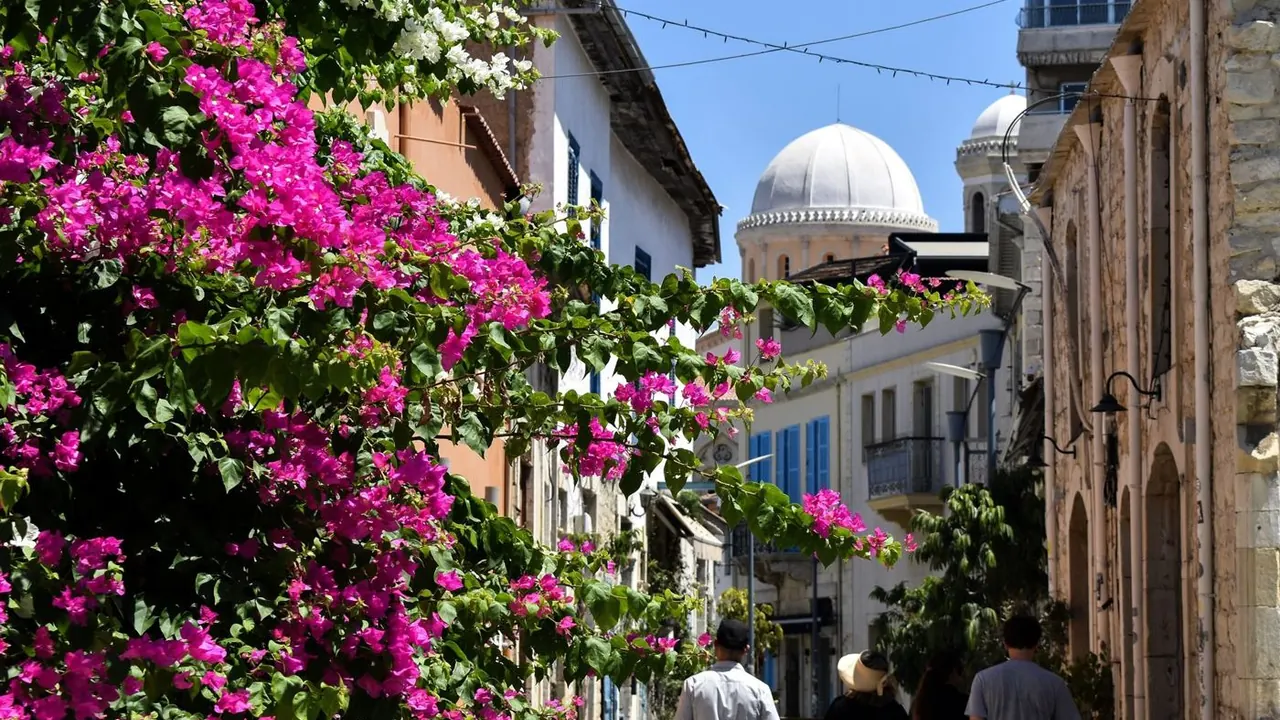
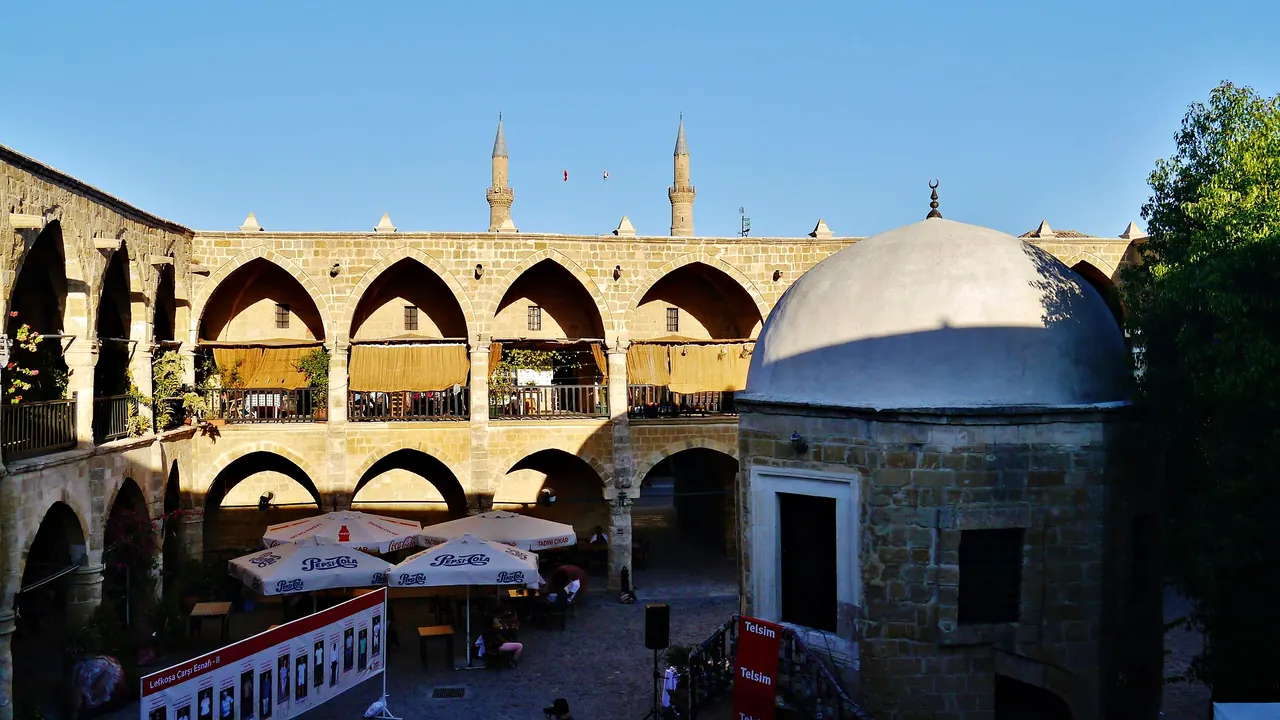
Photos: Limassol by Julian Lupyan, CC0; Nicosia by Zairon, CC BY-SA 4.0, cropped.
Limassol or Nicosia?
Our verdict in twelve categories, each scored against the same fixed benchmark cities, and the climate month by month, so you can choose for your trip.
Choose Limassol for
- beaches
- families
- nature and the outdoors
Limassol is the choice for a trip built around the sea. The city beaches are on the doorstep and prettier coves at Governor's Beach and Pissouri are a short drive away. The water is gentle enough for children and the resort hotels are designed around pools. Kourion, Paphos and the Troodos wine villages are all within easy reach, and evenings in the old town are a little livelier. Come for the water and the coast, not for museums.
Choose Nicosia for
- culture and sights
- prices
- getting around
If you care more about history than swimming, you will get more from Nicosia. The Green Line runs through the old city inside its Venetian walls, so a single walk takes in the Cyprus Museum, Byzantine icons, the Selimiye Mosque and an Ottoman caravanserai, and meals cost a little less than on the coast. The sea is a drive away and summer on the plain is fierce, so Nicosia suits a city stay in spring or autumn better than a family beach vacation.
Scoreboard
Twelve categories on one fixed scale from 0 to 100. The shaded stretch is the gap between the two.
Your match
Pick a travel style or drag the sliders, and both match scores follow your weighting.
Wins on beaches and families with your weighting.
Wins on culture and sights and prices with your weighting.
What matters to you?
Category by category
What the scores mean for a trip.
Beaches & swimming
Limassol lives on its seafront. Beaches of grey sand and fine shingle with sunbeds run from Dasoudi to Amathus, Lady's Mile has quieter space to the west, and the prettier spots at Governor's Beach, Kourion and Pissouri are short drives away. You can swim before breakfast without any planning.
Nicosia has no beach of its own. Larnaca and the Kyrenia coast are each about 45 minutes away, so the sea becomes an outing, and between trips a hotel pool is the only way to cool off in the city.
Food & drink
The two kitchens are close cousins, both built on the long meze of halloumi, tahini, kleftiko and souvla from the charcoal grill. What Limassol adds is wine and the sea. It sits below the vineyard villages that make Xynisteri, Maratheftiko and Commandaria, and its fish tavernas near the old port grill the day's catch. The seafront serves plenty of international resort cooking, but the better meals are in the old town and the hill villages.
Nicosia's difference is the Green Line. Walk across and you are eating Turkish Cypriot food, with kebab grills, lahmacun and syrupy pastries near the Selimiye Mosque, so a single day covers both of the island's cuisines. Away from Cypriot cooking, though, the capital has little international choice.
Culture & sights
On sights, Nicosia is clearly the stronger stop. Its Venetian walls, the antiquities of the Cyprus Museum, the icons at the Archbishop's Palace and, north of the line, the Selimiye Mosque and Büyük Han fill two or three days with Lusignan, Venetian, Ottoman and British history.
Limassol's own sights, the small castle museum, the old mixed quarter and the ruins of Amathus, take about a day. Most of the heritage around it lies outside the city, at Kourion and beyond, so culture there means taking a car rather than walking.
Nightlife
Limassol has the livelier evenings of the two. Drinkers fill Saripolou Square and the old-town lanes until the early hours, and the marina adds smarter cocktail bars. In summer, beach bars and a few big clubs on the tourist strip stay open past midnight, helped along by a large international crowd.
Nights out in Nicosia are smaller and more local. Students and young professionals drink on the pavements around Faneromeni Square and Ledra Street, the bars only fill towards midnight, and there are just a handful of clubs outside the walls.
Nature & outdoors
Both cities can reach the Troodos pines and Mount Olympos in about an hour, but Limassol has more right on its doorstep. Flamingos winter on the Akrotiri salt lake, the cliffs at Cape Aspro and Pissouri make good coastal walks, and diving and wind sports are available along the shore.
Nicosia sits on the flat Mesaoria, which turns brown and baking in summer, and its green space is mostly the moat gardens. What it has in its favour is the Kyrenia range to the north, with trails along the ridge looking out to sea, at their best in spring when the plain turns green.
Day trips
Cyprus is small, so both make good bases, but they look in different directions. From Limassol the easy outings are Kourion and Kolossi to the west, the Paphos mosaics within an hour, Omodos and the painted Troodos churches inland, and Lefkara and Choirokoitia to the east.
Nicosia looks north and east instead: Kyrenia's harbour, Bellapais abbey and St Hilarion over the hills, and walled Famagusta with Roman Salamis beside it. Paphos is a long day from here, and a hire car crossing the Green Line needs extra insurance.
Good for families
With children, Limassol is much the easier choice. Its city beaches shelve gently into calm water, the promenade suits scooters and pushchairs, and the resort hotels have pools and kids' clubs. A waterpark and a small zoo add a change from the sand.
Children are just as welcome in Nicosia's tavernas, but the city has little made for them beyond playgrounds and the moat gardens, and the beach needs a car. With summer heat often above 35°C, Nicosia works better as a day out from the coast.
Getting around
Neither city is easy without a car, there is no railway on the island, and traffic in both keeps left. In Limassol the walkable part is the cluster of old town, castle, old port and marina, with the long seafront promenade and the coast-road buses linking the hotel strip.
Nicosia's walkable core is more compact. Everything inside the walls is a short stroll, and the Ledra Street crossing takes you into the north in minutes with a passport or ID. Beyond the walls the suburbs are built for driving and local buses are of little use to visitors.
Shopping & style
Neither city is worth the trip for shopping, and both have the usual chain-store streets and outlying brand stores. Limassol adds a few marina boutiques and, more usefully, edible souvenirs from its market and wine villages, with Lefkara lace a short drive away.
Nicosia's distinctive extra is across the Green Line, where the covered Bandabulya market and the lanes near the Selimiye Mosque sell spices, Turkish delight, textiles and copperware. On the south side, the Cyprus Handicraft Centre brings the island's crafts together under one roof.
Affordability
Nicosia is the cheaper of the two. Meze and souvla lunches fill you up for little, coffee and pastries are inexpensive, and the northern half of the city is cheaper again. Its hotels are mainly for business travellers and mid-range in price, and you will probably need to add a hire car.
In summer, Limassol's beachfront hotels, marina bars and seafront restaurants charge resort prices. Eating in family tavernas away from the coast and avoiding the peak months brings costs down noticeably.
Live music & performing arts
Both scenes are modest and mostly local, but they offer different things. Limassol's highlight is seasonal and scenic: ancient Greek plays staged in the theatre at Kourion above the sea, along with touring shows at the Rialto and Pattihio and a lively carnival before Lent.
As the capital, Nicosia has the island's resident companies, the Cyprus Symphony Orchestra and the state theatre company. You can also hear rebetiko, folk and jazz in old-town bars and open-air concerts in the moat in summer. In both cities, most drama is in Greek.
Wellness & relaxation
The two differ in kind rather than degree. In Limassol, relaxing means resort life: well-equipped hotel spas along the coast and slow evening walks on the promenade.
Nicosia offers something the coast does not, a real Ottoman bathing tradition, with steam and massage in the domed 16th-century Omeriye Hammam and in the old baths of the north. For real quiet, people from both cities head up to the Troodos villages.
When should you go?
Pick your month. The climate figures are measured averages, not a forecast.
Limassol in July
Nicosia in July
Daytime high, °C
Rainfall in the month, mm
Where the figures come from
Limassol has no rain gauge within 25 km of the centre, so its rainfall comes from a gridded climate dataset read at the city rather than from a gauge further away.
Limassol's sunshine is measured 59 km from the centre, at Larnaca Airport.
Nicosia's temperatures are measured 40 km from the centre, at Larnaca Airport.
Nicosia's station stands 218 m below the city centre, so the centre is likely a little cooler than the figures say.
Nicosia has no rain gauge within 25 km of the centre, so its rainfall comes from a gridded climate dataset read at the city rather than from a gauge further away.
Temperature and rainfall are climate normals, averaged over the years shown. Limassol: 1998-2020 (sunshine 1991-2020, rainfall 1991-2020) normals, Akrotiri (11.6 km from centre). Nicosia: 1991-2020 normals, Larnaca Airport (40.4 km from centre).
The two cities share the same long, dry summer and the same generous sunshine, but they feel different in it. On the coast at Limassol the sea is warm enough to swim from May to November and reaches 27°C in August, so the beach season is long, and a sea breeze takes a little of the edge off the heat. Nicosia, out on the plain, runs a couple of degrees hotter, with highs of 33°C in July and August that make midday walks around the walls hard going. Its streets are at their best in April, May, October and November.
Winter is mild in both, with highs in the high teens, and this is when the rain falls. Limassol is the wetter of the two, with close to 100mm in December, while Nicosia gets noticeably less. Spring and autumn suit walking in either city. Winter is a fair time for Nicosia's museums but not for a beach trip to Limassol.
Which traveller are you?
On a beach and sun trip, Limassol is the obvious base. You can swim from the city seafront from May into November, and quieter coves at Governor's Beach and Pissouri are close by. From Nicosia, every swim means a drive of about 45 minutes.
For a culture and arts trip, Nicosia gives far more. A walk inside its Venetian walls takes in the Cyprus Museum, Byzantine icons, the Selimiye Mosque and Büyük Han on both sides of the Green Line, and the island's symphony orchestra is based here.
On a family trip with young children, Limassol is far easier. Gently shelving beaches, a promenade for pushchairs, resort pools and kids' clubs, a waterpark and a zoo keep the days simple. Nicosia has little built for children and a punishing inland summer.
Before you go
| Measure | Limassol | Nicosia |
|---|---|---|
| Official language | Turkish, Greek, Modern Greek | Turkish, Greek, Modern Greek |
| Currency | Euro (EUR) | Euro (EUR) |
| Sockets | G240 V, 50 Hz | G240 V, 50 Hz |
| Driving side | Left | Left |
| Time zone | UTC+2, UTC+3 in summer | UTC+2, UTC+3 in summer |
| Emergency number | 112 | 112 |
| Elevation | 10 m | 220 m |
| Main airport | Larnaca International Airport (LCA)58 km from centre112 non-stop destinations | Larnaca International Airport (LCA)41 km from centre112 non-stop destinations |
| Public holidays this year | 17 days | 17 days |
By the numbers
| Measure | Limassol | Nicosia |
|---|---|---|
| City population | 107,970 | 56,848 |
| People per km² | 2,405 | 1,112 |
| Museums within 10 km | 2 | 19 |
| UNESCO World Heritage sites within 50 km | 3 | 2 |
| Swim season, months above 21 °C | 6 months | 6 months |
Where else could you go?
Every comparison below shares a destination with this one, so you can follow Limassol or Nicosia somewhere new.
- Larnacavs Nicosia
- Paphosvs Limassol
- Larnacavs Limassol
- Paphosvs Nicosia
- Alanyavs Nicosia
- Alanyavs Limassol